Pottery Workshops in Poland: Classes, Firing and Collecting Your Work
The essentials: Choose the technique and check how many visits the finished piece needs. Confirm language, all included stages, extra-material charges, cancellation and collection deadlines. A first firing is not necessarily the finished object, and tableware suitability needs advice for the actual piece.
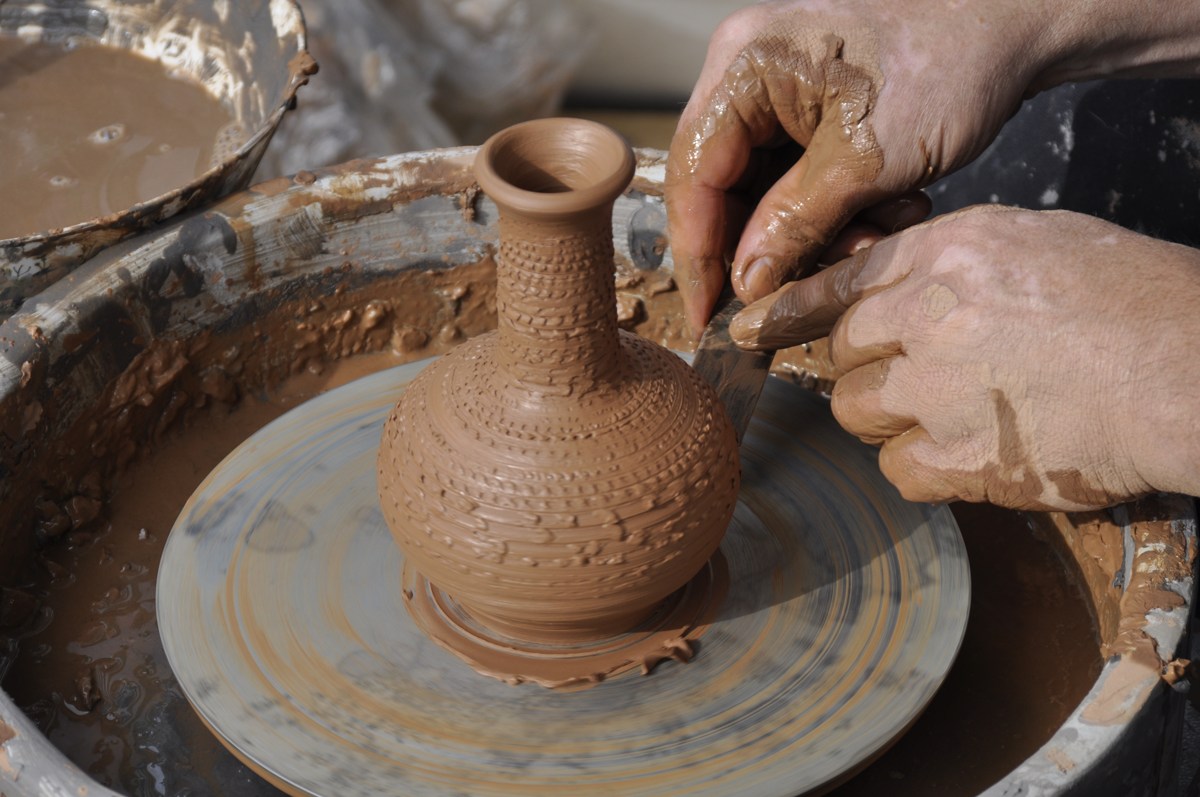
Illustrative pottery-wheel work, 15 July 2015, not a Polish studio or endorsement. Caaman / Wikimedia Commons, CC BY-SA 4.0. Resized and re-encoded; image adaptation under the same licence.
A pottery workshop can be a pleasant way to spend an afternoon in Poland, but the booking may involve more than one afternoon. Making a shape, drying it, firing it, glazing it and collecting the finished object are different stages. Before paying, find out which of those stages your ticket includes and when you need to return.
Useful search terms are warsztaty ceramiczne for ceramics workshops, lepienie for hand-building, toczenie na kole for wheel throwing, szkliwienie for glazing and odbiór prac for collecting work. This guide explains how to choose and arrange a class, not how to operate a kiln, select firing settings or certify a handmade mug for food use.
Choose the activity, not only a photograph of a mug
Read whether the class is hand-building, wheel throwing, decorating an existing piece or a combination. A photograph of a finished cup does not tell you which technique you will learn or how much of the finishing the studio does afterwards. Ask what a beginner is expected to make during that particular session.
Alike's English wheel-throwing offer, for example, describes a two-hour beginner workshop and includes clay and bisque firing of two selected pieces. Biały Królik's regular workshop description separates a first hand-building meeting from a later glazing meeting. Those are different experiences and different paths to a finished object, even though both involve clay.
If you have a specific idea, send a sketch or description before booking and ask whether it fits the class, materials and available time. A large planter, a matching dinner set and a small decorative piece are not interchangeable beginner projects. Keep the studio's limits on number, size and complexity with the booking details.
Understand the visits between making and collection
Ask how many attended sessions you need, what the studio does between them and whether the second session is included or separately paid. Kubkomat's FAQ describes a minimum of two meetings, first making and then glazing. Biały Królik describes two meetings separated by at least two weeks for its regular process.
Other formats may leave finishing to the studio. Echoes' English participation rules describe drying, firing, glazing and a second firing after the workshop, with finished work collected later. Do not transfer that arrangement to a class that includes only the first firing or expects you to book a glazing visit.
The Polish word biskwit refers to the first-fired stage in the reviewed studio descriptions. A piece being ready as bisque is not the same promise as a fully finished, glazed object. Ask whether “ready in two weeks” means ready for collection, ready for glazing or ready for another stage.
If you are travelling soon, explain the departure date before buying. The relevant deadline is when the finished work can be collected or dispatched, not when the class ends. Avoid planning a short holiday around taking home a freshly made item the same day unless the actual class explicitly offers that different format.
Confirm the full materials and firing allowance
Ask for the total package: attended sessions, clay allowance, number of pieces, glazing, each included firing and any later collection or shipping fee. “Materials included” can still have a limit on weight, dimensions or extra items. Get those limits before deciding to make something larger.
Ceramika Ananda's published rules include a stated clay allowance and maximum dimensions, with extra charges for more clay or oversized work. Echoes' rules describe an extra-item charge beyond the workshop's stated project. These are examples of studio-specific limits, not a national charging rule or a reason to assume every additional piece costs the same.
Ask what happens if your project exceeds the allowance or needs work after the booked session. Confirm any extra charge before the extra material or service is used. For a gift voucher or multi-session pass, check whether its value covers the whole process or only attendance at selected stages.
Arrange language, location and access for the actual class
If you need English, look for a class explicitly offered in English and confirm the booked session, rather than relying only on an English website. Alike publishes an English wheel-throwing product, but that does not establish the language of every class at every location.
Confirm the exact studio address and what time you may arrive. Operators may have more than one branch, and reception or collection hours can differ from class times. Ask whether a late arrival can join, whether the group waits and whether you would lose time or the place altogether.
For access needs, ask about the full route: entrance, workshop table or wheel, seating, toilet and collection point. Alike's FAQ describes a street-level entrance at its stated studio but toilets downstairs. A ground-floor entrance alone does not answer whether all the facilities you need are accessible. Check the exact branch and arrangement directly.
Read cancellation wording carefully and resolve conflicts
Check how to cancel, the notice deadline, whether a refund or rescheduling is possible and what happens if you miss one meeting in a multi-stage course. Keep the terms attached to the actual booking. A generic FAQ and a special workshop offer may not say the same thing.
Alike's pages checked on 28 October 2026 illustrate an unresolved difference: the English wheel product gives seven-day cancellation or postponement wording, while the general Polish FAQ describes a three-day threshold and a different later-refund arrangement. Their child-participation wording also differs. Ask the studio to confirm which terms apply to that exact English class before paying; do not silently choose the more generous page.
Also ask what happens if the studio cancels, changes the instructor or cannot run the planned format. For a fixed-date experience, do not assume buying online supplies an unconditional change-of-mind refund. This guide reports published studio terms, not a legal ruling on their enforceability or your particular contract.
Check children and accompanying adults separately
Ask whether the specific session accepts your child's age, whether an adult must participate, whether both need tickets and who supervises during the class. A studio welcoming families in general does not establish that a wheel workshop or adult evening class has the same age policy.
Kubkomat's FAQ describes its own age and guardian arrangements. Biały Królik describes children attending with a parent or guardian as separate participants below its independent-attendance threshold. These are local examples to check, not rules for every pottery studio in Poland.
For a private family or group event, confirm the number of participants, duration, included objects and the plan if somebody cannot attend. Ask whether an accompanying non-participant can remain, and whether the room is shared with another group. Do not assume that booking several places reserves the whole studio.
Prepare for a working studio, not just a social event
Wear comfortable clothes you do not mind marking and ask whether an apron is supplied. Alike's preparation guidance says clay work can dirty clothing despite protective aprons. Check shoe and jewellery advice for the selected activity, and tell the instructor about any adjustment you need before starting.
Follow the studio's instructions for materials, tools, cleaning and where to place unfinished pieces. Ceramika Ananda's safety rules put mechanical equipment under instructor permission and supervision. Do not operate unfamiliar equipment, approach a working kiln or improvise a new use for a tool because it is in the room.
Do not bring outside clay or glaze without agreement. Alike's FAQ says it asks about clay origin and intended firing temperature and may refuse unidentified material. Biały Królik says it does not offer firing for work made outside its studio. These policies are reasons to ask first, not an invitation to guess a temperature or mix materials yourself.
Identify your work and plan its collection
Follow the instructor's method for identifying each piece and take a clear photograph of the work you leave. Alike's FAQ specifically recommends signing work or photographing it so it can be found later. Record how many items you left and which are awaiting another visit rather than final collection.
Ask how you will be notified, what date to expect and the last collection deadline. Storage periods differ: Echoes describes storage measured from its ready notification, while other studio FAQs measure it from the workshop or a later calendar deadline. Do not turn one studio's timing into a general Polish rule.
If you cannot collect in person, ask whether somebody else may collect or whether shipping is offered, at what total cost and under what packing and damage arrangements. Echoes says InPost shipping is available for an extra fee. That does not confirm international shipping, a guaranteed dispatch date or the same service at another studio.
Expect a craft result, then ask about intended use
Handmade work may change during drying and firing. Kubkomat and Echoes warn that pieces can crack or be damaged during the process. Ask what the studio offers if a piece fails and how it distinguishes a normal craft outcome from a service problem. A finished-object photo is not a guarantee that every beginner's item will look identical.
Before using a piece for food, hot drinks, a dishwasher or a microwave, get advice for that actual piece, material, glaze and firing process. Do not infer suitability from the word “ceramic,” a glossy surface or another studio's claim about its own products. Keep decorative use separate from an assumed tableware function.
Finally, keep the collection message, booking and care instructions together. The workshop is the experience you attend; a usable finished object is a separate outcome with its own stages and checks. Knowing both before booking makes the whole process easier to enjoy.
Frequently asked questions
Can I take home a pot immediately after making it?
Do not assume so. Ask which drying, firing and finishing stages remain and when the actual finished object can be collected or shipped.
Does the workshop price include glazing?
Check the exact offer. Some formats include only making and first firing; others include studio finishing or a separate attended glazing session.
Can I book an English class from an English website?
Confirm the language of the specific session and instructor. An English page does not establish that every workshop is taught in English.
What if the booking page and FAQ have different cancellation rules?
Ask for written confirmation of the terms applying to the exact class before paying. The reviewed Alike pages contain different cancellation and child-participation wording.
Is a handmade mug automatically suitable for food or a dishwasher?
No such assumption follows from appearance. Ask the studio about that actual piece, material, glaze, firing and intended use, and keep its care advice.
Sources
- Alike English wheel-throwing product: included bisque, age and cancellation wording, checked 28 October 2026
- Alike general FAQ: stages, collection, access and conflicting terms, checked 28 October 2026
- Kubkomat FAQ: stages, children, collection and breakage, checked 28 October 2026
- Ceramika Ananda rules: material limits, extras and studio safety, checked 28 October 2026
- Echoes English participation rules: included work, collection, shipping and craft outcomes, checked 28 October 2026
- Biały Królik workshops: two-stage format, families and outside firing, checked 28 October 2026