Public Swimming Pools in Poland: Tickets, Lanes and First-Visit Rules
The essentials: Read the chosen pool’s rules, tariff and dated lane schedule before travelling. Confirm when paid time runs, what your ticket covers, local clothing and supervision rules, and any assistance you need. Opening hours and price lists do not guarantee a usable session.
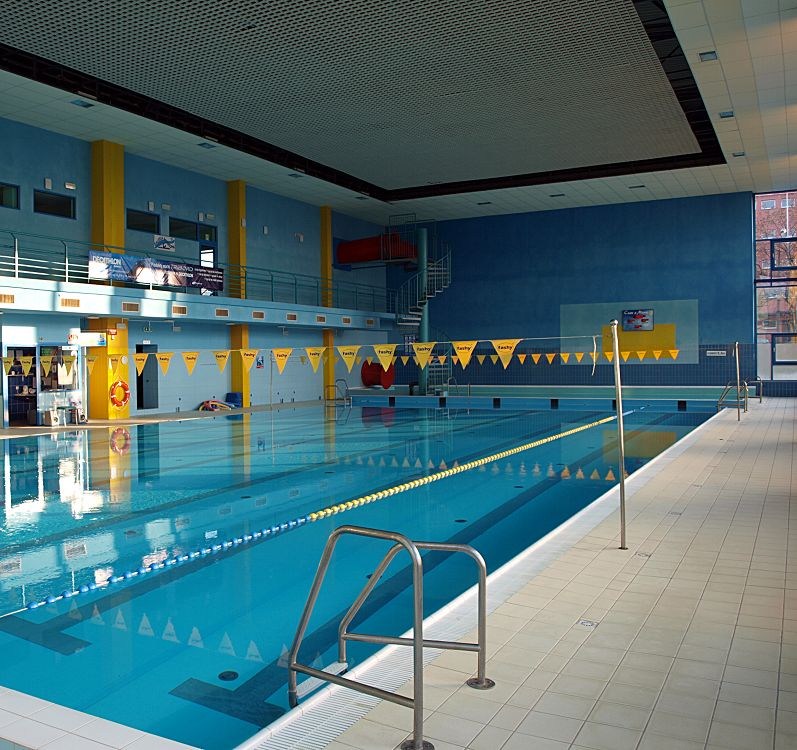
Historical Mewa pool interior in Gliwice, 26 May 2012, not evidence of current conditions or availability. Tomasz Górny (Nemo5576) / Wikimedia Commons, CC BY-SA 3.0. Re-encoded; image adaptation under the same licence.
A public swimming pool can be a useful part of settling into Poland, but the first visit takes a little more preparation than finding the nearest blue rectangle on a map. Opening hours do not tell you how many lanes are available, a one-hour ticket may include changing time, and the swimwear or cap rule at one pool may differ from the next.
Search for pływalnia or basen, then find the operator's own regulamin (rules), cennik (price list) and grafik (schedule). Municipal sports operators often use OSiR, MOSiR or POSiR in their names. This guide explains the practical checks for an ordinary visit, not swimming instruction, a medical clearance or a nationwide set of pool rules.
Check the pool schedule, not only the building hours
A facility can be open while much of its water space is reserved for schools, lessons, clubs or events. Look for a lane-availability chart rather than assuming the opening-hours box means unrestricted public swimming. Match the chart to the date and time you intend to visit.
OSiR Żoliborz's published rules specifically require users to check the pool's occupancy schedule before buying a ticket. POSiR Rataje publishes a separate schedule page and its rules explain that entry times and the number of lanes available for individuals are set out in that schedule. These are practical reasons to read beyond a map listing.
If a chart is an image, difficult to translate or unclear about lessons, ask reception how many lanes will actually be available to individual swimmers. Explain whether you want lengths, a recreational pool or a family visit. A timetable that works for a confident lane swimmer may be a poor fit for somebody looking for a beginner lesson or shallow-water activity.
Check current notices for technical breaks, events and holiday arrangements. A permanent regulation can describe ordinary hours without confirming service on your chosen day. Save the relevant page or message, but make a fresh check before travelling if the visit depends on a particular feature.
Understand when the paid clock starts and stops
Ask what the ticket duration measures. At Warsaw's Kasprzaka pool, the published rules define the paid area to include changing rooms, showers, drying space and the pool hall. Time runs from passing the entrance gate until settlement at the cash desk, and staying beyond the ticket period incurs an extra charge under the price list.
That is not the same as a full hour in the water. Leave time for the actual exit process rather than guessing how much time is “free” for changing. Ask whether the clock stops at a turnstile, a payment point or another location, and whether there is any allowance specific to your ticket.
As a dated local example, Rataje's price page checked on 28 October 2026 lists a normal pool ticket at 21 zł for one hour and an additional 35 groszy per minute afterwards. This illustrates the charging structure, not a Polish average or a promise that the price will remain unchanged. Check the current tariff for your chosen pool and ticket.
Also distinguish the last admission, the time you must leave the water and the building's closing time. Kasprzaka's rules require users to leave the pool hall before the facility closes. Arriving near the advertised closing hour does not necessarily buy a usable swimming session.
Confirm what the ticket or sports card includes
A basic entry, a family ticket, a lesson, a lane reservation and a pool-plus-sauna ticket can be different products. State what you plan to use and ask for the total, including any time-related supplement. A list of prices for an attraction does not prove that attraction is operating today.
Rataje's pages checked on 28 October 2026 illustrate the problem: the price page displays pool hours and tariffs, but its separate schedule page is headed ‘Przerwa technologiczna’ and marks the displayed slots as a technical break. The price page also flags sauna downtime. These pages do not establish a usable session. Confirm directly before travelling; do not treat tariffs or routine hours as availability.
If you use an employer sports card, check the exact facility, activity, entry allowance and any supplement in the card provider's current listing and with reception. Rataje lists several accepted schemes, but a scheme name on an operator page does not establish the terms of every individual card. Bring whatever identity or eligibility evidence the applicable scheme requires.
For a concession, ask which document is accepted. Do not assume that any foreign student card, age-based status or translated document qualifies simply because the tariff says ulgowy. If the discount matters to the decision, establish eligibility before buying rather than leaving staff to interpret it after entry.
Pack for the actual dress and hygiene rules
Read the local swimwear rules before relying on the clothes you normally wear abroad. Some facilities specify close-fitting swimming clothing and restrict loose shorts or garments with pockets. If you need a particular covering for comfort, religion or another reason, ask the operator how its rule applies before the visit.
A swimming cap is not a universal requirement across the sources reviewed. Kasprzaka's rules include caps in the required pool clothing. Rataje's rules recommend a cap rather than requiring one. Bring one if you are unsure, but verify the actual rule instead of presenting either venue's wording as national law.
Pack clean pool footwear, a towel and washing supplies. Both Kasprzaka and Rataje describe changing footwear and showering before entering the water. Follow the venue's route and signs rather than walking through wet areas in outdoor shoes. Ask whether lockers use the entry wristband, a key, a coin or another system.
Keep the wristband or key secure and check the locker actually closes. Rataje's published tariff includes a charge for a lost chip wristband. That does not mean the same charge or system applies elsewhere, but it is worth understanding the replacement process before leaving a band loose on a bench.
For children, check supervision and changing arrangements
Ask the pool about your child's actual age, swimming ability and planned activity. Do not assume the presence of lifeguards replaces the supervision the operator requires. The reviewed rules include venue-specific adult-supervision requirements, and lesson attendance can have separate arrival, handover and collection arrangements.
Clarify whether an accompanying adult must buy a ticket and change into pool clothing to enter the hall. Kasprzaka's rules distinguish an adult who is properly ticketed and dressed from a guardian who is not allowed in the hall. An adult waiting nearby should not assume they can walk onto the poolside in outdoor clothing.
Check family changing rooms and the rules for a child using a changing room with an adult. Żoliborz describes family changing provision and specific arrangements for younger children; that does not confirm identical facilities at another site. For a baby or toddler, ask about swim nappies and the suitable pool area before packing.
If you want lessons, confirm the booking, instructor, teaching language, group level, missed-class terms and whether entry is included. A standard swim ticket does not automatically authorise a private instructor to run a lesson. Kasprzaka's rules require teaching arrangements approved through the operator.
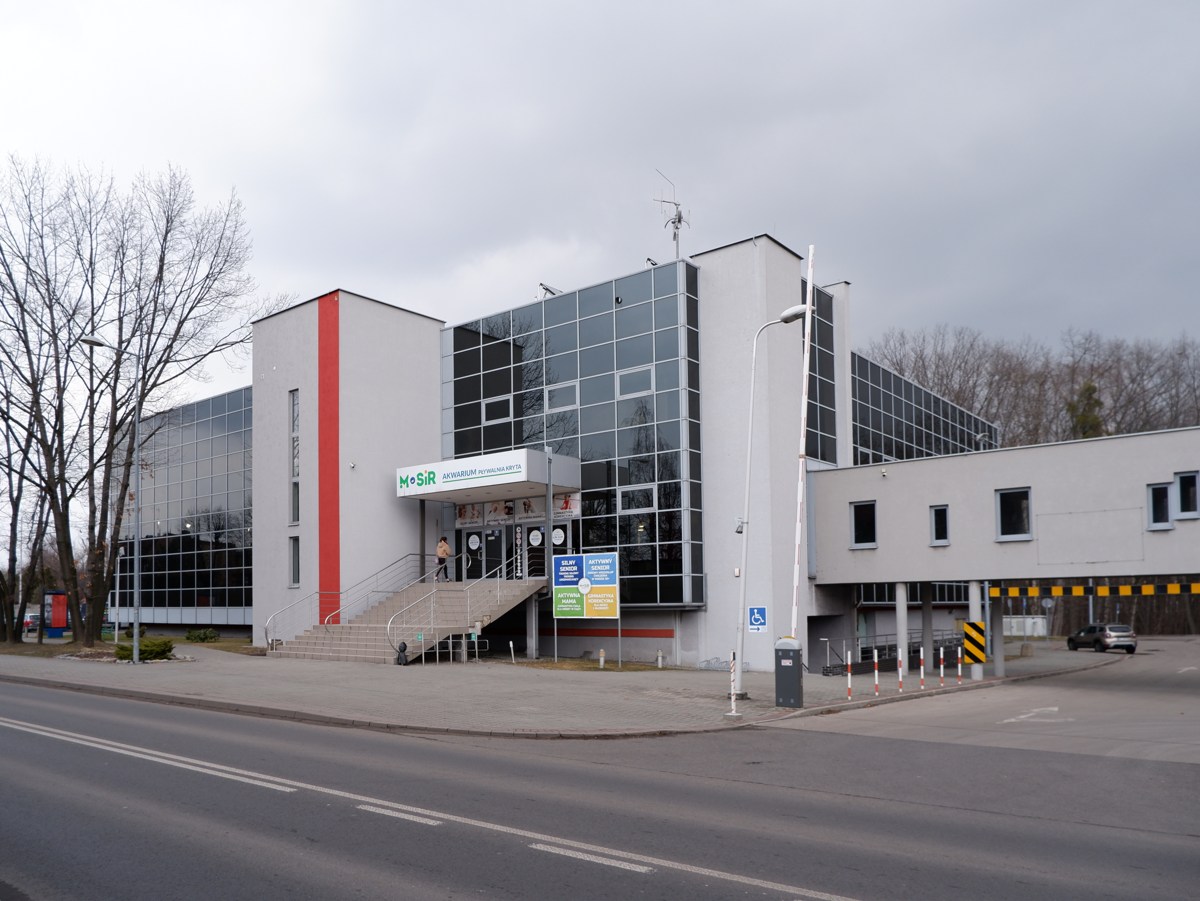
Ask specific accessibility questions before travelling
A general “accessible” description may not answer the route you need. Ask separately about the entrance, reception gate, changing room, toilet, shower, poolside route and transfer into the water. Explain the assistance or equipment you need without assuming a ramp at the entrance proves access to the pool itself.
Aktywna Warszawa's architectural-accessibility page for Inflancka gives detailed route information, including differences between spaces and toilets. This is a useful model for the questions to ask, not a substitute for checking your chosen venue and whether equipment is available at your intended time.
Confirm any assistance arrangement, advance notice, companion ticket and required documentation directly. If staff need to prepare equipment or a particular changing room, agree that before the visit. Do not infer access or transfer suitability from an old photograph, a sports-card listing or another facility run by the same organisation.
On arrival, follow the local lane and equipment directions
Ask reception or the lifeguard which area fits your activity and ability. Observe lane signs and follow staff directions rather than bringing your own assumptions about circulation, fast lanes or where lessons take place. A sports pool is not necessarily an appropriate beginner area simply because it has an entry ladder.
Ask before using fins, diving equipment or other training aids. Kasprzaka's rules require lifeguard permission for specified diving equipment, while other venues have their own equipment provisions. Do not assume an item sold for swimming is allowed in every public session.
Follow staff instructions and the site's signals, and report a problem promptly. Check photography and filming rules before taking a poolside picture: Kasprzaka restricts recording without management permission. Even where personal photography is allowed, respect other users' privacy and do not turn a public visit into an unapproved recording session.
Finish the visit with the bill and next session understood
Allow enough time to change, dry off and settle the wristband under the venue's actual timing rules. Check an unexpected supplement at reception while the entry record can be reviewed. Keep the receipt and explain the specific issue promptly rather than assuming every additional charge is either automatic or mistaken.
Before buying a multi-entry pass or lesson block, check expiry, cancellation, missed sessions, closures and whether unused value can be refunded or extended. A single successful visit does not establish those longer-term terms. Once the schedule, kit and payment process are clear, the next swim should involve less guesswork.
Frequently asked questions
Is a swimming cap compulsory in Poland?
There is no single rule established by these sources. Kasprzaka requires caps in its clothing rules; Rataje recommends them. Read your chosen pool’s current rules.
Does a one-hour ticket mean an hour in the water?
Not necessarily. Ask when billing begins and ends. Kasprzaka counts time in the paid area, including changing and showers, until settlement at the cash desk.
Do opening hours guarantee lanes for public swimming?
No. Check the dated lane schedule, events, technical breaks and actual admission availability. A tariff page is not a session confirmation.
Can I bring a private swimming instructor?
Check with the operator. Ordinary entry does not automatically authorise teaching; the reviewed rules contain separate instructor or agreement requirements.
What should I ask about accessibility?
Check the full route from entrance through changing and showers to the water, transfer equipment, assistance arrangements and companion-ticket terms for the specific venue.
Sources
- OSiR Wola Kasprzaka rules, published 24 May 2023, checked 28 October 2026
- OSiR Żoliborz pool rules, checked 28 October 2026
- POSiR Rataje rules effective 30 December 2022, checked 28 October 2026
- POSiR Rataje tariff, not a confirmation of availability, checked 28 October 2026
- POSiR Rataje schedule showing technical break on review, checked 28 October 2026
- Aktywna Warszawa Inflancka architectural accessibility, checked 28 October 2026