Instrument Repair in Poland: Finding a Lutnik or Service Centre
The essentials: Match the workshop to the instrument and separate a warranty assessment from paid repairs. Describe the fault, agree diagnosis and the full scope before work starts, document transport and accessories, and test the agreed result at collection.
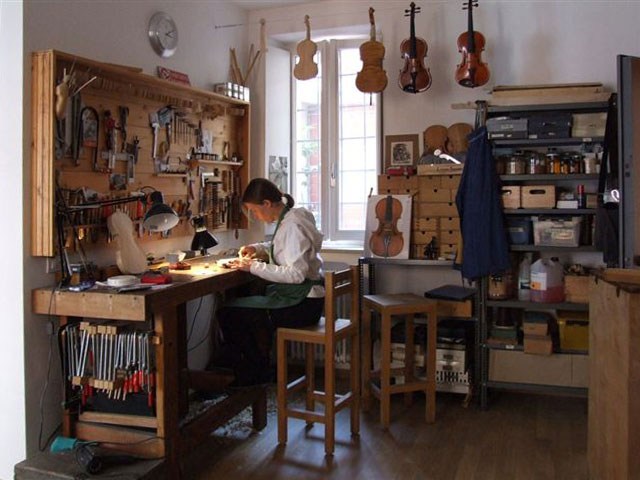
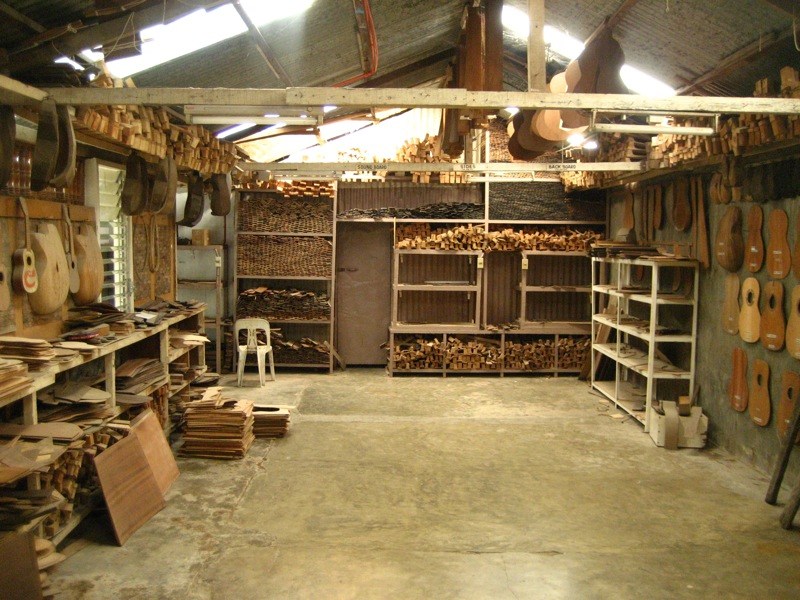
Historical illustrative workshop in Cremona, Italy, July 2007, not a Polish provider or endorsement. Hildegard Dodel / Wikimedia Commons, public-domain dedication. Re-encoded.
An instrument that arrived safely in Poland may still need attention before it feels right to play. A guitar might buzz after the move, a violin bow may need new hair, or an electronic keyboard may develop an intermittent fault. The useful first step is to describe the instrument and symptom, not to order a repair procedure based on a translated search result.
For string-instrument work, search for lutnik or pracownia lutnicza. For broader repair services, use serwis instrumentów muzycznych or naprawa instrumentów, adding the instrument name. This guide is about choosing the service route, agreeing the work and documenting handover. It does not teach adjustments, electrical repair or restoration techniques.
Match the workshop to the instrument
The word lutnik is a useful lead, but it does not prove a workshop accepts every stringed instrument or every type of work. A guitar setup, violin restoration and bow rehair are different jobs. Check the actual service list and ask about experience with your instrument's construction and problem before travelling.
Jacek Siwica's published offer, for example, describes bowed-instrument repairs, bow-hair replacement and guitar work. Rybczyński GuitarTech's price page separates guitar setup, frets, electronics, hardware and structural repairs. These are examples of how providers divide their work, not a ranking or a guarantee that either has space for your job.
For an electronic instrument, start with the maker's relevant support route rather than assuming an acoustic-instrument workshop can diagnose it. Yamaha's Polish service locator filters by product category, including digital pianos, keyboards, synthesisers, guitars and wind instruments. Confirm that the chosen service point covers the exact category and model, not simply that its name appears in a general list.
Separate warranty enquiries from paid work
If the instrument may be under warranty, locate the invoice, warranty information, model and serial number before agreeing independent work. Yamaha's Polish warranty page tells customers to contact their dealer or importer first, or find an authorised service point when the dealer is not nearby. It asks for purchase evidence and a detailed fault description.
That is Yamaha's published process, not a universal warranty promise for every maker or an instrument bought in any country. Tell the provider where and when you bought yours and ask which route applies. Keep a seller complaint, a manufacturer's guarantee and a separately paid adjustment distinct when describing what you want.
Do not assume a general shop receipt establishes the warranty position for a privately bought used instrument. Equally, do not treat “out of warranty” as agreement to an unlimited repair bill. Ask whether the proposed first step is a warranty assessment, chargeable diagnosis or an ordinary paid service, and what happens if you decline the quoted repair afterwards.
Describe the problem in a way someone can reproduce
Send the make, model, approximate age and clear photographs. Include a full view and close-ups of the affected area, without hiding previous repairs or damage. Explain whether the problem appeared after transport, a fall, a string change or another event. A short recording can help describe intermittent noise, but it does not replace a physical inspection.
For a guitar, say whether the problem occurs on particular strings, positions or playing styles. Describe your usual tuning and strings and what you want to improve about playability. Those are useful questions for the technician, not instructions to alter tension, bridge parts or neck adjustment yourself.
For an electronic instrument, explain the connected equipment and settings when the fault occurs. Yamaha's repair checklist explicitly asks for the configuration in which the problem appears. A keyboard that fails only with a particular pedal or connection needs a more precise description than “not working.” Ask which accessories the workshop wants you to bring so it can reproduce the fault.
Ask what a setup or package actually includes
Do not compare offers solely by the word “setup.” Pracownia Lutnicza PL2 publishes basic, standard and premium packages with individual pricing. GuitarTech distinguishes a full setup from a smaller setup and lists their contents. A package name is a provider's label, not a standard Polish specification shared by every workshop.
Request a plain list of the proposed work and what is excluded. Check whether strings, parts, cleaning, electronic checks and follow-up adjustments are included or separate. If the instrument needs a structural repair, ask whether the setup price still applies or a different assessment is needed first.
Explain priorities. Perhaps you need dependable rehearsal use rather than cosmetic restoration, or you want to preserve original parts on an older instrument. Record restrictions before work starts: no refinishing, irreversible modification or parts replacement without a separate explanation and approval. Sentimental value and market value are not the same decision about how much intervention you want.
Obtain a full quote and an extra-work rule
Ask for labour, parts, strings, diagnosis, tax and transport to be identified in the quote. Lutnik Poznań's published price page says parts are not included in its listed prices. GuitarTech also separates labour from parts and describes a diagnostic charge when the customer takes the instrument away without the recommended work. Do not carry either rule over to another business without checking.
A price list can contain starting prices, ranges and individually quoted work. Treat it as preparation for the conversation, not confirmation of your final bill. Ask what inspection is required before the provider can give a firm figure, whether diagnosis itself costs money and whether a deposit is required.
Agree what happens if hidden problems are found. GuitarTech's page says it pauses and contacts the customer before work beyond the agreed scope. Ask your chosen provider to confirm its own rule in writing: who contacts you, what needs approval and whether there is a cost if you decide not to continue. This prevents an enthusiastic repair brief from becoming permission to change everything.
Arrange transport rather than improvising it
Before sending an instrument, ask whether the workshop accepts deliveries and whether an appointment or job reference is needed. Confirm the exact delivery address, recipient and return arrangement through the provider's own channel. A general contact address is not automatically a staffed parcel-receiving point at the time your courier arrives.
Get packing instructions for the actual instrument and case. Yamaha recommends original packaging for transport in its Polish warranty guidance, but original packaging may no longer exist or suit a modified instrument. Do not replace model-specific advice with a universal rule about loosening strings, removing parts or filling a case. Ask the receiving specialist what it requires.
Agree who books transport, what value is declared and what the carrier's cover and packing conditions actually include. GuitarTech offers customer-arranged or workshop-arranged courier transport and notes the risk of shipping. An insured-value box is not proof that every kind of damage or inadequately packed instrument will be covered. Photograph the instrument, case and packing before dispatch.
Document condition and leave only agreed accessories
For an in-person handover, ask for a job record identifying the instrument, serial number if present, condition and requested work. List the case, bow, power supply, pedal or other accessories you leave. Photograph identifying marks and existing scratches so the record does not depend on memory when you collect it.
For electronic instruments with user data, ask what could be reset and follow the maker's backup instructions before handover. Yamaha's Polish repair checklist recommends making your own backup and, where possible, removing data. Confirm how to restore it and whether testing requires any particular files or settings, without sharing unrelated account passwords.
Give your real deadline if you need the instrument for lessons, rehearsal or a concert. Ask whether that date is confirmed or only an estimate, and what could delay it, such as inspection findings or parts. Keep a practical alternative for an important performance rather than interpreting a routine turnaround as a commitment to your event.
Try the result and retain the paperwork
At collection, compare the completed work with the quote and discuss anything left unresolved. Where practical, play the instrument in the circumstances that exposed the problem. For electronics, ask about the test setup and check the agreed functions with the accessories involved. Count the accessories and inspect the case as well as the instrument.
Ask for understandable care and follow-up instructions, the receipt or invoice and any repair-guarantee terms. A workshop's statement that services are guaranteed does not tell you the duration, exclusions or process. Request those details, including what to do if the original symptom returns after collection.
If the result differs from the agreement, contact the provider promptly with the job reference, description and supporting photographs or recording. Keep the response. Gov.pl's consumer-help page covers disputes about services bought privately from businesses and points to advice, local consumer ombudsmen and the Trade Inspection. The route depends on the actual transaction; this guide does not decide liability or promise a particular remedy.
Frequently asked questions
What does lutnik mean when searching for repairs?
It is a useful search term for a luthier or string-instrument workshop. Confirm the particular instrument and work accepted; not every workshop covers guitars, bowed instruments and bows.
Is diagnosis always free?
No. The reviewed providers have different arrangements. Ask what an assessment costs if you do not accept the repair and whether that fee is included when work proceeds.
Does a quoted setup include replacement parts?
Not automatically. Check the package contents and request labour, parts and strings to be identified in the quote.
Can I send an instrument by courier?
Only after agreeing acceptance, packing instructions, delivery details, transport responsibility and return arrangements with the workshop. Check the carrier’s cover and conditions.
Where should a warranty repair start?
Check the maker’s current process for the model and purchase. Yamaha’s Polish guidance starts with the dealer or importer, or an authorised service point when the dealer is not nearby.
Sources
- Rybczyński GuitarTech service scope, quote and transport, checked 28 October 2026
- Pracownia Lutnicza PL2 packages, checked 28 October 2026
- Jacek Siwica string-instrument and bow repairs, checked 28 October 2026
- Lutnik Poznań price scope and parts exclusions, checked 28 October 2026
- Yamaha Poland warranty and repair checklist, checked 28 October 2026
- Yamaha Poland service locator, checked 28 October 2026
- Gov.pl consumer help, updated 13 January 2026, checked 28 October 2026