Dance Classes in Poland: Levels, Partners and Booking Rules
The essentials: Check the exact class format, prerequisites and teaching language before booking. Confirm partner and waiting-list arrangements, full payment and sports-card rules, and the difference between missing a lesson and ending a continuing course.

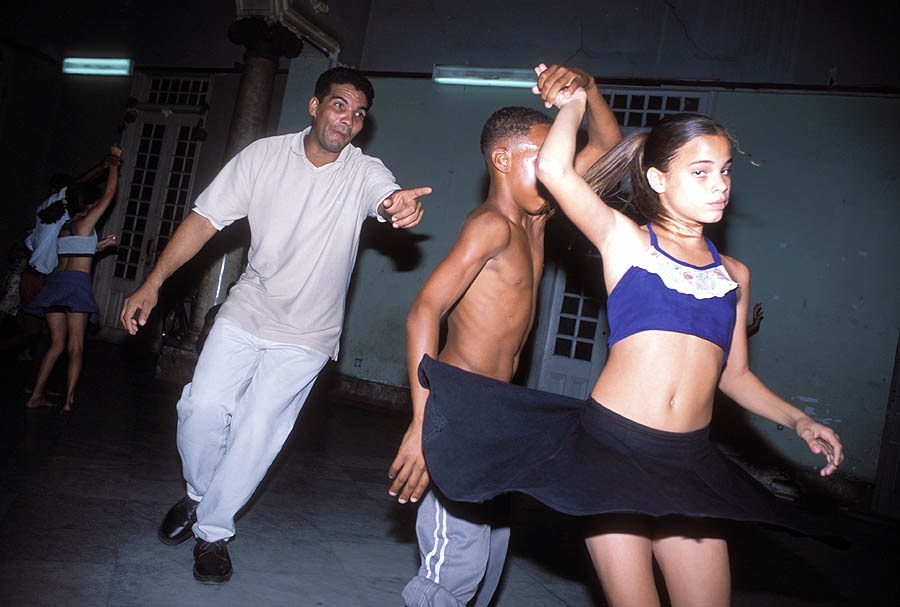
Historical salsa-school scene in Arnhem, Netherlands, source description dated 2008, not a Polish studio or current offer. Ziko / Wikimedia Commons, CC BY-SA 3.0. Resized and re-encoded; image adaptation under the same licence.
A dance class can be a useful way to build a routine and meet people after moving to Poland. The tricky part is choosing the right entry point. A class marked “open” may not teach from zero, a partner course may accept solo registrations, and missing one evening is not necessarily the same as cancelling a continuing course.
Search for szkoła tańca (dance school), grafik (schedule), początkujący od zera (beginners from zero), zajęcia solo and zajęcia w parach. Read the actual class description, registration conditions and price list before choosing a pass. This guide is about arranging adult classes, not dance technique, injury advice or a ranking of schools.
Choose the format before choosing the cheapest pass
Distinguish a single drop-in, a progressive course, an open choreography class, an intensive workshop, a private lesson and a social dance event. The same studio may sell all of them with different booking and payment rules. A regular-class pass does not automatically include workshops or special events.
Revolution Dance Center's FAQ, for example, describes open classes built around a new choreography each lesson, while its ordinary group arrangement moves from a paid trial to a pass. The Cuban Place distinguishes regular classes from fixed cycles that require advance payment for the complete programme. These are provider-specific formats, not common definitions used everywhere.
Ask yourself whether you want a flexible weekly activity or a structured group that builds on previous lessons. Tell reception how often you can realistically attend and whether travel or shift work will interrupt the course. A pass that looks cheaper per lesson may be poor value if its validity and group restrictions do not fit your schedule.
Do not assume “open” means absolute beginner
Schools use different level labels. Nova's Katowice FAQ describes First Step as beginner entry and Open as adaptable to the participants. SHO's Q&A describes Open Level as a group for people who already dance regularly. The Cuban Place allows different experience levels in open classes but suggests at least some background in the technique.
Those differences matter more than a familiar English label. If you have never tried the style, ask whether the selected class teaches its basics from the beginning. Describe experience by style and recent practice rather than calling yourself intermediate because you danced something different years ago.
Check the course's lesson number as well as its level. No Limits explains that a group at its twelfth meeting has already covered months of material and recommends a new P0 course from its first class for beginners. A class can remain labelled beginner while its regular participants have already learned material you have missed.
Joining halfway through is also local policy. Nova describes different entry arrangements for solo and partner courses. Ask the instructor or reception which date is a suitable start rather than treating a vacant place as confirmation that the lesson fits you.
Check whether you need a partner and how rotation works
Do not rule out partner dancing solely because you would attend alone. Organic Flow's FAQ says participants can sign up individually and rotate partners. The Cuban Place also accepts solo registration and says most courses rotate partners, without forcing participants to change.
That does not guarantee identical arrangements at every school or every event. Ask whether solo places are available for your chosen role, whether a partner is assigned, and whether a role balance or waiting list affects acceptance. No Limits says an application may remain queued while the school awaits a place, role or partner match.
If you want to attend as a couple without rotation, discuss that preference before booking. Confirm whether both people must register separately and whether the quoted price is per person or per pair. Nova's instructions tell people registering for partner courses to complete separate forms. One completed form should not be assumed to reserve two places.
For close-contact classes, ask what the session involves and tell the instructor about your boundaries. You do not need to accept an unfamiliar movement or partner arrangement simply because you have paid for a place. Choose a format in which you can ask questions and understand the instructor's directions.
Confirm language and the actual room
An English FAQ is useful, but it does not establish the teaching language of every class. Ask whether the specific instructor and session can support you in English, and whether the group instruction itself is in English or Polish with individual explanations. That difference can affect how easily you follow a fast-moving lesson.
Check the address, branch, entrance and room against the booking confirmation. Organic Flow says the exact room is shown on the individual course or event page. A studio's general contact address may not be where every workshop takes place.
If access or facilities matter, ask about the full route, changing rooms, toilets and showers. SHO's Q&A says it has changing facilities but no showers. Revolution describes showers and lockers in its changing rooms. Neither statement should be transferred to a different school, or treated as proof of step-free access.
Know what confirms a place
Registration, payment and acceptance are not always the same event. No Limits explicitly says payment does not always mean immediate admission to a group: the application can still await capacity, role balance or confirmation. Read the booking status rather than relying only on a payment receipt.
A waiting list is also not an ordinary confirmed place. Nova describes automatic movement from the waiting list when someone cancels and tells students to keep checking their status. Ask whether promotion creates a normal reservation and how you can withdraw before that happens if your plans change.
Check whether advance registration is compulsory. Revolution says it is; other schools describe limited walk-in possibilities when space remains. Do not travel assuming an empty-looking schedule is a reservation. Obtain the confirmation required by that studio and make sure you can access it at check-in.
Compare the full payment arrangement
Ask for the cost of the actual class, including any trial, pass, deposit, workshop supplement or separate charge for a partner. “Trial” does not automatically mean free. The Cuban Place's FAQ says its ordinary first classes are not free, while Revolution describes a single paid trial option.
Sports-card acceptance also differs. SHO and Organic Flow say they do not accept sports benefit cards. Nova lists accepted schemes but excludes some classes and describes reservation-deposit arrangements. Confirm your exact card, selected activity and required supplement in both the current provider listing and school terms.
For a pass, ask when validity starts, which groups it covers, whether it is personal and what happens to unused entries. Revolution describes passes tied to a group except for a broader option. The Cuban Place describes flexible regular-class passes within their validity period. Do not compare those products solely by their number of entries.
Separate absence, make-up lessons and cancellation
Ask how to withdraw from a particular date, how much notice is required and what happens if you do not attend. The reviewed schools use different systems and deadlines. Nova's FAQ describes a five-hour withdrawal deadline and possible loss of a deposit or entry; SHO describes a 24-hour cancellation limit. Neither is a national rule.
Use the channel the school requires. No Limits says telling the instructor does not register an absence in its system. Revolution describes notifying by text or email for its make-up arrangement. Save the confirmation or visible status so you do not have to prove later that a casual conversation was intended as formal notice.
Ask whether a missed lesson can be made up, in what group and by which deadline. A make-up entitlement does not necessarily extend the pass or allow a refund. The Cuban Place says absence does not extend its flexible pass validity; Revolution describes a defined make-up process for notified absences.
Most importantly, missing classes is not the same as ending an ongoing course. No Limits explains that an absence report does not cancel or suspend the course and that finishing a level does not automatically end participation. Before joining a continuing arrangement, obtain the actual resignation route, notice and payment consequences.
Bring suitable kit and check in before class
Wear clothes that allow movement and ask the school what footwear suits the style and floor. Clean indoor shoes are a recurring requirement in the reviewed guidance, but specialist styles may have additional advice. Do not buy expensive shoes from a generic checklist before checking what your chosen beginner class actually uses.
Revolution tells students to ask the instructor about style-specific shoes and to check in at reception on every visit. SHO describes its own light-soled change-of-shoes requirement. Pack water and leave time to change and find the room rather than arriving at the advertised start and expecting the group to wait.
If a movement causes concern or you need an adjustment, tell the instructor and do not push through something you do not understand. This is not a medical assessment: seek suitable advice for a health issue rather than treating a school's beginner label as clearance for every activity.
Decide after the first lesson, with the next commitment clear
After trying the class, assess whether the teaching, level, partner arrangement and travel fit your life. Ask what you missed or should prepare for next time, and whether the group continues on the same date and payment terms. A friendly first evening is a useful signal, but it does not answer the contract questions.
Before upgrading to a pass, keep the confirmed course, validity, cancellation rules and full price together. If the class is not the right match, ask about another level or format without assuming a transfer is free. The goal is a repeatable activity you can enjoy, with its practical obligations understood before they become an unpleasant surprise.
Frequently asked questions
Can I join partner dance classes without a partner?
Some schools accept solo registration, but confirm role availability, rotation and whether acceptance is still queued. One person’s registration does not automatically reserve a couple.
Does Open Level mean suitable for a complete beginner?
Not consistently. The reviewed schools use the label differently. Ask about the exact style, prerequisites and lesson number.
Are trial classes free?
Do not assume so. Check the actual offer and what payment or pass is required after the trial.
Does my sports card guarantee entry?
No. Acceptance, activity exclusions, supplements and reservation requirements vary by school and card. Check the selected session.
Does reporting an absence cancel a regular course?
Not necessarily. No Limits explicitly separates absence reporting from course resignation or suspension. Obtain the actual ending and payment terms before joining.
Sources
- Nova Katowice FAQ: levels, registration, waiting lists and cards, checked 28 October 2026
- No Limits FAQ: course progression, queue, absences and resignation, checked 28 October 2026
- SHO Q&A: levels, kit, booking and card exclusions, checked 28 October 2026
- Organic Flow English FAQ: solo registration, rotation and room, checked 28 October 2026
- The Cuban Place FAQ: rotation, passes, trial and fixed cycles, checked 28 October 2026
- Revolution Dance Center FAQ: formats, kit and make-up arrangements, checked 28 October 2026