EU Energy Labels in Poland: A-G Ratings and EPREL
The essentials: Match the label to the exact model, read its scale and consumption basis, then compare suitable appliances in the same category. EPREL provides free official model information. A rating is a comparison aid, not a guarantee of your actual bill.
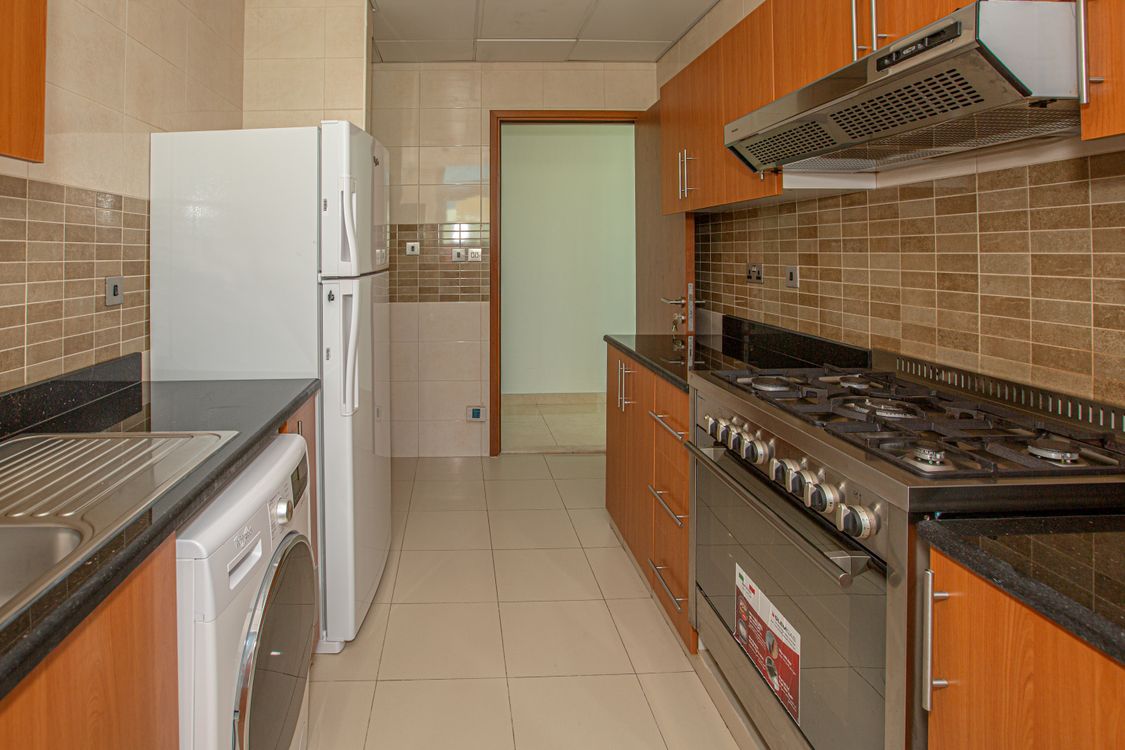
Cover: Denys Gromov, source photograph, Pexels License. Image unchanged. Household appliances in a kitchen. Illustrative appliance-shopping context, not evidence of these products' energy classes.
An appliance's energy class is a useful starting point, but it is not a complete shopping decision or a prediction of your electricity bill. Two refrigerators can have different capacities; two washing machines can use different amounts of energy while both meeting the same class. If you have moved to Poland and are comparing unfamiliar models, the most useful habit is to read the rating, the consumption figure and the product information together.
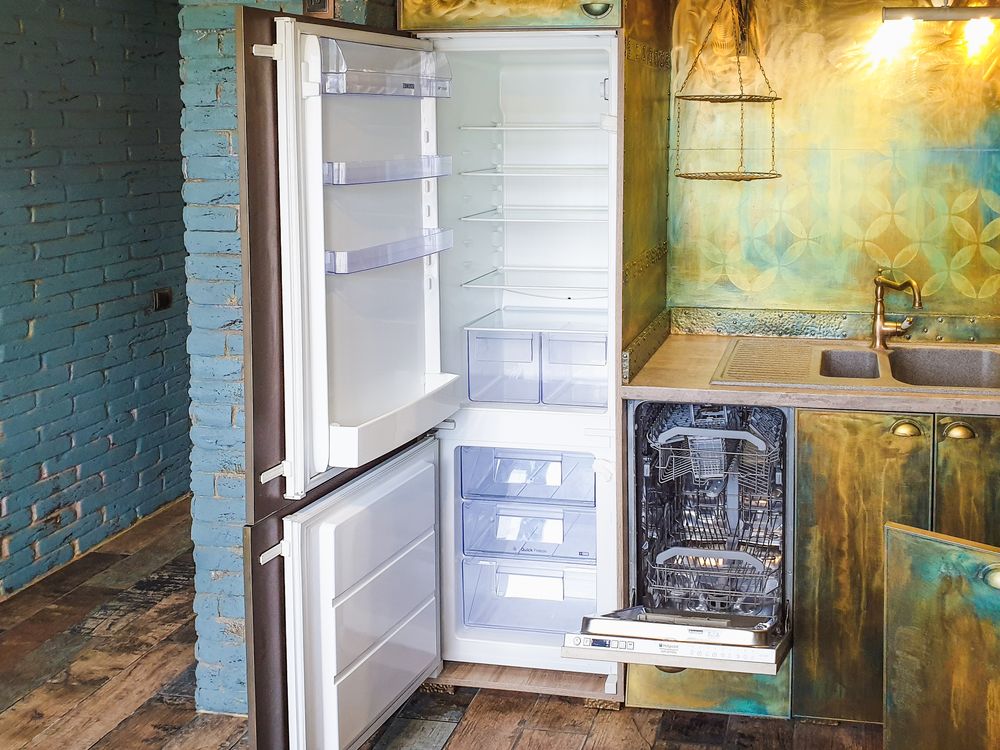
This guide explains the EU energy-label and EPREL information you can use when shopping in Poland. It does not recommend a model, claim a current price or approve a purchase. It uses European Commission consumer guidance checked on 5 November 2026. The photographs show household appliances as context, not labels or efficiency evidence for those pictured products.
Begin with the scale printed on that label
On the rescaled label, A is the most efficient class and G is the least efficient class. The model's own arrow points to its rating on that scale. Read the complete scale as well as the letter. An isolated claim of class A tells you less than the actual label, especially when you are comparing products from different categories or generations of labelling.
The European Commission explains that the move away from A+, A++ and A+++ has been gradual across product groups. Do not assume every energy-related product uses an identical new label at the same time. The label applicable to the product category matters. A refrigerator label and a heating-equipment label should not be treated as though every letter and measurement has the same meaning.
Nor should you translate an old A+++ into a particular current A-G class using a homemade conversion table. The Commission says there is no precise mapping for the illustrated refrigerator transition because parameters and test methods changed. If you are replacing an old appliance, compare the relevant consumption and product information rather than trying to preserve the same letter at any cost.
Match the label to the exact model
Start with the manufacturer and model identifier, not only the retailer's marketing name. Similar-looking appliances can have different capacities or specifications. Check that the displayed energy information belongs to the exact model and variant you intend to compare. A label beside several products is useful only when the association is clear.
This is equally important online. Save or inspect the label and product information for the actual listing, then confirm the model code before ordering. A photograph of an appliance that looks right is not evidence that its energy figures match the version on sale. If identifiers disagree, ask the seller to clarify rather than combining the best features from different pages into one imagined product.
When comparing a built-in appliance, do not let an energy rating replace practical fit checks. Dimensions, usable capacity and the type of installation remain separate questions. The label helps with standardised performance information; it is not a promise that the machine fits your kitchen or that the seller includes installation, delivery or removal of an old appliance.
Read the consumption unit before doing arithmetic
A kWh figure needs a time or usage basis. The number is not automatically annual consumption just because it appears prominently. The Commission's washing-machine explanation identifies energy consumption per 100 cycles on the eco 40-60 programme, while water use is shown per cycle. Read those units before treating a label as an annual household estimate.
For dishwashers, consult the specific dishwasher information and the relevant programme basis. Do not borrow a washing-machine explanation simply because both appliances use water and have an eco programme. Other categories can present consumption on a different basis. The safest first comparison is between similar products in the same group, using the same stated measurement.
An invented example shows the arithmetic: a washing machine labelled 50 kWh per 100 cycles corresponds to 0.5 kWh per labelled cycle on that basis. That is an illustration, not a real model specification. It does not predict every programme's consumption, and it does not make the label a measurement of your own last wash. Keep the test basis attached to the number.
A class and an absolute consumption figure answer different questions
The energy class summarises efficiency according to the category's rules. The consumption figure describes energy use on its stated basis. Look at both. A high efficiency class alone does not tell you the total running cost of every size and type of appliance. A smaller or differently configured product can be a different purchase even when the colour of its label looks similar.
Capacity is part of that comparison. The washing-machine guidance defines rated capacity as the maximum mass of dry laundry treated in a complete washing cycle when loaded according to the supplier's instructions. That is not permission to overload the machine or a claim that every programme accepts the same load. Check the model information and manual for the actual use you expect.
Choose a useful size for your household before comparing numbers too closely. The point is not to buy more appliance than you need merely to obtain a particular letter. Conversely, a model that cannot handle your ordinary needs may be a poor choice despite an attractive figure. Energy information should sharpen a practical decision, not displace it.
Use the QR code to reach the official product record
The QR code on relevant labels links to EPREL, the European Product Registry for Energy Labelling. The Commission describes it as a free public source of standardised model information. It can provide a product overview and a downloadable product information sheet, available in official EU languages. This is useful when a retailer's short description leaves out a parameter you want to compare.
Check the destination before opening a scanned code. The Commission's safety advice says the link should lead to its official ec.europa.eu address, and warns about false stickers placed over original codes. If something looks wrong, ask staff or search EPREL directly by model or registration information. A QR-shaped square on a product is not, by itself, proof that the destination is legitimate.
EPREL does not ask for payment or personal information simply to view a model. The Commission identifies a separate exception for reporting an erroneous registration, where an email confirmation is used. Do not confuse that optional reporting process with ordinary browsing. You do not need to buy access or supply payment details to read a public energy-label record.
Compare records, not isolated marketing claims
The EPREL consumer interface lets you select a product group and inspect individual models. The Commission describes search and comparison tools, along with a More Details view. Begin in the right category, then compare models that meet your practical requirements. A huge list is less useful than a small set of genuinely comparable appliances.
Record the exact model, class, consumption basis, capacity and any other parameter important to your household. A short table of those fields is easier to interpret than several screenshots with no identifiers. Keep the date of your comparison if you will return to it later. This is your working shortlist, not a statement that a seller still has stock or the same price.
The Commission also notes that some product groups provide links to additional information such as repair instructions, spare parts and indicative costs. Availability and content vary by group and record. Inspect what is actually supplied for the model instead of promising that every record contains the same repair information. An energy class alone does not settle repairability or after-sales service.
Check noise, water and duration separately
Energy labels can include other parameters, such as noise, water use and capacity. Washing-machine information includes programme duration and spinning noise, alongside energy and water figures. For an appliance near a bedroom or in an open-plan flat, those separate fields may matter as much as moving one efficiency class. Compare the parameter relevant to the problem you are trying to avoid.
Read the phase or programme associated with a number. A spinning-noise value is not a measurement of every sound a washing machine makes, and a duration attached to the labelled programme is not a promise that every programme takes that long. The information is useful because its conditions are defined. Removing those conditions makes a comparison less reliable.
Likewise, water consumption and electricity consumption are different costs. Do not add litres to kWh or compare only one while describing a total running-cost estimate. If you make your own budget, keep each resource and its unit separate. This guide does not supply a universal Polish utility rate or claim that every household pays the same amount.
Treat a bill estimate as an estimate
For a simple energy-cost illustration, multiply an appropriate consumption amount by an electricity price you can justify from your own tariff. If you start with a per-100-cycle figure, first decide how many labelled cycles you are modelling. State those assumptions. An invented rate or an unverified national average is not a sound basis for promising a particular saving to your household.
A real bill can include charges beyond the consumption component, and actual use depends on how you operate the appliance. The label is a standardised comparison tool, not a guarantee that a new machine will reduce your total bill by a fixed sum. Avoid claiming a payback period until the purchase price, comparable consumption, usage and relevant tariff assumptions are all clear.
End with a purchase you can explain: the correct model, a suitable size, a label on the applicable scale and consumption figures on a common basis. Use EPREL to fill missing product detail, then check the seller's actual price and delivery terms separately. The letter on the label is useful precisely when it starts a better comparison, rather than finishing the decision before you have read the rest.
Frequently asked questions
Can I convert an old A+++ rating directly into a new class?
No. The Commission says no precise mapping is possible in its refrigerator example because parameters and test methods changed.
Does a washing-machine kWh figure always mean yearly use?
No. The current label describes weighted energy use per100cycles on the eco40-60 programme; read the actual basis.
Must I pay to read EPREL information?
No. Public model information is free. The Commission warns to check QR destinations and not to confuse ordinary viewing with optional error reporting.