Flea markets in Poland: a pchli targ guide for expats
The essentials: Polish flea markets (pchli targ) run on weekend mornings: Warsaw Bazar na Kole opens Saturday and Sunday 6:00-15:00, Krakow Plac Nowy fills on Sunday mornings, and monthly fairs like Ursus run one Sunday a month (next: 8 November 2026). Bring cash, arrive early, and haggle - it is expected.
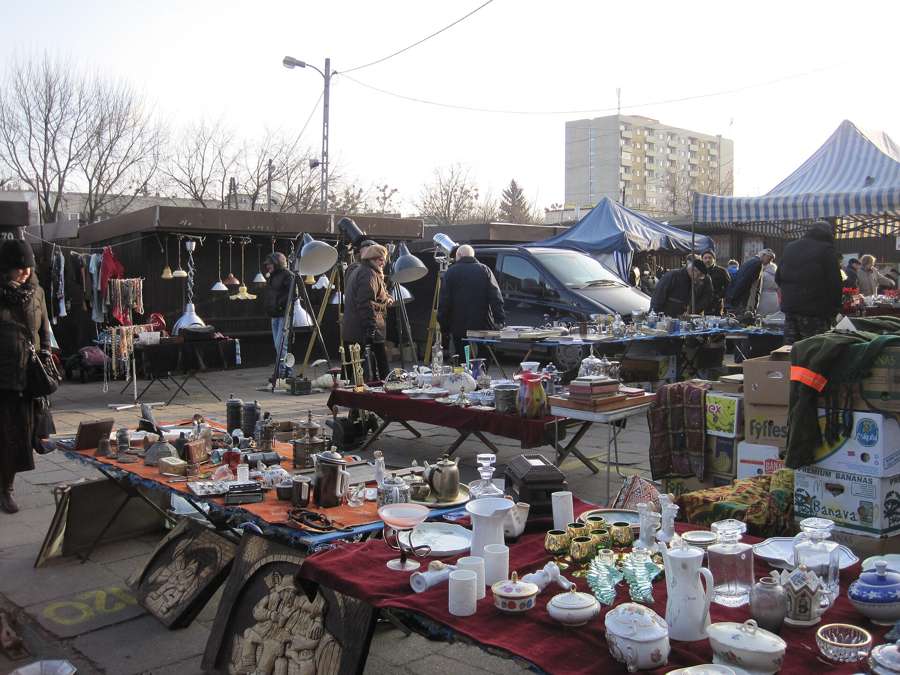
Every weekend, on patches of concrete across Poland, the country's attic empties out onto folding tables. Porcelain that survived the war, communist-era cameras, brass candlesticks, vinyl records, military medals, furniture with actual history - the pchli targ (flea market) is where Poland sells its past by the armful, and where an expat can furnish a flat, start a collection, or simply spend a Sunday morning rummaging through other people's memories. It is one of the most local experiences the country offers, and one of the cheapest. Here is where to go, when to show up, and how to buy without overpaying.
Warsaw: the big three
The capital has the country's richest flea-market circuit. According to Go To Warsaw, the official city tourism portal (accessed 26 October 2026), the three anchors are:
Bazar na Kole (ul. Obozowa 99, Saturday and Sunday 6:00-15:00) is the legend. Running since the 1980s, it is one of the largest and oldest markets in the capital, and the weekend antiques fair is the main draw. The City of Warsaw's own portrait of the market (biznes.um.warszawa.pl, accessed 26 October 2026) describes the transformation: on weekdays the square sells food - village produce trucked in on Tuesdays and Fridays - but on Saturday afternoon the food stalls vanish and "a completely different world" moves in, sellers who arrive on Friday evening to claim the best spots. The one condition for goods: they should be "bitten by the tooth of time." Expect furniture, mirrors in ornate frames, old ceramics, bronze, oil lamps, clocks, samovars and sewing machines, mixed in with glorious junk.
Bazar Olimpia (ul. Gorczewska 56/60, Sunday 6:00-15:00) is less collectors' fair, more everything-market: antiques and vinyl alongside clothes and food. Go To Warsaw recommends it for browsing without a fixed target.
Bazar Namyslowska (ul. Namyslowska 8, Saturday and Sunday 6:00-14:00) mixes groceries and clothes, with professional sellers next to locals simply airing out their wardrobes - the closest thing to a car-boot sale among the three.
Monthly and annual events worth the trip
Beyond the weekly markets, Warsaw runs a circuit of periodic fairs. The flea market at the PKP Ursus station hall has become a fixture: according to the organizer's page (zielonyursus.pl, 3 October 2026), it runs roughly monthly - upcoming dates include 8 November 2026, 13 December 2026, and monthly editions through spring 2027, typically 10:00-14:00 or 15:00. Entry is free for buyers with no registration; sellers get a free table but must register, with sign-ups opening two weeks before each date and closing when tables run out. The hall sits at ul. Wiosny Ludow 70, reachable by SKM line S1 or Koleje Mazowieckie R1 to Warszawa Ursus.
Two more for the calendar: the Falenicka Gielda Staroci (ul. Patriotow, Falenica) runs on the second Sunday of each month on the city's southern edge, with a calmer, more rural feel. And once a year, at the turn of May and June, Saska Kepa hosts the Garazowka - residents of the pre-war garden district put their things out in front of their houses, turning the whole neighborhood into a picnic-tinged garage sale, good for stylish clothes and art from local artists.
Krakow: Sunday morning on Plac Nowy
Krakow's answer is the Sunday flea market around Plac Nowy in Kazimierz, the old Jewish quarter. Per the krakow.com visitor guide (accessed 26 October 2026), the square and surrounding streets fill with tables and blankets selling communist-era memorabilia, vintage cameras, antique silver, military medals, vinyl, old maps and pre-war postcards. The advice is consistent with what regulars everywhere will tell you: arrive between 8:00 and 9:00 for the best selection, before the savvy locals scoop the real finds. Prices start at a few zloty for small items; antiques and cameras run higher. When you are done, join the queue at the round kiosk in the middle of the square - the okraglak - for a zapiekanka, the toasted baguette that is the unofficial meal of the market, at about 10-15 zl.
Plac Nowy has been a trading square since the 19th century, and the Sunday market carries that continuity: working-class marketplace turned creative-district ritual, stubbornly old-school in the middle of one of Krakow's liveliest neighborhoods.
How to buy like a regular
Go early or go late. The best pieces go in the first hour. The best prices come at the end, when sellers face packing up unsold stock - the City of Warsaw notes the same logic at Kole's food market, where Friday noon brings the cheapest produce because sellers will not haul it home.
Bring cash. Small sellers at flea markets are the last cash-first economy in Poland. Some regulars take BLIK to a phone number, but do not count on it, and there is never a card terminal on a folding table.
Haggle. It is expected. The krakow.com guide calls haggling "not just acceptable - expected," and the standard opener is simple: "czy moze byc taniej?" - can it be cheaper? Buying several items from one seller is your strongest position. Stay friendly; this is a ritual, not a battle.
Anchor your prices first. The City of Warsaw's portrait of Kole carries the sharpest warning: sellers who spot an inexperienced or wealthy-looking buyer may quote several times an item's real value, and an emotional, unconsidered purchase "can significantly slim your wallet." Check approximate prices online before you go, or bring someone experienced. If a price feels like a gallery price, walk - the same seller will often call you back.
Inspect, then buy. Test zips, open drawers, hold ceramics to the light, check that "working" electronics have all their parts. There are no returns at a pchli targ. What you carry away is yours, faults included.
Plan transport for big finds. A wardrobe does not fit on the tram. Sellers of large furniture usually hold items for a few hours while you arrange a car or a van; agree the pickup before you pay.
Selling: the other side of the table
The flea market is also the easiest way to empty a Polish flat when you leave. The Ursus market's model is typical of the newer fairs: a free table, registration online two weeks ahead, first come first served. Older markets like Kole work on the arrive-very-early-and-claim-a-spot principle. For clothes and small items, the online routes from our second-hand guide - Vinted and OLX - will usually net more money with less sitting around. But for furniture, odd lots, and the sheer pleasure of it, one morning behind a folding table is an experience every long-term expat should have once.
What you will actually find
Calibrate expectations honestly. The treasure stories are real - pre-war silver, first-edition books, mid-century furniture - but most of any pchli targ is ordinary old things at ordinary low prices. The wins for a newcomer are practical: kitchen equipment, lamps, mirrors, solid wood furniture that undercuts IKEA on price and outlasts it by decades, and Polish ceramics and glass that make better souvenirs than anything in the old-town shops. Treat the first visit as reconnaissance. Learn which sellers specialize, take their cards, and the market starts working for you - dealers at Kole set aside finds for known collectors, and a friendly face gets shown the good boxes first.
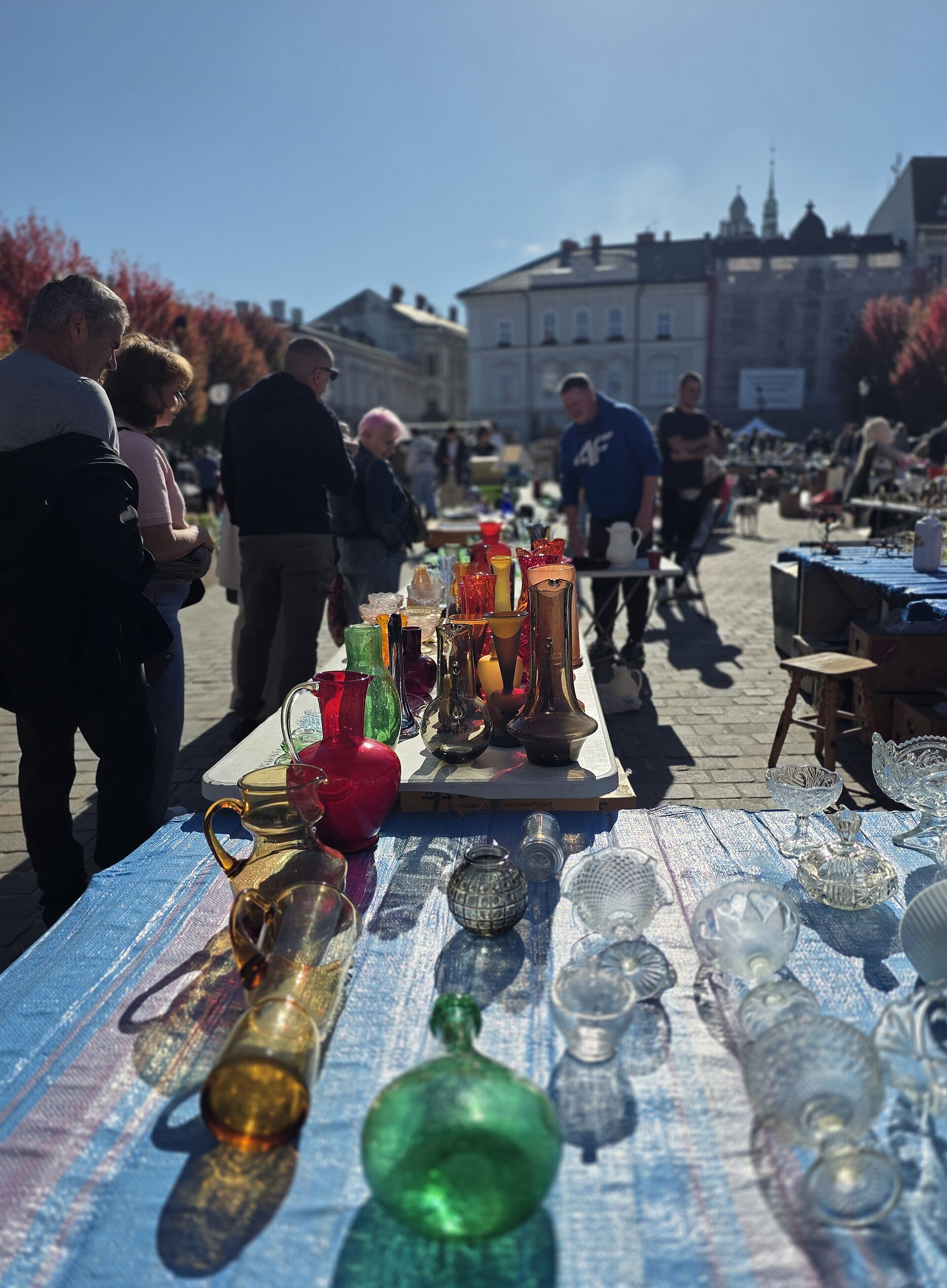
Cover: Bazar na Kole flea market in Warsaw - photo by viiviseppanen, CC BY 2.0, via Wikimedia Commons. Body: Vintage glassware at a flea market in Bielsko-Biala - photo by Auctor quaerendae, CC BY-SA 4.0, via Wikimedia Commons.
Frequently asked questions
What does "pchli targ" mean?
Literally "flea market" - targ is a market or fair, pchli means flea's. You will also hear bazar, gielda staroci (old-stuff exchange) and garażowka (garage sale). All describe the same treasure-hunt format: tables and blankets of second-hand everything, sold by a mix of professionals and ordinary households.
When are Polish flea markets open?
Weekend mornings are the rule. Warsaw's Bazar na Kole runs Saturday and Sunday 6:00-15:00, Olimpia on Sundays, Namyslowska both days until 14:00. Krakow's Plac Nowy market is Sunday morning. Monthly fairs like Ursus run one Sunday a month. The best goods go in the first hour, so set the alarm.
Do I need cash at a pchli targ?
Yes, treat cash as required. Small stallholders rarely have terminals; some take BLIK transfers to a phone number, many take neither. Bring small notes and coins - paying for a 5 zl find with a 100 zl note helps nobody.
Is haggling acceptable at Polish flea markets?
Not just acceptable but expected, especially if you buy several items from one seller. A polite "czy moze byc taniej?" (can it be cheaper?) is the standard opener. Check typical prices online first - sellers at the big markets can spot an inexperienced buyer and quote accordingly.
Can foreigners sell at Polish flea markets?
Yes. Periodic fairs like the Ursus market offer free tables with online registration that opens two weeks before each date; older markets work on an arrive-early basis. For clothes and small items, Vinted and OLX are usually simpler and reach more buyers.