Honey in Poland for expats: miod types, prices, how to buy
The essentials: Real Polish honey from a beekeeper costs roughly 35-75 zl/kg (industry guide, 12.08.2026); cheap supermarket jars are often imported blends. Named varieties - lipowy, akacjowy, gryczany, wrzosowy - mark the flower source. The 2026 harvest was short, so prices are rising.
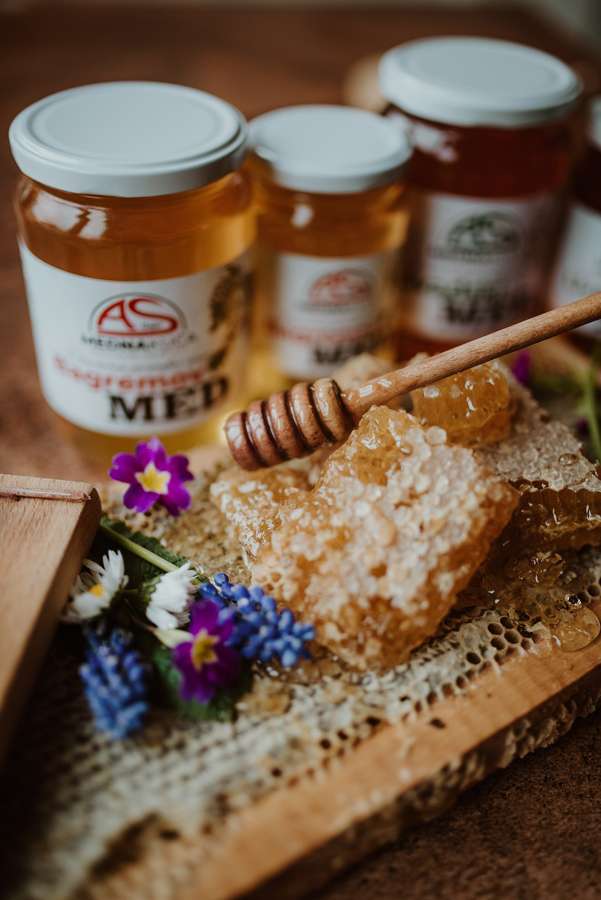
Open any Polish kitchen cupboard and you will likely find a jar labelled with a single word and a flower: miod lipowy, miod gryczany, miod akacjowy. Poland takes honey seriously enough to name it by its blossom, to protect regional varieties with official paperwork, and to argue about where the real stuff is sold. For an expat, the honey shelf is one of the friendliest parts of Polish food culture to explore - and 2026 is an interesting moment to do it, because a difficult season has made good Polish honey scarcer and more expensive. Here is what the labels mean, what honey should cost, and how to buy a jar you will not regret.
The main types on the shelf
Polish honey is sold by variety, and the variety name tells you the flower the bees worked. Learning six words covers nearly every jar in the country.
Wielokwiatowy - multifloral, the everyday blend from mixed meadows and gardens. Mild, versatile, the default for tea and baking. In a short season like 2026 this is what dominates the market, because bees take whatever is blooming.
Rzepakowy - rapeseed honey, from the yellow fields of May. Pale, mild and quick to crystallise into a soft, creamy paste. That crystallisation is normal and desirable - liquid rapeseed honey weeks after harvest would be suspicious.
Lipowy - linden (lime-tree) honey, amber, aromatic, slightly minty, the classic Poles reach for when a cold is coming. One of the most-loved varieties and, in 2026, one of the harder ones to find.
Akacjowy - acacia (actually black locust) honey, almost clear, very mild, and famously slow to crystallise - it can stay liquid for a year. Light and gentle, the beginner's honey.
Gryczany - buckwheat honey, dark as molasses, malty and strong. A love-it-or-leave-it taste and the traditional pairing with mature cheese and dark bread.
Spadziowy - honeydew honey, made not from nectar but from honeydew collected from conifers and deciduous trees. Dark, resinous, less sweet, prized and priced accordingly.
The heather honey with its own paperwork
At the specialist end sits miod wrzosowy - heather honey - and its most famous version comes with official protection. Miod wrzosowy z Borow Dolnoslaskich, heather honey from the Lower Silesian forests, was entered on the Ministry of Agriculture's national list of traditional products on 4 October 2005. The ministry's entry, published on gov.pl on 16 July 2018, describes a honey unlike any other on this list: amber-tea coloured, running to dark reddish-amber before crystallisation, with a consistency like a thick jelly - heather honey forms a gel that cannot be spun out of the comb like ordinary honey and is pressed instead. The taste is barely sweet, sharp and slightly bitter, with a strong heather aroma, and the specification requires at least 50% heather pollen, with the Bory Dolnoslaskie version often reaching 80%. It is the connoisseur's jar, and in retail it can pass 90 zl per kilogram.
Why 2026 honey is scarce and getting pricier
If your favourite variety is missing from the market stall this autumn, it is not your imagination. The 2026 beekeeping season was rough. According to an assessment by the National Institute of Plant Protection cited in an industry analysis published on 20 October 2026, a cold April, frosts, wind and local drought limited both nectar production and the number of days bees could fly. Blossoming did not guarantee harvest: even abundant flowers gave little when temperatures and humidity were wrong. Acacia and rapeseed honey were hit hardest, and many apiaries that reliably produce linden honey in normal years came up short.
The market flipped as a result. Portal Spozywczy reported on 28 September 2026 that the Polish honey market moved from surplus to shortage within months: buyers' warehouses stand empty, and the secretary general of the Polish Chamber of Honey, Przemyslaw Rujna, told the portal that prices can rise but there is simply no honey to buy. The president of the APIS beekeeping cooperative, Radoslaw Janik, said his company had for the first time written to regional beekeeping associations asking for help sourcing Polish honey - with little response so far. Expect the effects in your shopping basket through the winter: less varietal choice, and upward pressure on prices.
For the expat shopper the practical consequence is simple. If you have a favourite varietal honey, buy it when you see it this winter rather than waiting for a better price later. And if a stall or shop has run out of akacjowy or lipowy entirely, that is the season talking, not a permanent change - the 2027 harvest depends on next spring's weather, and beekeepers will be watching it just as nervously.
What real honey costs
Price is your first quality filter. A beekeeping-industry guide published on 12 August 2026 puts authentic Polish honey bought directly from a beekeeper at roughly 35-75 zl per kilogram, with heather honey above 90 zl/kg in retail, and estimates the real production cost in a Polish apiary at 30-40 zl/kg. The arithmetic follows: a jar selling for 15-20 zl/kg cannot be local craft honey at that cost base, and such cheap products are typically imported blends. Supermarket data tells the same story from the other side - a price-tracking service that monitored 62 honey listings across six Polish chains between 22 May and 16 August 2026 recorded a median of about 25 zl/kg on promotion. Promotions are fine for baking honey, but if you want the named variety from a named apiary, expect beekeeper prices.
One practical trap: compare prices per kilogram, not per jar. Honey is sold in jars measured by volume, and a litre of honey weighs about 1.35-1.45 kg, so a 900 ml jar holds well over a kilo. Sellers know exactly how confusing that is.
How to buy the real thing
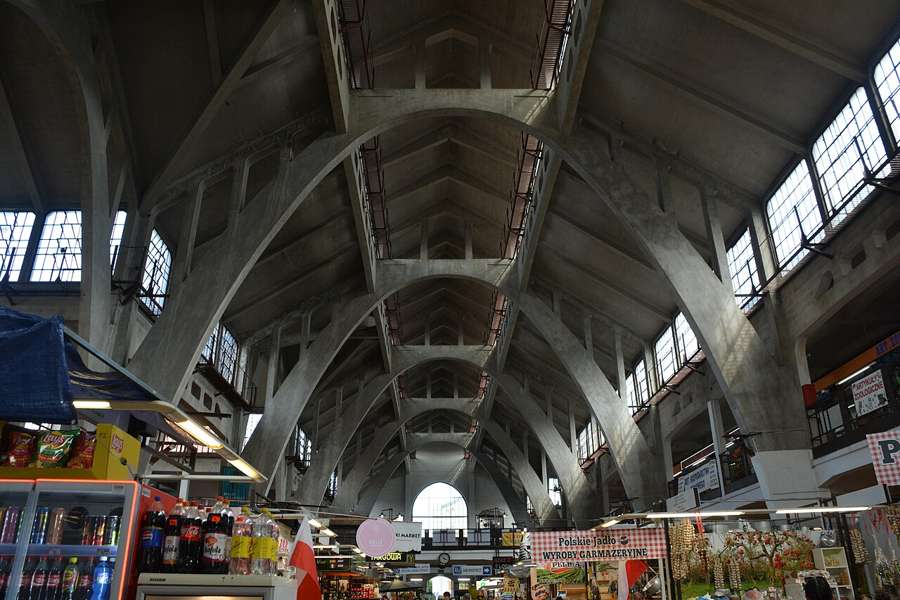
Buy from the source where you can. Beekeepers sell at farmers' markets, market halls, roadside stalls and increasingly online; their jars carry the apiary's name and address. You can ask what the bees foraged on and when it was harvested - a seller who answers confidently is selling their own product.
Read the label. A jar labelled simply miod plus a variety name and a Polish producer is what it claims. The phrase to watch for on cheap products is a blend declaration - honey labelled as a mix of EU and non-EU honeys is an imported blend, legal but a different product from the apiary jar.
Do not fear crystals. Crystallisation is natural and varies by variety: rapeseed sets within weeks, acacia stays liquid for a year, heather forms its gel. A jar of rock-hard gryczany or creamy rzepakowy is fresh honey doing its thing. To reliquefy, warm the jar gently in warm water - never microwave it and never heat above about 40 degrees, which destroys the aromatics you paid for.
Match the jar to the job. Cheap multifloral for baking and marinades is sensible shopping. The varietals - linden for tea, buckwheat for cheese, heather for the experience - are worth the beekeeper price precisely because their flavour is the point.
Honey in Polish life
Honey threads through Polish food culture well beyond the tea glass. It sweetens the Christmas Eve compote, glazes the piernik gingerbread of Torun, and becomes miod pitny - mead, the fermented honey wine that Poles will happily tell you predates the Polish state. A jar of good varietal honey is also a standard, always-welcome gift when visiting a Polish home, which is useful knowledge for an expat: show up with miod gryczany from a local beekeeper and you will look like you have lived here for years.
There is also a seasonal rhythm worth knowing. Autumn and winter are peak honey-buying months, when Poles stock up for the cold season and Christmas baking, and when beekeepers' stalls are fullest after the harvest. Late spring is the opposite: old stocks run down while the first fresh rapeseed honey of the new year arrives around June. Buy varietals in autumn, and you shop with the rhythm of the apiary year.
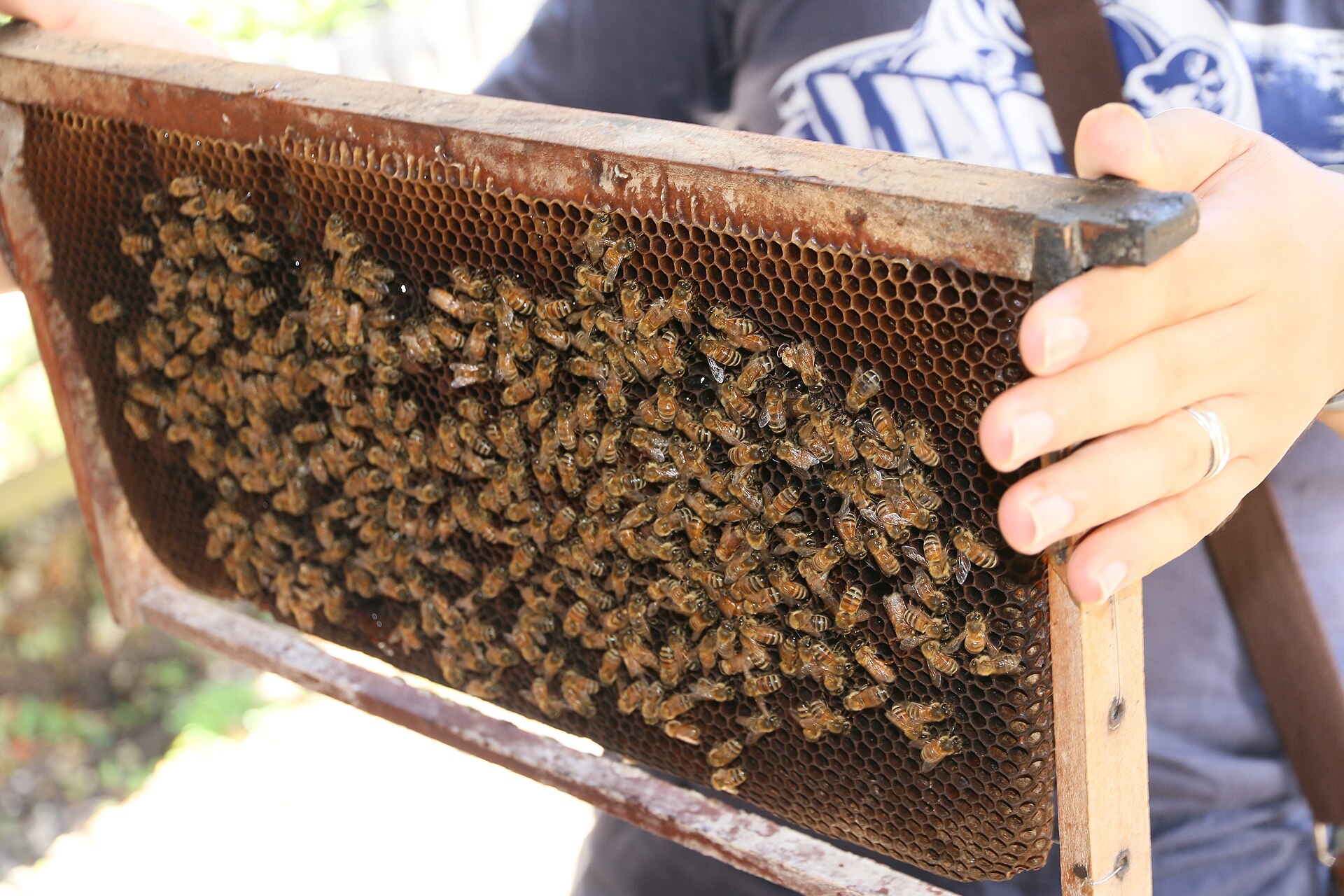
Cover: Jars of honey with comb and dipper - photo by Shixart1985, CC BY 2.0, via Wikimedia Commons. Body: Beekeeper holding a honeycomb frame - photo by Oyvind Holmstad, CC BY-SA 4.0, via Wikimedia Commons.
Frequently asked questions
Which Polish honey should I try first?
Start with lipowy (linden) - aromatic, slightly minty, the classic for tea - or akacjowy (acacia), which is very mild and stays liquid for a year. Move on to the strong personalities later: dark gryczany (buckwheat) and the jelly-like wrzosowy (heather).
Why is my honey crystallised? Has it gone bad?
No - crystallisation is natural and expected. Rapeseed honey sets creamy within weeks; heather forms a gel by nature. Honey essentially does not spoil. To make it runny again, warm the closed jar in warm water and avoid heating it above about 40 degrees.
How much should real Polish honey cost in 2026?
An industry guide from August 2026 puts beekeeper-direct honey at roughly 35-75 zl/kg and heather honey above 90 zl/kg, with production costs at 30-40 zl/kg. After the short 2026 harvest, prices are rising. A jar at 15-20 zl/kg is almost certainly an imported blend, not local apiary honey.
Is cheap supermarket honey fake?
Usually not fake, but often not local either. Check the label for the origin blend declaration - mixes of EU and non-EU honey are imported blends. They are legal and fine for baking, but if you want a named Polish variety from a named apiary, buy from a beekeeper or a market stall with the producer's details on the jar.
What is spadziowy honey?
Honeydew honey: bees collect honeydew - sweet secretions found on trees, especially conifers - rather than flower nectar. The result is dark, resinous and less sweet than nectar honeys, with its own following and a premium price.