Second-hand shopping in Poland: lumpeks, Vinted and vintage guide
The essentials: In Poland lumpeksy (second-hand shops) often price clothes per kilogram on a weekly cycle: 110-130 zl/kg on delivery day, falling to 20-30 zl/kg or a few zl per item by week end (naTemat, 30 September 2026). Go on delivery day for the best finds, at week end for the deepest discounts.
Every Polish city has them: shops with racks of colour-sorted clothes, a smell of detergent and dust, and a queue outside on delivery morning. The lumpeks - Poland's second-hand clothes shop - has been a fixture since the early 1990s, and second-hand shopping has gone from a budget necessity to a mainstream habit embraced by students, vintage hunters and sustainability-minded families alike. For an expat it is one of the cheapest ways to dress well here - if you understand the system. In 2026 that system has a catch: prices have climbed high enough to spark a national debate. Here is how lumpeks pricing really works, what you should pay, and when your phone beats the rack.
The weekly price cycle: the one thing to understand
Most Polish second-hand shops do not price each item individually. They run a weekly cycle anchored to delivery day - dzien dostawy - when fresh stock hits the floor. A price investigation published by naTemat on 30 September 2026 lays out the Warsaw reality: on delivery day, clothes at popular chains cost 110-130 zl per kilogram, and at shops positioning themselves as more upmarket, nearly 200 zl/kg. A few days later the same kilo costs 60-80 zl. By the end of the week it drops to 20-30 zl/kg, and the final days bring clearance at around 5 zl per item. The same logic applies in per-piece shops: the tag colour tells you which week the item arrived, and older colours go on sale.
This creates two valid strategies. Go on delivery morning if you are hunting gems - branded coats, silk shirts, vintage denim - and accept kilo prices at their peak plus a queue of regulars who know exactly what they are doing. Go at the end of the cycle if you want the bargain-bin prices the lumpeks legend is built on, and accept that the racks have been picked over. Midweek is the compromise: decent choice, falling prices, no queue.
The kinds of shops you will meet
Second-hand in Poland is not one format but several, as a sector guide from secondhandy.com.pl (29 July 2024, updated for 2026 pricing) breaks down.
Commercial lumpeksy are the default: chains and independents buying used clothing by the tonne from Western European wholesalers, sorting it, and selling by kilo or by piece. Quality ranges from near-new to tragic, sometimes on the same rack.
Charity shops run by non-profits sell donated clothes at lower prices, with proceeds funding their work. The stock is more random but the prices are the gentlest in the market.
Vintage boutiques curate rather than sort: specific decades, designer labels, cleaned and steamed stock - at boutique prices. This is where you go for a 1970s Polish wool coat, not a cheap jumper.
Kilo shops are the purest form of the format: everything by weight, big bins, minimal merchandising, maximum rummaging.
Online rounds it out, and it is no longer the side channel - for many Poles it is the main one, as we will see below.
The 2026 price debate: is the lumpeks still worth it?
You should know before your first trip that the lumpeks of legend - a bag of branded clothes for 30 zl - is not what it was. The naTemat investigation captured the mood: an influencer's receipt showing two used items for 150 zl went viral, and the article documents worn sweaters and plain t-shirts priced at or above the cost of new equivalents in the chain stores. Fast fashion has flooded the second-hand stream itself, so the rack now holds a lot of polyester that was cheap when it was new.
The practical conclusion is not to skip the lumpeks but to shop it with a price anchor. Know what a new t-shirt costs at the mall. Touch the fabric, check the label, and treat anything priced above a new equivalent as a style choice, not a saving. The gems still exist - wool, silk, leather, proper vintage - but they are found, not given. The end-of-cycle clearance remains genuinely cheap: 5 zl items and 20-30 zl kilos are real prices, not nostalgia.
Vinted: the rack in your pocket
The biggest shift in Polish second-hand is digital. Vinted, the Lithuanian peer-to-peer app, has become a national habit. According to a company report covered by Business Insider on 25 May 2026, Vinted users saved 21.6 billion euro across Europe in 2025, paying on average 72% less than original retail prices. The Poland-specific numbers show how deep the habit runs: 86% of users say they check Vinted before buying anything new, 56% report at least a quarter of their wardrobe is second-hand, and 76% of transactions on the platform replace the purchase of a new item. Women's jeans were the biggest saver category, at 75% below retail on average.
For an expat, Vinted works smoothly in Poland. Sellers ship primarily through the paczkomat parcel lockers covered in our delivery guide, buyers pay a small buyer-protection fee per transaction, and the interface handles English. It beats the lumpeks when you want a specific thing - your size in a known brand, a winter jacket of a particular model - because you search rather than rummage. The lumpeks beats Vinted on absolute price at clearance and on the thrill of the find. Most experienced second-hand shoppers here use both.
What the labels tell you
Regulars flip the label before anything else. Natural fibres - wool, cashmere, silk, linen, thick cotton - survive a previous life far better than polyester and hold value no kilo price can argue with. Western European and Scandinavian high-street labels dominate the racks, but the real finds are older: made-in-Italy tailoring, Austrian loden coats, and Polish brands from before the fast-fashion era. A faded tag with a country of manufacture you respect is worth more than a shiny one you do not. If the fabric pills, the seams pucker or the knit has lost its shape, put it back at any price - cheap and bad is still bad.
How to shop a lumpeks like a local
Learn your shop's delivery day. Ask at the counter or check the shop's Facebook page - every lumpeks announces its dostawa. That is when the best stock appears, and the regulars queue before opening.
Dress for rummaging. Fitting rooms exist in bigger shops but are scarce in small ones. Regulars wear thin layers and try things on over their clothes in the aisle. Nobody blinks.
Inspect before you pay. Check underarms, cuffs, zips and seams in good light. Returns generally do not exist. Kilo pricing means a heavy coat can cost more than three light shirts, so weigh your haul mentally before the till.
Pay any way you like. Card and BLIK are accepted almost everywhere in cities; a few zloty coins still help at church-basement charity shops.
Wash before wearing. Everything, always, at the highest temperature the fabric allows. This is universal practice, not squeamishness.
Sell as well as buy. When your own clothes cycle out, Vinted and OLX turn them back into money, and the businessinsider-cited report shows Poles increasingly factor resale value into what they buy - 63% of Polish sellers say so. The wardrobe here is circular, and joining that loop is one of the more local things you can do.
Beyond clothes: pchli targ
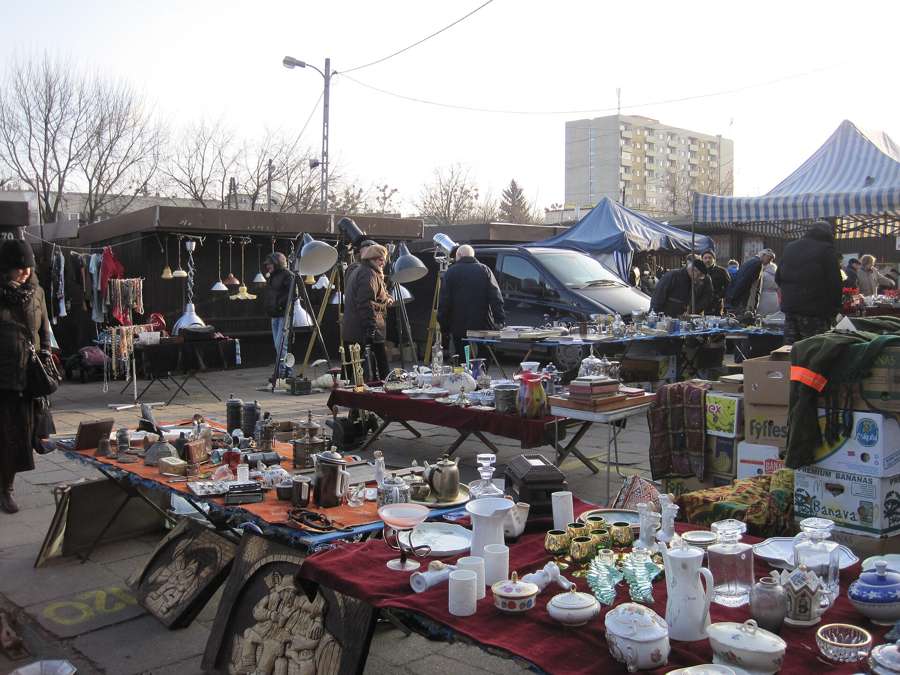
When you hear pchli targ - flea market - that is a different animal: weekend markets of furniture, books, militaria, porcelain and general treasure, from Warsaw's Bazar na Kole to Krakow's Plac Nowy stalls. The lumpeks sells clothes by the kilo; the pchli targ sells everything else by negotiation. Both reward the same skills: show up early, know your prices, and enjoy the hunt.
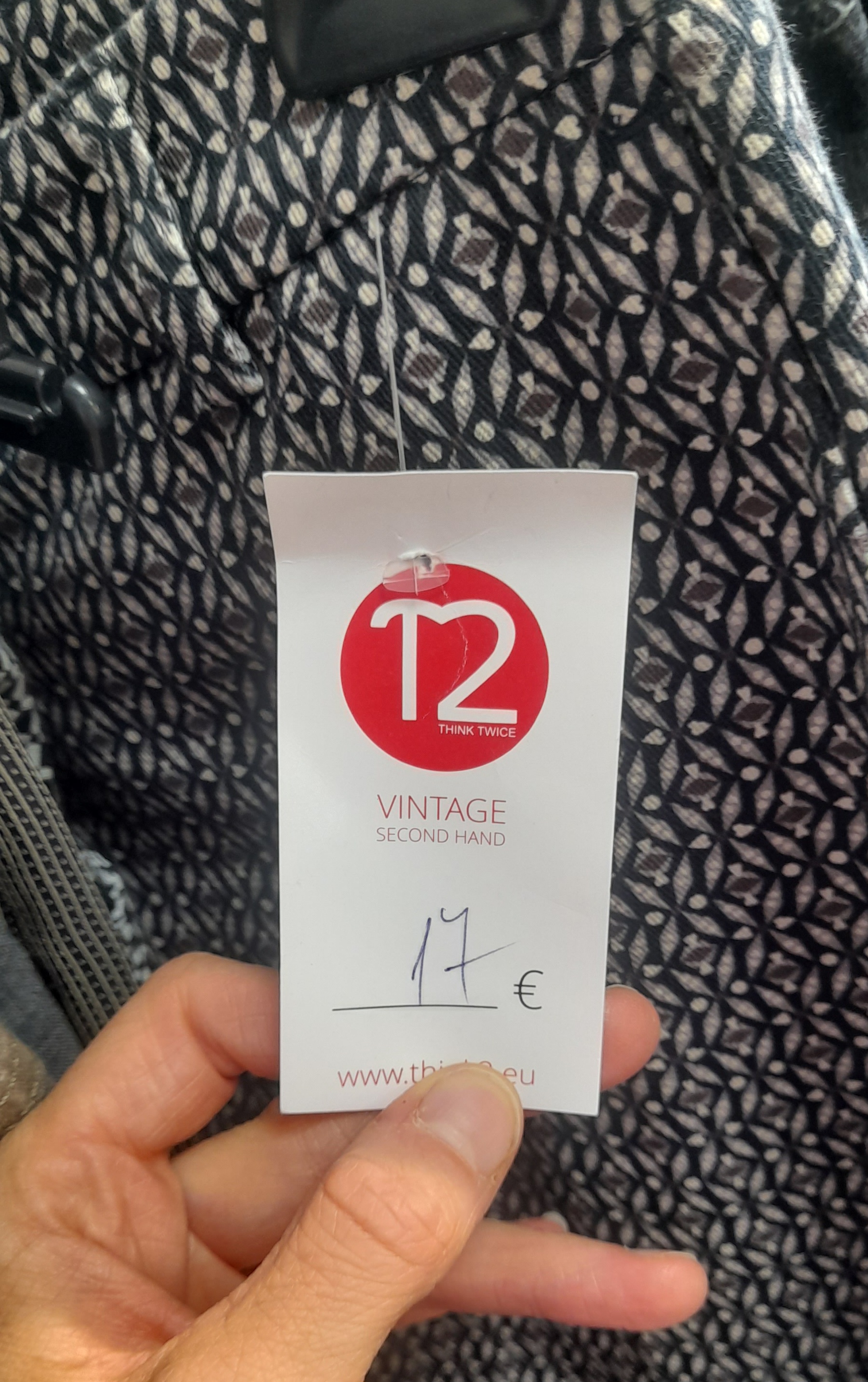
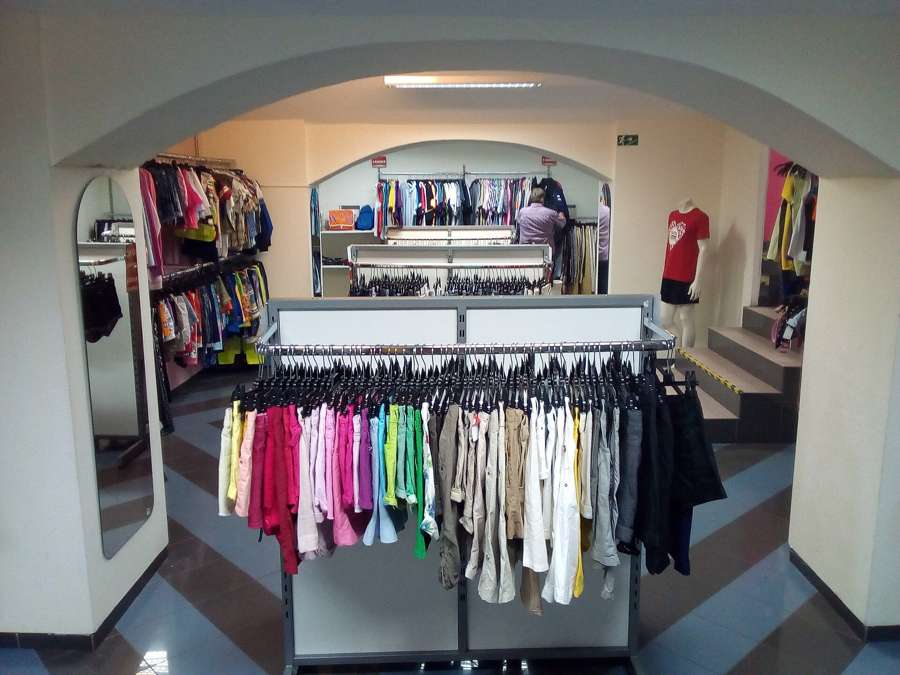
Cover: Inside a second-hand shop, clothing racks - photo by MAKY.OREL, CC BY-SA 4.0, via Wikimedia Commons. Body: A vintage second-hand price tag - photo by Mictlancihuatl, CC BY-SA 4.0, via Wikimedia Commons.
Frequently asked questions
What exactly is a lumpeks?
A second-hand clothes shop. The word is slang with old roots - it once meant a rag fair - and today covers everything from charity shops to kilo outlets. Most stock is used clothing imported in bulk from Western Europe, sorted and priced in weekly cycles.
How does per-kilogram pricing work?
Instead of tagging each item, the shop weighs your finds at the till and charges by the kilogram. The kilo price is highest on delivery day - 110-130 zl in Warsaw in autumn 2026, per naTemat - and falls through the week to 20-30 zl, with final clearance at a few zl per item.
What is the best day to go to a lumpeks?
Delivery morning for the best selection at the highest prices; the last day or two of the cycle for the deepest discounts on picked-over stock; midweek for the balance. Ask your local shop when its dostawa (delivery) is - it is their busiest day.
Is Vinted really that popular in Poland?
Yes. Per a 2026 company report, 86% of Vinted users check the app before buying new, and purchases averaged 72% below original retail in 2025. Sellers ship via parcel lockers, buyers pay a small protection fee, and the app works in English.
Can I sell my own clothes in Poland?
Easily. Vinted and OLX are the main channels - list with photos, ship via a parcel locker when sold. For bulk clear-outs, some lumpeksy buy or accept donations, and charity shops take clean clothes gladly.