Food Allergen Labels in Poland: A Packaged-Food Guide
The essentials: Find składniki, read the full ingredients list and highlighted allergen sources, then check separate precautionary wording. Może zawierać means may contain. Follow your own avoidance advice and resolve important uncertainty before eating.
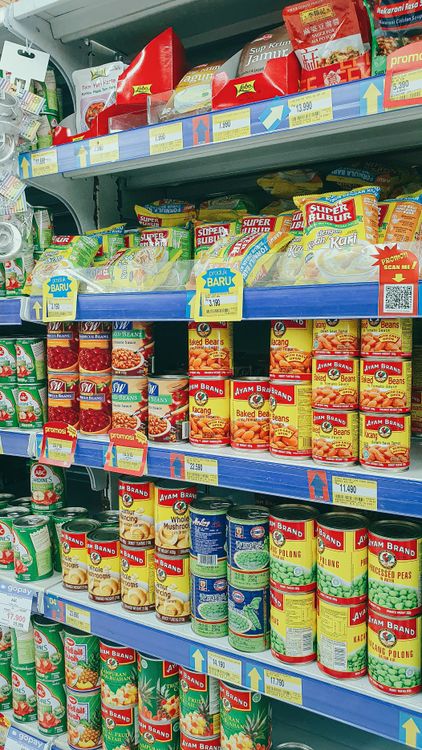
Cover: Laudia Tysara, source photograph, Pexels License. Image unchanged. Packaged groceries on store shelves. General packaged-food context, not an example of a compliant Polish allergen declaration.
A Polish food package can be familiar enough to recognise and still be difficult to check for an allergen. The front may show a dish you know, while the information that matters sits in a small ingredients panel. For a newcomer, the useful skill is not guessing which Polish foods usually contain milk, wheat or nuts. It is learning how the actual packet names ingredients, highlights regulated allergens and separates ingredients from precautionary warnings.
This guide concerns packaged-food label reading. It is not an allergy diagnosis, treatment plan or a recommendation that any particular product is safe for an individual. Use the avoidance advice given by your healthcare professional, and do not experiment with a food when important information remains unclear. The general shopping photographs are not Polish allergen-label examples or endorsements of the products shown.
Start with składniki, not the photograph on the front
Składniki means ingredients. GIS explains that food marketed in Poland must be labelled in Polish, although other languages can appear as well. The ingredients panel is therefore an important place to start even when a product has an English name. A foreign-language brand name does not tell you which language will carry the full information you need.
Allergenic ingredients covered by the labelling rules must be highlighted in the ingredients list, for example using a different typeface, style or background. The emphasis may be bold or capitals, but do not expect one identical design on every pack. Read the words as well as looking for a visual pattern. A poorly printed or partially covered panel is a reason to seek clarification, not to assume nothing important is there.
Read the full list, including the ingredients of components shown in brackets. NCEZ gives the example of a sauce within a larger product containing egg yolk. A product assembled from several components can carry the relevant allergen inside one of those components. Stopping at the first line or at the main ingredient can miss information that changes your decision.
Learn the words relevant to the person you shop for
A small personal vocabulary is more useful than an attempt to memorise every food name. Mleko is milk, jaja are eggs, soja is soya, ryby are fish, seler is celery, gorczyca is mustard, and sezam refers to sesame. Treat this as a starting aid, not an exhaustive list of possible ingredient forms. Ingredient descriptions can name a source within a longer phrase.
For cereals, the actual source name matters. Official guidance lists wheat, rye, barley and oats among cereals containing gluten, with specified exceptions in the legal list. Useful Polish names include pszenica, żyto, jęczmień and owies; orkisz is spelt, which is a type of wheat. Do not interpret a familiar-looking grain word as a declaration that it is suitable for your needs.
Peanuts and tree nuts are separate groups in the regulated list. Orzeszki ziemne means peanuts; individual tree nuts can be named specifically, such as migdały for almonds or orzechy laskowe for hazelnuts. The broader lesson is to know the actual allergen you need to avoid and the names under which it may appear. A general dislike of nuts and a medically required avoidance plan are different shopping situations.
Understand what the regulated list does and does not mean
The current sanitary-inspectorate explanation identifies 14 groups that require allergen information: gluten-containing cereals, crustaceans, eggs, fish, peanuts, soya, milk, specified nuts, celery, mustard, sesame, sulphur dioxide and sulphites, lupin, and molluscs. Some groups have legal exceptions, and sulphites have a specified concentration threshold. This guide is an introduction, not a replacement for the full legal annex or individual advice.
The presence of a regulated list does not mean those are the only substances to which anyone can react. If the person you shop for needs to avoid something outside the highlighted groups, reading only the bold text is not enough. Use their specific advice and read the full composition. A quick scan for emphasis is a useful first pass, not a universal safety certificate.
Likewise, different needs should not be collapsed into one label shortcut. Milk allergy, lactose-related needs and gluten-related requirements are not interchangeable categories. Avoid deciding suitability solely from a front-of-pack phrase you recognise. If a claim does not answer the exact question you need settled, inspect the ingredients and relevant warnings or ask the manufacturer about that product.
Distinguish zawiera from może zawierać
Zawiera means contains. Where the rules require allergen information for a product without an ingredients list, the relevant declaration can use contains followed by the allergen name, subject to the rules and exceptions. Do not assume every allergen declaration will always look like a bold word halfway down a conventional ingredients list. Read the package as a whole.
Może zawierać means may contain. IJHARS describes such wording as information about possible unintended presence, rather than an ingredient deliberately included in the recipe. Other phrases can refer to possible presence or trace quantities. This distinction tells you why a substance can appear in a warning without appearing as a normal ingredient. It does not mean the warning is unimportant.
IJHARS notes that trace quantity is not a defined numerical amount for each allergen in this context. Do not translate a trace warning into your own safe dose, and do not infer that one wording is less serious than another. If your avoidance plan depends on how to handle precautionary warnings, follow the advice you have been given and ask for product-specific clarification rather than making a supermarket experiment.
Do not turn missing warnings into a guarantee
A label check has limits. The absence of a may-contain statement is not the same as an individual medical assurance about a product. Equally, an unfamiliar package is not automatically unsafe simply because its design differs from one you know. The useful approach is to identify the actual product, read the required information and resolve any material uncertainty before consuming it.
Check the pack each time you buy, including a different size or flavour of a familiar brand. This is a practical precaution, not a claim that any particular manufacturer has changed its recipe. Keeping an old label photo can help you ask a precise question, but it cannot replace the current package. The item in your hand is the one you are choosing.
If a Polish sticker supplies information on an imported product, include it in your reading and keep the rest of the packet available. Do not decide that one language version must be the reliable one when two panels seem to conflict. Ask the retailer or manufacturer to clarify the exact discrepancy. A product code and clear pictures of the relevant panels make that question easier to answer.
Keep the information with the food
For a shared kitchen, preserve enough packaging to identify what is in a container after it has been opened or decanted. A jar labelled only cereal or snack may be convenient for storage, but it strips away the ingredients and precautionary information. Keep the original packet or an accurate record tied to the actual contents. Do not mix different products and assume an old label describes the result.
When buying for someone else, ask what information they need rather than deciding on their behalf that a warning is probably harmless. Send a clear view of the actual ingredients and warning panel if they want to check it. A photograph of the front alone often answers the wrong question. The goal is to help them make their own informed choice within their established requirements.
For children or a household with several people, make the distinction between a product checked for one person and a general household product clear. This is organisational advice, not a claim that a sticker can prevent cross-contact or replace appropriate food handling. Label-reading is one part of a broader avoidance routine, and it cannot settle every kitchen risk on its own.
Ask a question that can receive a precise answer
If you need help, identify the full product name, size, variant and any relevant batch information before contacting the retailer or manufacturer. State which ingredient or warning you cannot interpret. Asking whether a brand is safe is much less specific than asking what a particular warning on a particular pack means. Do not consume the product while a consequential answer remains unresolved.
A useful Polish starting question is Czy ten produkt zawiera mleko?, meaning Does this product contain milk? Replace the allergen only with the term that actually matches your need. For possible unintended presence, show the exact wording rather than relying on a memorised sentence alone. This guide does not promise that a shop worker can answer a technical manufacturing question.
Keep the routine simple: find składniki, read the complete panel, identify the highlighted sources, read any separate precautionary wording and check that the information answers your own requirement. If it does not, choose a product you can assess or obtain a reliable clarification. Confidence should come from the information, not from a familiar picture, a shelf position or an assumption that a small amount cannot matter.
Frequently asked questions
What does może zawierać mean?
It means may contain, referring to possible unintended presence rather than an ordinary recipe ingredient. Do not convert it into your own safe dose.
Is reading only the bold text enough?
No. Read the complete panel and warnings against the actual needs of the person eating. Not every individual requirement is covered by the regulated highlighted groups.