Footwear Labels in Poland: Upper, Lining and Sole Materials
The essentials: Read the upper, lining and insole, and outer sole separately. The label distinguishes leather, coated leather, textile and other materials. Composition information is not a fit, waterproofing, care or protective-performance guarantee.
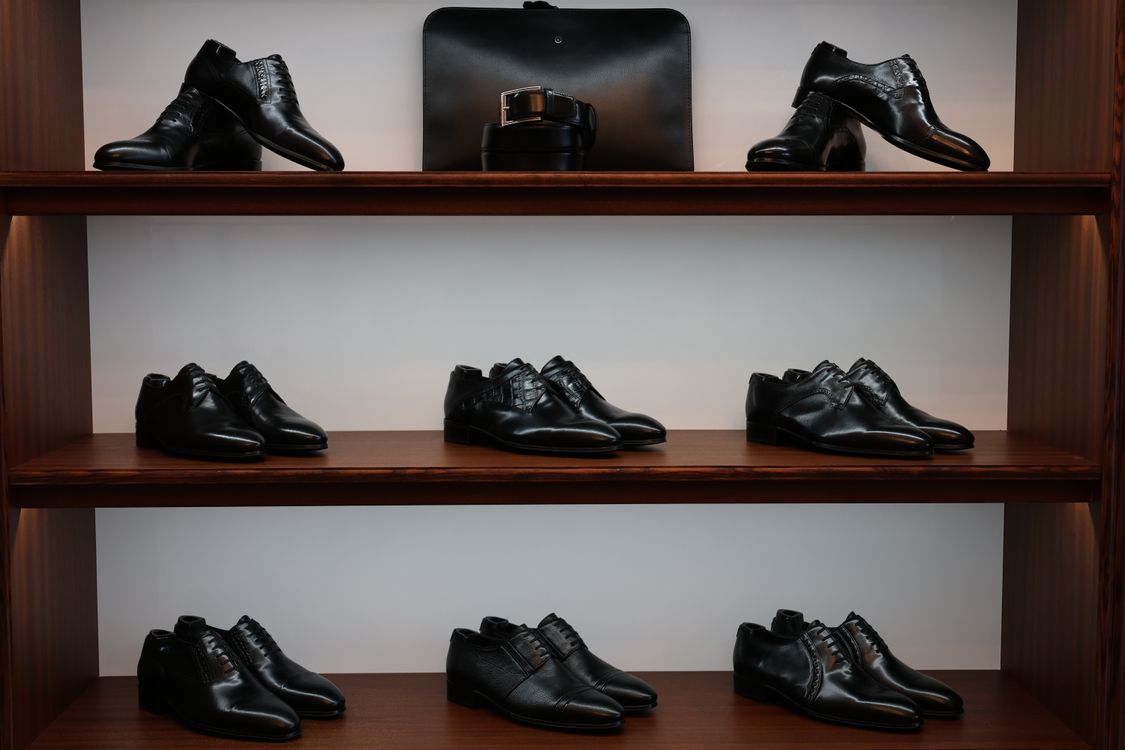
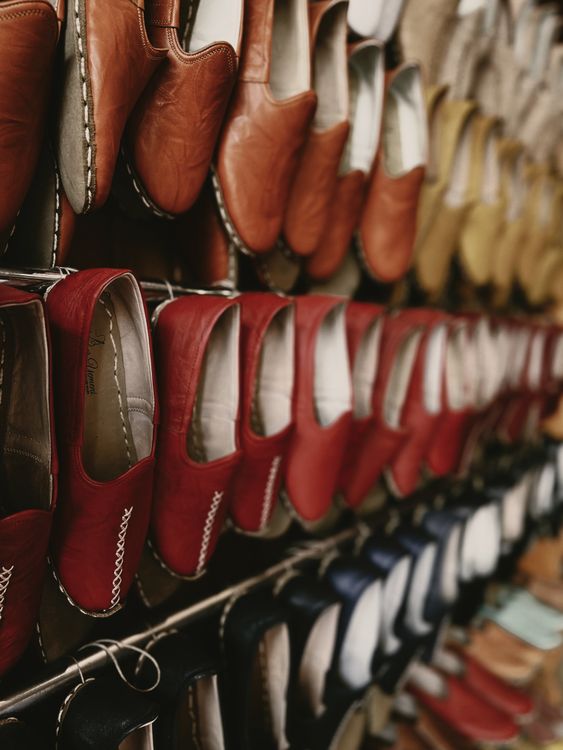
Cover: Tahir Xəlfəquliyev, source photograph, Pexels License. Image unchanged. Shoes displayed on shop shelves. General footwear context, not verified material declarations or a Polish location.
A shoe can look like one material while containing several. The outside, the surface around your foot and the part that meets the pavement have different jobs. The small material label helps you separate them. Reading only a shop's headline, such as leather boots or textile trainers, can miss the part you actually care about.
In Poland, start with the same European material-labelling framework used across the EU. This guide explains the ordinary shopping question: which materials are declared for which parts of the shoe? It does not choose protective footwear, diagnose a foot problem, prescribe shoe care or promise that a material will be waterproof, comfortable or durable.
Find the material information before comparing pairs
Look inside the shoe, underneath it, on an attached label or on the packaging supplied with the pair. The European Commission's guidance says the information can be printed, stuck, embossed or tied to the footwear. It must be visible, securely attached and accessible. At least one shoe in the pair must carry the label; do not assume the other shoe supplies a different composition because you cannot find a second copy.
An online listing may put materials in a specification tab rather than the first description. Open that section before choosing between models. If it says only leather shoe, ask which part is leather and where the information for the lining and sole can be found. That is a more precise question than asking whether the shoe is real.
Keep the model and colour in view. Retailers can sell similar-looking models with different constructions. A label photographed for another pair in the range is not necessarily evidence about the pair in your basket. Compare the actual label or the seller's information tied to that exact product.
Read the three components separately
The first part is the upper, called cholewka in Polish. This is the outside construction above the outer sole. The material declared here does not automatically describe the lining, insole or sole. A leather upper therefore does not establish that every surface of the shoe is leather.
The second part is the lining and insole, often described with podszewka and wyściółka. This concerns the inside of the footwear. It is especially relevant if your reason for checking materials concerns what surrounds the foot rather than what can be seen from outside. Do not substitute the upper declaration for this part of the label.
The third part is the outer sole, podeszwa zewnętrzna. It is the bottom component exposed to wear. The material category here answers a composition question, not a complete grip or slip-resistance question. A material label is not a performance test for a wet pavement, a workplace or a mountain route.
When the label uses pictures, first identify the component picture, then read the material picture beside it. Avoid reading a line of symbols as if it described one continuous material. When the meaning is unclear, ask the seller to identify each component in words rather than guessing from the shape alone.
Know the four material categories
EU footwear guidance distinguishes leather, coated leather, textile and other materials. In Polish descriptions, skóra refers to leather, while skóra powlekana refers to coated leather. Materiały włókiennicze indicates textile materials. Inne materiały means other materials. The fact that two categories look similar in a shop does not make their label names interchangeable.
Coated leather is a separate category in the European framework. If the distinction matters to you, ask for the declared category rather than relying on a sales phrase or the feel of the surface. This guide does not offer a home test for identifying leather or measuring a coating.
Textile is also a broad category. It does not, by itself, tell you that the textile is cotton, wool or a particular synthetic fibre. Similarly, other materials is not a detailed chemical recipe. A shopper who needs more detail should ask about the exact model and component rather than filling in an unprinted answer.
Marketing descriptions can add useful information, but they are not a replacement for the component label. Read the formal material categories first. Then decide whether an additional claim, such as a particular lining or a named material technology, has enough product-specific explanation to help your choice.
Understand the 80 percent rule correctly
The European Commission explains the threshold by component. For the upper and for the lining and insole, the relevant main material covers at least 80 percent of the surface area. For the outer sole, the threshold concerns volume. If no single material reaches the threshold, the two main materials must be indicated.
This is not an instruction to treat the shoe as a bag of materials and calculate 80 percent of its total weight. Nor does one declared material necessarily mean there are no other materials anywhere in that component. The rule explains why a label can name a main material without listing every small construction detail.
For the upper, the rules also distinguish the main material from accessories or reinforcements. The practical lesson is to avoid treating a decorative patch or visible trim as proof of the whole upper's composition. Read the label, and ask a focused question if the detail you care about is not answered there.
Suppose an invented label declares a textile upper, textile lining and other-material sole. That is three component statements, not a claim that every piece of the shoe is textile. This is a teaching example, not a description of the footwear in the photographs or of a current model sold in Poland.
Separate composition from comfort and performance
Material information narrows down what a shoe is made from. It does not settle fit. Two shoes in the same material categories can differ in shape, construction and intended use. Try or assess the actual pair through the retailer's normal process rather than assuming a material category guarantees comfort.
The label also does not supply a waterproof rating, insulation rating or a promise about how long a sole will last. If a particular activity needs a performance feature, look for information specifically addressing it. Do not turn an ordinary composition label into permission to use fashion footwear as protective equipment.
A personal sensitivity or medical requirement needs more than a broad category if the relevant detail is absent. Ask the seller or manufacturer about the exact component or obtain appropriate professional advice. Do not infer suitability from a smooth lining, a leather headline or the absence of an obvious warning in a photograph.
Do not derive a care method from the material label
Knowing the upper category is useful when reading the manufacturer's care information, but it is not a complete care instruction. The finished shoe can include finishes, adhesives, colour treatments and components not explained by a short composition label. A general material name does not authorise washing, heating or a chemical treatment.
Find the care instructions supplied for the actual model. If they are missing and the proposed treatment could change the shoe, ask before trying it. This guide gives no cleaning recipe, drying temperature, waterproofing procedure or repair method. Those are different questions from reading the material declaration.
Keep a copy of useful product information while it is available. An online listing can change or disappear. A clear photograph of the label, together with the model name, makes a later question easier to explain without relying on memory.
Ask questions that the seller can answer
A useful question names the component: What is the lining and insole material for this model? Another asks where a claim is documented: Does leather in the description refer only to the upper? These questions reduce the chance of receiving a general reassurance that does not address your concern.
If a description and a label seem inconsistent, preserve both before making a conclusion. Check that they concern the same model, size variant and colour. Ask the retailer to explain the difference. Do not publicly declare a product mislabelled solely because a photograph is blurred or a symbol is unfamiliar.
For an online purchase, save the product title and the specification section, not only the attractive first image. For an in-store question, keep the label readable rather than peeling it away before you have understood it. The aim is a clear record of what was declared for the particular pair.
Use a short comparison routine
Begin with intended use. Then identify the upper, lining and insole, and outer sole. Read the declared category for each. Ask whether the information answers your own material concern, and keep fit, performance and care as separate checks.
If two pairs have similar labels, that does not make them identical products. It only means their broad component categories are similar. Decide what else matters to your purchase, such as the shape or the manufacturer's stated use, without assigning qualities that the label does not claim.
Finally, remember the boundary of a label-reading guide. It helps you avoid buying on a vague headline. It cannot verify composition in a laboratory, guarantee personal comfort or certify protective performance. When the answer you need goes beyond the declaration, ask for that answer explicitly before relying on the shoe for the task.
Frequently asked questions
Must both shoes carry a separate label?
EU guidance requires the material label on at least one shoe in the pair.
Does a leather upper tell me the lining material?
No. Read the separate lining and insole declaration.