Foreign Birth or Marriage Certificate in Poland: Recognition Guide
The essentials: EU-issued certificates need no apostille in Poland and can use a free multilingual form instead of translation. Non-EU documents need an apostille from the issuing country, then a sworn translation. Transcription (Art. 104) enters the document into the Polish registry; the post-transcription copy costs 50 zł.
At some point nearly every expat in Poland faces the paperwork moment: a registry office, consulate or bank asks for your birth or marriage certificate - and then asks what else comes with it. Does it need an apostille? A sworn translation? Something called transcription? The answer depends on where your document was issued, and the rules are friendlier than the folklore suggests. This guide lays out the three routes under current Polish and EU law, as of October 2026.
First question: where was the document issued?
Everything branches on the country that issued your certificate.
Issued in an EU member state. You can usually skip the apostille entirely. Under EU rules on public documents, when you present a document issued by the authorities of one EU country to the authorities of another, the receiving authorities must accept it as authentic without an apostille stamp. This covers birth certificates, marriage certificates and certificates of capacity to marry, death, name, divorce, registered partnership, parenthood, adoption, domicile, nationality and absence of a criminal record. One caveat matters: the exemption covers the document's authenticity, not automatic recognition of its legal effects - the contents still have to fit Polish law.
If the Polish office cannot read your document, you have a cheaper option than translation: ask the country that issued it for a multilingual standard form, an official EU attachment that maps the document's fields into Polish. You present the form together with the original instead of a translation. The office can still ask for a certified translation exceptionally, if the form leaves genuine doubts - but for standard certificates it normally suffices.
Issued outside the EU. Two further branches: whether the country belongs to the Hague Apostille Convention (most do), and whether it does not.
*Data source: Your Europe (europa.eu), "Getting your public documents accepted in the EU", accessed October 21, 2026.*
The apostille route for non-EU documents
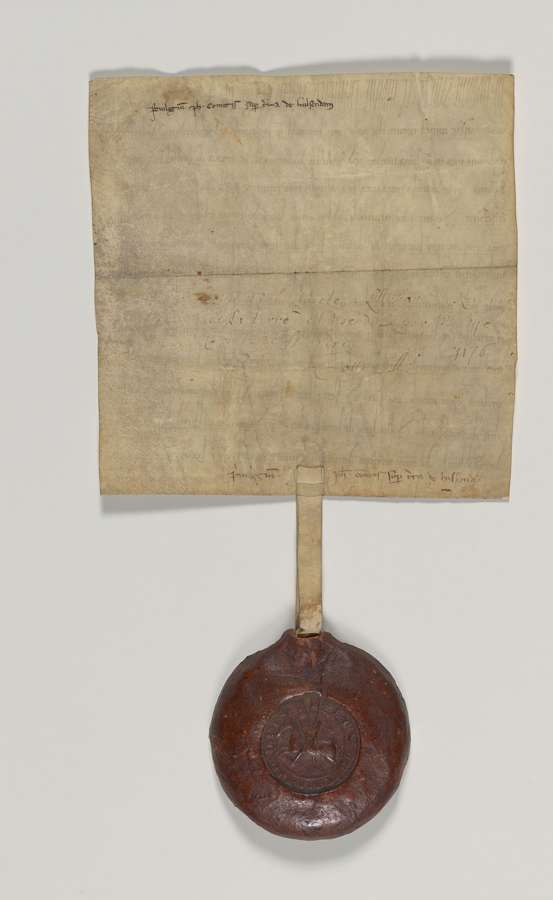
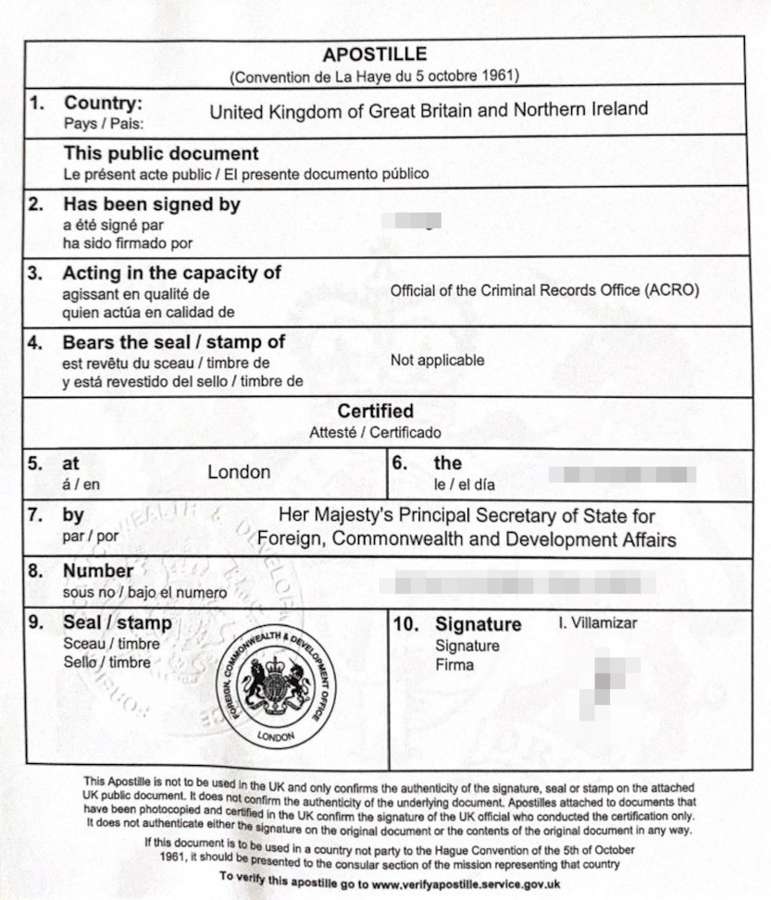
The apostille is a one-page certificate under the 1961 Hague Convention that confirms the authenticity of the signature and seal on your document. Poland has been a party since August 14, 2005, and today the convention covers the great majority of countries expats arrive from - the UK, US, Canada, Ukraine, India, and most of Latin America and Asia.
The point expats get wrong most often: the apostille is issued by the country that issued your document, never by Poland. A British birth certificate gets its apostille from the UK's Foreign, Commonwealth and Development Office; a US document from the relevant state's Secretary of State. You arrange it before travelling or by post, through the issuing country's competent authority - the current list per country sits on the Hague Conference (HCCH) status table. If your document's country is not a convention party, the older route applies: consular legalisation, where a Polish consulate certifies the document instead.
*Data source: HCCH, status table of the Convention of 5 October 1961 Abolishing the Requirement of Legalisation for Foreign Public Documents (hcch.net), accessed October 21, 2026.*
Translation: only a sworn translator counts
Whether or not your document needed an apostille, a Polish office will need it in Polish - and not just any translation. Under Article 31 of the Civil Status Records Act (Prawo o aktach stanu cywilnego), foreign-language documents must be filed with an official translation made by one of exactly three categories: a sworn translator (tłumacz przysięgły) entered on the list kept by the Minister of Justice, a sworn translator authorised in an EU or EEA member state, or a Polish consul. A translation by a friend, an agency without sworn status, or an AI tool has no legal force, no matter how accurate.
Practical notes. Sworn translations are priced per page of 1,125 characters with spaces, and every page carries the translator's seal and a registry number - ask for the original paper version, as offices usually want it rather than a scan. If your language is rare in Poland and no local sworn translator exists, the consular route in Article 31(3) covers you: a consul or an authorised staff member of your country's diplomatic mission in Poland can translate it. Keep the original document, the apostille and the translation permanently stapled together - offices treat them as one bundle.
*Data source: Prawo o aktach stanu cywilnego, consolidated text Dz.U. 2026 poz. 393, Art. 31 (eli.gov.pl), accessed October 21, 2026.*
Transcription: entering your document into the Polish register
Recognition for a single errand is one thing. Transcription (transkrypcja, also called umiejscowienie) is the bigger step: your foreign certificate is transferred, literally and faithfully, into the Polish civil status register, and from then on Polish offices issue you Polish copies of it.
The rules sit in Article 104 of the same act. Transcription is a verbatim transfer of the document's content - linguistically and formally - with no interference whatsoever in the spelling of names: the Polish copy repeats your name exactly as the foreign document shows it. Only a document that counts as an official civil status document in its country of issue, was issued by the competent authority there, and raises no doubts about authenticity qualifies. You apply to any civil registry office (Urząd Stanu Cywilnego) you choose - it does not have to be your local one - and the application can be filed by the person the document concerns or by anyone who shows a legal interest in it. If you apply through a Polish consul abroad, the consul forwards the file to the office you picked.
When is transcription worth it? Typically when Poland needs to keep referencing the event: registering a marriage in the Polish system so a spouse can be recorded, a child's documents for school or passport applications, inheritance matters, or simply avoiding sworn translations over and over - after transcription, every Polish copy costs a flat registry fee instead. Under the stamp duty table, a full copy of a civil status act costs 33 zł, a full copy issued after transcription 50 zł, and a copy issued after registering an event that happened abroad 39 zł.
*Data source: Prawo o aktach stanu cywilnego, Dz.U. 2026 poz. 393, Art. 104, and ustawa o opłacie skarbowej, consolidated text Dz.U. 2025 poz. 1154 (eli.gov.pl), accessed October 21, 2026.*

What offices ask for, in practice
A typical USC transcription file is: the application (the office provides the form), the original foreign certificate, its apostille if the issuing country is outside the EU and a Hague party, and the sworn translation. The head of the registry examines the document and may refuse if it does not meet the Article 104 conditions - authenticity doubts, wrong issuing authority, or content contrary to fundamental principles of Polish law. Refusals on those grounds are uncommon for ordinary birth and marriage certificates, but they are the reason offices scrutinise the issuing authority and the document chain so closely - transcription records the foreign event in the Polish register; it does not, by itself, create new legal status under Polish law.
Names deserve one warning. Because transcription copies names letter-for-letter, any mismatch between your certificate and your passport (diacritics, anglicised spellings, changed surnames) will follow you into every Polish record. Article 104(7) offers a fix only in narrow cases for Polish citizens who also hold Polish-issued acts; everyone else should regularise the passport spelling first.
*Data source: Prawo o aktach stanu cywilnego, Dz.U. 2026 poz. 393, Art. 103-105 (eli.gov.pl), accessed October 21, 2026.*
Frequently asked questions
Does my EU birth certificate need an apostille in Poland?
No. EU countries must accept each other's public documents as authentic without an apostille - this covers birth, marriage, death, name, divorce and several other certificates. If the office cannot read the language, ask the issuing country for a free multilingual standard form to attach instead of paying for a translation. Source: Your Europe, "Getting your public documents accepted in the EU", europa.eu, accessed October 21, 2026.
Where do I get an apostille for a British or American certificate?
Always in the country that issued the document - for UK documents the Foreign, Commonwealth and Development Office, for US documents the Secretary of State of the issuing state. Poland cannot apostille a foreign document. Check the HCCH status table for the competent authority in your country. Source: HCCH, Apostille Convention status table, hcch.net, accessed October 21, 2026.
Can any translator translate my certificate for a Polish office?
No. Under Article 31 of the Civil Status Records Act, only a sworn translator on the Minister of Justice list, a sworn translator authorised in another EU or EEA state, or a Polish consul can produce a translation offices must accept. Source: Prawo o aktach stanu cywilnego, Dz.U. 2026 poz. 393, eli.gov.pl, accessed October 21, 2026.
How much does transcription cost and how long does it take?
The registry fee for a full copy of your act issued after transcription is 50 zł (ordinary full copies cost 33 zł). Processing time is set by the individual registry office - straightforward files at a quiet USC can complete within weeks. Source: Ustawa o opłacie skarbowej, Dz.U. 2025 poz. 1154, eli.gov.pl, accessed October 21, 2026. * Photos: UK apostille certificate by Tidin, CC BY-SA 4.0; civil registry office in Toruń by Mateuszgdynia, CC BY-SA 4.0, both via Wikimedia Commons*