Poland’s Friendly School Programme: What Migrant Parents Can Ask For
The essentials: The Przyjazna szkoła programme supports assistants, school-community wellbeing and staff training through August 2027. It targets qualifying schools with pupils from Ukraine but benefits the wider community. The November conference was staff development, not a new family application route.
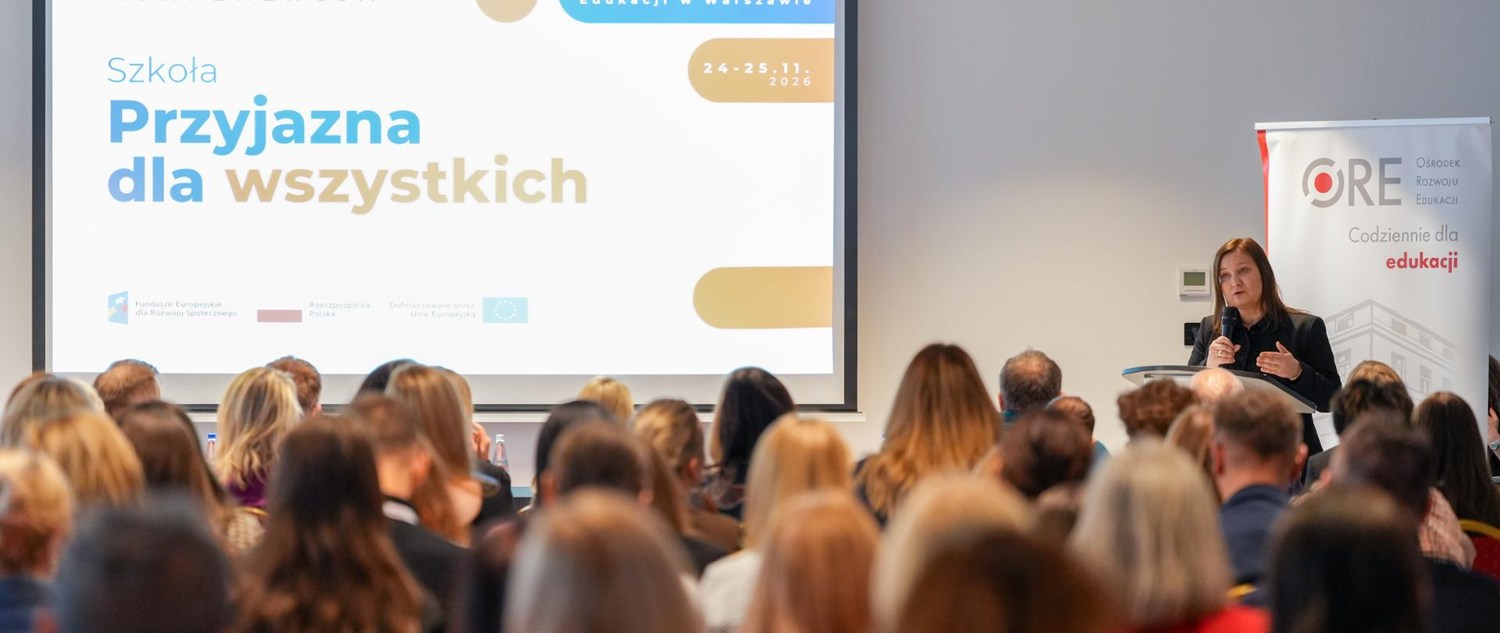
A Warsaw conference on 24–25 November 2026 put a familiar question for migrant families at the centre of the discussion: how can a Polish school help a child learn, settle in and communicate when the family has arrived from another country? The event, Szkoła przyjazna dla wszystkich, was organised by Ośrodek Rozwoju Edukacji, or ORE. Its programme covered language, intercultural assistants, cooperation with parents and the everyday organisation of a multicultural school.
For a parent, the useful news is not a new application form for the conference. It is the wider support programme behind it and the questions it gives you to take to your own school. Staff training, an assistant's work and an individual child's learning support are connected, but they are not the same thing. A conference announcement does not by itself assign an assistant to every child or guarantee a particular service at every school.
What the November meeting was about
The Ministry of National Education says the conference brought together school leaders, teachers, specialists, intercultural assistants, education authorities and organisations supporting schools. Deputy minister Paulina Piechna-Więckiewicz took part in the opening. The subjects included the language used for learning, working with parents and local communities, and the experiences of Roma pupils from Ukraine.
ORE's original invitation placed the event in Warsaw's Arche Hotel Poloneza and set a registration deadline of 15 November. Those details identify a professional event that has now taken place, not an open drop-in clinic for families. Do not travel to its venue expecting a school placement or an individual education decision. The practical route for your child's arrangements remains the school and the authority responsible for it.
The programme behind the conference
The meeting forms part of Przyjazna szkoła, the government's 2025–2027 programme for equal educational opportunities. The ministry describes its main aim as supporting schools attended by pupils from Ukraine, while helping the whole school community feel safe, build relationships and learn. The programme page says its activities run until 31 August 2027.
That description has two parts which should be kept together. The programme has specific school-level conditions connected to pupils from Ukraine. Its benefits are intended to reach a wider community, including pupils with migration or refugee experience from other countries, Polish classmates, parents and teachers. It is therefore too narrow to say that only Ukrainian children can benefit, and too broad to say that every school automatically qualifies regardless of its situation.
Three modules, different jobs
The first module supports the employment of assistants. The second concerns the wellbeing of the school community, including psychological and educational support. The third is professional development for education staff. November's conference belongs to that third module, coordinated centrally by ORE. It is an investment in how staff work, rather than a direct benefit payment to parents.
The distinction helps when asking for information. If you need help communicating with a school, ask about the assistant's role and availability. If the problem concerns adaptation or wellbeing, ask which school specialist or programme service is appropriate. If you are a teacher looking for training, ORE and the programme's regional arrangements are the relevant starting points. One module's publicity is not proof that another module is operating in your particular school.
What an intercultural assistant can help with
The ministry's programme page describes an assistant helping pupils who are not Polish citizens, especially pupils from Ukraine, including Roma pupils. The work includes recognising barriers to adaptation and integration and helping pupils adjust to the realities of a Polish school. It is a bridge between the child's experience and the school environment, not simply another label for a classroom teacher.
The education minister's 29 June 2026 letter also describes an intercultural assistant as supporting integration, communication between school and home, and adaptation problems. For a parent, useful questions are who the contact person is, which languages can be used, when the person is available and how teachers share information with them. Do not assume the school has an assistant merely because the programme exists nationally.
Language for lessons is more than playground conversation
The conference explicitly addressed the language of education. That is a useful distinction for families: a child may chat comfortably with classmates and still struggle to understand a task, explain a scientific process or write an extended answer. Ask teachers for examples of what is difficult, rather than treating a child's general confidence in Polish as a complete assessment.
Bring a specific learning problem to the conversation. Is the child missing vocabulary, misunderstanding instructions, finding written work slow or struggling with a different subject sequence? A precise example makes it easier to discuss suitable help. It also avoids turning every difficulty into a language problem when a child may need subject support, clearer instructions or time to adjust to a new classroom routine.
Use current rules, not an old emergency-school guide
The minister's June 2026 letter explains that, from 1 September 2026, pupils from Ukraine move into the general framework for educating foreign pupils. It identifies Article 165 of the Education Law and the regulation on schooling for people arriving from other education systems as the relevant framework. That makes dates important when a parent finds a helpful-looking guide online.
The same letter sets out additional free Polish lessons for the pupils it describes who do not know Polish well enough to learn through it, at no less than two hours weekly and for no longer than 24 months. It also discusses help from a person who speaks the pupil's country-of-origin language, for up to 12 months, and additional subject catch-up classes for up to 12 months. These are the letter's stated arrangements, not a personalised decision about how a period is counted in your child's case.
Ask how the rule applies to your child
If your child has already received support, give the school the relevant dates and ask it to explain the current plan. Do not assume that a change of school, a new school year or a conference resets every time limit. Equally, do not conclude from an older article that all support has ended. Ask which provision the school is applying and who can explain the decision.
The letter also describes the possibility of a preparatory class where a pupil's needs call for an adapted educational process and organisation. A preparatory class is not automatically the right answer for every newly arrived child. Discuss the child's prior education, Polish-language needs and progress with the school, rather than choosing a route solely because another family used it.
Wellbeing is part of the programme
The second module is called Dobrostan społeczności szkolnej, the wellbeing of the school community. The ministry lists support for pupils, parents and education staff. At central level, the Educational Research Institute, IBE PIB, has a role in materials and the programme's methodical work, while regional arrangements involve provincial authorities and operators.
IBE's materials include a 2026 package on supporting the social and emotional competences of children with migration experience. Its published description identifies a teacher guide, lesson scenarios and information for parents and carers. These resources are a useful way to make a conversation with the school more concrete. They are not a diagnosis of your child or a substitute for an individual discussion with an appropriate professional.
Prepare a short, practical school conversation
Start with what you want the child to be able to do more confidently. Bring one or two examples, such as a task the child could not understand or a message that was difficult for the family to act on. Ask who coordinates language support, how subject teachers will know about the plan and when you will review whether it is helping.
For communication, agree on a workable channel and language. Check how the school sends urgent messages, homework information and invitations to meetings. If an assistant is involved, establish their role rather than assuming they can handle every translation or make every decision. Keep the conversation focused on an arrangement the school and family can actually follow.
Families from outside Ukraine should ask too
The programme page expressly includes the wider school community, including pupils with migration or refugee experience from countries other than Ukraine. That is a reason to ask what is available locally, not a reason to assume nationality never matters to a particular funding condition. Separate the child's general schooling needs from the rules of the particular programme being used.
A useful question is whether the school participates in Przyjazna szkoła and which activities are available to your family. If it does not, ask what support exists under the ordinary education arrangements. The absence of this programme at a particular school does not itself answer every question about Polish lessons, communication help or the child's educational needs.
What to take away from the November conference
The conference shows attention to the daily work of multicultural schools: language, parent relationships, staff skills and integration. Its value for an expat family is as a prompt to ask better, more specific questions. Identify the person responsible, the support available, the rule being applied and the next review point.
Use the ministry's programme page for its structure, ORE for staff-development information and the current school guidance for your child's situation. Keep older emergency arrangements separate from the 2026 school year. A national initiative can support local practice, but the reliable next step is a clear conversation about what your school will do for your child now.
Frequently asked questions
Is the programme only useful to Ukrainian families?
Its school-level conditions are tied to pupils from Ukraine, but the ministry explicitly includes the wider school community, including migrants from other countries.
Does the conference guarantee an assistant for my child?
No. Ask the school about its staff, programme participation and the support arrangements applying to your child.
Sources
- Ministry of Education: November conference,24 November 2026
- Ministry: programme structure,school conditions and support through August 2027
- ORE: conference invitation and original registration deadline
- Minister of Education:29 June 2026 letter on school support from September 2026
- IBE PIB: programme methodical component
- IBE PIB: 2026 social-emotional support materials and parent information
- Ministry of Education: reuse conditions