Kraków’s Polish Aviation Museum With Kids: A Visit Plan
The essentials: The Polish Aviation Museum is a mixed indoor-and-outdoor outing, not a wholly weatherproof attraction. Check seasonal hours, compare family tickets with under-seven free admission, and allow time to reach the entrance from Markowskiego Street.
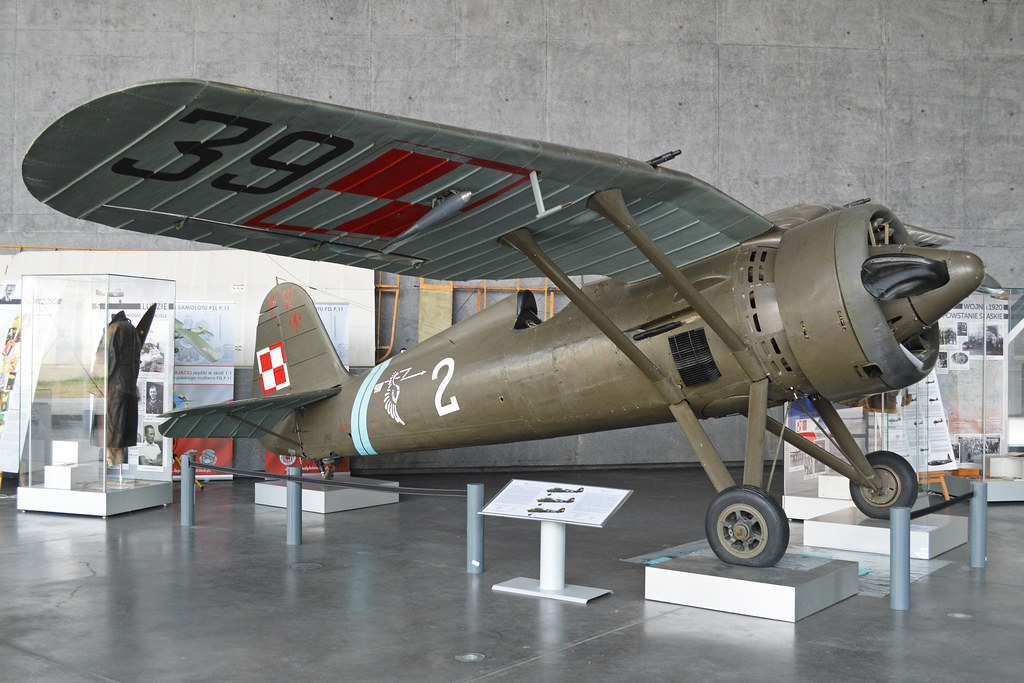
PZL P.11c at the Polish Aviation Museum, photographed on 23 August 2013. Historical display photograph, not a guarantee of the current exhibition layout. Alan Wilson (HawkeyeUK), PZL P.11c '39 / 2', CC BY-SA 2.0. Image unchanged.
Aviation can be a good subject for a mixed-age family because the first questions are visible: why does this machine have that shape, why are some wings straight and others swept, and how did people fit inside? Kraków’s Polish Aviation Museum offers those starting points without requiring a child to know aircraft names before arriving.
It is not, however, a simple indoor attraction where weather can be forgotten. The official exhibition list covers several buildings and an outdoor aircraft display. A practical family plan needs to account for the space between exhibits, the seasonal closing time and the difference between looking at a preserved aircraft and being invited to touch it.
Choose it for aircraft, not for a generic play session
This is a museum collection. Its rules prohibit touching exhibits except those specifically adapted and made available for interactive visiting. In particular, climbing on displayed objects and spinning propellers are prohibited. Tell children this before they see a machine they naturally want to explore with their hands.
The distinction is useful rather than disappointing: looking closely can become the activity. Ask children to compare wing shapes, count engines or notice where a pilot would see out. These are suggested observation games that do not require touching the collection, inventing aircraft facts or treating display barriers as optional.
If your child mainly needs unrestricted climbing and running, choose another outing for that part of the day. The museum works better when everyone arrives expecting preserved machines, shared paths and limits around objects, rather than a transport-themed playground.
Plan for indoor and outdoor sections
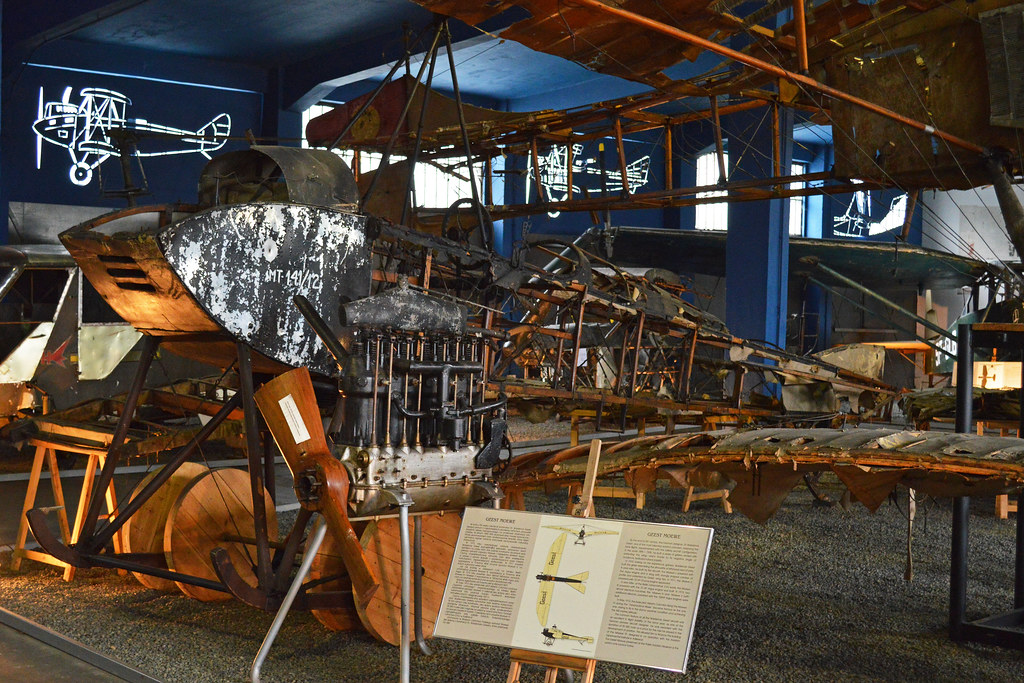
The official regulations list aircraft in the main building, exhibitions in several hangars, the engine room and other themed spaces, plus the outdoor display. The indoor programme includes subjects such as the First World War, twentieth-century aviation and civil aviation. This gives the visit more variety than simply walking a line of outdoor aircraft.
You still need to move around the site. In November, wet or cold conditions can affect how long children want to remain outside. Wear layers and shoes suitable for the actual forecast, and plan the outdoor section while attention and comfort are still good. That is a practical suggestion, not a guarantee that every building is heated to the same level or every path is equally sheltered.
The museum warns about uneven surfaces and other features of the historic site. In winter, visitors must use designated paths. If a pushchair, wheelchair or limited walking range is part of your plan, ask about the route you want to take rather than assuming a general accessibility statement covers every hangar and outdoor display.
Seasonal hours make a real difference
The museum’s 2026 schedule gives Tuesday-to-Sunday opening with ordinary Monday closure. From November through February, hours are 09:00–16:00. March through May and October have 09:00–17:00 opening, while June through September extend to 18:00.
Ticket sales and last entry end 45 minutes before closing. In winter, that means 15:15 is a final-entry threshold, not a sensible target for a full family visit. Arriving just before the cutoff leaves limited time even if admission is still permitted. Work backwards from the closing time and the amount of the collection your children realistically want to see.
The official 2026closure list includes 11 November as well as several other holidays. This is important when planning an outing on a day off: a public holiday does not automatically mean a museum is open. Check the operator’s dated closure list and any exceptional notice before leaving home.
Compare tickets using the children’s real ages
At the source check, standard admission was 35 zł and reduced admission 21 zł. Children under seven were listed as free. The family ticket was 92 zł for either two adults and two children or one adult and three children, subject to the museum’s stated categories.
The family label is not automatically the cheapest answer. For two adults and two children under seven, two standard adult tickets total70 zł, while the children fall within the published free-entry age group. For two adults and two children who need reduced tickets, individual admission totals 112 zł, making the 92 zł family ticket worth considering if its composition conditions fit.
Those are worked comparisons from the published rates, not new offers. A family containing a student, a free-entry child or someone with another entitlement may have a different cheapest combination. Bring the documents needed for the rates you claim and ask before paying if acceptance of a foreign document is uncertain.
The museum lists free admission on Tuesdays, subject to special changes. This can reduce the cost considerably, but does not establish unlimited capacity, open access to every optional service or a guaranteed quiet visit. Check the actual date and any booking arrangements, especially if you are coming with more than one household.
Find the entrance, not just the postal address
The museum’s postal address is Aleja Jana Pawła II 39, Kraków, but its visitor information directs access from Markowskiego Street. The same page explains pedestrian access from the Jana Pawła II side via Markowskiego and past Gnysia Street. Save the entrance instructions before travelling so that a correct address does not still leave you searching along the edge of the grounds.
The operator lists the Muzeum Lotnictwa Polskiego tram stop among public-transport options. Use a current city journey planner for the actual route and service rather than copying a tram number from an older guide. Allow time for the walk after leaving transport, especially with younger children or in winter weather.
For drivers, the museum currently identifies free parking on Markowskiego and Gnysia streets and along the access road. It also provides specific arrangements for visitors with disabilities, including contacting the coordinator or security to arrange the most suitable access. Free parking does not mean a particular space is reserved for your arrival; have a fallback if availability matters to your plan.
A route for a first family visit
Start by checking the day’s accessible areas with staff. Maintenance or other circumstances can close parts of the museum, and the official rules allow restrictions. An old site map can help with orientation but should not overrule a barrier or current instruction.
Then choose a small number of priorities. One family might focus on engines and civil aviation; another may want the outdoor aircraft and a single hangar. Keeping a short list makes it easier to spend time on a favourite without feeling that every remaining building is unfinished business.
For planning, a few hours is a reasonable editorial starting point, including getting around and taking breaks. It is not an official minimum or a promise that a full collection tour fits that time. A dedicated aircraft enthusiast may want much longer; a younger child may do better with one short route and a clear ending.
One useful game is to choose a feature to track across the displays: propellers, cockpit windows, wheels or wing placement. Let the child record similarities by drawing or counting rather than requiring correct model identification. Adults can read a label when a question needs an answer, instead of turning every exhibit into a lecture.
Guides and extras need a separate decision
The visit page lists paid guide services in Polish and in English or German, plus audio-guide options. Do not assume an admission ticket includes any of those services, or that a guide can be supplied on demand. Confirm availability, language, group size, duration and the total charge directly before committing.
The museum also lists workshops and other special activities. Their existence does not make them walk-in additions to every family visit. If a child is coming mainly for a simulator or a model-making activity, establish the exact product and booking conditions before presenting it as a promised part of the day.
For an ordinary self-guided visit, a basic shared plan is often enough. Let the children know whether the main aim is to see large aircraft, compare machines or learn about a period of history. A clear purpose can be more useful than buying another extra to keep the visit interesting.
Food, photographs and finishing well
The regulations prohibit food and drinks in exhibition buildings except designated areas. Plan a break around the permitted arrangements instead of assuming snacks can be opened beside an aircraft. Keep belongings with you and follow staff instructions around accessible machines and historic surfaces.
The museum permits amateur photography and video intended exclusively for private use. Publication or commercial photography has separate consent and fee requirements. If you intend to make content for a business or public project, clarify that with the museum rather than treating a visitor ticket as permission for a commercial shoot.
Finish while there is still enough energy for the journey home. A successful visit might be three aircraft a child remembers and one question they want to investigate, rather than a completed list of hangars. For another low-pressure indoor option on a longer stay, our Kraków library guide explains how newcomers can use a very different kind of city resource.
Keep one question for the journey home
Before leaving, ask each child to choose one machine or detail they would like to understand better. A drawing or a private family photograph, taken within the museum’s rules, can help them remember it. Check the aircraft name from the label rather than guessing from appearance. The follow-up can be as small as looking at how a propeller differs from a jet engine when you are back home. There is no need to solve every question during the visit. Leaving with one specific curiosity gives the outing an ending without turning the final minutes into another rushed circuit of the grounds.
Frequently asked questions
Is the aviation museum entirely indoors?
No. Its official exhibition list includes several buildings and an outdoor aircraft exhibition. Dress for the outdoor part and confirm any route restrictions before visiting.
Can children climb into every aircraft?
No. The rules prohibit touching or climbing on exhibits except those specifically adapted and made available for interactive visiting. Follow signs and staff instructions for any accessible aircraft.