Kraków Library Card for Foreigners: Documents, Borrowing and Legimi
The essentials: Biblioteka Kraków accepts foreign readers using a residence card or passport under its regulations. A card works across its branches, but books must return to the lending branch. Standard loans are 31 days; Legimi codes are limited, not guaranteed.
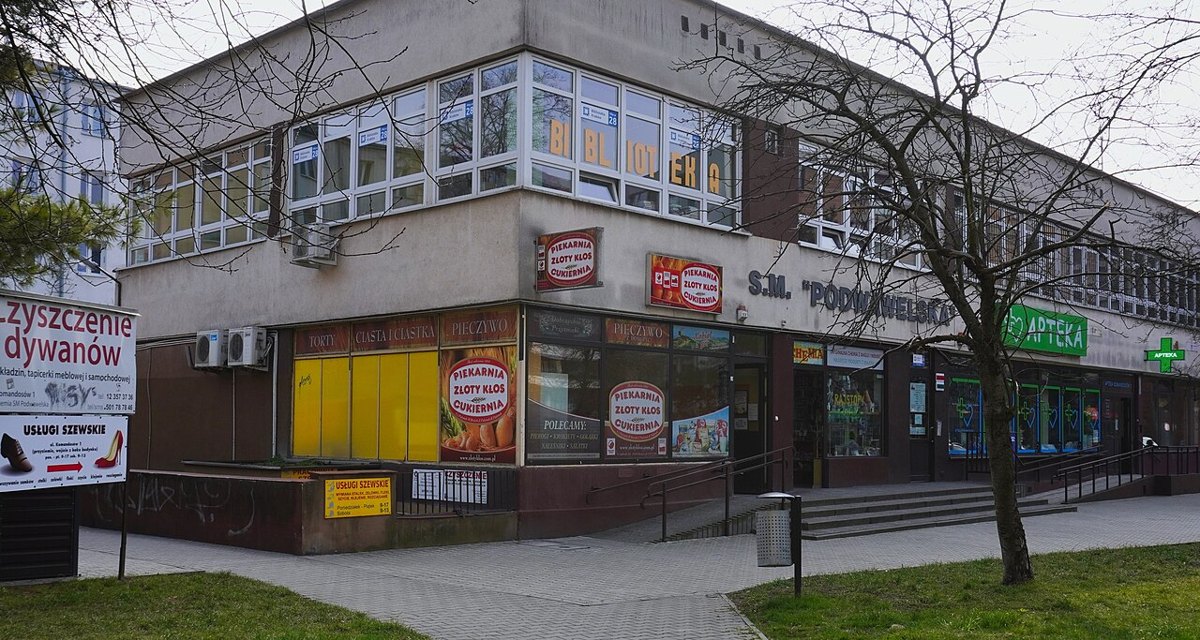
Biblioteka Kraków, Branch 28 on ul. Komandosów, photographed in 2021. Photo: Mach240390 / Wikimedia Commons, CC BY 4.0. Resized and re-encoded.
You do not have to buy every English novel or Polish-learning book you want to read in Kraków. Biblioteka Kraków, the city's public library network, accepts foreign readers and gives members a card usable across its branches. The useful part is knowing which documents to bring, where a particular copy lives and which return rules can catch out a new member.
This guide is based on the library's official practical information, consolidated regulations, fee appendix and Legimi page, checked on 30 October 2026. It also distinguishes the city network from the separate regional library on Rajska. It does not promise that a particular English title, e-reader or monthly e-book code will be available when you arrive.
Start with the right library network
Use the Biblioteka Kraków branch directory to choose a convenient location, then check that branch's current hours and notices. A library card valid throughout this network does not mean every library in Kraków belongs to it. In particular, the foreign-language department at the regional library on Rajska is a separate service with its own arrangements.
Choose your first branch partly for the return journey. Biblioteka Kraków requires materials to go back to the branch from which they were borrowed. A book collected on the other side of town is therefore a future trip, not something you can automatically drop at the library nearest your home. Check the collection location before reserving, especially if you are fitting a visit around work or childcare.
What a foreign reader should bring
The clearest common document route in the official sources is a valid passport. The practical FAQ asks foreign readers for a permanent residence card or passport, while section 1 of the consolidated regulations says residence card or passport. That wording differs on the type of residence card, but both explicitly name a passport. If you intend to use a residence card instead, ask the branch about your document before travelling.
The general registration instructions also mention a photo identity document and PESEL. Do not turn the separate foreigner provision into a blanket promise that no additional information will be requested. Bring your passport, have your current contact details ready and ask the librarian how to complete any field that does not apply to you. This guide cannot settle an individual registration case from the wording of a web page.
At the branch, you read the rules and complete a registration form. The library says staff can help with the form if necessary. A parent or legal guardian signs for a minor and carries the responsibility described in the rules. Before leaving, make sure you understand how to sign into your reader account and how the library will notify you about reservations and return dates.
Online registration is not always the final step
The library's FAQ allows new readers to register through the online catalogue. It draws an important distinction: ordinary remote registration enables reservations and orders, but borrowing materials requires completing registration in person at a branch. The library also offers a separate registration route using Profil Zaufany. Do not assume that creating a catalogue login alone makes you ready to take books home.
For a straightforward first visit, bring the document even if you have already started online. Show the librarian your existing registration rather than creating another account. Add an email address if you want system notices, and check your account yourself rather than treating the arrival of an email as the only reminder that a loan is due.
Find the language and the actual copy
Search the official SOWA catalogue for the title or author you want. Before reserving, check the edition's language, material type, branch and current availability. An English title appearing in search results is not enough to establish that the copy is an English-language edition or that it is ready for collection at your chosen location.
The library explains two useful Polish terms. Rezerwacja concerns a material currently available in the library; zamówienie concerns one already borrowed or reserved by another reader. In either case, wait for the collection notification rather than making a journey on the strength of a search result. For Polish study, also distinguish a language textbook from a novel in Polish and check whether any accompanying material is included.
Can you not find the book? The FAQ points readers to a purchase-suggestion form, Zaproponuj zakup. A suggestion is not a promise that the library will buy it or obtain it by a particular date. If you need a textbook for a course starting soon, keep a separate plan rather than relying on a requested purchase.
Borrowing limits and renewals
The standard limit is five materials from one branch and fifteen in total when using several branches. The rules give ordinary materials a 31-day loan period. Do not read the total limit as permission to take fifteen books from a single branch, or assume that every kind of equipment follows the ordinary book rules.
A renewal depends on nobody else having requested the material. Each renewal extends the return date by 31 days from the day you renew, with a maximum of 124 days from the original loan. The practical FAQ describes up to three renewals and lists the catalogue, library app, in-person contact, telephone and email as routes. Renew before the deadline and check the new date actually recorded on your account.
Renewing early is not necessarily the same as adding a full month to the old due date, because the official wording counts from the renewal date. If another reader is waiting, plan to return the book rather than assuming that you can keep extending it. A quick account check before a trip away is more reliable than remembering roughly when you borrowed something.
Collection deadlines, returns and fees
A notified reservation waits for collection for five days at a branch. For a książkomat, the library's book locker, the collection period is three days from notification that the order has been prepared. These are different deadlines. Follow the notification for your item and do not assume that a locker reservation waits for the same period as a staffed counter collection.
Return materials to their lending branch. The regulations also restrict locker returns to books and audiobooks borrowed from the branch associated with that locker. If you cannot get there, contact the branch about your options before the due date rather than leaving books at another location and assuming the loan has ended.
The fee appendix lists 0.20 zł per book for each overdue day. Other items differ: a board game is 2 zł per overdue day and an e-reader is 5 zł. The duplicate library card fee is 2 zł. Lost or damaged materials are a separate issue: tell the librarian, who will explain the applicable compensation, rather than assuming that paying an overdue charge settles the loss.
Legimi codes: useful, but not guaranteed
Biblioteka Kraków offers a limited pool of monthly Legimi codes for its library package of e-books and audiobooks. The official page says readers must have reached age 13, hold a valid library card and have settled their obligations to the library. Ordinary collection is in person at a branch, with one code per reader per month and allocation in order of requests.
The published schedule lists the next issue date as Tuesday, 3 November 2026. Use that dated schedule rather than assuming that codes always start on the first calendar day. Branch hours and code stock are separate checks. The library explicitly says the same readers are not guaranteed codes each month; obtaining one before does not reserve the next one.
Activate a collected code within the month in which it was issued or it expires. The page describes access for one month from activation. It also warns that some titles labelled Fundacja Krajowy Depozyt Biblioteczny are outside the package the library purchased. Check the current library instructions for your device before collecting a code, particularly for Kindle, where the page describes a ten-e-book monthly limit.
Borrowing an e-reader is a different commitment
The FAQ says e-reader borrowers must be adults with a valid card, complete the relevant declaration and pay a refundable 350 zł deposit. The normal equipment loan described there is 31 days. Availability is not assured, so ask before visiting specifically for a device.
Keep the deposit receipt. For a cash refund, the library asks for at least three days' notice of the intended return and requires proof of payment. The deposit is not a stated cap on responsibility for damage or loss: read the equipment conditions before signing. Inspect the device and ask about anything already damaged or missing before taking it away.
Where to look for more foreign-language books
If the city catalogue does not have what you need, investigate the separate foreign-language department at the regional library, Wojewódzka Biblioteka Publiczna, on ul. Rajska 1. Its official page lists fiction, children's books, language-learning materials, dictionaries and other resources in English and several other languages.
Use that department's own website for access arrangements. The Biblioteka Kraków card, loan limits, fees and Legimi scheme explained above should not be carried over to Rajska by assumption. Keeping the two networks separate is the simplest way to avoid arriving with the wrong expectations, while giving yourself another place to search for something worth reading.
Frequently asked questions
Can a foreigner join Biblioteka Kraków?
Yes. The regulations name a residence card or passport for foreign readers. Both the regulations and FAQ name a passport; ask the branch about any unresolved registration fields or residence-card wording.
Can I return a book to any branch?
No. Return it to the branch from which you borrowed it. Book lockers also have branch-specific return restrictions.
How long can I keep a book?
The standard loan is 31 days. Renewals depend on no other reader having requested it and cannot extend it beyond 124 days from the original loan.
Does a card guarantee a free Legimi code?
No. Codes are limited and issued under the library’s eligibility and collection rules. The library does not guarantee a code to the same readers every month.
Is the library on Rajska part of the same system?
The regional library on Rajska is separate. Check its own membership and borrowing rules rather than applying Biblioteka Kraków rules there.
Sources
- Biblioteka Kraków practical FAQ, undated; checked 30 October 2026
- Biblioteka Kraków regulations and consolidated rules; checked 30 October 2026
- Consolidated regulations with fee appendix, linked October 2026; checked 30 October 2026
- Director order 13/2026, 23 March 2026, effective 1 April 2026; checked 30 October 2026
- Biblioteka Kraków Legimi rules and 2026 schedule; checked 30 October 2026
- Biblioteka Kraków branch directory; checked 30 October 2026
- Biblioteka Kraków SOWA catalogue; checked 30 October 2026
- Regional library foreign-language department, Rajska; checked 30 October 2026