Hit a Wild Animal in Poland? Safe Steps, Reporting and Car Insurance
The essentials: Stop safely, warn other road users and report the collision with its exact location. Do not approach or transport the animal. Your own car damage may fall under AC if the policy covers it; compensation from a road manager is not automatic.
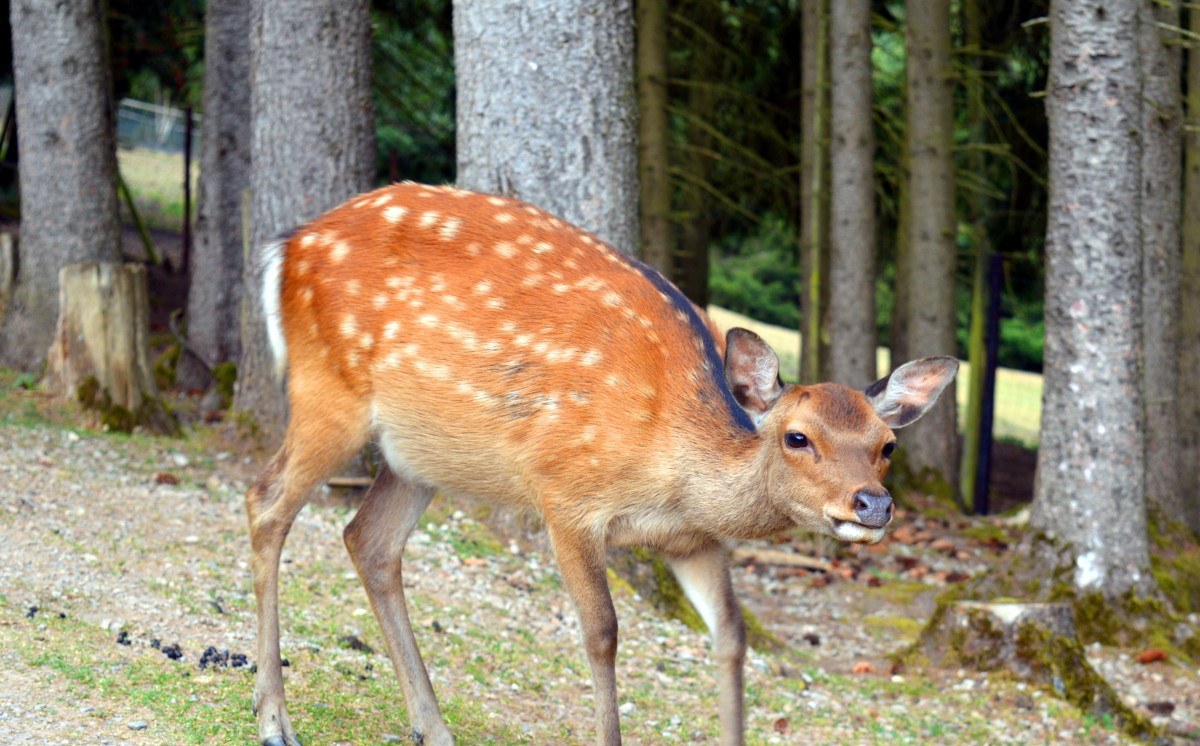
Wildlife illustration, not a photograph of a collision or a verified Polish location. PxHere photo 492487, CC0. Resized and re-encoded.
A deer or wild boar on the road creates two separate problems: keeping people safe now and dealing with the injured animal and vehicle damage afterwards. Do not treat it as an ordinary scrape between two drivers. There is no second driver to sign a joint statement, and the animal may still be dangerous even when it is lying still.
This guide brings together Polish police advice, the Animal Protection Act's reporting provision and the Financial Ombudsman's explanation of compensation. It is practical information checked on 30 October 2026, not a promise that an insurer or road authority will pay a particular claim. If you are at the scene now, deal with safety and reporting before reading about money.
1. Stop safely and report the location
Police guidance says to stop, switch on hazard lights and secure the scene with a warning triangle. Do this without walking into moving traffic or creating another collision. If someone is hurt or there is danger on the carriageway, tell the emergency operator immediately. Follow the operator's instructions rather than trying to solve the whole situation alone.
The Przasnysz Police notice of 18 April 2026 specifically directs drivers to call 112, give their exact location and explain what happened. A road number, direction of travel, nearest junction or town and a location from your phone are more useful than simply saying you are near a forest. Explain whether your vehicle or the animal is blocking a lane and whether other vehicles are involved.
Do not cross a busy road to identify the species. It is enough to describe what you actually saw and say when you are unsure. If the animal has moved away, report that too, including its direction only if you observed it safely. Do not chase it into woodland or assume that running away means it was not injured.
2. Keep away from the animal
Police warn that an animal may be in shock, badly injured or capable of attacking when approached. That warning also applies when it looks dead. Keep passengers, children and dogs away. Taking a close-up photograph, checking for breathing or pulling an animal off the road is not worth another injury.
Pomorska Police's 30 July 2025 guidance says not to take a wild animal from the scene, including in an attempt to help. It describes a driver who brought a young deer to a police station and explains why the right response is to report the incident and let the appropriate services arrange help. Do not put a deer, boar or other wild animal in your boot.
The same notice says services must be notified even when the animal has died so that transport and removal can be handled properly. Tell the operator about the hazard; do not decide that a dead animal makes the incident finished. Stay in a safe place and follow the responding services' directions about what to do next.
3. Understand the duty without attempting a rescue
Article 25 of the Animal Protection Act, in the official consolidated text cited below, says that a driver who has hit an animal must, as far as possible, provide appropriate assistance or notify one of the services listed in the Act. The wording matters: notification is an alternative to attempting physical assistance yourself.
Kutno Police repeat this duty and list the police, veterinary and other relevant services as possible contacts. Their practical advice is to notify through 112 and not approach the animal yourself. The legal commentary in Prawo.pl also explains that failing to provide appropriate help or notify the services can have consequences. This is not permission to leave simply because your car still drives.
Do not confuse that duty with a guarantee about driving liability. Whether the original collision involved an offence depends on its circumstances. Reporting an animal does not erase unsafe driving, and the fact that an animal appeared suddenly does not let this article decide fault. Give a factual account rather than inventing certainty about speed, distance or what another driver could see.
4. A short language card for an emergency call
If Polish is difficult under stress, start with your location and say that you need English. The following phrases are a communication aid, not a script that replaces the operator's questions:
- Potrąciłem zwierzę / potrąciłam zwierzę. I hit an animal.
- Jestem na drodze numer... I am on road number...
- W kierunku... In the direction of...
- Zwierzę leży na jezdni. The animal is lying on the road.
- Są ranni. There are injured people.
- Nie ma rannych osób. No people are injured. Use this only when you know it is true.
You do not need polished grammar to explain an emergency. Keep the phone available, answer questions and correct the location if you discover that you first gave the wrong direction or junction. Do not stop communicating in order to inspect the animal.
5. Collect evidence only when it is safe
The Financial Ombudsman recommends evidence such as photographs or a recording of the place and damage, witness details and a police or municipal-guard note when seeking compensation for road-related damage. For an animal collision, record the time, road, direction and circumstances while they are fresh. Keep any incident reference you are given.
Photograph your car and the wider location from somewhere safe. If warning signs are relevant to a later claim, record what you can without walking along a dangerous road to search for them. Ask willing witnesses for contact details. Save original photographs and your own account rather than relying only on a social-media post or a cropped image.
Contact your insurer or assistance provider and ask what evidence and approval they need before towing or repairs. Do not assume every garage, recovery charge or replacement vehicle is covered. If it is a rental or company car, also use the reporting route in that vehicle's agreement. This guide cannot determine those contract terms for you.
6. OC and AC are different questions
Your compulsory motor OC is third-party liability insurance, not a general fund for repairing your own car after hitting wildlife. For own-car damage, check whether you have AC, often called autocasco, or another relevant own-damage product. UNIQA's guidance explains that animal-collision cover depends on the policy, including for narrower minicasco products.
Read the scope, exclusions, excess and reporting conditions for your actual contract. A product called AC does not establish identical cover across insurers. Tell the insurer what happened and ask for a claim reference and the next steps. Do not accept an online example of someone else's payout as evidence of your own entitlement.
7. A road-manager claim is not automatic
A common shortcut says that if there was no wild-animal warning sign, the road authority must pay. The Financial Ombudsman's explanation is more careful. Responsibility can arise where a relevant danger should have been marked and was not, but the assessment depends on the circumstances and the authority's actions. A missing sign alone does not prove the whole claim.
The Ombudsman discusses fault, damage and a causal connection between the failure and the loss. Establish which entity actually manages the road rather than sending a demand to whichever office is nearest. Preserve evidence of the location and why you believe a duty was not met. Disputed responsibility may need specialist advice; neither a police note nor vehicle damage guarantees payment.
8. If an insurer refuses, ask for reasons
Keep the written decision and check whether it explains the factual and legal or contractual basis for refusal. The Financial Ombudsman advises making a complaint to the insurer when you dispute its assessment and adding evidence or corrections. Its guidance describes possible Ombudsman assistance after an unsuccessful complaint, as well as other dispute routes.
For prevention, police advise extra attention around forests, fields and meadows, particularly around dawn and after dark. Watch for warnings, adjust speed to conditions and remember that one animal may be followed by others. These habits reduce risk, but they do not turn a forest road into a predictable environment. If a collision happens, the priorities remain people, a clear report and distance from the animal.
Before your next journey
Keep your insurer's assistance contact and policy details accessible without depending on a search at the roadside. Check whether the number serves your policy and vehicle, especially if you use more than one car. Knowing that you have roadside assistance is different from knowing that animal damage is insured; ask those questions separately.
After an incident, keep one folder with your account, photographs, reference numbers, correspondence and any towing or repair documents. Note which organisation you contacted and when. If an insurer requests something you cannot safely obtain, explain that rather than returning to a dangerous carriageway. A tidy record helps you answer questions consistently, but it does not establish fault or replace the insurer's assessment of cover.
Frequently asked questions
Should I call even if the animal runs away?
Report what happened and where, including the direction it went if you saw it safely. Do not follow it into the woods. An animal leaving the road does not establish that it is uninjured.
Does my compulsory OC pay for my own damaged car?
Do not assume so. OC is third-party liability cover. Check AC or other own-damage cover and its terms for animal collisions.
Can I take an injured deer to a vet in my car?
Police advice is not to approach or transport wild animals yourself. Report the location and let the responding services arrange the next steps.
Does no A-18b sign mean the road manager must pay?
No. The Financial Ombudsman explains that a claim depends on the specific circumstances, a relevant failure of duty and its connection to the damage.
Sources
- Przasnysz Police, 18 April 2026; checked 30 October 2026
- Pomorska Police, 30 July 2025; checked 30 October 2026
- Kutno Police, undated practical guidance; checked 30 October 2026
- Financial Ombudsman, 9 May 2024; checked 30 October 2026
- Prawo.pl, 14 September 2024; checked 30 October 2026
- UNIQA, insurer guidance, undated page checked October 2026; checked 30 October 2026
- ELI, Animal Protection Act, 2023 consolidated text, Article 25; checked 30 October 2026