HackNation 2026: 15 Winners, Not 15 Live Public Services
The essentials: HackNation 2026 produced 600 projects and 15 winning teams, according to the Ministry of Digital Affairs. Projects include AED location data, a parents' guide and government document tools. They are prototypes, not a confirmed set of live public services.
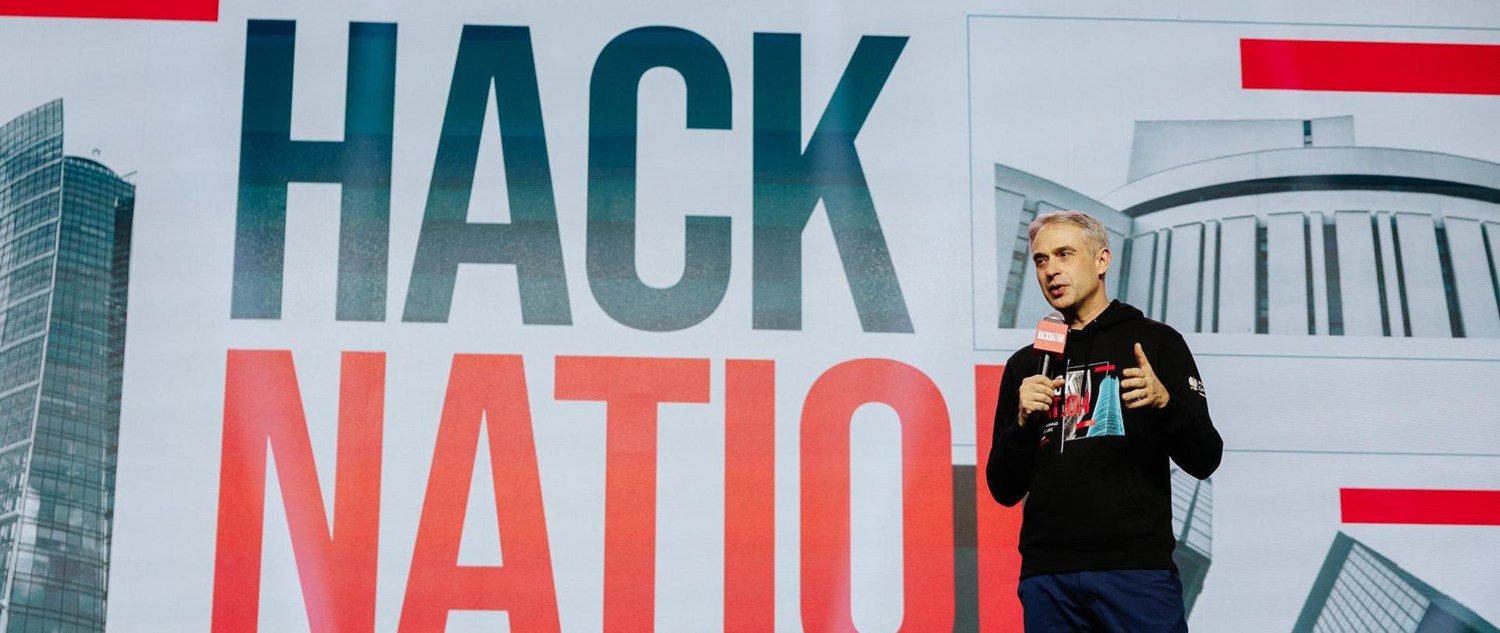
HackNation 2026 ended in Bydgoszcz with 600 projects and 15 winning teams, according to the Ministry of Digital Affairs. The second edition brought programmers, analysts and designers together for 24 hours on 21–22 November to work on practical problems set by public institutions. For foreign residents working in technology, it is a useful view of where Polish public-service development is heading, even if a competition result is not a new service you can use today.
The strongest distinction is between a prototype, a pilot and an operating public system. This year's winning projects include an attempt to combine information about defibrillators, a guide for future parents and tools for working with government documents. Their subjects may sound immediately useful to an expat. That does not mean the tools have already been released, approved for every use or connected to your existing government account.
What happened in Bydgoszcz
The ministry reports 15 challenges prepared by 14 partners and support from more than 200 mentors and experts. The subjects included cybersecurity, artificial intelligence, data analysis and digital public services. The event was organised by the ministry's GovTech Polska department with the City of Bydgoszcz. The city's own report identifies the venue as Bydgoskie Centrum Targowo-Wystawiennicze.
Published participant counts are approximate rather than perfectly uniform. The ministry says close to 2,000, while the civil-service report gives 1,800. The consistent picture is a large, short, intensive event, not a census that needs a falsely precise total. Local reporting also attributes the 600-project figure to the organisers. This article uses those numbers as reported event results, not as an independent audit of submissions.
Why a public-sector hackathon matters
A hackathon compresses discovery, design and demonstration into a short period. Here, the institutions supplied problems rather than simply inviting teams to make anything they liked. The ministry says the aim is for successful ideas to be developed and used after the competition. That link to an institution is more informative than a prize total alone: it indicates who would need to decide whether a prototype can become a dependable service.
For someone new to Poland's technology scene, the challenge list also offers a practical map of public-sector interests. It includes agriculture, investor protection, cybersecurity, public procurement, family benefits and the handling of forms. Polish government technology is therefore a much wider subject than a single identity app or an online tax return.
Misja AED: making location data usable
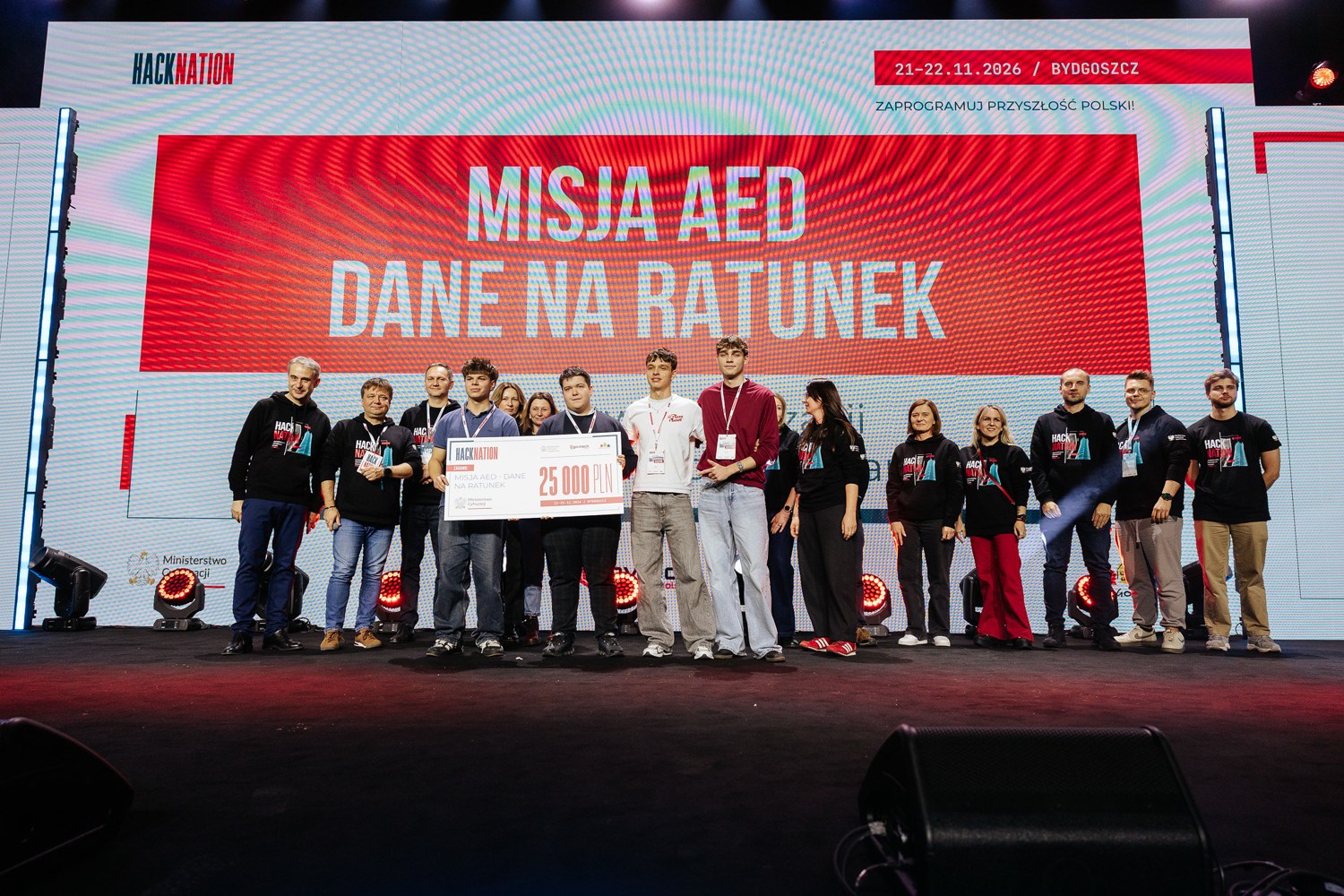
The Ministry of Digital Affairs identifies Haloware as the winner of Misja AED: dane na ratunek, a challenge prepared by its data-management department. The task was to bring scattered information about automated external defibrillator locations into an open national dataset. The stated possibility is eventual publication through dane.gov.pl, with the aim of making a nearby defibrillator easier to find.
The conditional wording matters. A winning proposal to combine location data does not establish that a complete, current national locator is already available. Nor does a location entry prove a device can be reached at every hour. Access, opening times and maintenance are separate facts. The project is interesting because it targets a real information problem, not because a competition announcement can replace emergency instructions or a live, maintained service.
A guide for future parents is still a prototype
The regional government and city reports name LublinNieLondon as the winning team for ZUS's Przewodnik przyszłego rodzica challenge. The published task asks for a tool that would make information about pregnancy, parenthood, benefits and formalities easier to understand. That is a familiar problem for a person dealing with Polish forms in a second language.
Do not turn the winning team's name into evidence of international eligibility or an English-language interface. The reports establish the team and challenge, not every feature of a finished service. A future parents' guide also cannot decide whether a particular foreign resident qualifies for a benefit without applying the actual legal rules. Use the existing ZUS channels for a real application and treat the hackathon project as a development lead.
Two different staff-assessment challenges
Some project names are similar enough to invite confusion. The ministry names HalfMinions as the winner of Kompas kompetencji, its own challenge about assessing competences and development needs. Separately, the civil-service report names friends as the winner of Cyfrowy asystent ocen okresowych, prepared for the civil service.
These are not two incompatible claims about one prize. They are separate challenges with related subjects. The distinction is useful when following a particular project, looking for a team or comparing institutional announcements. Match the full challenge name and sponsoring institution rather than assuming that every reference to employee assessment describes the same product.
Forms, procurement and information quality
The regional results list also includes Cyfryzacja formularzy, the COI challenge won by Brocław, and Odwołania 2 json, the Public Procurement Office challenge won by Solvro Bartek. NASK's Kolekcjoner fejków was won by Solvro Dawid. These names point towards work on structured information, forms and the quality of digital content, rather than another generic chatbot announcement.
For a resident, the value would be in a reliable process: a form that preserves the right fields, a document that can be searched accurately, or information that can be checked against its source. A short demonstration is only a first step. The reports do not establish that these prototypes now handle official submissions, replace existing forms or provide a legally authoritative answer to your case.
The finance challenge and its unusual team name
The Ministry of Finance and Krajowa Administracja Skarbowa, Poland's National Revenue Administration, set an open-source intelligence challenge called Osintowy Łapacz Cyfrowych Śladów. Their own report identifies the winning team as [object Object] and the project as [off]ramp. The unusual brackets are part of the published names, not a website error to correct into somebody else's team.
The finance ministry was a strategic partner of the event. That does not make every prize-winning tool a tax service for individuals. Keep an institution's internal analytical needs separate from the public systems used to file a return, check an account or submit documents. An announcement about a prototype should not send you to an unofficial app for a real tax obligation.
What happened to an earlier winner?
The ministry gives a more concrete example from the 2025 edition: KAS is testing Wyszukiwarka anomalii, developed by MEWA. It uses artificial intelligence to analyse X-ray images of vehicles, containers and railway wagons for signs of possible smuggling. The useful word is testing. The ministry presents it as an example of development after a hackathon, not evidence that every winning 2026 project is already deployed.
Following an older project is a better way to assess the event's long-term effects than counting launch-stage promises. Look for the institution responsible, the stage reached and the next published decision. A prize can start a collaboration. It does not by itself establish procurement, production acceptance, ongoing support or a public availability date.
What an expat developer can learn from the tasks
You do not need to have attended to use the published challenge list as a learning resource. It shows the kinds of problems public institutions consider worth solving and the language they use to describe them. Read the original brief, identify the user and decide what evidence a proposed solution would need. A benefits guide, an agricultural tool and a cybersecurity product have different users and failure risks.
The reports mention programmers, analysts and designers, which also makes clear that building a useful service involves more than writing code. Understanding an administrative process, designing a clear interface and testing whether an answer is supported by the source can be as important as choosing a framework. Do not assume, however, that this establishes a job opening or a paid contract with the sponsoring institution.
There is a 2027 plan, not a registration promise
The Ministry of Digital Affairs says a third edition will take place in Bydgoszcz in 2027. Its results announcement does not settle an exact date, registration opening, team rules or language requirements for that future edition. If you are interested, follow the official event site and wait for the relevant rules before making travel plans.
For a foreign citizen, nationality, age, team composition and participation language should all be checked against the next edition's own terms. Last year's attendance or a friendly-sounding challenge is not enough to establish eligibility. No place in a future event is reserved by reading this report, and the announcement does not require you to send personal documents to an unofficial contact.
Read the results without mistaking them for services
HackNation's results are useful because they make public-sector problems visible and attach institutions and teams to possible solutions. The practical habit is to keep the stages separate. Read the challenge to understand the problem, the results to identify the winner, and later institutional notices to establish whether a tool has moved into a pilot or a live service.
That approach lets you follow Polish civic technology without either dismissing prototypes or overstating them. The 2026 event produced an organiser-reported 600 projects and 15 winners. What residents can depend on next will be established by the work, testing and official service instructions that follow.
Frequently asked questions
Can I use the winning projects as official public services now?
The results establish winning prototypes. They do not provide a general production launch or replace existing official service instructions.
Is HackNation returning in 2027?
The ministry announced another edition in Bydgoszcz in 2027. Its results report does not settle an exact date or future eligibility rules.
Sources
- Ministry of Digital Affairs: results, projects and 2027 announcement,23 November 2026
- Ministry of Finance: winning team and project,23 November 2026
- Civil Service: separate assessment challenge and 1,800 participant count
- Regional government: full winning-team list,23 November 2026
- Event organiser: original challenge briefs
- Tygodnik Bydgoski: locally reported organiser figures,23 November 2026
- City publication: venue and winning-team results,22 November 2026
- Ministry of Digital Affairs:CC BY 3.0 Poland reuse policy