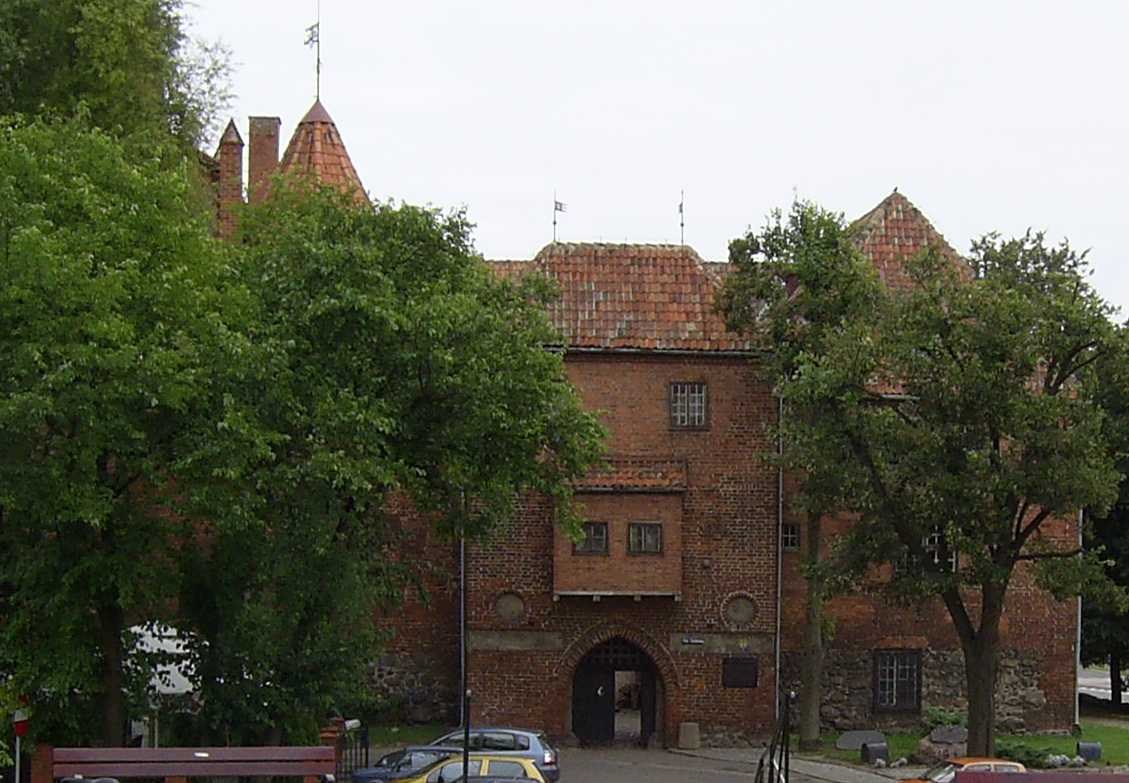
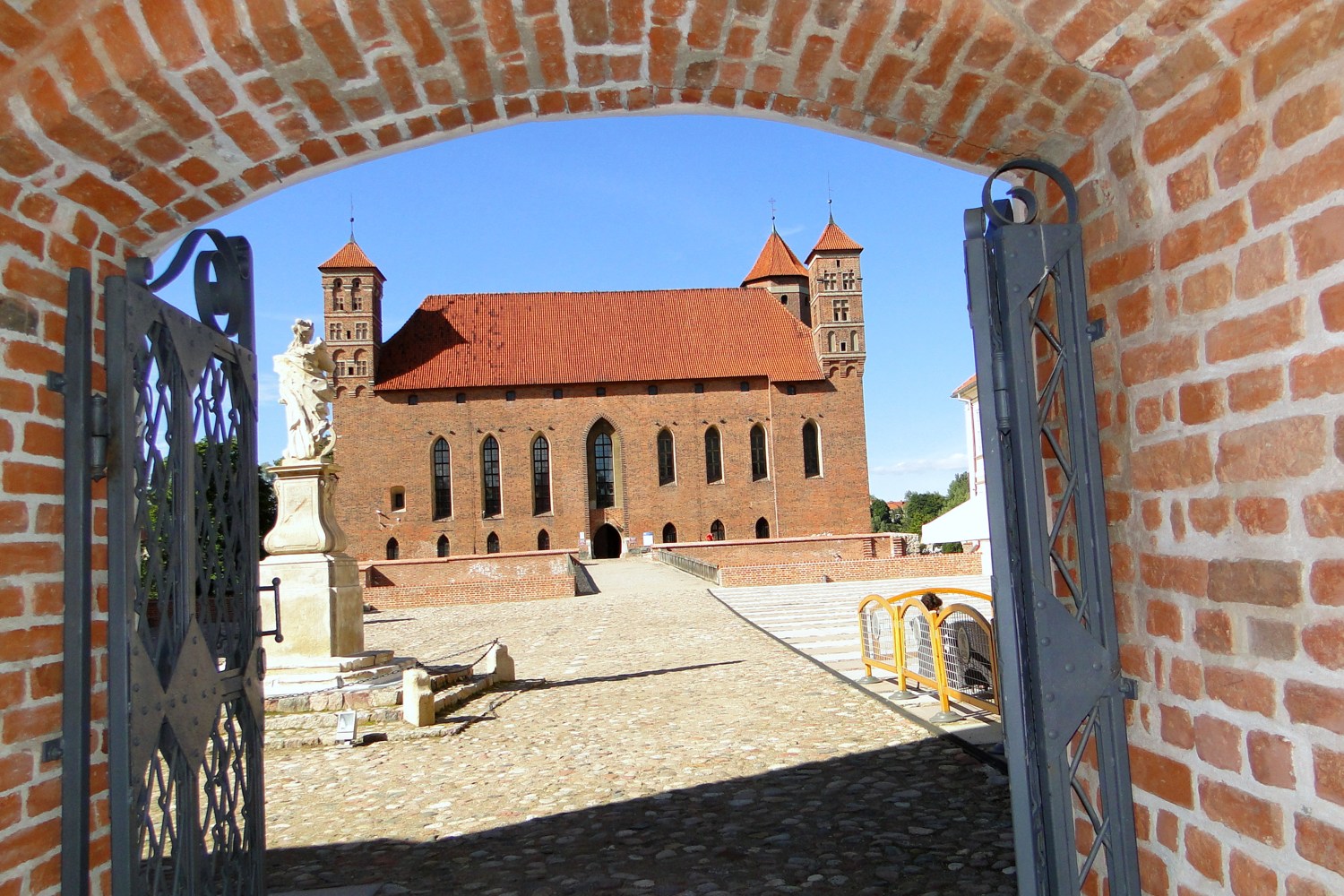
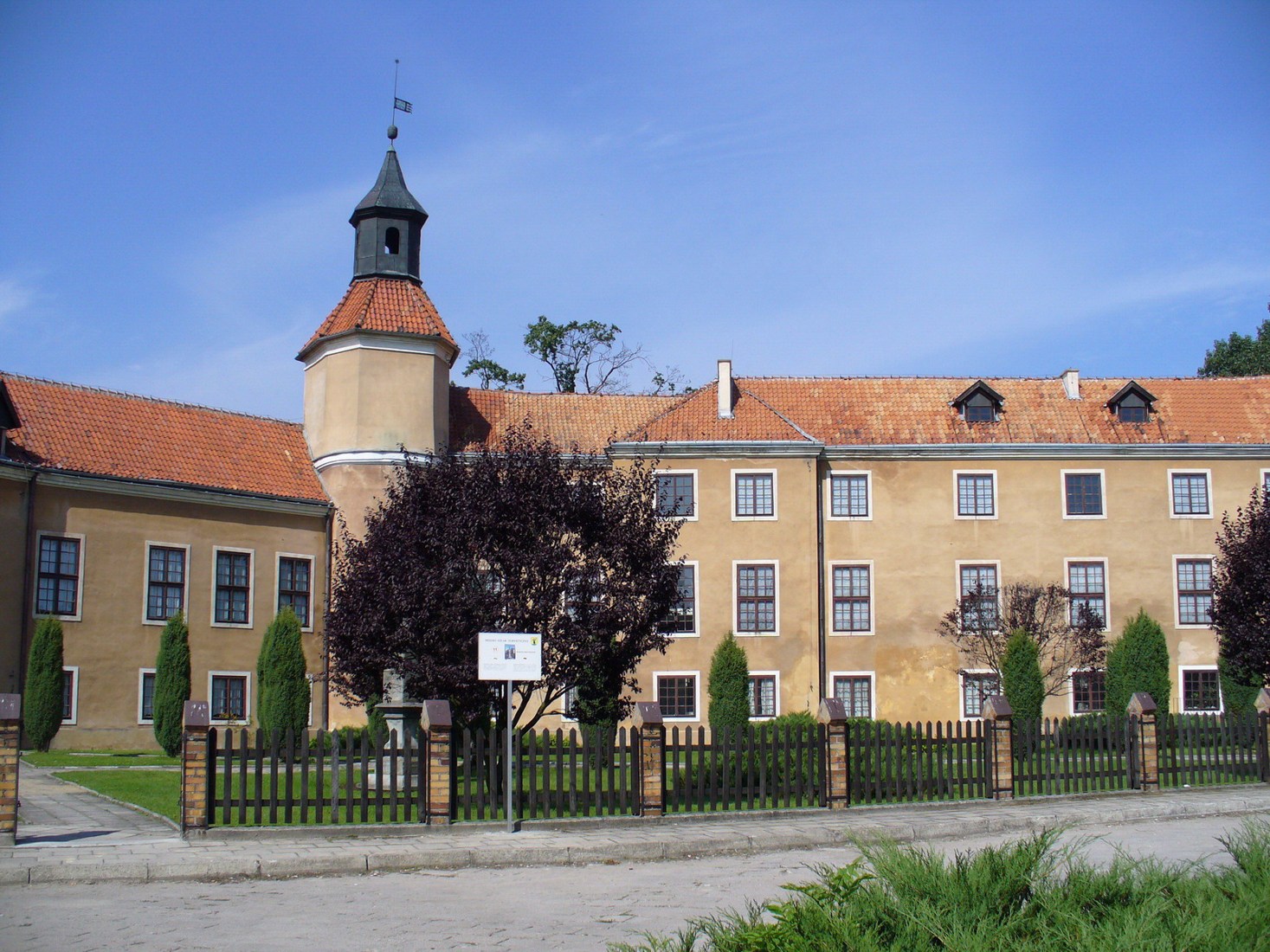
Frombork Museum During Restoration: What Is Open This Winter?
The essentials: The Nicolaus Copernicus Museum currently lists its former Bishop’s Palace and Copernicus Tower as temporarily closed for restoration. The planetarium, History of Medicine Department and Astronomical Park have separate opening times. Winter park visits run Friday-Sunday; sky viewing depends on good weather.
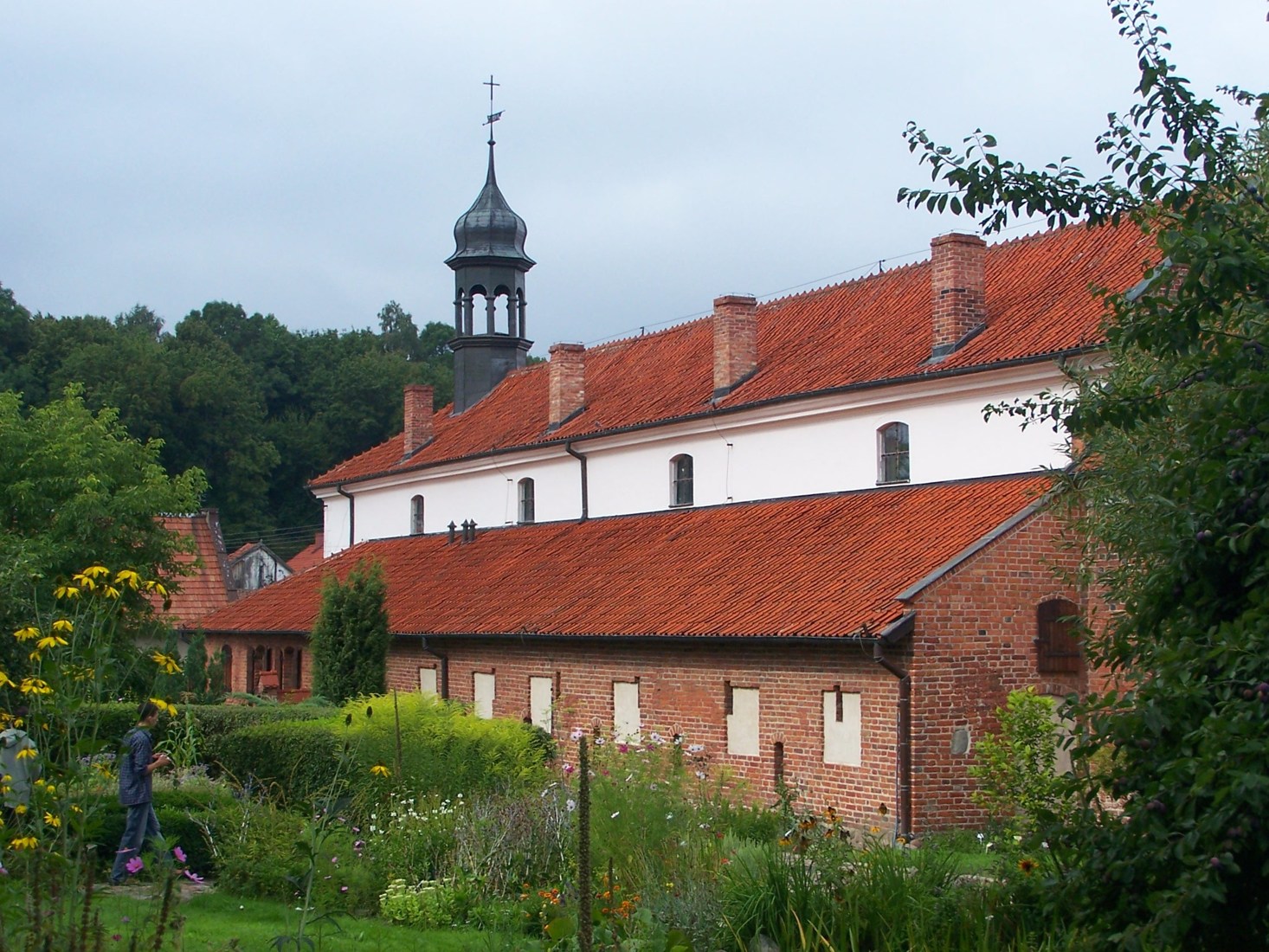
Cover: former Holy Spirit Hospital in Frombork, photographed on 22 August 2006. Archival exterior, not current access evidence. Photo: Lestat (Jan Mehlich) / Wikimedia Commons, CC BY-SA 2.5. Commons crop and rotation by Andrew J.Kurbiko; resized and compressed under the same licence.
Do not plan around the closed palace and Copernicus Tower
Frombork is still worth considering for a museum trip, but the route currently offered by the Nicolaus Copernicus Museum is different from the one older guides may describe. The museum's current visitor homepage says that the main building in the former Bishop's Palace and the Copernicus Tower are temporarily unavailable because of construction and restoration for the European Copernicus Centre project. Do not book a journey on the assumption that those interiors are open.
The same page lists three alternatives with their own timetables: the planetarium on Cathedral Hill, the History of Medicine Department in the former Holy Spirit Hospital and the Astronomical Park outside the town. These are not different rooms within one building. A useful visit starts by choosing which of those experiences you actually want, then matching their opening days and times.
The distinction between towers matters too. The open planetarium is in the base of the Radziejowski Tower, not the closed Copernicus Tower. A notice about one does not establish the status of the other. This guide covers the museum's published offer checked in November 2026; it does not promise a reopening date or include every attraction elsewhere on Cathedral Hill.
Planetarium: reserve the show, not just time in town
The planetarium page gives October-April opening as 09:00-16:00 and May-September as 09:00-17:00. The museum homepage describes daily opening. Regular shows are listed at 09:30, 10:20, 12:00, 13:40 and 15:20. A visit therefore works best around a particular performance, rather than arriving whenever another museum stop finishes.
Additional winter slots are 11:10, 12:50 and 14:30. The museum says these are used for organised groups and when regular performances have no spaces left. They should not be treated as an unconditional extra schedule. The 14:30 show is intended for families with children aged three to five; the other shows are described as unsuitable for children under five. Ask whether the children's show will run on your date before making it the centre of a family outing.
The experience is a classical planetarium projection, using a Carl Zeiss instrument from 1978 under an eight-metre dome. It is not the same as looking through an outdoor telescope. The museum asks visitors to enter the projection room ten minutes before a show so their eyes can adjust, and gives a running time of about thirty minutes. Build those ten minutes into your arrival, not into the advertised start.
Seats can be reserved by telephone or email during planetarium working hours, no later than the day before the visit. Reserved tickets must be collected at the main ticket office at least thirty minutes before the show. The published planetarium telephone is +48 55 244 00 88. Confirm the show, language and collection arrangements directly; an online timetable alone is not a seat reservation.
Prices and the important under-seven exception
The museum tariff lists planetarium admission at 16 PLN normal and 12 PLN reduced. The same normal and reduced prices apply to the History of Medicine Department and the Astronomical Park's daytime visit. Night visiting at the park, listed as lasting up to one and a half hours, costs 19 PLN normal or 13 PLN reduced.
Do not assume a small child's museum exemption applies to every stop. The tariff lists free admission for children under seven but explicitly excludes the planetarium from that rule. The show-age guidance is a separate matter: paying for admission does not make a regular show suitable for a three-year-old. Settle both the ticket category and the appropriate performance before buying.
The tariff also lists prices for holders of the Polish nationwide Large Family Card: 9 PLN at the hospital and for the park's daytime visit, and 11 PLN for the park's night visit. These are card-specific prices, not a general family-group ticket or a promise that any foreign family card qualifies. Bring the required identity and eligibility documents and ask how reduced admission applies to your party.
Each attraction has its own listed price. Do not read three 16 PLN entries as a single 16 PLN museum pass. The main ticket office sells tickets to the museum's sites, while the hospital and park also have their own ticket desks. The homepage currently gives the main desk at Katedralna 8, in the South Gate, as open daily 09:00-15:20. That closing time is earlier than the end of some activities, so ticket collection needs its own place in the plan.
History of Medicine: a different subject and a different address
The History of Medicine Department occupies the former Holy Spirit Hospital at Stara 6. From October to April it opens Tuesday-Sunday, 09:00-16:00; from May to September the published pattern is daily, 09:30-17:00. Last entry is half an hour before closing. A winter Monday planetarium visit therefore cannot automatically be combined with the hospital.
The museum describes a historic hospital complex with the Gothic St Anne's Chapel, displays on medical history and temporary exhibitions concerning death, illness and the body. There is also an adjacent herb garden. This is a useful counterpoint to astronomy, but it is not a generic children's science centre. Consider the subject matter and your children's interests before deciding that two indoor stops are automatically better than one.
The department's current page lists an exhibition of pharmacy vessels from the museum collection. Temporary displays can change, so check what is actually available if one is a main reason for travelling. The hospital has a reception shop selling souvenirs and museum publications. Its location below Cathedral Hill also means moving between sites, rather than simply walking along an internal corridor.
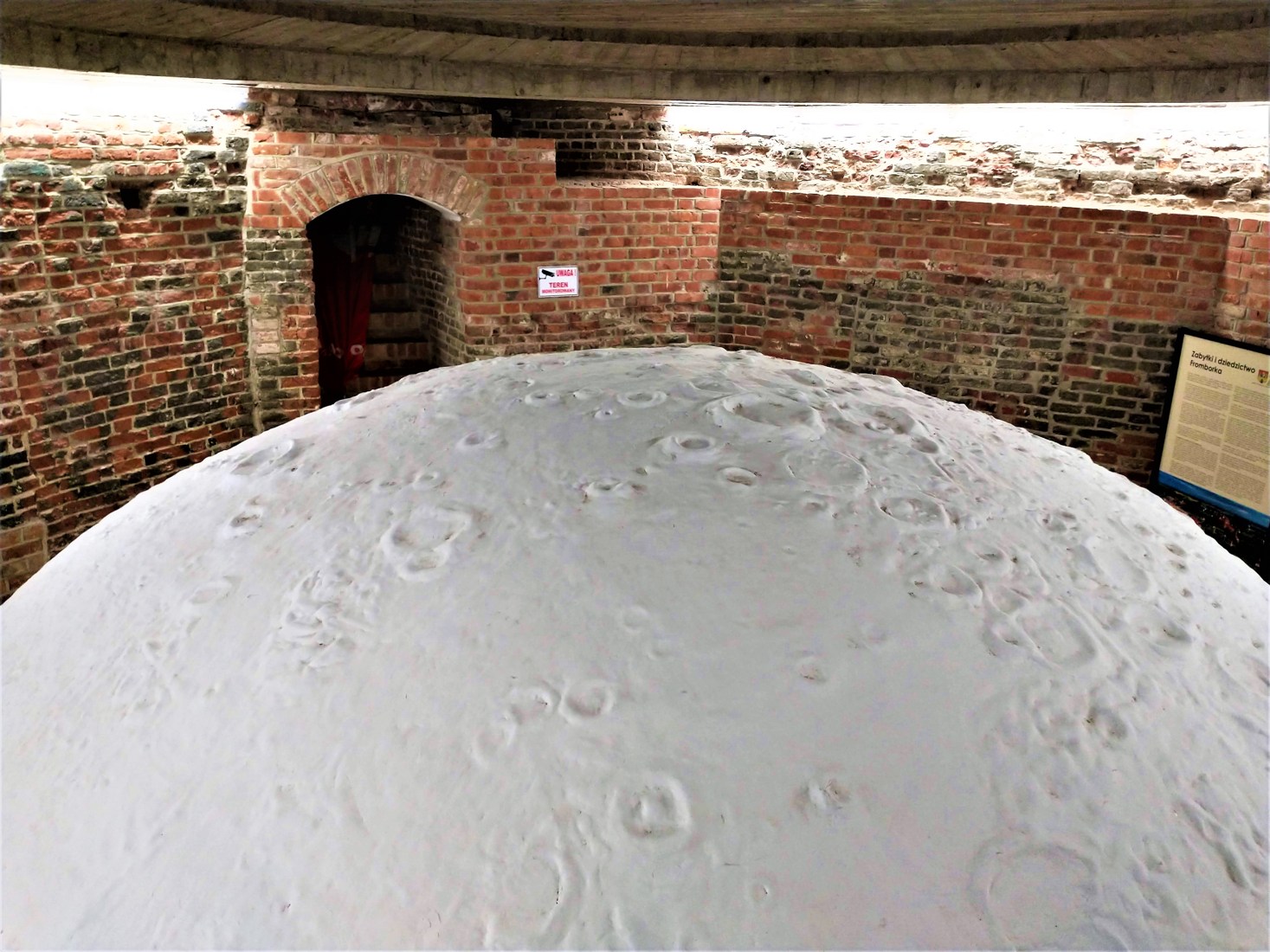
Astronomical Park: winter afternoons and weather-dependent sky viewing
The Astronomical Park is at Ronin 25 on Góra Żurawia, approximately 1.5 kilometres from Frombork. The museum describes a reception building with temporary exhibitions and observation pavilions containing astronomical instruments. Its purpose is to explain ways of observing celestial objects from the sixteenth century to the present. The site also offers night-sky viewing, which is a separate prospect from an indoor planetarium projection.
The park opens Friday-Sunday. From November to February its published hours are 12:00-20:00, with guided visits at 12:30, 13:30 and 14:30 and a sky show at 17:30 in good weather. March and October use 14:00-22:00, guided visits at 14:30, 15:30 and 16:30, and weather-dependent sky viewing at 20:00. April-September shifts later again: 16:00-midnight, guided visits at 16:30, 17:30 and 18:30, and sky viewing at 22:00.
These seasonal differences change the whole trip. A winter Friday or weekend can combine an indoor daytime stop with an early-evening sky session, but a Tuesday hospital visit does not make the park available that day. Outdoor observing depends on suitable weather. Ask about the current forecast-related decision, ticket arrangements and the programme before travelling specifically for a sky show; an advertised time is not a guarantee of visible stars.
Accessibility differs sharply between the open sites
The museum's mobility-access information describes substantial barriers. The planetarium's historic space is not accessible to wheelchair users. The main ticket office is also not adapted, with uneven surfaces and two levels of stairs on the approach; the museum asks wheelchair users to make contact before buying tickets. Do not assume a central ticket office is the easiest accessible starting point.
The hospital is described as partly adapted and has an adapted toilet, but its entrance includes stone steps and a change of level beyond the threshold. The main and side aisles are described as available to wheelchair users, while the steps prevent access to St Anne's Chapel. Discuss the actual entrance and assistance needed before travel, rather than reducing that description to either 'accessible' or 'inaccessible'.
At the Astronomical Park, the museum lists an adapted toilet and a parking space for visitors with mobility impairments, but says only the reception building's ground floor is accessible to wheelchair users. Steep paths make reaching observation pavilions difficult. A toilet or parking provision does not establish access to the telescope experience you want. Name that experience when asking staff about the route.
The access page also describes facilities in the palace, but that is not evidence that the palace has reopened. The current closure notice takes precedence for whether a visit can happen. Keep building access, opening status and the availability of a particular activity as three separate checks.
Choose one anchor activity, then add what fits
For a winter weekday, start with a confirmed planetarium performance and, Tuesday-Sunday, consider the hospital before its 15:30 last-entry limit. For Friday-Sunday astronomy interests, check a park guided visit or weather-dependent evening session first, then add an indoor stop only if the timing works. For preschool children, confirm the special performance rather than assuming every show is suitable.
The museum's contact page provides separate numbers for the attractions. The hospital is +48 55 243 75 62 and the park +48 55 243 80 88; the main ticket office is +48 55 244 00 76. A focused enquiry can settle the date, language, children's ages, ticket collection, current opening and mobility requirements. None of those arrangements is confirmed merely by reading the site.
Frombork's present museum offer is best understood as several distinct visits during a major restoration project. The closed palace and Copernicus Tower remain closed in the checked information, while the open attractions each have something different to offer. Match the right building to the right day and purpose, and the trip need not depend on an outdated all-in-one itinerary.
Frequently asked questions
Is the whole museum closed for restoration?
No. The current homepage lists the palace and Copernicus Tower as temporarily closed, while the planetarium, History of Medicine Department and Astronomical Park have their own visitor schedules.
Are all planetarium performances suitable for small children?
No. The 14:30 additional show is intended for ages three to five and needs confirmation. Other shows are described as unsuitable for under-fives. Under-sevens do not receive free planetarium entry.
Can I visit the Astronomical Park on a winter weekday?
The published November-February schedule is Friday-Sunday 12:00-20:00. Friday is the weekday option in that regular pattern. Sky viewing is weather-dependent.