Morąg Museum: Free Tuesday, Winter Hours and the Lift Question
The essentials: The Museum of Upper Prussia at Dąbrowskiego 54 in Morąg opens Tuesday-Sunday 09:00-16:00 from October to May, with ticket sales ending at 15:30. Admission is 28/16 PLN; permanent exhibitions are free on Tuesdays. An October 2026 lift project notice does not confirm a working lift today.
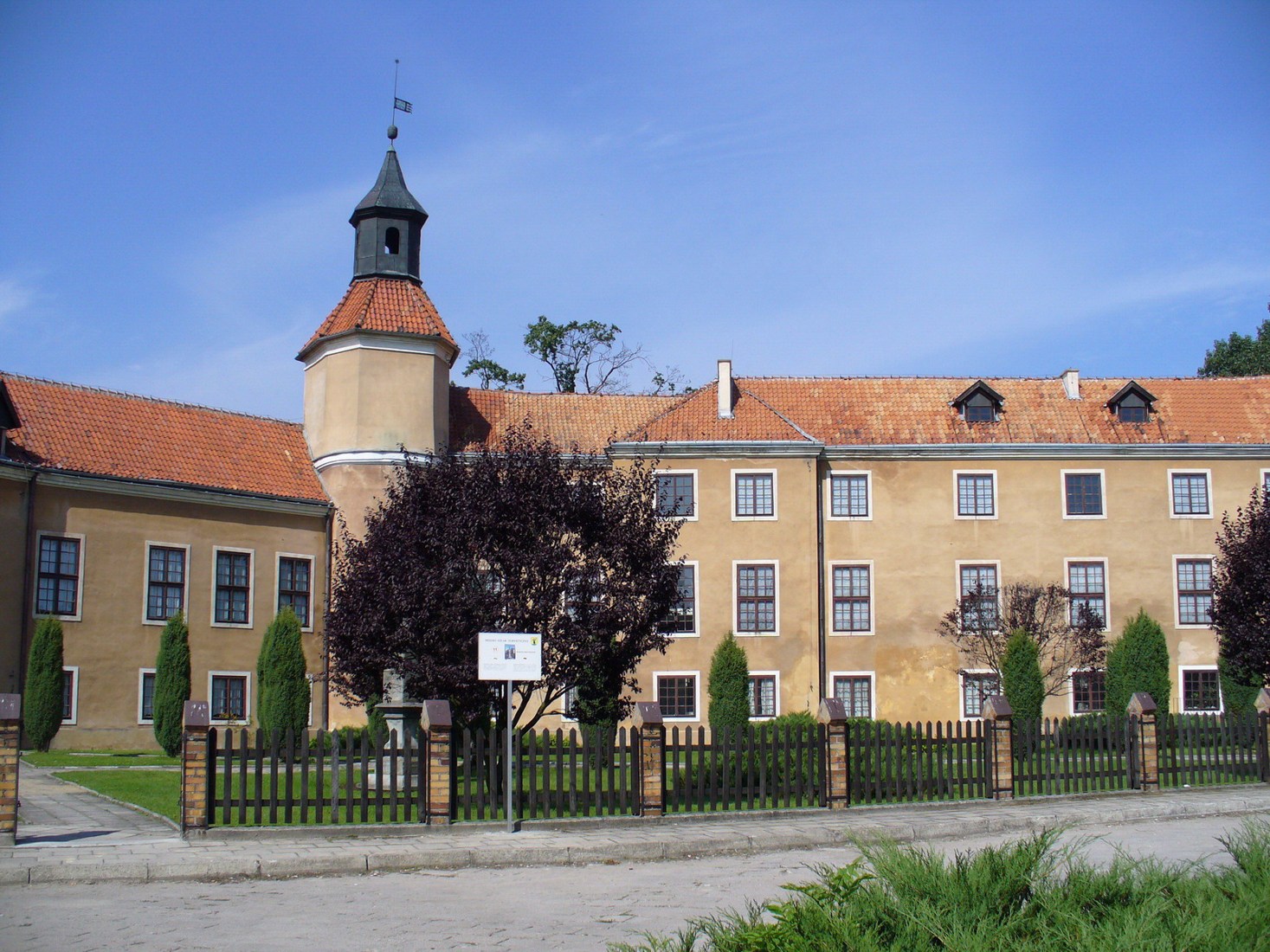
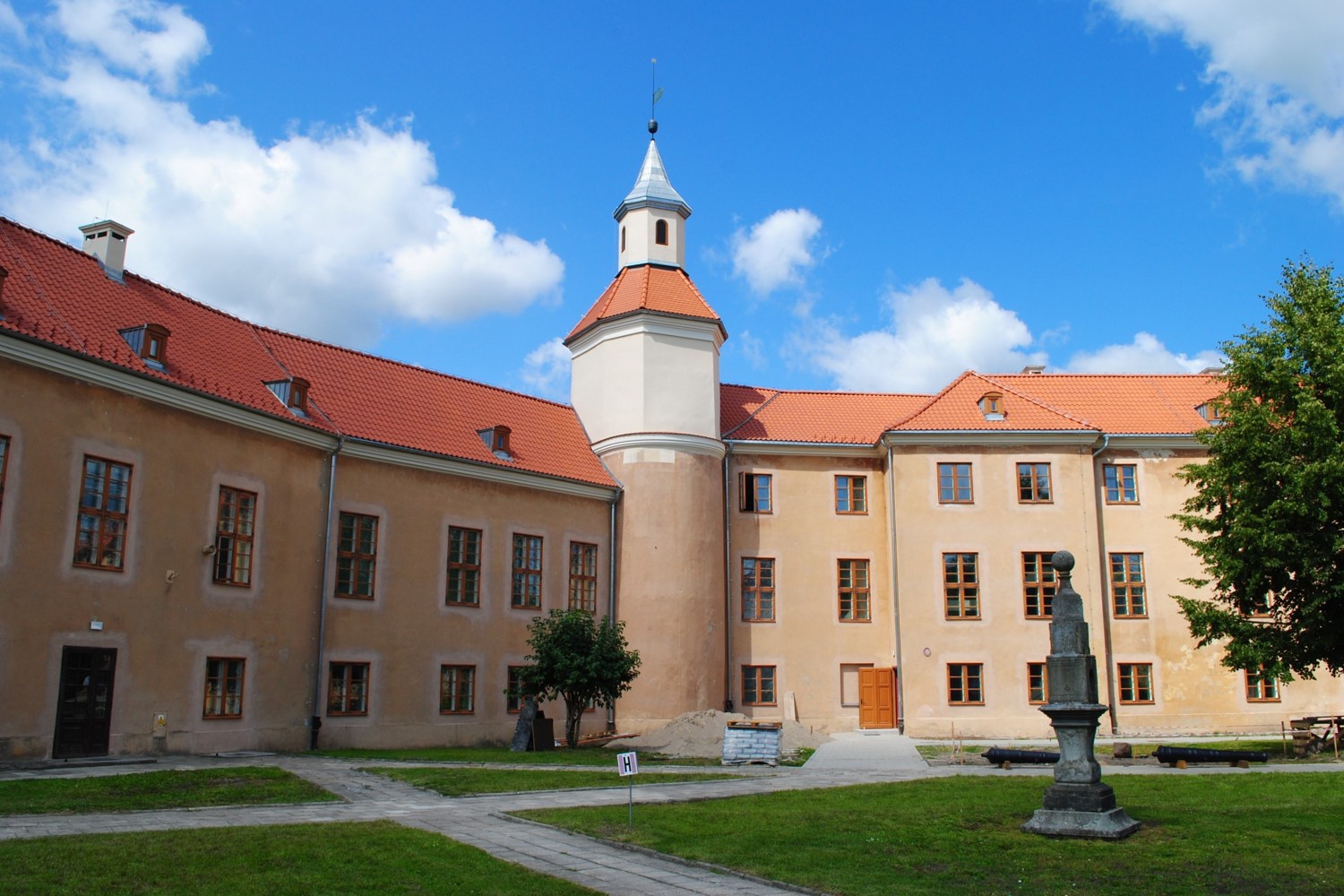
Cover: Dohna Palace in Morąg, photographed on 18 August 2006, before the recent renovation. Archival exterior, not current access evidence. Photo: Mclion / Wikimedia Commons, public-domain dedication by the photographer. Resized and compressed.
A reopened palace museum with a different story to tell
Morąg's museum is worth looking up under its current name before planning a visit. Muzeum Prus Górnych w Morągu, the Museum of Upper Prussia, occupies the Dohna Palace at ul. Dąbrowskiego 54. Older listings still call it the Johann Gottfried Herder Museum and can show much lower ticket prices. Those are not safe instructions for a visit now. The current branch pages give a different tariff, seasonal opening hours and a wider set of regional exhibitions.
For a winter visit, the useful starting point is Tuesday-Sunday, 09:00-16:00, with the ticket office closing at 15:30. Tuesday is the free day for permanent exhibitions, not an unconditional free pass to everything. There is another important distinction: an October 2026 announcement describes a planned lift installation. It does not confirm that the lift is already operating. Check that directly if access between floors determines whether your visit works.
Winter hours, ticket-office closing and holiday exceptions
The official opening-hours page lists two seasons. From 1 October to 31 May, the museum opens Tuesday-Sunday 09:00-16:00, with ticket sales 09:00-15:30. From 1 June to 30 September, it opens Tuesday-Sunday 10:00-17:00, with ticket sales 10:00-16:30. Monday is closed for internal work in both seasons. A winter Sunday is therefore part of the published timetable, unlike a Monday.
Do not plan to arrive at the ticket desk at the museum's closing time. The half-hour gap is printed explicitly, and arriving before the desk closes still leaves only the remaining visiting time. Choose an earlier arrival if you want to read the exhibition material rather than rush through. No fixed visit duration is promised here, because the official pages checked do not establish one and visitors will spend different amounts of time with the displays.
The museum's 2026 holiday list closes the branch on 24, 25, 26 and 31 December. Those exceptions override an otherwise open weekday. The page also retains a notice about an exceptional closure on 18 September 2026; that was a dated interruption, not a new weekly closing day. For a holiday trip or a journey made specially for the museum, check the branch's current notices again before leaving. Do not carry a 2026 holiday list forward as a confirmed 2027 calendar.
Tickets and what free Tuesday actually covers
The current branch ticket page, updated in September 2026, lists 28 PLN for a normal ticket and 16 PLN reduced. It describes family tickets for parents or legal guardians with children under 18: 58 PLN for 2+1 or 1+2, and 72 PLN for 2+2, 2+3 or 1+3. Match your party to those listed combinations instead of assuming that any group travelling together is a family-ticket group.
On Tuesdays, entry to permanent exhibitions is free. The same tariff lists 12 PLN for temporary exhibitions on that day. This is a useful saving when the permanent displays are your main reason for coming, but it is not a promise of free guiding, workshops or every special exhibition. Ask which exhibitions are included before paying if you are visiting for a particular display. A temporary exhibition's own dates also matter; the general tariff does not prove that a named temporary show is still running.
The page says families with the national Large Family Card, Ogólnopolska Karta Dużej Rodziny, are entitled to a 50% admission reduction at the museum and its branches. It does not explain every possible combination with family tickets or other concessions. Bring the relevant proof and ask the desk to apply the correct entitlement. Do not combine separate reductions in your budget unless the museum confirms that combination.
There is a specific online trap here. An older branch tariff on another official museum domain still displays 12/6 PLN admission and lower family and guide prices. This guide uses the current Morąg branch tariff, not that older page. Older search results can also lead to pandemic-era visiting rules. Their publication dates and context matter; they should not replace the current seasonal table.
What changed after the palace renovation
A regional government account dated 18 March 2025 records the museum's reopening after major renovation. The branch's own exhibition pages explain the current focus through Upper Prussia's archaeology, noble households, religious art, local places and the palace itself. That gives visitors a better basis for choosing the museum than expecting only a small collection about Herder because an older directory still uses his name.
The palace-history exhibition follows the Dohna family's connection with Morąg and the building's repeated changes. The museum describes an early residence formed from two houses joined by a central tower, later destruction by fire and a Baroque rebuilding. It also covers the palace's burning in 1945, postwar reconstruction, opening to the public as the Herder Museum in 1986, and the renovation begun in 2022 and completed in 2024.
That history is presented with digitised photographs, plans and prints, alongside information about the palace's residents and institutions. It is a useful first display if you want to understand why the building looks as it does. Treat an attractive exterior photograph as architectural context, though, not proof that the interior, entrance or access arrangements remain unchanged since the photograph was taken.
Choose the displays that fit your interests
The burial-mounds exhibition reaches back before the medieval history often associated with this part of Poland. The museum explains how individual mounds and larger groups survive in the Upper Prussian landscape, especially in forests, and uses archaeological objects to explore their forms and wider cultural connections. This is a different strand of the visit from palace interiors or family portraits.
The display about Morąg and its surroundings uses photographs, postcards, maps, family documents and other objects to connect local places with the people who shaped them. The palace, town hall, streets, church and railway station all appear in its account of local space. For someone living in Poland and trying to understand a smaller town beyond its main monument, that local focus may be especially useful.
Lutheran epitaphs and commemorative portraits examines religious and memorial art, including the epitaph of Piotr and Katarzyna zu Dohna, originally from the church in Morąg. The exhibition of objects from Prussian manors follows noble families through paintings, furniture and other surviving furnishings. Choose the sections that interest your party rather than treating every room as a checklist. English-language labels or an English-language guided visit are not established by the pages checked, so confirm language support if it matters.
Lift funding is not proof of a working lift
The most important access source is the museum's lift project announcement, updated 8 October 2026. It says a passenger lift with a shaft is planned for purchase, installation and commissioning. The 2022-2024 works created the conditions for it, including a new stairwell and sanitary facilities with accessible toilets. The announcement says the absence of the lift prevents those improvements from being fully used.
That is evidence of a funded project and of the situation described in October, not a current completion certificate. It would be wrong either to advertise a working lift or to claim that it definitely remains unavailable today. Before travelling, ask whether it has been commissioned, which exhibition floors it serves, and whether the route from the street through the entrance to those rooms is step-free. Ask about the toilet and any temporary construction restrictions as separate points.
Guides, school groups and making a workable plan
Polish-language guiding costs 100 PLN for groups up to 10 people and 140 PLN for larger groups in normal opening hours. The tariff lists 170 PLN and 220 PLN respectively outside those hours, and asks for guide reservations at least a week ahead. Those are guide-service prices, not a statement that admission is included. Ask for the full group total, confirmed time and language before committing to a group visit.
Lessons and workshops have separate charges: admission for each participant plus a group fee of 60 PLN for a lesson or 70 PLN for a workshop, with the tariff stating a minimum payment of 140 PLN for each activity. Confirm how that minimum applies to your actual group. A family looking around independently should not treat a school activity price as an ordinary admission alternative.
Use the branch contact details, telephone 89 757 28 48 or [email protected], for unresolved access, language and group questions. For a simple winter visit, choose an open Tuesday-Sunday, arrive well before 15:30, decide whether permanent exhibitions are enough, and check any requirement that would make the journey fail. The museum's current identity and displays are clear; working lift status, language provision and individual concession combinations need direct confirmation.
Questions to settle before leaving
Is this still the Herder Museum?
The present branch name is Museum of Upper Prussia in Morąg. The palace-history page records the earlier Herder Museum, while the current displays address a wider regional story. Use the current branch name and Dąbrowskiego 54 when checking practical details.
Is a free Tuesday the best choice for every visit?
It fits a visit centred on permanent exhibitions. A temporary exhibition still has a listed Tuesday charge, and a guided group needs a separate arrangement. Pick the day around the displays and services you actually want.
Does renovation mean every floor is accessible?
No such guarantee follows from the renovation alone. The October lift announcement describes planned installation and commissioning. Confirm the present situation directly, including the entrance route and the rooms you want to reach.
Sources
- Current branch seasonal hours and 2026 holiday exceptions
- Current branch admission and group-service tariff
- Official October 2026 lift project notice
- Palace history and renovation exhibition
- Burial-mounds exhibition
- Morąg and surroundings exhibition
- Lutheran epitaphs and commemorative portraits
- Objects from Prussian manors
- Regional government March 2025 reopening account
- Official branch contact details
- Older conflicting tariff, not used for current prices
Frequently asked questions
Is this still the Herder Museum?
The current branch name is the Museum of Upper Prussia in Morąg, at Dąbrowskiego 54 in the Dohna Palace. Older listings may use the Herder name and outdated prices.
Is everything free on Tuesday?
No. Permanent exhibitions are free; temporary exhibitions have a listed Tuesday charge of 12 PLN. Guides and educational activities have separate prices.
Does the museum have a working lift?
An October 2026 official announcement describes planned lift installation and commissioning. The sources checked do not confirm its current operating status. Ask the museum before relying on it.
Sources
- Current branch seasonal hours and 2026 holiday exceptions
- Current branch admission and group-service tariff
- Official October 2026 lift project notice
- Palace history and renovation exhibition
- Burial-mounds exhibition
- Morąg and surroundings exhibition
- Lutheran epitaphs and commemorative portraits
- Objects from Prussian manors
- Regional government March 2025 reopening account
- Official branch contact details
- Older conflicting tariff, not used for current prices