Ostróda Castle Museum: Free Thursdays, Winter Saturdays and Tickets
The essentials: Muzeum w Ostródzie at Mickiewicza 22 opens Monday-Friday 09:00-16:00 and Saturday 10:00-16:00 in November-February; Sunday is closed. Regional tickets are 22/17 PLN and regional exhibitions are free on Thursdays. The punishment-and-torture exhibition and guide services have separate charges.
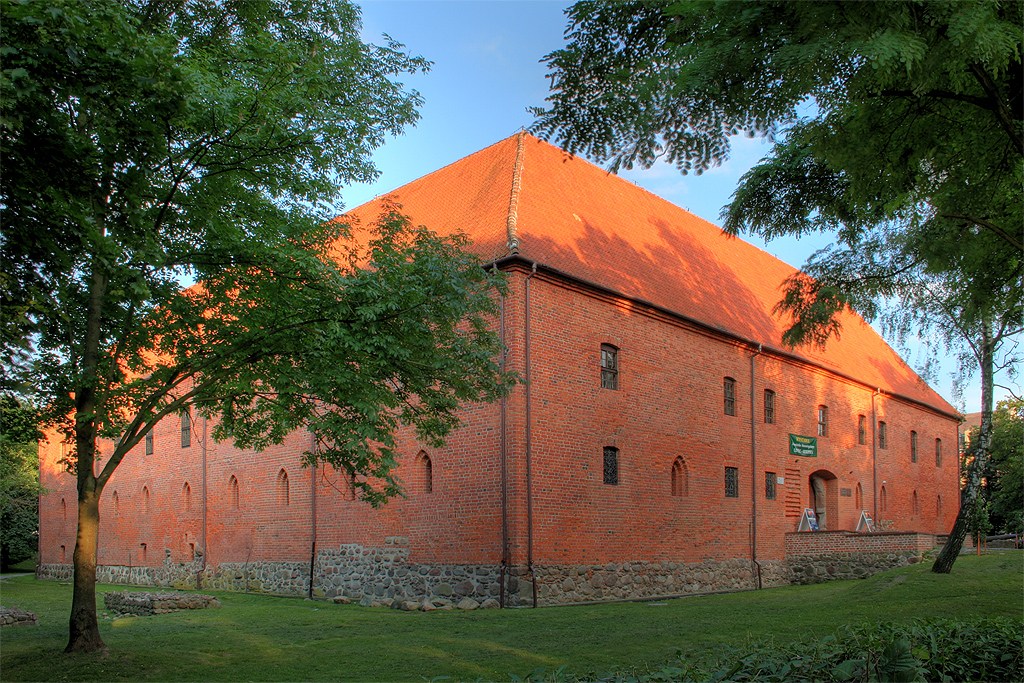
Cover: the castle in Ostróda, an archival image uploaded on 16 July 2008; the capture date is not established here. Not a current entrance or access photograph. Photo: Jacek Piech / Wikimedia Commons, CC BY 2.5. Recompressed.
A castle museum for a winter Saturday, not Sunday
Muzeum w Ostródzie is a practical indoor stop for a cold-weather visit to the town, but the day matters. Its published November-February timetable includes Saturday opening and closes on Sunday. The museum is at ul. Mickiewicza 22, inside the former Teutonic castle. Regional history and a Napoleon exhibition are the core visit; a separately priced exhibition about punishment and torture is a different choice, not something every family needs to add.
The most useful decisions are simple: choose the right seasonal timetable, decide between the regional exhibitions and a combined ticket, and check any access or guiding needs before travelling. The official pages used here were checked on 28 November 2026. They do not all use the same prices or describe the rooms in the same way, so this guide uses the museum's dedicated ticket page for the current published tariff and explains where older material can confuse a visit.
Opening hours and the Thursday free-entry boundary
The official opening-hours page lists November-February hours of Monday-Friday 09:00-16:00 and Saturday 10:00-16:00, with Sunday closed. From March to June and September to October, weekdays remain 09:00-16:00 and both weekend days are 10:00-16:00. July-August extends weekdays to 09:00-18:00 and weekends to 10:00-18:00. November is therefore not a continuation of the autumn Sunday pattern.
The same page says Thursday admission to the regional exhibitions is free. That wording matters. It does not promise that every exhibition, workshop or guide service becomes free, and the ticket page separately prices the temporary exhibition. If your aim is a low-cost history visit, Thursday regional admission is the clear published option. If you also want the punishment-and-torture exhibition, ask the desk about its charge rather than presenting a free regional ticket as a pass for the whole building.
Published holiday closures include 1 and 6 January, Holy Saturday and Easter, Corpus Christi, 15 August, 1 and 11 November, and 24-26 December. Treat those as exceptions to the weekly pattern. A holiday falling on an otherwise open day is not evidence that the museum will open. Check for a fresh notice when planning a special journey, and arrive with time to see the exhibitions rather than using the closing time as your arrival time.
Use the ticket that matches the exhibitions you want
The dedicated ticket page lists regional exhibition admission at 22 PLN normal and 17 PLN reduced. The reduced school-youth group ticket is 12 PLN. The regional exhibitions named there are Ostróda w czasach najdawniejszych, Ostróda w XIX i XX wieku and Napoleon w Ostródzie. A ticket with Karta Ostródzka is listed at 10 PLN; do not assume that applies to any visitor merely staying in the town.
The 48 PLN family ticket specifies particular family compositions: two adults with two or three children, or one adult with three children. That list is narrower than a generic promise that any family can enter for 48 PLN. Ask about the correct ticket if your party has a different composition. Bring evidence for any reduced-rate or local-card entitlement instead of relying on an age or status that the ticket seller has not confirmed.
The temporary exhibition Przedpiekle. Narzędzia kar i tortur is listed separately at 16 PLN normal and 12 PLN reduced. The combined ticket for the permanent exhibitions plus that exhibition is 33 PLN normal, 25 PLN reduced/group, or 70 PLN family. These are published ticket categories, not a guarantee that the temporary exhibition will be available on every future date. Confirm its current operation if it is the main reason for coming.
There is a genuine source trap: the museum's general visiting-rules page still contains lower ticket figures, including 14 PLN normal and 10 PLN reduced. This guide uses the dedicated ticket page's 22/17 PLN figures, not the older numbers in that rules text. The museum also maintains a separate page of rule and tariff amendments. If you are organising a large visit, confirm a written total rather than calculating a budget from a mixture of those pages.
Start with the town models and archaeological finds
The permanent-exhibition description offers a useful route through the regional displays. Two models show the development of Ostróda: one depicts the sixteenth-century town, while a larger one shows the town around the beginning of the twentieth century. Comparing them makes changes in the street plan and the effects of the great fire of 1788 easier to understand than a list of dates alone.
The museum describes prehistoric and medieval objects, Bronze Age finds, Roman coin deposits from Półwieś and early-medieval denarii from Lubajny and Biskupiec Pomorski. Other material comes from archaeological work around the castle, old town, former town hall and Pottery Gate. These objects connect the castle visit with places beyond its walls. The exhibition is about the development of a town and its surrounding area, not simply a display of a castle's military history.
Everyday objects from the nineteenth and twentieth centuries and old postcards bring the story closer to the present. Look for views of market buildings that no longer survive. A good short-visit approach is to compare one model with a postcard and then look at the town outside. That keeps the museum visit connected with the place you are walking through, without needing to read every label or assume every reconstructed building is unchanged from the medieval period.
Napoleon: the exhibition is not his original upstairs room
Napoleon stayed in Ostróda from 21 February to 1 April 1807, according to the museum's castle history. He occupied a room on the first floor of the north wing while conducting the campaign and administering the empire. The current exhibition description places the Napoleon display, created in 2022, in a Gothic room on the ground level of that wing. Those are two different locations within the castle's story.
The exhibition sets the stay within the war against the Fourth Coalition and the East Prussian campaign. An interactive map traces routes, battles and headquarters. The museum describes a letter and decree issued in Ostróda, staff correspondence, medals, uniforms and equipment. Copies of two paintings relating to Napoleon's stay appear alongside original nineteenth-century prints based on those works. The distinction between original objects and later copies is part of what the display offers.
That makes the Napoleon section a good choice for visitors interested in European history as well as local history. It is not necessary to buy the torture exhibition to follow that subject. Nor should the presence of an interactive map be read as a promise of English interpretation. Ask what language support is available if you need it, especially before booking a guided visit for people who do not read Polish.
The building has a history of destruction and rebuilding
The castle's red-brick exterior is only the starting point. The museum's history explains the move from an earlier wooden stronghold to the brick castle begun in the fourteenth century. Its defensive setting used the river and the proximity of Lake Drwęckie. Inside, the surviving or restored Gothic character includes ribbed vaulting and granite supports in parts of the lower rooms. The spaces now used for displays once had practical economic functions.
The fire of 1788 damaged the upper floors and eastern wing; the eastern wing was later removed. Further destruction came in 1945, and restoration work began in 1977 after archaeological investigation. The museum and library have occupied the restored castle as cultural institutions since the 1990s. It is therefore more accurate to see a building with surviving historic fabric and substantial reconstruction than to imagine an untouched medieval interior.
The museum's main page also points to the courtyard, restored well and nineteenth-century mangle, and describes cultural events held there. That is background, not a current event listing. Do not plan around a concert or reenactment because a general page mentions performances. For an ordinary visit, the exhibitions and the building itself are the dependable focus of the published visitor offer.
Guides, school visits and workshops need their own arrangement
The standard ticket page lists guide services, arranged by telephone, at 200 PLN for groups up to 15, 250 PLN for 16-25 and 400 PLN for 26-50. The educational offer has a different context: paid school lessons for children from age six and school pupils, with a maximum group size of 25. It gives school guide charges of 80 PLN up to 15 and 120 PLN for 16-25, plus admission at 12 PLN per pupil, with the teacher admitted free.
Do not substitute the school-lesson rates for an ordinary adult tour. The educational page discusses lesson topics, age-appropriate teaching and advance arrangements. It also lists workshops such as coin striking, handmade paper and postcard making, with separate participant prices. A museum ticket is not a workshop reservation. Ask which activity, age range, language, admission and guide charges apply, and obtain the combined total for your actual party.
The educational page requires confirmation of a reservation or notification if cancelling. Its contact routes include 503 434 631, 89 646 32 31 and [email protected]. Use those details to arrange the activity, not to assume availability. This guide has not booked a tour, reserved a workshop or checked a live slot calendar.
Check access, then decide whether to add the river
The permanent-exhibition page places displays on the castle's ground level. That alone does not establish a step-free route from the street, suitable door widths, an adapted toilet or access to every exhibition. The official pages checked here did not settle those practical details. If they matter to your party, use the museum's contact details to ask about the entrance and the exact rooms you want before travelling. A historic building being open to visitors is not the same as an accessibility guarantee.
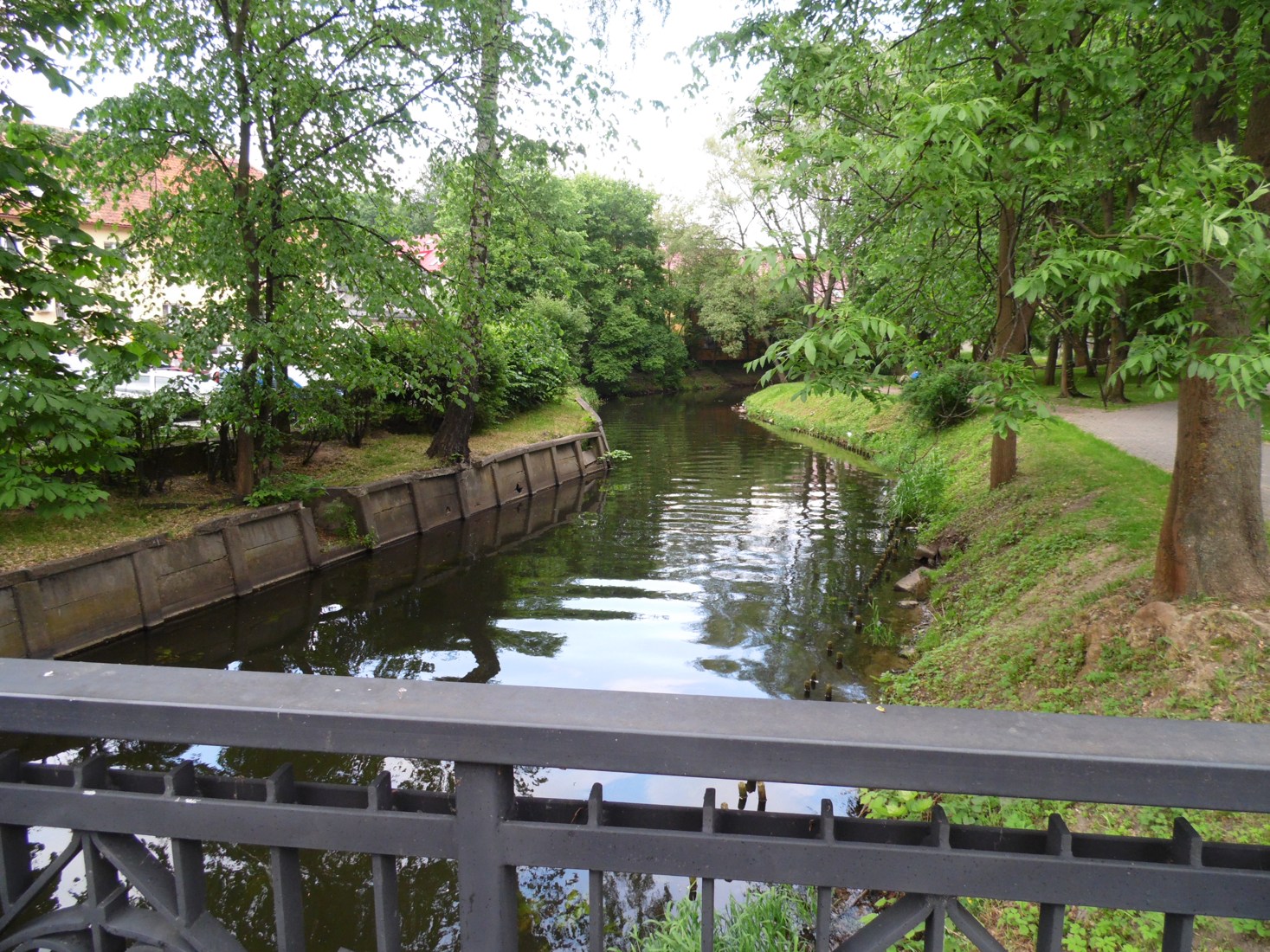
The castle history places the building near the eastern shore of Lake Drwęckie and the Drwęca's outlet. A look at the water can make sense after the indoor visit when daylight, weather and your route allow. Keep it optional in winter and use an appropriate land path. The photograph is an older landscape view, not proof that a particular riverside route is clear or accessible today. For a straightforward plan, choose a winter weekday or Saturday, make the regional exhibitions the main visit, and add anything else only after checking its separate conditions.
Frequently asked questions
Is everything free on Thursdays?
No. The museum says regional exhibitions are free. Temporary exhibitions, guiding and workshops are separate.
Can I visit on a winter Saturday?
Yes, the November-February table lists Saturday 10:00-16:00. Sunday is closed, and listed holiday closures override ordinary hours.
Does the Napoleon exhibition occupy his original room?
The museum says Napoleon stayed upstairs in the north wing in 1807, while the exhibition created in 2022 occupies a ground-level Gothic room. Do not confuse the two.
Sources
- Official seasonal hours and Thursday regional admission
- Dedicated current published ticket tariff
- Permanent exhibitions and 2022 Napoleon display
- Castle history and reconstruction
- School lessons and workshops
- Museum background
- General rules containing older prices
- Rule and tariff amendment archive
- Official contact details