Lidzbark Warmiński Castle: Free Tuesday, Late Hours and Tickets
The essentials: The Bishop’s Castle museum in Lidzbark Warmiński opens Tuesday and Thursday 11:00-19:00 and Wednesday, Friday, Saturday and Sunday 09:00-17:00. Monday is closed. Normal/reduced admission is 38/25 PLN; permanent displays are free on Tuesday. Last entry is 30 minutes before closing.
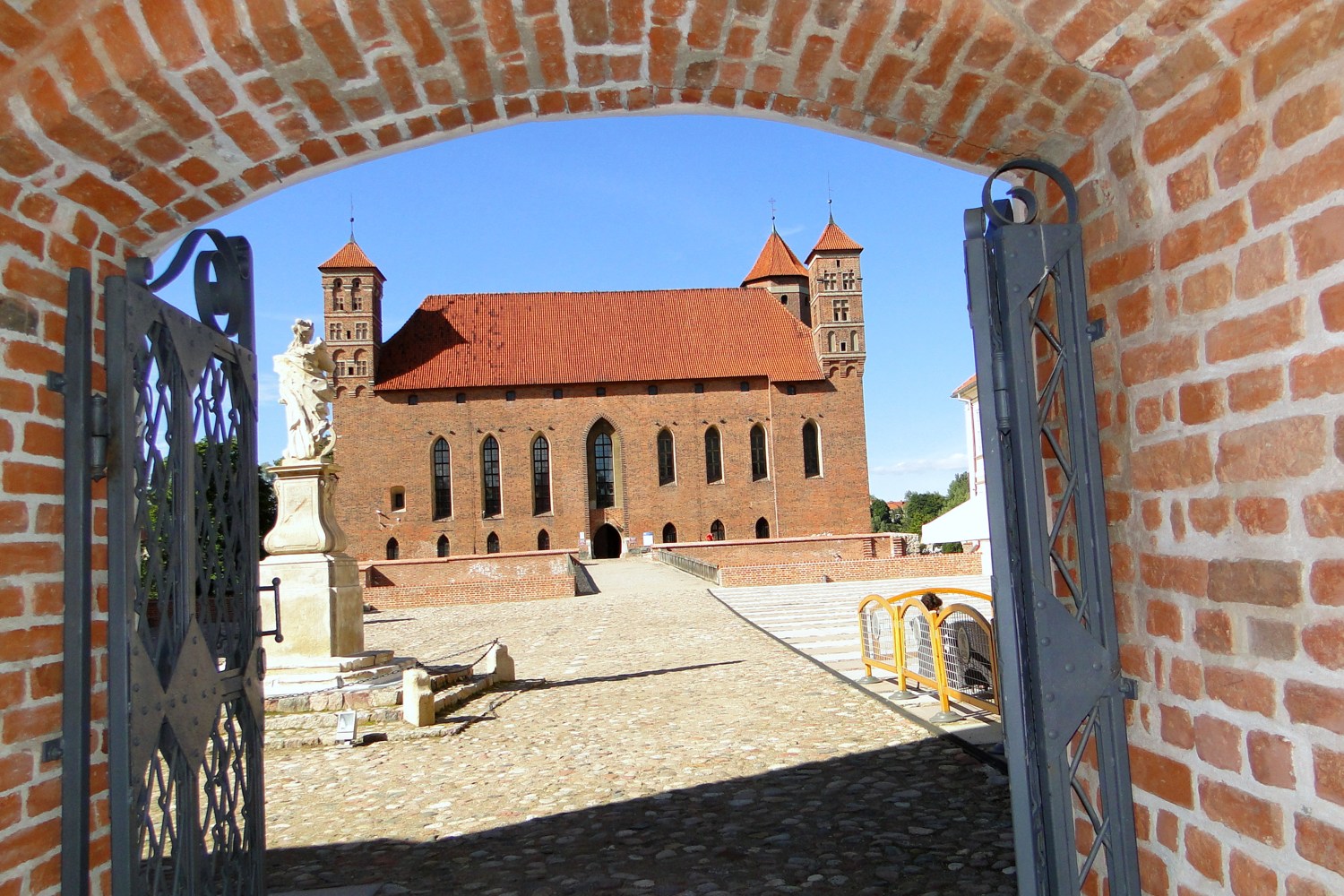
Cover: Bishop's Castle in Lidzbark Warmiński, photographed on 28 August 2012. Archival exterior, not evidence of current access. Photo: Jędrycha / Wikimedia Commons, CC BY-SA 3.0 Poland. Resized and compressed under the same licence.
Start with the day, not a generic winter timetable
Lidzbark Warmiński's Bishop's Castle makes a useful museum trip for residents who want more than an exterior photograph. The practical catch is that the opening pattern changes during the week, rather than becoming uniformly shorter in winter. The museum's official hours show Tuesday and Thursday opening at 11:00 and closing at 19:00. Wednesday, Friday, Saturday and Sunday run from 09:00 to 17:00. Monday is closed for internal work.
The page prints separate May-September and October-April tables, but the times in those tables are identical. Do not move a Tuesday visit to 09:00 because another nearby museum opens then, or assume a November visit must end at 16:00. The ticket office closes at 18:30 on Tuesday and Thursday and at 16:30 on the other opening days. Last visitors enter half an hour before closing. Those are entry limits, not suggested arrival times for a full visit.
For an ordinary weekend, arriving earlier gives you more freedom to choose between the castle's different subjects. For a weekday visit built around saving money, Tuesday is the relevant day. Thursday has the same later hours but is not the published free-admission day. This distinction matters if you are arranging time away from work or bringing children after other activities.
What 38 PLN buys, and what Tuesday does not cover
The current branch tariff, updated in September 2026, lists normal admission at 38 PLN and reduced admission at 25 PLN. Family tickets cost 85 PLN for the listed 2+1 or 1+2 configurations and 105 PLN for 2+2, 2+3 or 1+3. Check eligibility for the actual people travelling, rather than assuming any group of relatives qualifies. Bring whatever evidence is required for a concession.
Tuesday is free for permanent exhibitions only. The same tariff gives a 20 PLN Tuesday ticket price for temporary exhibitions. It also lists separate admission prices of 14 PLN for the castle tower and 9 PLN for the gardens. The page does not establish that those extras become free on Tuesday, or that every area is available every day. Ask which parts are open and how tickets combine before paying for a larger route.
For a first visit on a limited budget, the permanent displays are a sensible starting point. Decide whether a temporary exhibition is important enough to add, rather than treating the word 'free' as a promise covering the whole complex. For a family visit, compare the published family category with the individual tickets you genuinely qualify for. A guide, lesson or workshop is another service, not something automatically included in admission.
Choose a route through the building's different lives
The museum's exhibition directory is a better planning tool than a list of picturesque rooms alone. It separates permanent and temporary displays and shows that the castle tells several overlapping stories: its construction, the people who used it, regional sacred art and its later social role. Choose two or three subjects that interest your party before arrival, then ask staff how to connect them on the available route.
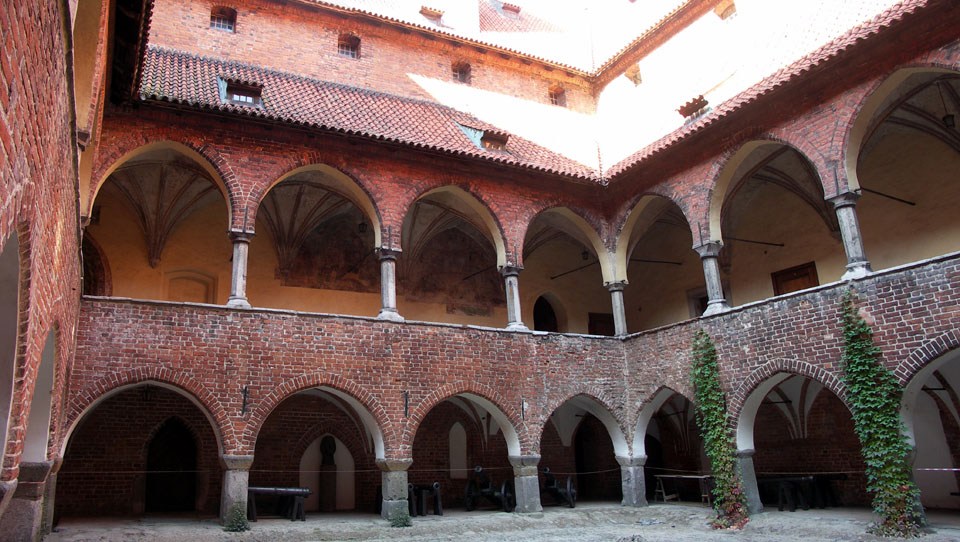
The building-history exhibition is described as occupying the upper cellar of the north wing. It uses architectural fragments, construction details, stove tiles, weapons, tools and everyday objects to explain successive phases of the residence. Models and multimedia connect individual finds with the larger building. This is a useful choice if someone in the group normally finds a castle hard to understand from wall labels and room names alone.
Rather than trying to memorise every date, use the display to ask what changed and why. A heating system, a rebuilt room or a surviving piece of decoration can make the building's long history easier to follow. The museum presents construction and later alterations as a sequence, including periods associated with Łukasz Watzenrode, Nicolaus Copernicus and Ignacy Krasicki. That gives the visit a structure beyond photographing the courtyard and moving on.
Two cellar exhibitions, two different questions
The archaeological cellar display is not simply another name for the north-wing building-history exhibition. Its description places it in the lower cellar of the south wing and focuses on heating. It includes worked fireplace surrounds from the eighteenth-century palace on the castle's outer defensive area. The exhibition explains the fireplace system and other ways of warming the residence.
That distinction gives families an easy way to divide attention. One display asks how the castle was built and changed; the other asks how people made life inside it more comfortable. On a cold-weather trip, the second question may feel especially immediate. It does not, however, tell you the present indoor temperature or whether every cellar is suitable for someone who cannot manage steps. Ask about those practical points separately.
A third strand concerns the St Joseph Foundation orphanage, which operated in the castle from 1859 to 1932. The museum describes exhibits, information panels and two multimedia presentations about the institution and the adaptation of the castle. This shifts the story from a bishops' residence to a place used for children's care, education and health. It is worth including if your party is more interested in everyday lives than in architectural chronology.
Read the Gothic-art page as a collection guide
The museum's account of Gothic art provides substantial background on sacred sculpture and painting from Warmia and the former Teutonic Prussian lands. It also contains a warning that matters when planning: the exhibition is reduced for the safety of the objects, while the accompanying text describes the whole collection. A long online catalogue is therefore not a guarantee that each named work is currently on display.
If a particular sculpture or painting is your reason for travelling, ask the museum whether it is on view before setting off. Otherwise, use the page to prepare a broader question, such as how works from different regional centres differ, or how religious images moved between places. This avoids turning an interesting background essay into a checklist the current galleries may not fulfil.
Accessibility needs a room-by-room answer
The building-history exhibition page says that the exhibition was adapted for blind and partially sighted visitors. That is useful, specific information. It does not establish wheelchair access to the whole castle, to the tower or to every cellar. Sensory interpretation and a continuous step-free route answer different needs.
The official accessibility report covering the position on 1 January 2025 describes two buildings. One has all communication spaces free of barriers and access to all rooms, while the other has only partial barrier-free circulation and does not provide access to every room. The report identifies the historic castle and the newer Bishop Grabowski building, but the aggregate counts should not be turned into an unsupported promise about a particular castle route.
Before travelling with a wheelchair, walking aid or pushchair, name the exhibitions you want to see. Ask about the entrance, the route between those rooms, any steps or equipment, toilets and staff assistance. Ask the same specific question for a tower visit rather than assuming a general museum answer includes it. An older report is a starting point for that conversation, not a substitute for confirmation of current arrangements.
Guides, school groups and the contact to use
Organised groups should book at least three days ahead, according to the tariff page. During normal opening hours, Polish-language guiding costs 90 PLN for groups of up to ten people and 120 PLN for larger groups. Foreign-language guiding costs 180 PLN or 240 PLN respectively. A foreign-language price does not confirm that your chosen language is available at your preferred time. Settle language, group size, admission and the route together.
The same page lists museum lessons as each participant's admission plus a 50 PLN group charge, and workshops as admission plus a 60 PLN group charge. Separate, higher arrangements are listed outside normal opening hours. For an ordinary visit, do not treat those out-of-hours prices as a late-entry option you can buy on arrival. Obtain the museum's agreement before building a group plan around them.
The branch contact is at Plac Zamkowy 1, 11-100 Lidzbark Warmiński. The published telephone is +48 89 767 21 11 and the general branch email is [email protected]. A short enquiry can cover the visit date, number and ages of visitors, preferred language, the rooms you want and any access requirements. These are contact details for making your own arrangements, not confirmation of a booking.
Check holiday exceptions before committing to the journey
The opening page includes an explicit 2026 holiday list. It names 24, 25, 26 and 31 December as closed. Those exceptions override the regular weekday pattern, so a normally late-opening Thursday should not be treated as available on Christmas Eve or New Year's Eve. The list is for 2026; it does not establish the 2027 calendar.
The simplest plan is to choose the day for its hours and ticket rules, select a few permanent displays, and confirm any special requirement before travel. Tuesday can reduce the cost, Thursday offers the same later finish without the free-permanent-display rule, and the weekend starts earlier. None of those choices removes the need to check holiday closures, temporary exhibition availability or the precise route your party can use.
Frequently asked questions
Does the castle close earlier in winter?
The official May-September and October-April tables show the same hours. Tuesday and Thursday are 11:00-19:00; the other opening days are 09:00-17:00.
Is everything free on Tuesday?
No. Permanent exhibitions are free; temporary exhibitions cost 20 PLN that day. The tariff separately lists tower admission at 14 PLN and gardens at 9 PLN.
Can I book an English-language guide on arrival?
The tariff lists foreign-language guiding, but groups should arrange it at least three days ahead. Confirm the language and time with the museum.