Cleaning Labels in Poland: Hazards, Precautions and UFI
The essentials: Identify the actual product, then read its purpose, hazard and precautionary information, use and storage instructions. UFI is a 16-character mixture identifier that can help professional services identify an exposure; it is not a treatment or safety certificate.
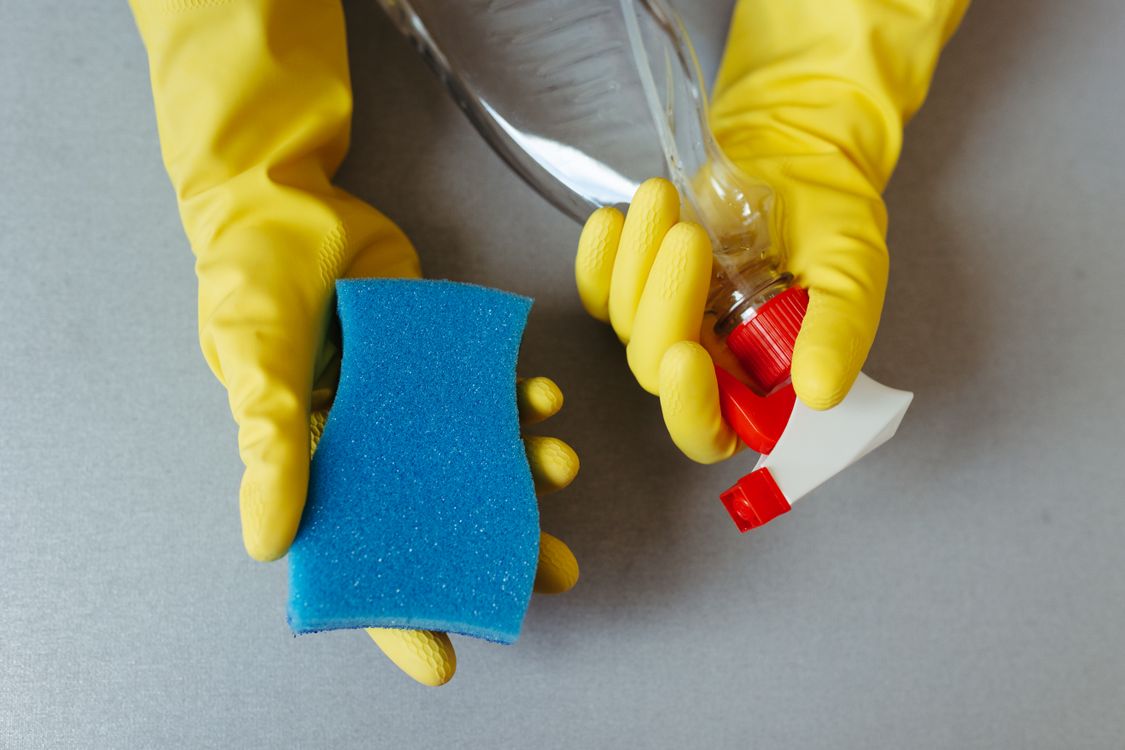
Cover: Jonathan Borba, source photograph, Pexels License. Image unchanged. Cleaning equipment held with protective gloves. General household-cleaning context, not a complete labelled product or handling procedure.
An unfamiliar cleaning bottle is not something to identify by colour, smell or the room where the previous tenant left it. The useful information is on the original label: what the product is for, what hazards it has, how it should be used and stored, and which precautions apply. In a new language, those separate pieces can blur together. Reading them before you start is safer than trying to infer a procedure from a familiar-looking spray nozzle.
This guide covers household chemical label reading, not mixing recipes, dilution instructions, stain-removal procedures or treatment after exposure. It uses European Chemicals Agency information checked on 5 November 2026. The photographs are general cleaning-supply context, not examples of complete compliant Polish labels or recommendations to use the containers as shown. Follow the original product instructions and seek appropriate emergency help if an incident occurs.
Identify the actual product before using it
Read the product name and intended use, then find the relevant instructions and warnings. Two products described as bathroom cleaners can have different contents and precautions. A familiar brand does not make every bottle in its range interchangeable. If you cannot establish what an unlabelled container holds, do not experiment with it or identify it by a smell test.
ECHA explains that classified hazardous substances and mixtures carry CLP label information, including product identifiers and supplier details, with hazard and precautionary information where applicable. The label communicates identified hazards to users; it is not decorative packaging. Read it as part of deciding whether you can use the product as intended.
Keep the product in its original labelled packaging. This practical precaution preserves the information you need for normal use and for any later question. A drink bottle or a container with an old unrelated label creates avoidable uncertainty. This guide does not provide a method for transferring or repackaging household chemicals.
A pictogram points to a hazard, not a recipe
CLP hazard pictograms are warning symbols associated with particular hazard information. ECHA's reference describes pictograms for hazards such as flammability, corrosion, serious health effects and environmental harm. A pictogram should direct you to the accompanying statements and precautions. It does not tell you the whole safe-use procedure by itself.
Do not reduce a label to one remembered symbol. A product can have more than one relevant hazard, and the written information explains what applies. An exclamation mark does not mean a product is harmless, while a more severe-looking symbol is not a reason to invent your own handling technique. Read the actual instruction rather than relying on how alarming the artwork feels.
This guide deliberately links to ECHA's official pictogram reference instead of reproducing a simplified chart. A short chart can be useful for recognition, but the product's own full label is the relevant source during use. If you do not understand a hazard statement, obtain a reliable explanation before using the product rather than guessing from the picture.
Separate hazards from precautions
A hazard statement describes the nature of a hazard. A precautionary statement tells you measures relevant to prevention, response, storage or disposal. The distinction matters because knowing that something can cause harm does not automatically tell you how to avoid that harm. Read both parts and the manufacturer's use directions together.
Signal words also form part of the label information where applicable. Do not treat a single word as a numerical safety rating or compare two products only by the tone of the wording. The label belongs to a classification and instruction system. Your practical question is whether you can follow the relevant conditions for that actual product and task.
For a Polish-language label, keep the whole relevant passage when asking for a translation. A cropped warning without the product name or its accompanying precaution can be misleading. Do not rely on an isolated translated noun to decide on protective equipment, ventilation, application method or contact time. Those are product-specific instructions, not details to fill from a generic guide.
Do not turn household experience into mixing instructions
Using one cleaner successfully before does not establish that it can be combined with another. This guide gives no combinations, ratios or procedures for mixing chemicals. If the task would require a use that the original instructions do not describe, stop and obtain appropriate product-specific advice rather than treating two familiar products as a safe new formula.
Likewise, do not add extra stages merely because a product did not immediately produce the result you expected. The correct response is to review its stated purpose and directions, not to improvise a stronger mixture. A label-reading article is not a substitute for the manufacturer's instructions or competent advice on a specialised task.
When a rental flat contains several unknown or partly used products, identify what you can from intact original labels and ask the responsible household member or landlord about the rest. Do not assume the location of a bottle establishes its intended use. A previous occupant's arrangement is not an instruction for your task.
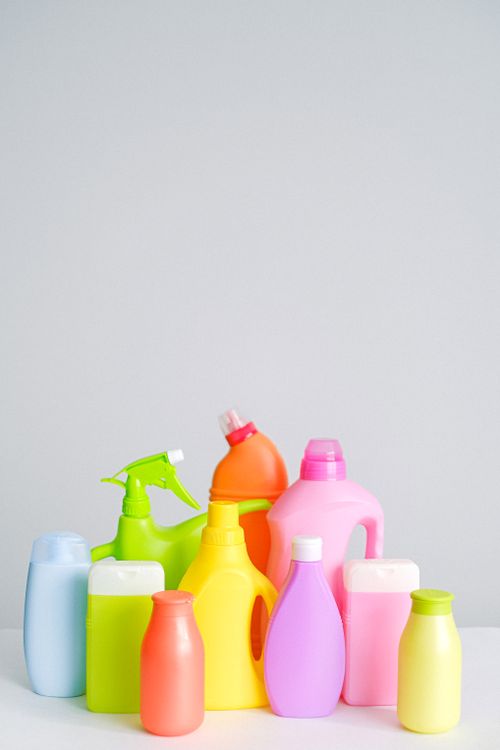
Find the UFI before you need to explain a product
UFI stands for unique formula identifier. ECHA describes it as a 16-character code that links information about a mixture, including its ingredients and toxicity, for poison-centre identification. It can help health services identify the product involved when someone seeks advice about an accidental exposure. It is not a consumer recipe or a public certificate that a product is safe.
Look for UFI near the trade name or hazard information on applicable products. ECHA says it may appear on a label or directly on the packaging and should be visible, rather than on the bottom. Learning where the code is while reading the bottle is easier than searching hurriedly during a stressful call. Keep the actual container available when doing so is safe.
Not every household product is in the same system. ECHA specifically distinguishes cosmetics and pharmaceutical products, which are governed by other rules, from the relevant hazardous mixtures. Do not decide that a shampoo without a UFI is necessarily missing chemical-labelling information. Identify the product category before applying an expectation from a cleaning bottle.
A code does not replace emergency advice
The UFI can help the appropriate service identify the mixture; it does not tell you what treatment to perform yourself. If an exposure occurs, follow the label's response information and obtain appropriate professional help. This article does not supply a home treatment sequence, tell you to induce a reaction or advise waiting to see what happens when someone is unwell.
Do not delay urgent help while trying to obtain a perfect photograph or decode every character. Share the product identity and available information with the professional service, and follow its instructions. The useful preparation is to keep labels readable and understand that the UFI is an identifier you may be asked to provide.
If you save a photograph for household reference, include the full label and tie it to the actual container. A photo of a similar bottle from a retailer's website may describe a different formulation or variant. The code and product information on the item involved are more useful than a generic search result about the brand.
Keep storage and disposal instructions separate from use
A product's suitable use does not tell you where it can be stored afterward. Read storage precautions and keep the container properly closed as instructed. Consider whether the place you have chosen meets the actual label requirements. This guide does not supply one universal storage temperature or cabinet arrangement for every household chemical.
ECHA's packaging explanation says hazardous products supplied to the general public must not resemble food, animal feed, medicines or cosmetics in a misleading way. The same principle is a useful household warning against making the contents ambiguous. Keep identification and warnings intact rather than making a collection of anonymous matching bottles.
Disposal is another separate question. Follow the label and the applicable local collection guidance for the actual contents and packaging. Do not assume that a recycling symbol on a bottle settles what to do with leftover product inside it. This guide does not prescribe a drain-disposal method or a nationwide collection route for every chemical.
Check current information without inventing compliance findings
ECHA's older consumer UFI page refers to a transition period ending at the beginning of 2025. That is historical context, not a future deadline in November 2026. Its later notice confirms that the transition to harmonised poison-centre notifications ended on 1 January 2025. Do not repeat an old webpage's future-tense wording as though companies still have that time remaining.
At the same time, the absence of one marking in a photograph is not enough for this guide to declare a product unlawful. Category, classification, packaging exceptions and the actual complete label can matter. If you have a concrete concern, keep clear product information and ask the supplier or the appropriate authority. Avoid turning an incomplete view into a confident legal verdict.
For everyday use, the routine is simpler than the legislation: identify the product, read its purpose and full warnings, follow its use and storage instructions, and keep the original label available. Know what a UFI is without trying to use it as a treatment tool. When you cannot answer an important safety question from reliable information, pause the task instead of replacing that gap with household guesswork.
Frequently asked questions
Does a UFI mean a cleaner is safe for any task?
No. It identifies a mixture for the relevant information system. Read the product's use instructions and hazards.
Can I use this guide to mix cleaning products?
No. It gives no mixing, dilution or treatment procedures. Follow original instructions and obtain appropriate product-specific advice.
Must cosmetics also carry cleaning-product UFI codes?
Not under the same expectation. ECHA distinguishes cosmetics and medicines, which have different rules.