Kampinos National Park Guide: Free Entry, 357 km of Trails
The essentials: Kampinos National Park (38,544 ha, UNESCO biosphere reserve since 2000) is free to enter and reachable by ZTM bus 210 in 20 minutes. Trails are daylight-only; dogs, drones and fires are banned; the Granica museum loop is the best first visit.
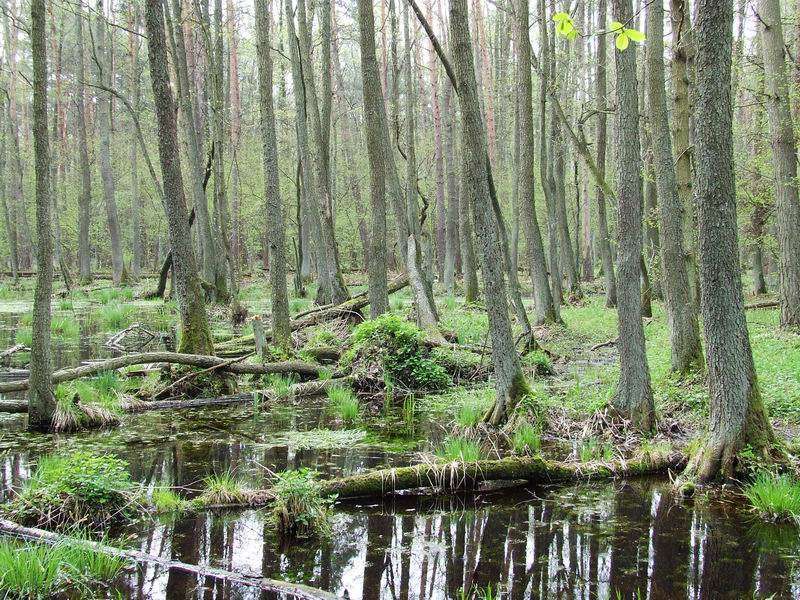
Twenty minutes from the end of Warsaw's metro line sits one of Poland's oldest national parks - 38,544 hectares of dunes, marshes and pine forest that most expats have heard of and surprisingly few have actually visited. Kampinos is free to enter, reachable by city bus, laced with 357 km of marked trails, and strict about its rules in ways that catch first-timers out. This is the practical guide: what the park is, how to get there, which trails to pick, and exactly what you may and may not do once inside. For more nature escapes, see our day trips from Warsaw guide.
What Kampinos actually is
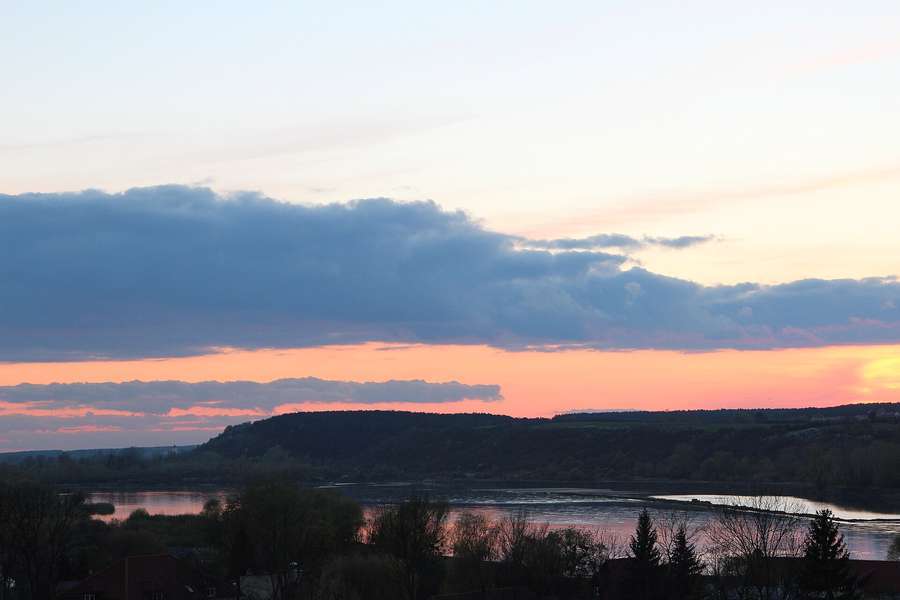
Kampinoski Park Narodowy was created on 16 January 1959, one of Poland's oldest national parks, on the plain between the Vistula and the Bzura at Warsaw's north-western edge. Its 38,544 hectares sit inside a protective buffer zone of 37,756 hectares; the most valuable fragments are 22 strict-protection areas totalling 4,636 hectares, the largest of them - Sieraków, 1,205 hectares - just a few kilometres from the city limits. The whole park forms the UNESCO "Puszcza Kampinoska" Biosphere Reserve (since 2000) and a Natura 2000 site. The landscape is unusual: inland sand dunes covered in pine next to low peat bogs and meadows - a mosaic that supports elk (the park's emblematic animal), beavers, cranes and black storks. The park also holds 156 officially protected monument trees, the oldest an oak named for the park's founders, over 330 years old. Data source: Kampinoski Park Narodowy official site (kampn.gov.pl), checked 22 October 2026.
Reading the landscape: dunes and bogs
What makes Kampinos unlike Poland's mountain parks is its geology. The park sits on a glacial outwash plain where wind piled sand into inland dunes - today forested in pine - directly beside waterlogged low peat bogs and sedge meadows. The two habitats can sit fifty metres apart, and the marked routes deliberately alternate between them: dry dune ridges with views, then boardwalks and bog edges full of life. The strict-protection areas, off-limits to visitors, are where the park lets this mosaic run wild - and why the trail rule exists: a shortcut off a marked path can put you inside a protected bog without any sign telling you so. The park's active-protection work - rebuilding water relations, reintroducing lost species like yew and European larch - is what keeps the mosaic functioning, and it is the reason the elk, vanished from the region in the 19th century, is back in numbers large enough that rangers treat sightings as routine.
Entry is free - but it is not a free-for-all
Kampinos charges no entrance fee. What it enforces instead is a tight rulebook, set by the park director's current access regulation (Zarządzenie nr 5/2026):
- Trails only, daylight only. Hiking, cycling and cross-country skiing are allowed on marked trails from sunrise to sunset. Cyclists may use hiking trails but pedestrians have priority. Riding a horse, camping, organizing any event over 20 people, and any commercial filming or photography require a permit from the park directorate.
- No fire. The park is highly fire-prone; any use of fire - including on the picnic clearings - requires the director's consent. Treat barbecues as simply not a thing here.
- Dogs are essentially a no. Dogs are banned across the park's protected areas. The exceptions are narrow: one section of the blue trail (Brochów toward Famułki Brochowskie), car parks, six named rest clearings (Granica, Lipków, Jakubów, Roztoka, Zaborów Leśny, Dąbrowa Leśna) and public roads. Assistance dogs are exempt under the nature-conservation act.
- Cars stay on public roads and in the designated (unguarded) car parks - no driving into the forest.
Twelve rest clearings (polany wypoczynkowe) with shelters and benches serve as picnic spots; the ones at Jakubów and Lipków also have children's playgrounds. Data source: kampn.gov.pl access rules and dog rules pages, checked 22 October 2026.
The trail network by the numbers
The marked network currently totals: 23 hiking trails at 357 km (including 15 km of easy walking paths), 11 cycling trails at 206 km, and 10 educational paths at 28 km. The signature starter route is the 4 km "Along the Edge of the Forest" educational loop from the Granica car park: an observation tower over the Olszowieckie Błoto marshes, the open-air museum of forest architecture, the Kampinos Forest Museum, the edge of the Granica strict-protection area and a September 1939 war cemetery. In spring the meadows there flower in sequence - kingcup first, then buttercups and loosestrife - and the marsh edge is one of the easiest places near Warsaw to spot cranes, storks and, with luck, an elk at dawn. Data source: kampn.gov.pl English guide, checked 22 October 2026.
Getting there without a car
Izabelin (park headquarters and Education Centre): ZTM bus 210 from the Metro Młociny terminus, about 20 minutes, to the Urząd Gminy stop in Izabelin, then 750 m on foot down Tetmajera street. The weekday-only L-7 (six runs daily) connects Izabelin with Łomianki and Ożarów Mazowiecki.
Granica (museum, skansen, the 4 km loop): the Motobuss carrier's Sochaczew-Kampinos-Warsaw line from the Marszałkowska-Sawa stop in central Warsaw, about an hour to the Kampinos stop, then roughly 3 km on foot along the blue trail. Alternatively ZTM bus 719 from Os. Górczewska to Leszno, changing to a PKS Grodzisk Mazowiecki bus for Kampinos.
By car: Izabelin is about 10 minutes from the Bielany edge of Warsaw (35 from the centre); Granica about 40 minutes from the Bemowo edge via road 580. All park car parks are unguarded - take valuables with you. Data source: kampn.gov.pl directions page, checked 22 October 2026.
What is open: museums and the skansen
The Education Centre in Izabelin (Tetmajera 38) is free and open Monday-Friday 7:30-15:30, though its main exhibition is temporarily closed - check before going. At Granica, the Kampinos Forest Museum is free (also temporarily closed at last update), while the open-air museum of forest architecture (skansen) charges admission: since 26 January 2026, 10 zł normal and 5 zł reduced. Granica's opening hours run Tuesday-Friday 8:00-16:00, and on weekends and holidays 10:00-15:00 in November-February, 10:00-17:00 in July-August and 10:00-16:00 otherwise; closed Mondays. Data source: kampn.gov.pl tickets and English guide pages, checked 22 October 2026.
Kampinos with children
For families, the park is close to ideal with two caveats. The short educational paths (the 28 km network includes several under 3 km) are stroller-tough but manageable with a carrier; the rest clearings at Jakubów and Lipków have proper playgrounds, making them natural turnaround points; and the Granica skansen gives younger children something concrete - old forest buildings - after an hour of trees. The caveats: mosquitoes in bog season and the no-dog rule, which surprises many Warsaw dog-owning families. Plan the route around a clearing, start early before the car parks fill on sunny weekends, and the park delivers a full nature day inside a public-transport budget.
When to go and what to bring
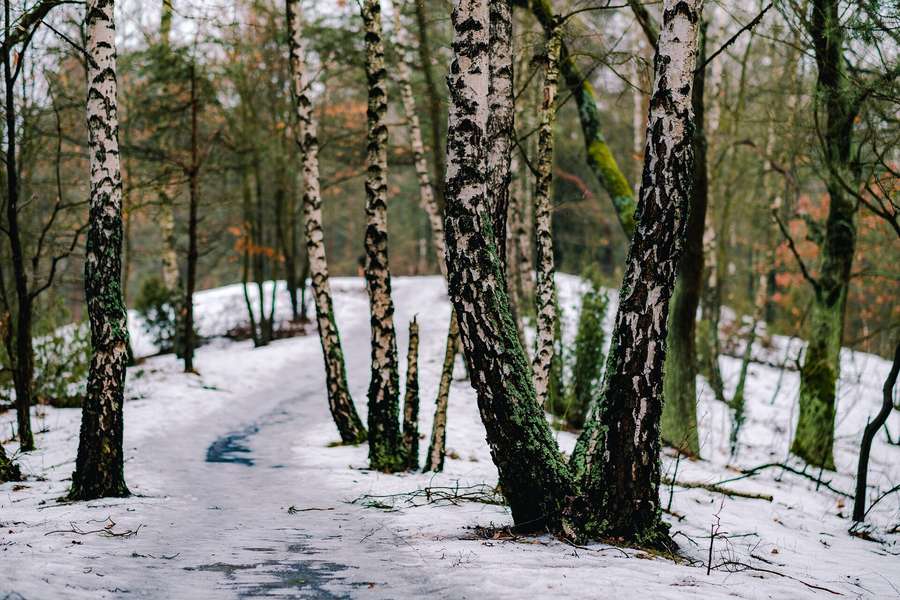
Kampinos rewards every season, differently. Late April-May is the flower sequence on the Granica marshes and the easiest birding; June-August is full-canopy walking but also mosquito season - repellent is not optional in the bog sections; late September-October is mushroom-free (collecting in a national park is restricted) but the best colour and the elk rut, when the bulls' calls carry across the bogs at dawn; winter turns the trail network into Warsaw's best cross-country skiing the moment snow holds. Whatever the season: trails are unpaved dune sand and bog boardwalk, so waterproof walking shoes beat trainers, and there are no shops or taps inside the forest - carry water. Tick checks afterward are standard practice in Polish forests.
A half-day plan that works
The proven first visit: bus 210 out to Izabelin in the morning, a trail section north into the forest (the educational paths start right at the village edge), picnic at the Jakubów clearing with its playground if you have kids, and back by mid-afternoon. With a car or the Motobuss run, swap in Granica: tower, skansen, museum and the 4 km loop cover the park's greatest hits in three hours. Either way you are back in Warsaw for dinner - which is precisely the point of Kampinos: a genuine national park that costs nothing, asks only that you stay on the trail, and sits inside a city-bus ticket.
Rules expats break without knowing
Three violations rangers see from newcomers every season. First, the drone: flying one in a national park requires the director's permission, full stop - "just a quick shot" counts. Second, mushroom and berry picking: the default in a national park is not the State Forests default, and foraging rules here are restricted rather than assumed - check the current access regulation before filling a basket. Third, the sunset mistake: the daylight-only rule means the legal end of your hike moves with the calendar - in December that is around 15:30, and being on a trail after dark is an offence, not an adventure.
Frequently asked questions
Is Kampinos National Park free to visit?
Yes - there is no entrance fee. Only specific facilities charge: the Granica open-air museum costs 10 zł (5 zł reduced) since 26 January 2026. Both museums in Izabelin and Granica are otherwise free.
Can I take my dog to Kampinos?
Almost nowhere. Dogs are banned in the protected areas; they are allowed only in car parks, six named rest clearings, one section of the blue trail and on public roads. Assistance dogs are exempt.
How do I get to Kampinos from Warsaw by public transport?
ZTM bus 210 from Metro Młociny reaches Izabelin (park HQ) in about 20 minutes. For the Granica museum area, take the Motobuss line from Marszałkowska-Sawa to Kampinos (about an hour), then walk 3 km along the blue trail. * Photos: Hiuppo (CC BY-SA 3.0), Light Charmer (CC BY-SA 3.0), via Wikimedia Commons.