Independence Day in Poland: An Expat’s Guide to 11 November
The essentials: Independence Day (11 November, statutory holiday) marks Poland’s 1918 return to statehood. In 2026 it falls on a Wednesday: shops closed, free MHP festival at 10:00/12:00, the 20k Independence Run, and the 14:00 march from Rondo Dmowskiego.
Poland's Independence Day - Narodowe Święto Niepodległości, 11 November - marks the day in 1918 when the country returned to the map after 123 years of partitions. It is the most serious of Poland's holidays and, for expats, the one with the widest gap between what you see in the streets (flags, a huge march, families at free festivals) and what the day actually means. In 2026 it falls on a Wednesday - a single midweek day off with no long weekend attached. Here is what happens, what closes, and how to take part without putting a foot wrong. For the race itself, see our Independence Run guide.
What the day commemorates
On 11 November 1918, as the First World War collapsed the occupying empires, Józef Piłsudski took command of Polish forces in Warsaw and the German garrison was disarmed - the date Poles count as the rebirth of the state. The holiday is statutory: 11 November appears in the Act on Days Off Work (consolidated text Dz.U. 2025 poz. 296) as the National Independence Day. Because it lands on a Wednesday in 2026, there is no attached weekend: Tuesday 10 November is a normal working day and so is Thursday 12th. Data source: Dz.U. 2025 poz. 296, checked 22 October 2026.
What closes and what stays open
The Sunday-and-holiday trading ban (Dz.U. 2025 poz. 301) applies to Independence Day: supermarkets, discounters and shopping malls are closed on Wednesday 11 November. The same statutory exceptions as always apply - pharmacies, petrol stations, owner-run small shops, bakeries, florists, and restaurants and cafés - so lunch out and emergency groceries are possible, but the weekly shop must happen by Tuesday evening. Offices, schools, public administration and most museums close; several museums instead open free for the occasion (below). Data source: Dz.U. 2025 poz. 301, checked 22 October 2026.
The official ceremonies
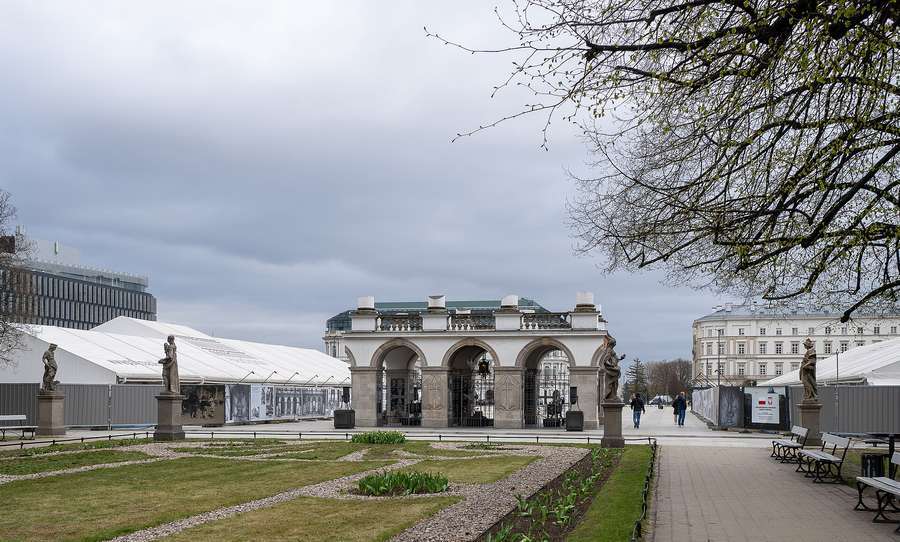
The state's central ceremonies traditionally take place at the Tomb of the Unknown Soldier on Plac Piłsudskiego in Warsaw at 11:00 - a guard change, wreath-laying and the singing of the anthem, with the President and state leadership attending; the precise 2026 program is published in the days before the holiday. The mood at the official ceremony is formal and brief - worth seeing once, and easily combined with the free city festival that follows. City flags go up on public buildings and buses; private flag displays on balconies are common across the country, and many people wear a kotylion - the small red-and-white rosette pinned to a lapel. Wearing one as a foreigner is read as a gesture of respect and is entirely welcome.
Why 11 November carries extra weight in Poland
Context helps an expat read the day's intensity. Poland's independence was lost to three partitioning empires for 123 years, regained in 1918, fought for again in 1920, lost under occupation in 1939, and subordinated for the following four decades - the holiday itself was celebrated before the war, then abolished under communism and only restored in 1989. That history is why the day has a martial edge (the Tomb of the Unknown Soldier, the army's central role), why "did Poland exist?" is never a wise joke, and why two very different Polands celebrate the same date: the state festival crowd at the Citadel in the morning and the march crowd on Rondo Dmowskiego in the afternoon see each other as the two halves of one national argument. Understanding that you are watching a live negotiation over what patriotism means - rather than a single settled ceremony - is the deepest insight the day offers a newcomer.
The polonaise and the anthem: joining in without faking it
Two participatory traditions are open to anyone. The polonez - the stately opening dance of Polish balls - is danced collectively at independence events, and the MHP festival explicitly invites everyone in: it is a slow walking dance in pairs, learnable in three minutes by watching the couple ahead. The anthem is sung at 11:00 ceremonies and at the festival's collective singing; foreigners are not expected to know it, but humming along standing up (everyone stands) is the done thing. If you sing one line, make it the first: "Jeszcze Polska nie zginęła, kiedy my żyjemy" - "Poland has not yet perished, so long as we still live" - a lyric whose tense tells you most of what the previous section explained.
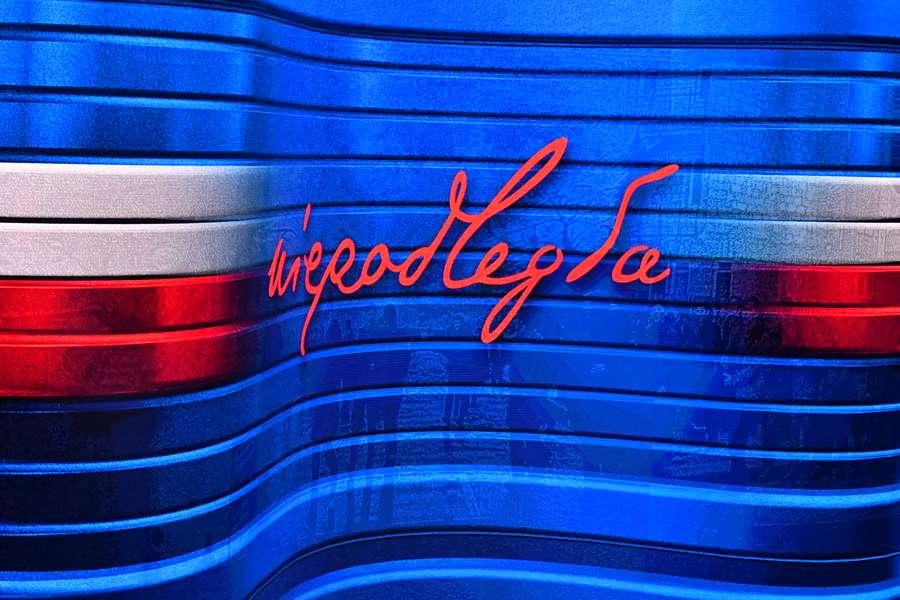
The big events of the day
Wspólna Niepodległa (Independent Together). The Museum of Polish History's free festival runs on 11 November 2026 in two locations: from 10:00 at the Warsaw Citadel and from 12:00 on Krakowskie Przedmieście - a full family day of music, dance, workshops and historical reenactment, including a collective singing of the anthem and a polonaise. Free entry; this is the easiest, most welcoming way for an expat family to join the celebration. Data source: Muzeum Historii Polski event page, checked 22 October 2026.
Bieg Niepodległości (Independence Run). Warsaw's 10 km run down Puławska starts on 11 November morning and draws a record 20,000+ participants; the 2026 race office operates at Westfield Arkadia from 7-11 November. Registration is required - see our detailed run guide. Nearly every Polish city runs its own independence run the same morning. Data source: biegniepodleglosci.waw.pl program, checked 22 October 2026.
Marsz Niepodległości (Independence March). Warsaw's Independence March - billed by its organizers, the Marsz Niepodległości Association, as Europe's largest patriotic demonstration - sets off on 11 November 2026 at 14:00 from Rondo Dmowskiego in central Warsaw. The march draws tens of thousands, mostly ordinary families alongside nationalist organizations, and it dominates the city centre for the afternoon: expect street closures along the route and a heavy police presence, and expect the atmosphere to be emphatically patriotic - flags, flares and chanting rather than a carnival. Watching from the pavement is normal; joining is a personal call about a march whose political colouring is openly nationalist. Data source: marszniepodleglosci.pl, checked 22 October 2026.
Outside Warsaw
Every city marks the day. Kraków's ceremonies centre on Wawel and the Matejko monument with services and wreath-laying; Poznań spends 11 November on a different saint entirely - St Martin's Day, when the city eats its way through rogale świętomarcinskie, the PGI-protected croissants (see our rogal guide) - alongside the official ceremonies; Gdańsk, Wrocław and Łódź all hold runs, parades and free museum days. Wherever you are, the pattern repeats: morning ceremonies, midday runs and festivals, afternoon marches.
Etiquette: where expats go wrong
- The register is dignity, not festivity. "Happy Independence Day" translates fine and Poles say it too (wszystkiego najlepszego z okazji Święta Niepodległości), but the day's tone is closer to solemn pride than to a Fourth-of-July barbecue - especially in the morning.
- White-and-red everywhere. Flags, kotylions, face paint on children at the festival - joining in is welcomed, and nobody expects a foreigner to know the anthem. (If you want to try: the first line, "Jeszcze Polska nie zginęła", is the one everyone sings loudest.)
- Flares are a march thing, not a you thing. Red flares belong to the march's ultras fringe; do not buy or carry one, and keep a normal distance if a flare-heavy block passes.
- 11:00 is a moment. If you find yourself near Plac Piłsudskiego at eleven, the minute of ceremony is worth stopping for - stand still, take your hat off, and you are doing it exactly right.
With children
Of all Poland's solemn holidays, this one is the most child-friendly. The MHP festival is built for families - workshops, dancing, reenactors who let kids try on historical kit - and the morning runs include children's races in many cities. The practical pattern Polish families use: festival in the morning, home before the march hour, flag crafts in the afternoon. One genuine caution: the march's crowds, flares and noise make the centre after 14:00 a poor choice for small children - not because of violence (the march has been largely peaceful in recent years) but because it is simply overwhelming.
Planning around the Wednesday
With no long weekend in 2026, most Poles simply work Tuesday and Thursday - so the normal getaway traffic wave does not materialize, and the day's disruption concentrates in city centres instead. In Warsaw, plan around three closures: the morning run route along Puławska, the midday ceremonies around Plac Piłsudskiego and Krakowskie Przedmieście, and the afternoon march route from Rondo Dmowskiego. Police publish the closure map in advance; the metro runs throughout and is the way through the day. If you need one shopping rule: supermarkets are open Tuesday until late and closed all of Wednesday - and Thursday morning's shelves are picked clean of bread by nine.
Frequently asked questions
Is 11 November a day off work in Poland?
Yes - National Independence Day is a statutory holiday under the Act on Days Off Work. In 2026 it falls on a Wednesday, so it is a single midweek day off with no long weekend.
Are shops open on 11 November 2026?
No. The holiday trading ban applies: supermarkets and malls are closed. Pharmacies, petrol stations, owner-run small shops, bakeries, florists and restaurants remain open under the statutory exceptions.
What is the Independence March and should I avoid the centre?
The Marsz Niepodległości leaves Rondo Dmowskiego at 14:00 on 11 November 2026. It is a huge, emphatically patriotic demonstration with street closures along its route; the centre is not dangerous, but if flags-and-flares crowds are not your scene, plan the Old Town for the morning and elsewhere for the afternoon. * Photos: Igor123121 (CC BY 4.0), Kancelaria Sejmu (CC BY 2.0), via Wikimedia Commons.