Las Kabacki: Warsaw's Biggest Forest Reserve, an Expat Guide
The essentials: Las Kabacki is Warsaw's largest forest reserve (904 ha), a 20-minute M1 metro ride to Kabaty station, free to enter. Walk or cycle only on 33 km of marked trails; dogs, mushroom picking and fires are banned, with a 500 zl picking fine.
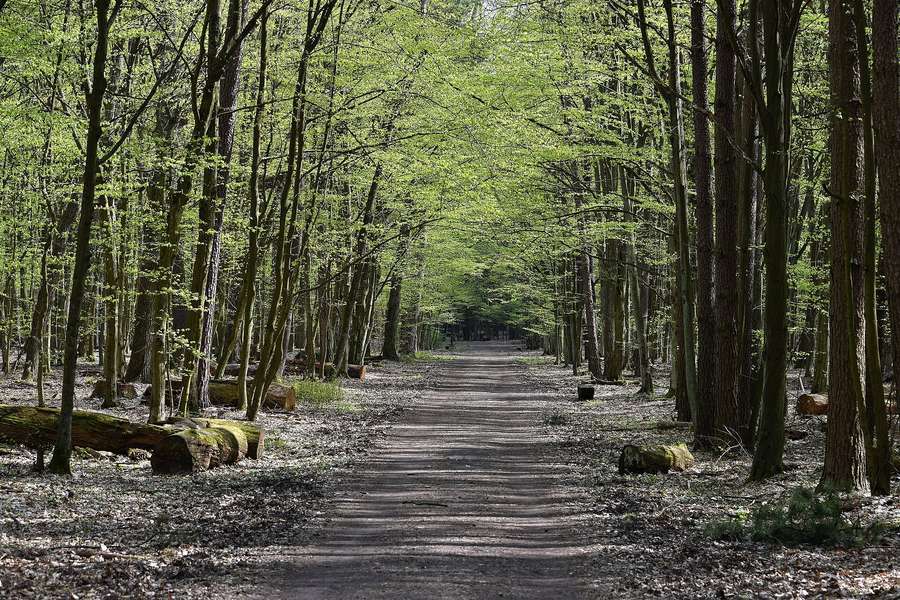
At the southern end of Warsaw's metro line 1, the city does not so much end as dissolve into trees. Step out of Kabaty station and within five minutes you are inside the largest forest complex within Warsaw's city limits: the Las Kabacki im. Stefana Starzyńskiego nature reserve. For expats used to driving an hour to find real forest, it is a minor shock - 904 hectares of protected woodland sitting directly behind the apartment blocks of Ursynów, reachable on a standard ZTM ticket.
Las Kabacki is not a park in the Łazienki sense. There are no cafés, no manicured lawns, and no playgrounds beyond the edge of the trees. It is a legal nature reserve - the biggest in the entire Mazovian voivodeship - and it runs on rules that catch newcomers off guard: dogs are banned outright, you may only walk or cycle on designated trails, and picking a single mushroom can cost you a 500 zł fine. This guide explains what the reserve is, how to get there, what the rules actually say, and why the forest is worth the trip anyway.
What Las Kabacki actually is
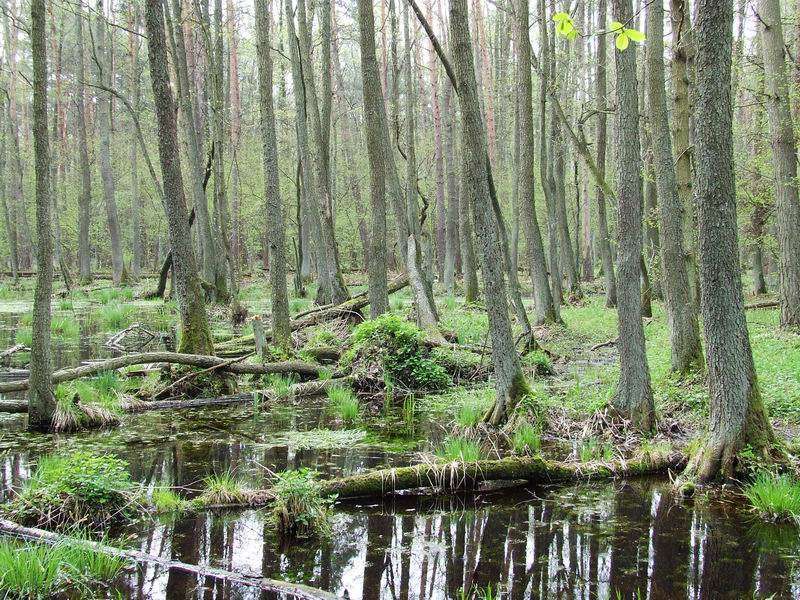
The reserve's full official name is Rezerwat Przyrody Las Kabacki im. Stefana Starzyńskiego. The national conservation register (CRFOP) records it as a forest reserve of 903.6 hectares, formally recognized on 1 September 1980 under a ministerial order of 11 August 1980 (M.P. 1980 no. 19 item 94). A buffer zone of another 1,076 hectares wraps around it, spilling beyond Warsaw into Piaseczno and Konstancin-Jeziorna. The forest measures roughly 4-5 km long and 2.5-3 km wide, mostly flat, with a beautiful stretch of the Warsaw Escarpment in its eastern part.
The name honors Stefan Starzyński, the pre-war mayor who bought the forest for the city in 1938 so residents could rest in it - and to save it from being parcelled out and built over. A protection plan adopted in 2016 governs the reserve until 19 October 2036; day-to-day management sits with Lasy Miejskie - Warszawa, the city's municipal forest company, with conservation oversight from the Regional Directorate for Environmental Protection (RDOŚ) in Warsaw.
Data source: Central Register of Forms of Nature Conservation (crfop.gdos.gov.pl), record PL.ZIPOP.1393.RP.383, and Lasy Miejskie - Warszawa (lasymiejskie.waw.pl), checked 22 October 2026.
Getting there: the easiest forest in Poland
The best thing about Las Kabacki is the journey. Kabaty is the southern terminus of metro line M1, and it has been there since the beginning: Warsaw's first metro section, 11 km and 11 stations from Kabaty to Politechnika, opened on 7 April 1995. From Centrum the ride takes about 20 minutes. Exit at Kabaty and the forest edge is a few hundred meters east along Aleja KEN - just follow the people carrying picnic blankets on any warm weekend. Several bus lines also stop at the Metro Kabaty loop.
Drivers will find small parking areas near the main entrances off Aleja KEN and around Pyry on the western side, but on sunny Sundays they fill early and the metro is genuinely faster from most of the city. Entry is free, around the clock, all year - the reserve never closes, though there is no lighting and an autumn evening under the canopy gets properly dark.
Data source: City of Warsaw (um.warszawa.pl, "Warszawskie Metro ma już 30 lat", 2025), checked 22 October 2026.
The rules: read this before you go
This is the section most guides skip, and the one that saves you money. Because Las Kabacki is a statutory nature reserve - not a regular city forest - the full catalogue of reserve prohibitions under the Nature Conservation Act has applied here since 2004, enforced with specific local orders. The big four:
Stay on the marked trails. Moving off the designated network is prohibited. In December 2015 the regional conservation director formally opened just over 33 km of walking and shared walking-cycling trails - the largest trail access granted to any reserve in the voivodeship - and in May 2025 RDOŚ confirmed it plans no more, citing habitat damage from people cutting their own paths. Cyclists may use the designated shared trails only.
No dogs, at all. Since December 2017, dogs have been completely banned from the reserve - not just off-leash, entirely. The 2016 protection plan identified dogs as a threat to ground-nesting birds and to roe deer that panic and bolt onto roads. The plan runs to 2036, the ban is still in force as of late 2025 reporting, and it remains one of the most debated local rules on Ursynów. Dog owners should use the forest's non-reserve edges or other city woods.
No picking. Mushrooms, berries and all forest-floor plants are off limits inside the reserve. Warsaw's TVP reported a 500 zł fine for mushroom picking here, and police and municipal guards do patrol. For legal mushrooming, head to state forests outside the reserve network.
No fires or barbecues. Designated campfire spots once existed, but the order establishing them was repealed by RDOŚ on 26 June 2026, so today there is no legal place to light a fire or grill anywhere in the reserve. Bring a thermos, not a grill.
Data source: RDOŚ Warszawa (gov.pl, trail order no. 30 of 23 December 2015; order no. 13 of 26 June 2026; "33 km szlaków to za mało?", 22 May 2025), CRFOP register, and TVP Warszawa (10 October 2022), checked 22 October 2026.
Trails, nature paths and what to walk
The 33 km of legal routes include three color-marked tourist trails crossing the forest end to end. The red trail (9 km) runs from Pyry through the forest to the bike path linking Wilanów with Powsin. The green trail (10 km) crosses from Warszawa Dawidy station eastwards towards Ciszyca. The blue trail (5 km) starts right at Kabaty and continues south through Konstancin-Jeziorna and the Chojnów Landscape Park to Zalesie Górne railway station - arguably the best half-day walk on Warsaw's doorstep, since you can ride the KM train home.
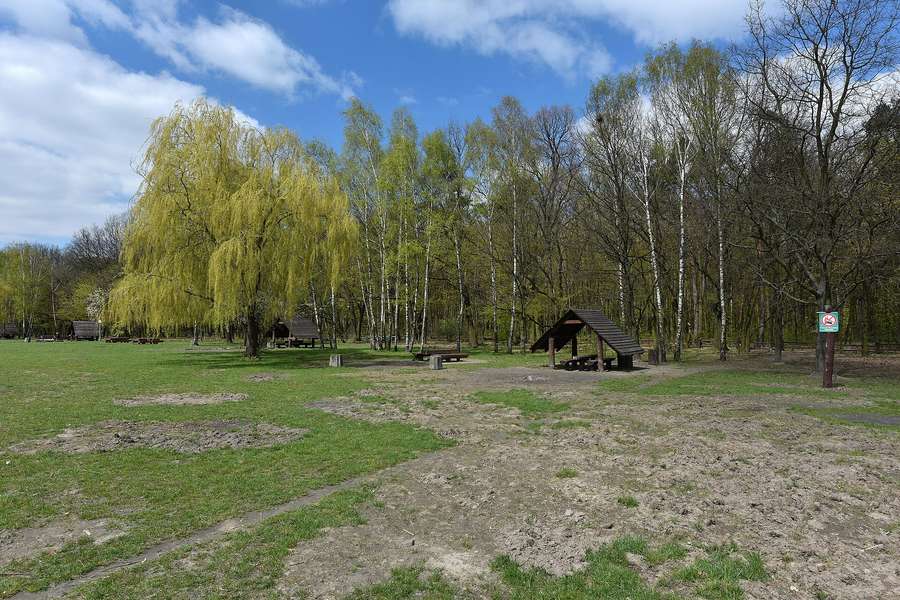
Two signposted nature trails (ścieżki przyrodnicze) loop through the reserve with educational boards, benches and roofed shelters for a sit-down. The main alley running east from the metro is wide, paved and stroller-friendly; the deeper you go, the quieter and sandier the paths become. Near the forest edge on the escarpment stands a wooden forester's lodge from 1890, next to the Centrum Edukacji Przyrodniczo-Leśnej, which runs workshops and walks. Small ponds in the forest's center are leftovers from a 17th-century hunting menagerie that once watered game.
Data source: Lasy Miejskie - Warszawa (lasymiejskie.waw.pl, "Las Kabaty"), checked 22 October 2026.
The nature you are actually looking at
For a forest hemmed in by housing estates, Las Kabacki is remarkably rich. The city's ecology office counts 623 species of vascular plants and 62 species of trees and shrubs, with pine, oak and birch stands dominating. Thirteen trees carry formal nature-monument status, including a Norway spruce 32 m tall with a 160 cm trunk. In places you will notice pines leaning at odd angles: they are 120 to 160 years old and still bent from hurricanes that tore through in February and March 1945.
Wildlife is the reason for the strict rules. Roe deer, foxes and wild boar are routine at dawn and dusk. Martens, polecats and raccoon dogs hunt here, and badgers have settled recently. Tawny owls breed in unusual numbers for a city forest, and patient observers can spot buzzards, sparrowhawks, ravens, three lizard species, and the harmless grass snake with its yellow head patches. Spring brings carpets of wood anemones; October turns the oak-hornbeam sections into Warsaw's best free foliage show, ten minutes from a metro stop.
Data source: City of Warsaw ecology portal (eko.um.warszawa.pl, "Las Kabacki") and Lasy Miejskie - Warszawa, checked 22 October 2026.
History hidden between the trees
Few Warsaw forests carry this much history per hectare. In 1939 the forest concealed "Wicher", the secret signals unit where Marian Rejewski, Jerzy Różycki and Henryk Zygalski - the mathematicians who had built a replica of the German Enigma machine in 1933 - worked on breaking Wehrmacht codes. Their work, passed to Britain and France in July 1939, underpinned Bletchley Park. A memorial stone marks the site.
The wartime record is darker. German forces murdered more than 150 people in the forest during the occupation, and three graves survive, including a collective grave of Poles shot between 1939 and 1944 and the solitary grave of an unknown soldier of the 1944 Warsaw Uprising. During the uprising, around 700 partisans hid here on their way from the Chojnów woods to Wilanów, while local foresters quietly marked drop zones for weapons.
On 9 May 1987, LOT flight 5055, an Ilyushin Il-62M bound for New York, crashed into the forest's south-western corner, killing all 183 people on board - still Poland's deadliest air disaster. The falling plane cut a 1.9-hectare swath through the trees; that autumn the clearing was replanted with larches arranged so their crowns form a cross visible from the air. A memorial lists every victim's name.
Data source: Lasy Miejskie - Warszawa (lasymiejskie.waw.pl, "Las Kabaty"), checked 22 October 2026.
Make a day of it: Powsin next door
The forest's eastern edge touches Powsin, home to the Park Kultury i Wypoczynku with its lawns and summer events, and the Polish Academy of Sciences Botanical Garden, with national plant collections across 40 hectares. A practical loop: metro to Kabaty, walk the red trail east through the reserve, lunch in Powsin, then a ZTM bus back to Wilanów or the metro.
Data source: Lasy Miejskie - Warszawa, checked 22 October 2026.
Practical tips from regulars
Go early on summer weekends: by 11:00 on a hot Sunday the main alley feels like a promenade, by 8:00 you will have deer to yourself. Wear shoes you do not mind getting sandy or muddy - most trails beyond the main alley are natural forest floor. There are no shops or food kiosks inside, so bring water and snacks from around Metro Kabaty. Ticks are present from spring to autumn, as in every Polish forest: use repellent and check yourself and children afterwards. And a final repeat, because it is the mistake newcomers make most: leave the dog at home, leave the mushrooms standing, and save the barbecue for your balcony where it is legal.
Frequently asked questions
Is Las Kabacki free to enter?
Yes. Entry is free and the reserve is open year-round, around the clock. Your only cost is the ZTM ticket to Kabaty and whatever snacks you bring.
Can I take my dog to Las Kabacki?
No. Dogs have been completely banned from the reserve since December 2017 under its 2016-2036 protection plan, and the ban remains in force. Nearby city forests outside the reserve boundaries are the legal alternative for dog walks.
Can I pick mushrooms in Kabaty forest?
No. Picking mushrooms, berries and plants is prohibited inside this statutory nature reserve, with a reported 500 zł fine. For legal foraging, use state forests outside reserves.
How do I get to Las Kabacki by public transport?
Take metro line M1 to its southern terminus, Kabaty - about 20 minutes from Centrum - then walk a few hundred meters east along Aleja KEN to the forest entrances. * Photos: Adrian Grycuk (CC BY-SA 3.0 PL), via Wikimedia Commons.