Best Parks in Kraków: Planty, Błonia and Zakrzówek Guide
The essentials: Kraków's municipal greenery authority (ZZM) counts 51 parks. The three essentials: Planty, a 4 km ring of gardens around the Old Town on the UNESCO list; Błonia, a 42-hectare central meadow with a history back to 1162; and Zakrzówek, a flooded limestone quarry turned 50-hectare park with floating swimming pools.
Kraków is greener than its tourist brochures suggest. The municipal greenery authority, Zarząd Zieleni Miejskiej (ZZM), counts 51 parks across the city, from historic gardens wrapped around the Old Town to a flooded limestone quarry that looks like a piece of the Croatian coast dropped into the south of the city. Three of them define outdoor life for most residents: Planty, Błonia and Zakrzówek.
This guide covers what makes each one worth your time, with the practical details - sizes, transport and rules - straight from ZZM's park pages.
Planty: the green ring around the Old Town
Planty is Kraków's signature park: a roughly 4-kilometre ring of gardens encircling the entire Old Town, built where the medieval fortifications once stood. ZZM gives its area as 20.51 hectares, split into eight named gardens - Barbakan, Dworzec, Florianka, Gródek, Pałac Sztuki, Stradom, Uniwersytet and Wawel - each taking its name from a neighbouring landmark. The ring sits within Kraków's UNESCO World Heritage listing, and ZZM describes it as the city's "green transport tunnel": the way locals actually walk between districts.
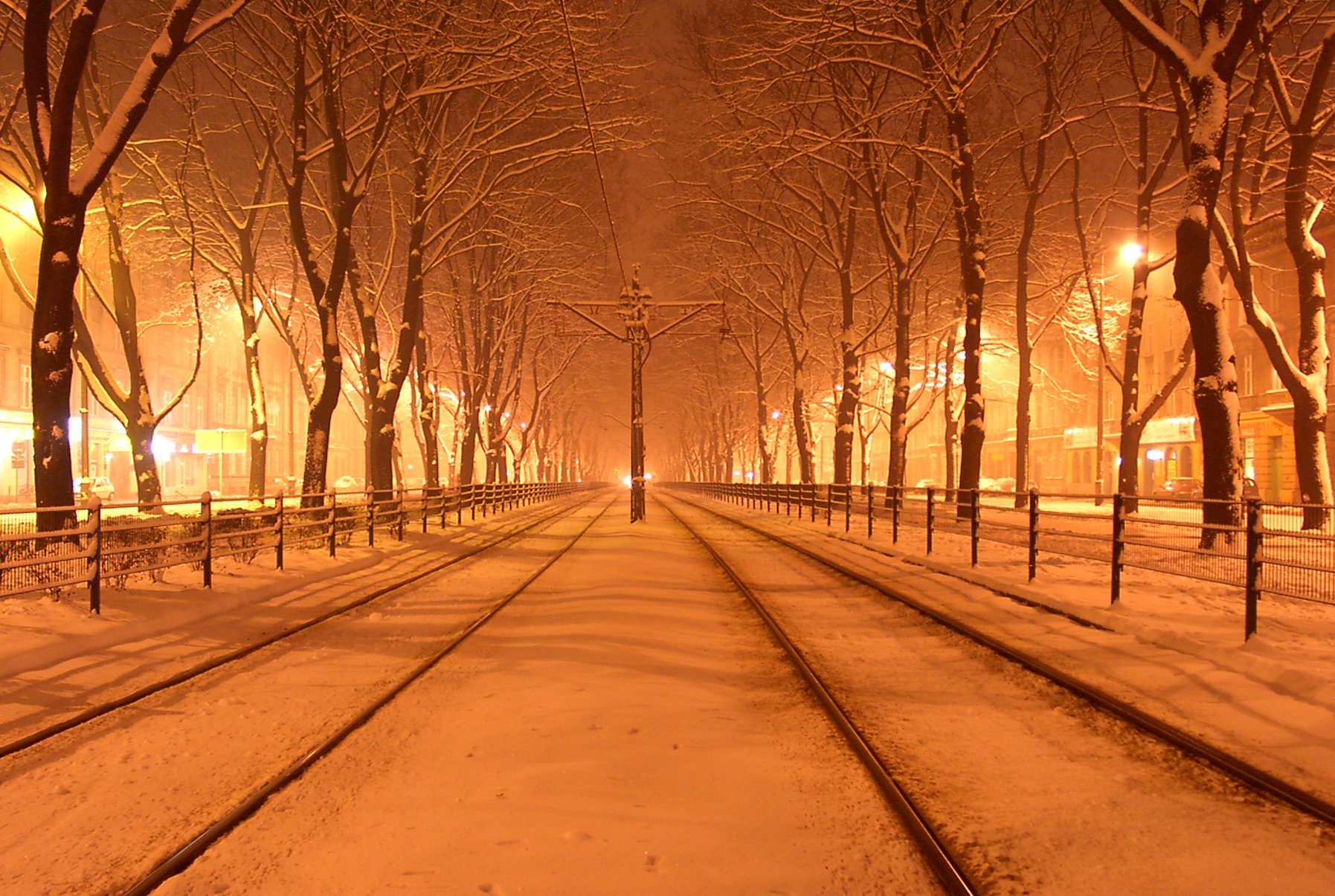
The width varies from 40 to 120 metres, and the ring packs in more than lawns. There are two playgrounds (PLANTUŚ on Poselska street and Dzikie Planty on św. Gertrudy street), monuments to figures from Copernicus to Grottger, a Chopin piano fountain, ponds and centuries-old trees that ZZM treats as living witnesses of the city's history. In autumn and winter the avenues are at their most atmospheric - leafless limes over long straight paths, five minutes from the Main Square but a world quieter.
* Data source: ZZM Kraków Planty park page (zzm.krakow.pl, page created 26 February 2016), checked 23 October 2026.
Błonia: Europe's great city meadow
Błonia is the opposite of a manicured park: a vast open meadow of 42.02 hectares west of the centre, bounded by Piastowska, Aleja 3 Maja and Aleja Focha. ZZM calls it one of the largest city-centre meadows in Europe, and its history is improbably long - in 1162 a wealthy nobleman, Jaksa of Miechów, donated the meadow between Zwierzyniec and Łobzów to the Norbertine convent to secure a blessing before his pilgrimage to the Holy Land. For centuries it was cow pasture; it simply never got built on.
Today Błonia is Kraków's shared back garden: joggers, cyclists, kite flyers and dog walkers on ordinary days, and the city's default stage for mass events - open-air concerts, festivals and sports competitions. The visual payoff is the sightline: the Old Town skyline in one direction, the Kościuszko and Piłsudski mounds in the other. Useful tram and bus stops include Reymana, Cichy Kącik, Cracovia Błonia and Muzeum Narodowe.
* Data source: ZZM Kraków Błonia park page (zzm.krakow.pl), checked 23 October 2026.
Zakrzówek: the turquoise quarry
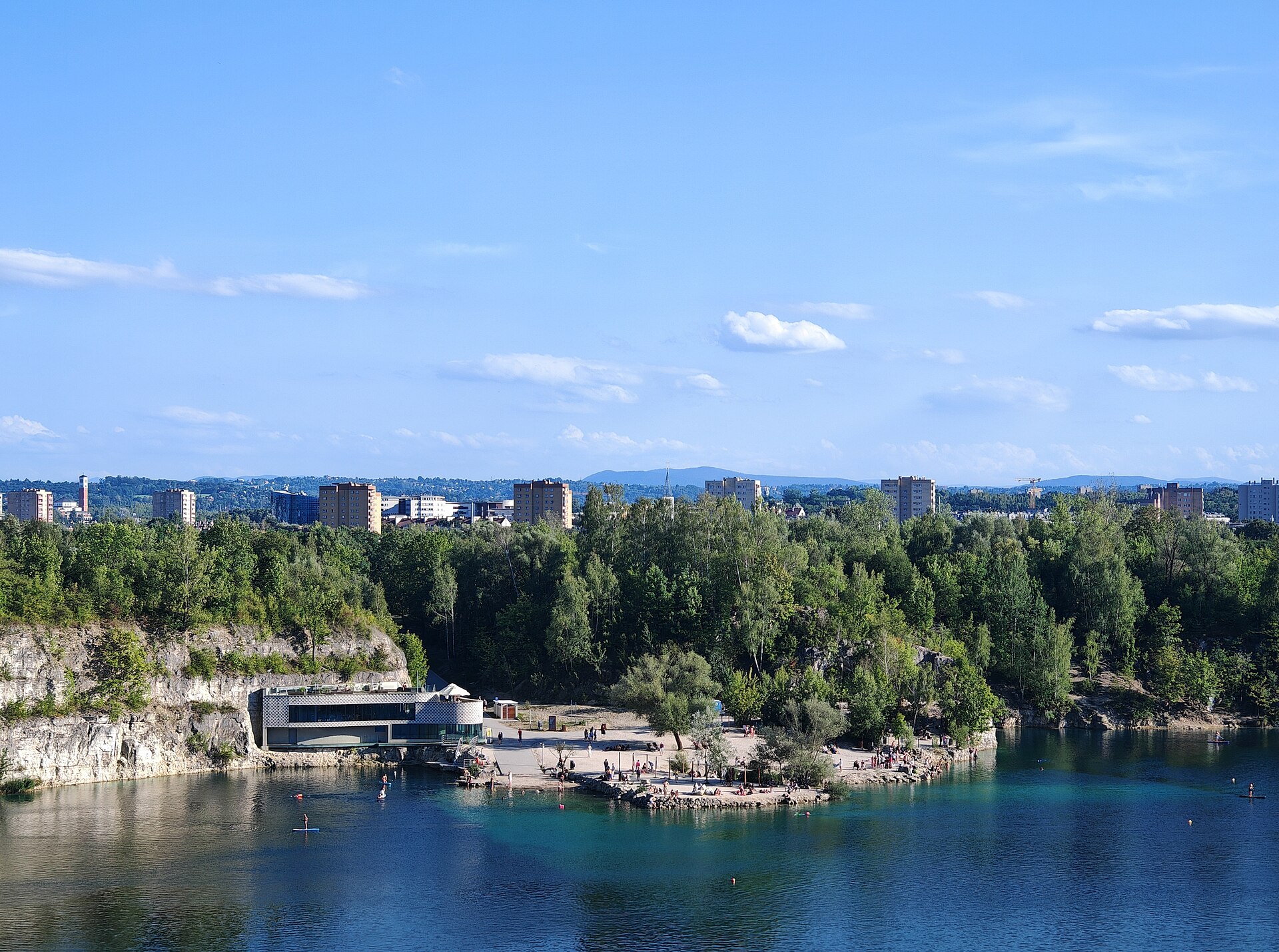
Zakrzówek is the newcomer and the showstopper. A former limestone quarry in the Dębniki district, flooded in 1990, it became a reservoir with strikingly clear turquoise water - a colour it owes to the limestone once extracted there. The park covers more than 50 hectares, rising to around 100 hectares with adjoining land, and ZZM notes the water reaches a maximum depth of about 32 metres.
After a multi-year revitalisation, the park now offers measured running tracks with stretching stations and drinking fountains, walking paths and viewpoints, climbing on the quarry rock faces, and Kraków's first public bathing area of its kind: a grid of floating pools on the reservoir. The pools range from a 40 cm-deep basin for small children to 3.5-metre pools for confident swimmers, with a total capacity of 600 people - a limit ZZM says protects the water quality and the park's wildlife. One warning matters: the open water around the pontoons averages about 20 metres deep, and swimming outside the designated bathing area or its hours is strictly at your own risk. The pontoons themselves double as walking decks open all year.
Getting there is easy: ZZM lists buses 101, 112, 162, 194, 219 and 578 and trams 11, 17, 18, 22 and 52, with the most convenient stops at Park Skały Twardowskiego, Kapelanka, Grota-Roweckiego and Norymberska.
* Data source: ZZM Kraków Park Zakrzówek page (zzm.krakow.pl), checked 23 October 2026.
Beyond the big three
The remaining 48 parks on ZZM's list fill in every gap. Park Jordana, beside Błonia, is the classic children's park. Lasek Wolski, the forest on the western edge, holds the zoo and long walking trails toward the Kościuszko Mound. Bulwary Wisły are the riverside boulevards for evening walks along the Vistula, and smaller historic grounds like Park Bednarskiego in Podgórze hide cliffside paths above old quarry walls. ZZM also runs a free "Kraków w zieleni" app with location-based games in selected parks, including a history trail through Planty's Wawel garden.
* Data source: ZZM Kraków parks list and Planty page (zzm.krakow.pl), checked 23 October 2026.
Practical notes for newcomers
Season shapes the experience. Spring brings the flower beds and rabaty that ZZM plants along Planty's avenues; summer belongs to Zakrzówek's water and the shade of Lasek Wolski; autumn turns the Planty ring into a tunnel of colour; and winter suits Błonia's open expanse for cross-country-style walks when snow covers the meadow. Few European cities put this much varied green within a twenty-minute walk of the main square.
All three headline parks are free and open around the clock, though each has its own regulations (posted at entrances and on ZZM's pages) covering dogs, cycling and barbecues. Zakrzówek's bathing area operates seasonally with a 600-person limit, so arrive early on hot weekends. Planty is the all-weather option: its avenues drain well and stay walkable through autumn rain and winter snow, which is when the ring is arguably at its best. If you are choosing a flat, proximity to Błonia or Planty does more for daily quality of life than almost any other single factor in Kraków.
For day trips beyond the city, see our guides to Wieliczka and Auschwitz, the Tatra Mountains and Kraków in winter. Warsaw residents can compare with our guide to Warsaw's best parks.
* Photos: CC BY-SA 4.0 Dwxn via Wikimedia Commons (Lake Zakrzówek, cover); CC BY 2.5 Mastyk via Wikimedia Commons (Planty in winter, body).
Frequently asked questions
How many parks does Kraków have?
The city's greenery authority, Zarząd Zieleni Miejskiej (ZZM), lists 51 parks within Kraków. Some are historic gardens around the old centre, others are large recreation grounds like Błonia or forested areas like Lasek Wolski on the western edge of the city.
What is Planty in Kraków?
Planty is the green ring that wraps around the entire Old Town, built where the medieval city walls and fortifications once stood. It runs about 4 kilometres, covers 20.51 hectares across eight named gardens, and sits within Kraków's UNESCO World Heritage listing. It is the city's default walking route between districts.
Can you swim in Zakrzówek?
Yes, but only in the designated bathing area during its operating hours. The park's floating pools include a 40 cm-deep pool for small children and 3.5-metre pools for confident swimmers, with a 600-person capacity limit. Swimming elsewhere in the reservoir or outside bathing hours is only at your own risk - the open water around the pontoons averages about 20 metres deep.
Is Błonia worth visiting as a tourist?
Yes, especially for the space and the views. Błonia is one of the largest meadows in the centre of any European city, with open sightlines to the Old Town on one side and the Kościuszko and Piłsudski mounds on the other. It is where Kraków holds big outdoor events, and where locals jog, cycle and fly kites the rest of the year.
How do I get to Zakrzówek by public transport?
According to ZZM, buses 101, 112, 162, 194, 219 and 578 serve the park, along with trams 11, 17, 18, 22 and 52. The most convenient stops are Park Skały Twardowskiego, Kapelanka, Grota-Roweckiego and Norymberska. From the city centre the ride takes roughly 15 to 20 minutes.
Which Kraków park is best for small children?
Planty has two dedicated playgrounds - PLANTUŚ on Poselska street and Dzikie Planty on św. Gertrudy - and flat, traffic-free paths for buggies. Park Jordana, next to Błonia, is the city's classic children's park. Zakrzówek's shallow 40 cm paddling pool is the summer favourite, but the rest of its shoreline is deep quarry water, so it needs close supervision.