Laundry Care Labels in Poland: Washing, Drying and Ironing
The essentials: Read the whole care label before choosing a programme. The wash-tub number is a maximum temperature; process bars, drying restrictions and ironing instructions are separate. Match them to the appliance manual rather than guessing from a programme name.
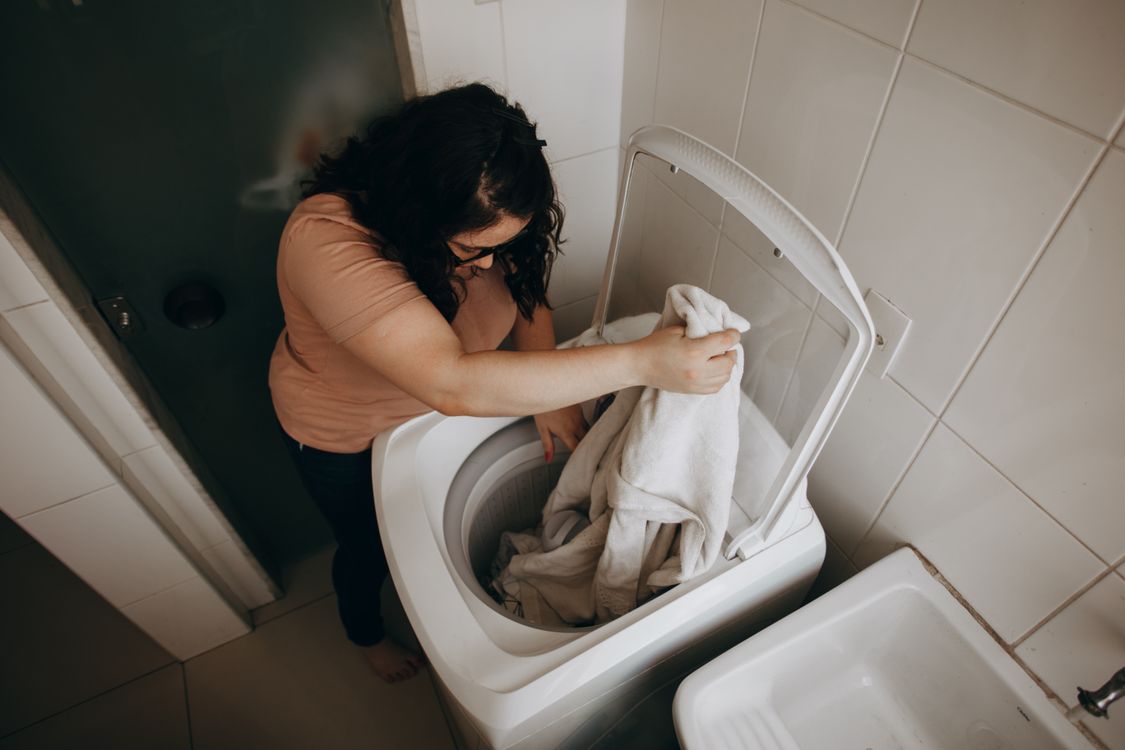
Cover: Helena Lopes, source photograph, Pexels License. Image unchanged. Loading laundry into a washing machine. Illustrative home-care context, not proof of a suitable programme for any particular garment.
The care label sewn inside a garment is a better starting point than a washing machine's most familiar button. A number in a wash tub, a bar beneath it and a crossed-out drying symbol answer different questions. When you have just moved to Poland, reading those instructions can be complicated by Polish appliance menus, an unfamiliar machine and a wardrobe bought in several countries. The solution is to separate the garment's requirements from the machine's programme names.
This guide covers home garment care, not choosing a laundry service or giving a cleaner instructions for a valuable item. It follows GINETEX's current explanation of the ISO 3758:2023 symbols, checked on 5 November 2026. The photographs show laundry and ironing context, not authoritative symbol charts or a recommendation for the depicted equipment. No branded care-symbol artwork is reproduced here.
Read the whole sequence before choosing a programme
GINETEX groups care information into washing, bleaching, drying, ironing and professional care. Those are separate operations. Permission to wash a garment does not automatically mean you can tumble dry it, bleach it or press it with a hot iron. Read across the label before loading the machine, especially when you will need the garment quickly and are tempted to use a dryer afterward.
A crossed-out symbol means the corresponding treatment is not allowed. First identify which operation is crossed out. Do not turn one prohibition into a guess about every other stage, and do not ignore it because a fabric looks robust. A garment can include trims, coatings or other construction details that are not obvious from a quick look at the main fabric.
Keep written instructions alongside the symbols in your reading. If the label is damaged, missing or genuinely unclear, do not use a generic chart as a promise that a risky treatment will work. For a valuable garment, ask its maker or a suitable textile-care professional. A general explanation helps you understand information that exists; it cannot reconstruct a missing manufacturer's instruction.
The wash-tub number is a maximum, not a target
GINETEX explains that numbers in the wash tub state the maximum washing temperature in degrees Celsius and must not be exceeded. That is different from saying every wash must use that temperature. Read any accompanying mild-process restriction as well. A temperature alone does not describe the amount of mechanical action the garment can tolerate.
One bar below the wash tub indicates a milder process; two bars indicate a very mild process. GINETEX links these with reduced mechanical treatment and, for relevant examples, smaller loads. Do not assume selecting a lower temperature on a strong normal programme automatically satisfies a mild-process instruction. Temperature, agitation, spin and loading are related parts of the treatment.
The machine's manual is the bridge between the garment label and the available programmes. If the controls are unfamiliar, identify the model and read the manufacturer's instructions rather than matching a programme by how gentle its name sounds. Two machines can use different programme names. The garment's care requirements are the constraint you are trying to meet, not a reason to improvise beyond them.
Hand washing is a method, not a rough shortcut
A hand-wash instruction should not be read as permission for aggressive scrubbing in a sink. GINETEX's hand-wash guidance describes dissolving suitable detergent in plenty of water, moving the item carefully, avoiding rubbing, pulling and wringing, rinsing well and removing excess water gently. Delicate treatment matters as much as avoiding a machine.
Current GINETEX guidance distinguishes hand washing at ambient water temperature, around 20-30°C, from hand washing at a maximum of 40°C. Read the actual label or any accompanying temperature information rather than assuming every hand symbol means the same temperature. If you cannot identify the version reliably, seek clarification instead of choosing the hotter option.
A washing machine's hand-wash programme is not automatically an answer to every hand-wash label. Check the appliance instructions and the garment maker's guidance. The name on a dial does not prove that the whole process matches what the garment needs. Likewise, a do-not-wash instruction should not be defeated by deciding to hand wash instead: GINETEX describes it as a prohibition on washing, not merely on machine use.
The bleach triangle belongs in your detergent decision
The triangle concerns bleaching. GINETEX explains that an empty triangle permits chlorine and oxygen bleaching, while a triangle with two oblique lines permits oxygen bleach but not chlorine bleach. A crossed-out triangle means do not bleach. This is a separate check from the maximum wash temperature and from whether a garment is white or coloured.
That distinction matters before you pour a product into a machine or soak a stain. Do not assume a product is suitable because its packaging says it is powerful, hygienic or intended for whites. Read its own directions and the garment's restriction together. This guide does not identify individual detergents or promise that a particular stain treatment is safe.
For do-not-bleach items, GINETEX says to use bleach-free detergent. If you cannot establish whether the product you have satisfies that restriction, choose one you can assess or ask the manufacturer. Avoid combining unfamiliar cleaning products as an improvised solution. Garment-care advice is not a chemical-mixing instruction, and a label chart cannot make an unsuitable treatment appropriate.

Separate tumble drying from natural drying
A square is the drying family; a circle inside the square refers to tumble drying. Dots indicate the severity of the thermal process, with a milder or normal drying process distinguished in the current GINETEX explanation. A crossed-out tumble-dry symbol means the garment is unsuitable for tumble drying. A lower heat button is not permission to ignore that prohibition.
Other lines within a square concern natural drying. GINETEX distinguishes line drying, drip line drying, flat drying and drip flat drying; an oblique line indicates drying in the shade. These are not decorative variations. Flat drying and hanging are physically different ways to support a wet garment. Follow the actual instruction rather than using whichever space happens to be free first.
Do not use a generic programme name as proof of dryer suitability. GINETEX notes that programme text does not clearly determine suitability for all appliances and textiles. If a garment's drying instruction is absent or unclear, take extra care and seek specific guidance. A deadline to wear the item does not remove the risk of irreversible damage from a wrong drying method.
Choose ironing settings from the care label
The iron symbol and its dots concern ironing temperature. GINETEX says the maximum should be selected from the care label, not simply from the fibre content. This is important for blends, finishes, prints and decorative elements. A fabric name on the iron's dial is not a guarantee that every garment containing that fibre can tolerate the same treatment.
A crossed-out iron means do not iron. Steam can also be restricted, and a low-temperature instruction should not be treated as general permission to apply steam. Read the actual symbol and any written direction together. This guide intentionally does not provide a universal dot-to-temperature chart: labels and standards in circulation can differ, and the current garment and appliance instructions need to be matched.
Before pressing a garment that needs special handling, identify what the maker permits for the whole item, including trims. Do not rely on an old internet chart while ignoring a written warning on the label. If you cannot settle the setting, stop before applying heat. Avoiding damage is more useful than confidently translating a symbol into the wrong iron setting.
A professional-care circle is not a home recipe
The circle gives information for professional dry or wet cleaning. Letters inside it communicate process information to textile-care professionals; a bar can indicate further restrictions. GINETEX describes professional wet-cleaning as using equipment and finishing methods that cannot be reproduced in a domestic washing machine. A W in a professional-care context is not an instruction to choose any water-based home wash.
A do-not-dry-clean instruction also matters when considering solvent-based stain removers. GINETEX's explanation warns against them for that prohibition. Do not turn a professional process code into a shopping list of chemicals for home use. If the item needs professional assessment, show the complete label and explain the problem rather than choosing a treatment from one letter.
This is where the boundary between a home-care guide and professional advice is useful. You can recognise that a garment needs a different process without learning to perform that process yourself. Keep the care label attached and available. A cleaner needs the actual garment information, not a remembered summary that it was probably delicate.
Build a repeatable home routine
Before each unfamiliar load, sort by compatible care requirements rather than colour alone. Read the washing limit, process bars and drying instructions, then select a machine programme that you can verify. Keep any written warnings with that decision. A group of garments all labelled 40°C may still require different mechanical treatment or drying methods.
For an unfamiliar appliance in a rental flat, find the model and the manual before experimenting with an important garment. Do not assume the programme left by a previous occupant is suitable for your clothes. The machine settings are a choice, not a record of what the next load requires. Start with items whose instructions you can meet confidently.
The useful outcome is a small pause before treatment: identify the garment's limits, check the product and appliance instructions, and stop when a material question remains unanswered. Care symbols make that decision easier to communicate across languages. They do not require you to guess faster, and they are most useful when you let them constrain the treatment rather than merely decorate the label.
Frequently asked questions
Does a 40°C label mean every 40°C programme is suitable?
No. Process bars can require milder mechanical treatment, and load, spin and programme instructions also matter.
Can I use a dryer on low when tumble drying is prohibited?
No. A crossed-out tumble-dry instruction is not permission to dry on a lower setting.
Why is there no reproduced symbol chart?
This guide explains the instructions in words and links to the official GINETEX reference. It does not reproduce protected symbol artwork.