Living in Wilanów With Children: An Expat Family's Guide
The essentials: Wilanów suits families who value schools and green space over commute time: 44,940 residents, three international or bilingual schools, trams 14, 16 and 19 reaching the centre in 20-30 minutes, the palace park and Kabaty Forest for weekends. Expect top-of-market rents and nursery waiting lists.
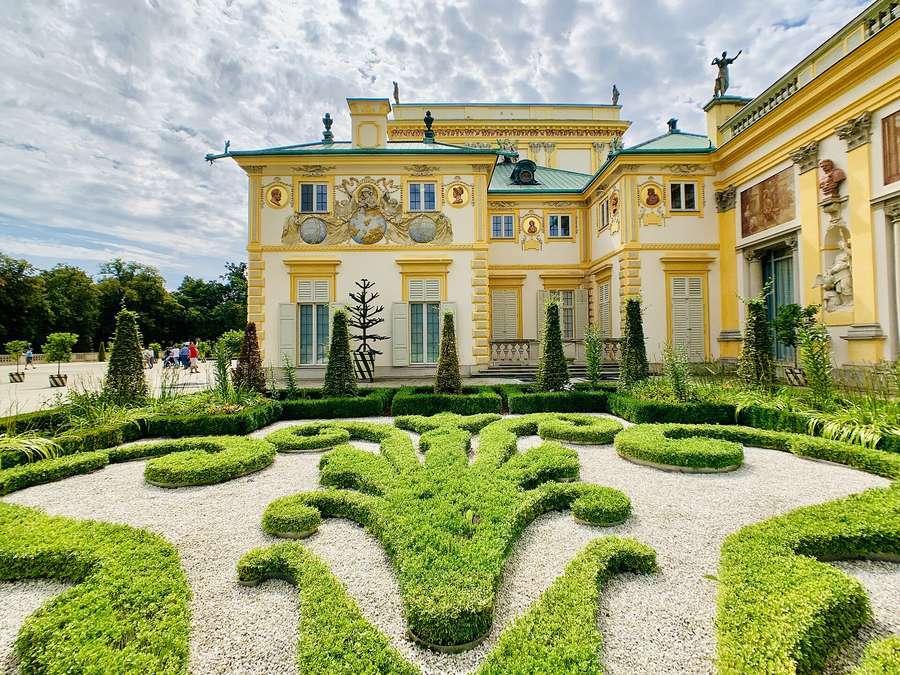
The district in numbers - and why families keep choosing it
Wilanów sits at Warsaw's southern edge, a district of 36.73 km² with 44,940 registered residents as of 31 May 2025 - one of the capital's smallest districts by population and one of its greenest by design. The area pairs a historic palace estate with Miasteczko Wilanów, a master-planned neighbourhood of mid-rise apartment blocks built over the past two decades, and that combination explains its pull for expat families: modern flats with lifts and underground parking, playgrounds in every courtyard, and a royal park as the local back garden.
The trade-offs are real and this guide covers them honestly - Wilanów has no metro line, and its popularity has pushed school and nursery capacity tight. But for families who can flex on commute time, the quality-of-life return is among the best in Warsaw. The district office handling registrations and resident matters is Urząd Dzielnicy Wilanów at ul. Franciszka Klimczaka 2.
Data source: wilanow.pl "Dzielnica w liczbach", checked October 21, 2026.
Getting around: the tram changed everything
For years the standard complaint about Wilanów was the commute - a bus crawl down al. Wilanowska at rush hour. That ended on 28 October 2024, when trams reached Miasteczko Wilanów over a 6.5 km new section along Belwederska, Sobieskiego and al. Rzeczypospolitej, with 12 new stops. It was Warsaw's longest new tram section since the 1950s. Two lines now serve the district: line 14 towards Politechnika and Ochota, and line 16 along Marszałkowska to the northern districts, with a combined 22-23 departures per hour at peak and a journey of roughly half an hour to the centre.
The network kept growing. On 28 June 2025 the Stegny branch opened - line 19 runs along ul. św. Bonifacego to the Stegny loop, putting Wilanów families about 20 minutes from Warszawa Centralna by rail. Buses still fill the gaps, and the nearest metro stations (Wilanowska, Kabaty) remain a bus or tram ride away, but the district's isolation is firmly a thing of the past. A standard ZTM ticket covers the whole trip.
Data sources: ztm.waw.pl press release of October 29, 2024 and um.warszawa.pl announcement of June 27, 2025, both checked October 21, 2026.
Schools: unusual depth for one district
Wilanów punches far above its size on education, which is precisely why internationally mobile families cluster here. Three options illustrate the range. The British Primary School of Wilanow teaches the Cambridge International Curriculum with COBIS accreditation, adds "Forest School" outdoor learning, and issues officially recognised Polish diplomas from Year 2 upwards - useful if your child's path later crosses into the Polish system. The Edison International School runs a Wilanów campus with an international programme. The Bilingual Einstein School in Wilanów follows the Polish curriculum from Grade 0 with intensive English through the CLIL method - a strong fit for families planning a longer stay who want their children fluent in both systems.
Public Polish primaries in the district are well regarded but oversubscribed in places, and catchment rules apply; contact the district education department early, ideally before signing a lease. The same advice holds for nurseries and kindergartens - Miasteczko Wilanów's young-family demographics mean waiting lists are the norm for the most sought-after spots, so register your child as soon as you have an address, even a temporary one.
Data sources: bsw.com.pl, szkola-edison.pl and einstein.edu.pl school pages, checked October 21, 2026.
Which Wilanów: Miasteczko, Stary Wilanów or Powsin
"Wilanów" covers three distinct living environments, and choosing between them shapes daily life more than any district-level statistic. Miasteczko Wilanów, the planned quarter between al. Rzeczypospolitej and the palace, is where most expat families land: modern blocks with lifts, garages, courtyards and playgrounds, shops at street level, and the tram terminus inside the neighbourhood. Stary Wilanów, the villa streets around the palace itself, offers pre-war and newer houses with gardens at house prices - quieter, leafier, further from shops and the tram. Powsin, at the southern edge by the botanical garden, still feels like a absorbed village: larger plots, a slower pace, and direct access to the Kabaty Forest, in exchange for the longest commutes of the three.
Families with a school-age child at one of the international schools typically start in Miasteczko for the walk-to-school convenience, then reassess once they know the district. Those working from home and prioritising space over access often look straight to Powsin.
Green space and weekends: a palace, a forest and a botanical garden
The Museum of King Jan III's Palace at Wilanów is the district's anchor: a baroque royal residence with formal gardens, open Monday to Sunday, 10:00 to 16:00 (last entry 15:00). The palace park is where Wilanów's children learn to ride bikes and where weekend walks default to. In winter the grounds host the Royal Garden of Light, an outdoor exhibition of thousands of LEDs that is one of Warsaw's signature family evenings - the 2025-26 edition ran from 18 October 2025 to 1 March 2026, with tickets at 25-55 zł and free entry for children under six. Check the museum site for the new season's dates.
On the district's southern edge, the Polish Academy of Sciences Botanical Garden in Powsin opens daily from 9:00 to 18:00 (last entry 17:30), closing only on 1 November, 24 and 31 December. November-to-March tickets cost 25 zł normal, 20 zł reduced and 77 zł for a family; children under three pay a symbolic 1 zł. Next door, the Kabaty Forest (Las Kabacki) - a protected urban forest reserve - is free, unfenced and made for Sunday walks, mushroom season and sledging when snow holds.
Data sources: wilanow-palac.pl and ogrod.pan.pl, checked October 21, 2026.
For older children and teenagers, the picture requires more planning. Warsaw's international secondary schools sit outside the district, so secondary students typically commute by tram and metro - a journey Wilanów's teenagers do routinely and safely on their own, which parents here treat as a milestone rather than a worry. The district compensates with a dense after-school scene: sports clubs, music schools, language academies and riding stables in and around Powsin all run English-friendly programmes.
The international character of the district smooths the practical side of settling in. English is usable in most Miasteczko shops, clinics and cafés, babysitting and cleaning services advertise in English as readily as in Polish, and parent networks - school chat groups, compound playgrounds, the cafés around Plac Vogla on weekend mornings - make it one of the easier Warsaw districts in which to build a parent circle quickly. That same concentration of young families is what fills the nurseries, so the convenience and the crowding are two sides of one coin.
Daily life: errands, healthcare and the things nobody mentions
Miasteczko Wilanów functions as a self-contained town: supermarkets, pharmacies, bakeries, paediatric clinics, dentists and after-school clubs cluster around Plac Vogla and al. Rzeczypospolitej, so weekday logistics rarely require leaving the district. Private healthcare is well represented - the big Polish networks all have clinics here or in neighbouring Mokotów - and the nearest public hospital with a paediatric emergency department is in Mokotów, a short drive away. The district is flat, pavement-smooth and genuinely stroller-friendly, which parents of toddlers rate higher than any attraction. Dog owners are equally well served - the palace park's designated areas and the forest edge absorb the morning-walk crowd - and cyclists get continuous paths along al. Rzeczypospolitej and into the Kabaty woods, so a cargo bike is a realistic school-run vehicle for much of the year.
Two honest cautions. First, road traffic: al. Rzeczypospolitej clogs at school-run hours and the Sobieskiego artery remains busy at peak, so test your commute at the hour you will actually travel. Second, budget: Wilanów rents sit at the top of Warsaw's range for family-sized flats, reflecting exactly the demand described above. Families comparing districts should weigh those costs against the hours saved on school runs and weekend logistics - for many, the arithmetic still favours Wilanów.
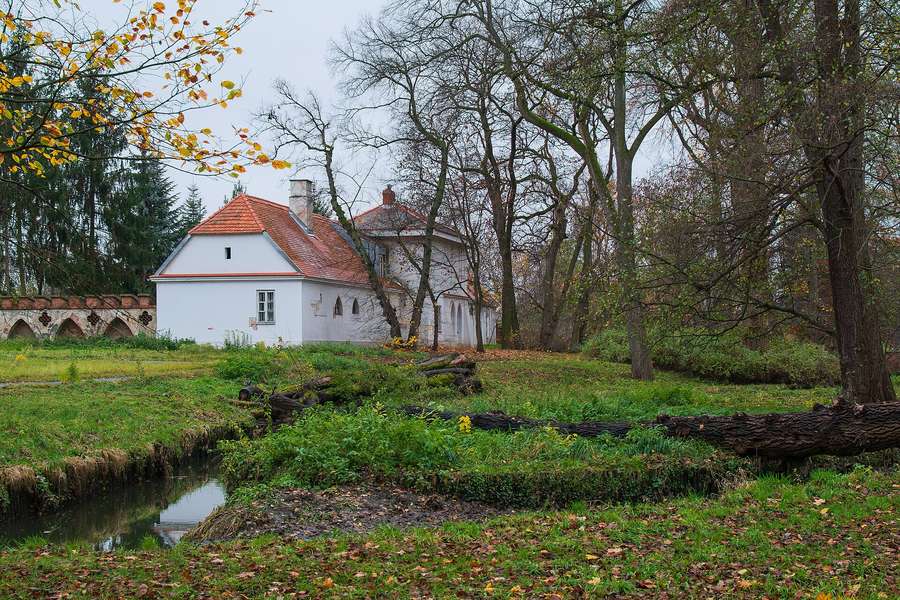
* Cover photo: Chris Olszewski, CC BY-SA 4.0, via Wikimedia Commons. Body photo: Dominic Nelson, CC BY-SA 4.0, via Wikimedia Commons.
Frequently asked questions
Is Wilanów a good district in Warsaw for expat families with young children?
Yes - it is one of the strongest family districts in Warsaw: modern stroller-friendly housing in Miasteczko Wilanów, three international or bilingual schools in the district, the palace park and Kabaty Forest for weekends, and trams (lines 14, 16 and 19) reaching the centre in about 20-30 minutes. The main trade-offs are top-of-market rents and tight nursery waiting lists.
How do children commute from Wilanów to central Warsaw?
Trams are the backbone: lines 14 and 16 run from Miasteczko Wilanów towards Ochota and the city centre, and line 19 via Stegny reaches Warszawa Centralna in about 20 minutes. Wilanów itself has no metro station; the nearest are Wilanowska and Kabaty, a bus or tram ride away.
Are there English-speaking schools in Wilanów?
Yes. The British Primary School of Wilanow teaches the Cambridge International Curriculum with COBIS accreditation, Edison International School has a Wilanów campus, and the Bilingual Einstein School follows the Polish curriculum with intensive English from Grade 0.