Lublin Village Museum: Tickets, Routes and First-Visit Tips
The essentials: Muzeum Wsi Lubelskiej is an outdoor museum at al. Warszawska 96. Its November-February offer is 15 zł standard and 10 zł concession; the 30 zł family ticket requires a listed family card. Winter closing is 15:00, with last entry by 14:00.
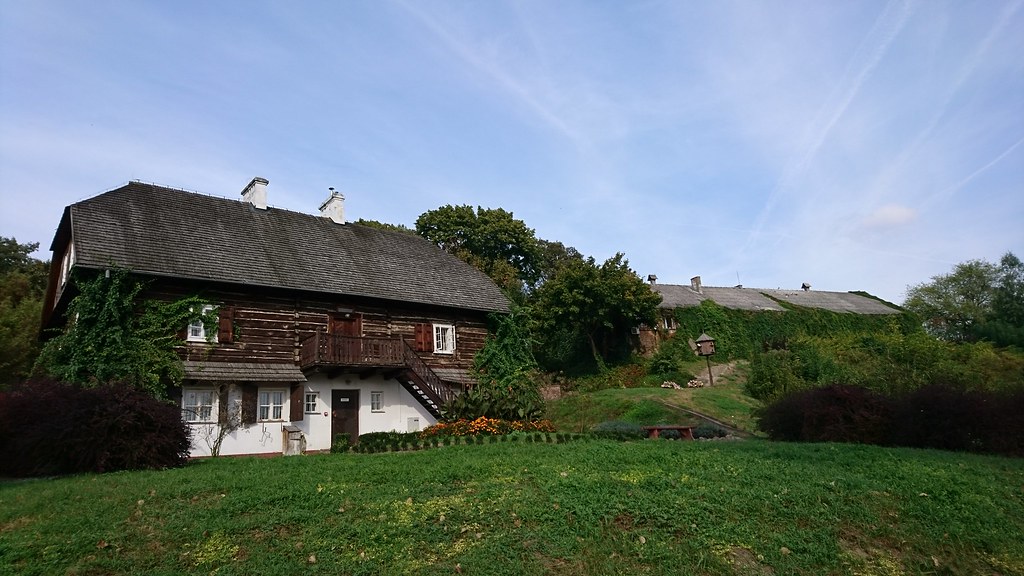
Cover: Derbeth, source photograph, CC BY 2.0. Image unchanged. A historic rural building at Muzeum Wsi Lubelskiej, photographed in September 2018. Historical venue view, not current access conditions.
Lublin's village museum makes more sense if you think of it as a landscape of different communities, rather than a row of interchangeable cottages. Muzeum Wsi Lubelskiej brings together rural buildings, a manor setting and a reconstructed provincial town. For an expat, the reward is a way to connect familiar Polish words for places, trades and household objects with the spaces in which people used them. You do not need to turn the visit into a test of architectural knowledge.
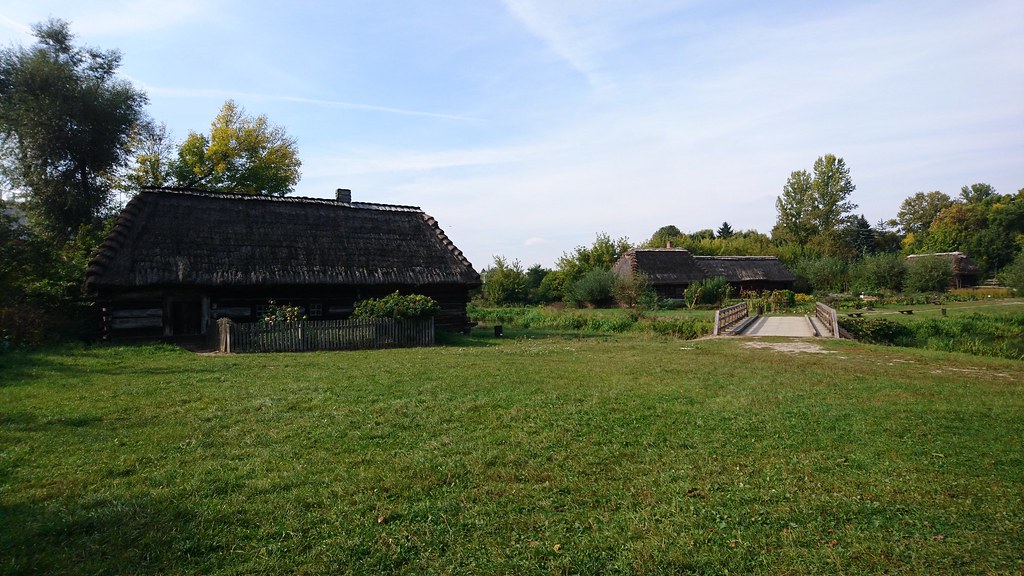
The practical catch is that this is an outdoor museum with historic surfaces and small interiors. Opening hours, daylight, walking conditions and the kind of ticket you qualify for matter more than a long checklist of buildings. This guide uses the operator's information checked on 5 November 2026. The photographs show the museum in September 2018, not current conditions or a guarantee that particular interiors will be open.
Start with the winter timetable
The museum's published November and December schedule is 09:00-15:00, with last entry no later than one hour before closing. That makes 14:00 the entry cutoff, not a sensible target for a long first visit. January to March has the same ordinary hours. In April and October the published closing time is 17:00, while May to September extends to 19:00. These are seasonal opening hours, not a promise that every building is available throughout the day.
For a winter visit, choose a morning arrival and leave space for a slower return to the gate. A two-to-three-hour visit is a reasonable planning allowance, not an official full-route duration. If you want a guide, photography stops or time to read displays carefully, reduce the number of sectors you try to cover. Arriving early is especially useful when children or someone with limited walking stamina will set the pace.
Check the visitor page again for holiday exceptions. The operator lists closures on 1 and 6 January, Easter, 1 November and 24-31 December; its contact page also names Holy Saturday. Do not resolve that difference by assuming the museum is open on Holy Saturday. Confirm the specific holiday date before travelling. Equally, an ordinary daily timetable is not proof that a special event follows ordinary admission arrangements.
Use the dated winter tariff, not an older summary
For 1 November 2026 to 28 February 2027, the dedicated visitor page lists standard admission at 15 zł and concession admission at 10 zł. Children under seven enter free. Outside that dated winter offer, the same page lists 30 zł standard and 20 zł concession admission. If you are comparing a winter outing with a spring visit, compare the correct seasonal prices rather than assuming one amount applies all year.
The winter family ticket is 30 zł, but the important detail is eligibility. The operator ties this ticket to presentation of a Karta Dużej Rodziny, a Regionalna Karta Dużej Rodziny or the listed Rodzina 3+ card. It is not described as a universal ticket for any household arriving with children. Without the relevant card, price the visit using the tickets each person actually qualifies for. The regular family amount is 60 zł under the same stated card condition.
The accessibility page still displays the regular 30/20/60 zł amounts. That does not cancel the explicitly dated winter offer on the visitor page. Use the current tariff when buying, and bring documents supporting any concession. A cheap ticket does not settle the separate question of access to every interior, a guide, a workshop or a special photographic session. Those arrangements need their own checks.
Find the museum, not a generic city-centre attraction
The museum address is al. Warszawska 96, 20-824 Lublin. Save the full address before setting out, especially if your accommodation is in the old town and your day includes several places with museum names. The operator lists bus routes 18, 20, 30 and 37 as access options. Use a current journey planner for the actual departure, direction and service on your chosen day; this guide does not promise a frequency or journey time.
The accessibility page identifies nearby stops as Skansen 1, Skansen 2 and Skansen 3, with different directions. On the return, check the destination shown for the service rather than assuming the stop opposite your arrival point is automatically right. Allow time to walk from the exit, especially near closing. A museum entry cutoff and the departure time of your bus are separate constraints.
For drivers, the operator describes a nearby municipal car park as unguarded and free, without designated disabled parking spaces. Treat that as the published facility description, not a reservation of a space. If a short step-free approach is essential, discuss the practical arrival arrangement with the museum before the visit. Do not base a mobility plan on the word parking alone.
Choose a route through different kinds of settlement
The museum's own introduction divides its exhibition into seven sectors reflecting the region's landscape and cultural variety: Wyżyna Lubelska, Roztocze, Powiśle, Podlasie, Nadbuże, the manor sector and the small-town sector. You do not have to master those names first. A useful approach is to select contrasting settings: a rural part, the manor setting and the town. This is an editorial route suggestion, not an operator-led tour or a claim about today's open doors.
The museum identifies the windmill from Zygmuntów as the first building transferred to the site, and places the Greek Catholic church from Tarnoszyn in the Roztocze sector. The manor from Żyrzyn forms the centre of the manor sector. These give you a few anchors without turning the day into a hunt for every object. Ask staff which route fits the conditions and the amount of time you have.
The town sector represents a provincial town of the 1930s. The operator describes displays including a barber's shop, an ironmonger's shop, a Jewish kitchen, a post office, a tobacco shop and craft workshops. Looking at the relationship between home, work, religion and trade is more useful than expecting a shopping street of working businesses. An exhibition representing a shop does not mean that it sells the goods shown inside.
Decide whether an English-language guide is worth arranging
The published English-language guide fee is 200 zł for a group of up to 15 people, or 260 zł for 16-30 people. Admission for the participants is extra. The operator describes guided visits as approximately 1.5 hours and requires bookings at least seven days in advance through its education and promotion team. Do not assume that arriving early will produce an English-speaking guide on demand.
For organised groups, the museum states that visits must be with a guide. That is different from an individual household choosing to walk independently. If you are arranging an expat-group outing, agree the actual group size, language, entry tickets and any accessibility needs together. A guide quote is not the total cost until admission and any additional activity have been included.
For independent visitors, a guide is a choice about interpretation rather than simply route-finding. If you mostly want an outdoor walk with a few buildings, self-directed visiting may fit. If your interest is how different communities lived and worked, language support can add more than trying to translate every label on a phone. Ask about the confirmed route when booking rather than assuming all described buildings are included.
Take the access limitations seriously
The operator describes a roughly 23-hectare outdoor site, with field paths, cobbles and other historic surfaces. It says many buildings have high thresholds, narrow entrances and small exhibition rooms, and that historic buildings do not have ramps or platforms. This is not a venue where an adapted toilet means the whole museum is step-free. Contact the museum with the actual chair, walking or assistance needs that affect your visit.
An adapted toilet is described in the town sector, in the town hall from Głusk at level -1. Access uses a lift operated by exhibition attendants. That staff dependence matters: identify the route and ask about the lift on arrival instead of leaving it until someone urgently needs the toilet. The outdoor distance to a facility may matter just as much as its features.
For blind and partially sighted visitors, the museum describes a bookable Inne spojrzenie route with tactile aids, models and selected objects. Reservation is needed. It also describes Polish Sign Language films linked by QR codes at 58 historic buildings. These are specific forms of support, not evidence of a fully accessible route or English-language interpretation. Ask which support fits the person travelling with you.
Pack for a walk and respect the exhibition
Choose footwear for uneven outdoor ground, and clothing that still works when you stop moving to look inside a building. In winter, a shorter route with time to enjoy it can be better than trying to complete all seven sectors. Keep a simple priority list and change it if the surface, weather or energy level makes the original plan awkward. This is practical planning advice, not a claim that the museum supplies particular equipment.
Historic interiors can be tight and dim, with low doorways. Watch thresholds and supervise children around water and fragile displays. Do not treat reconstructed rooms as a hands-on play space unless staff identify an activity or object for that purpose. The museum's tactile programme is an organised access provision, not blanket permission to handle the collection.
Ordinary personal photography and an arranged shoot are different activities. The current rules permit private personal photos without a fee or permission, while professional occasion sessions and commercial or marketing work with special requirements need arrangements. The visitor page lists a photo-video session fee of 300 zł plus admission. This is not permission to organise a paid shoot spontaneously. For a first visit, keep the camera secondary to the buildings, ask before unusual equipment use, and leave with a route you enjoyed rather than a hurried inventory.
Frequently asked questions
Can every family buy the winter family ticket?
No. The operator requires presentation of one of its listed family cards, including Karta Dużej Rodziny. Check eligibility rather than assuming any family group qualifies.
Is the whole museum wheelchair accessible?
No. The museum describes historic paths, high thresholds and narrow entrances, with no ramps or platforms at its historic buildings. Discuss the required route and support before travelling.
Can I arrive at 14:00 for a winter visit?
14:00 is the published final-entry cutoff before 15:00 closing, not a recommended first-visit arrival. A morning start leaves more time.