Men's cancers in Poland: PSA, self-exams and the checks to book
Short answer: Akademia NFZ advises monthly self-exams, yearly basic tests, and from age 40 a GP referral to a urologist for a PSA blood test. See a doctor early for any worrying symptom or mole.
Men in Poland get some cancers more often than others, and several can be caught early with simple checks. This page summarises the NFZ health education site Akademia NFZ, in an article published on 16 September 2026 (checked on 19 October 2026). It is general information, not medical advice.
Which cancers are most common
The article says that, as in other developed European countries, men in Poland most often get cancer of the prostate, lung, colon, bladder, rectum and stomach. The highest number of deaths is from lung, prostate and colon cancer. It adds that early-found cancer is most often curable and that some cancers can be prevented.
Cancers of the male genital organs
Prostate cancer. The risk rises after the age of 50. The signs listed are a raised PSA level in the blood, urinary problems (frequent urination, a weak stream, blood in the urine), erectile problems with no emotional cause, lower abdominal pain, and swelling of a leg or the genitals. The page says it is detected by measuring PSA in a blood sample, by a rectal examination and by a histopathology test of a tissue sample. PSA is a protein made by the prostate gland, and it can point to cancer or to a benign enlargement.
Testicular cancer. It affects mainly young men aged 20 to 39. Signs are a lump in the testicle, a change in how it feels, discomfort or aching in the scrotum, and repeated pain in the lower abdomen or lower back. The article recommends self-examination once a month and links to an instruction file.
Penile cancer. Signs are changes in the skin of the penis (colour, thickness, sores or bumps), swelling at the tip and enlarged lymph nodes in the groin.
The checks the page recommends
- Once a month: self-examination of the testicles and penis.
- Once a year: routine tests such as a blood count, a general urine test and a lipid profile (cholesterol).
- From age 40: regular prostate checks. Ask your primary care doctor (POZ) for a referral to a urologist and have a PSA blood test.
- After age 60: an abdominal ultrasound once a year to check, among other things, the kidneys and bladder.
For any worry, the page says to go to the POZ doctor and not to ignore symptoms. It also points to the NFZ examination calendar, where you can select sex and age to see the recommended checks.
Skin cancer
Any mole or growth that worries you should be examined as soon as possible by a dermatologist or an oncology surgeon. Go at once if a mole changes shape, itches, bleeds or cracks. The doctor looks at the skin of the whole body, including the scalp, feet and genital area, with a dermatoscope that magnifies 10 times. The page lists these protection steps: protect skin from sun all year, use UV 50+ cream, cover the head, neck and ears, avoid sun between 10:00 and 14:00 when it is sunny, wear sleeves, and use UV-filter sunglasses.
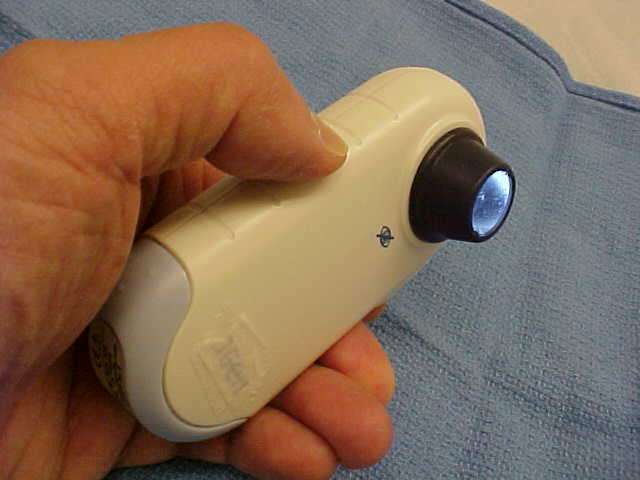
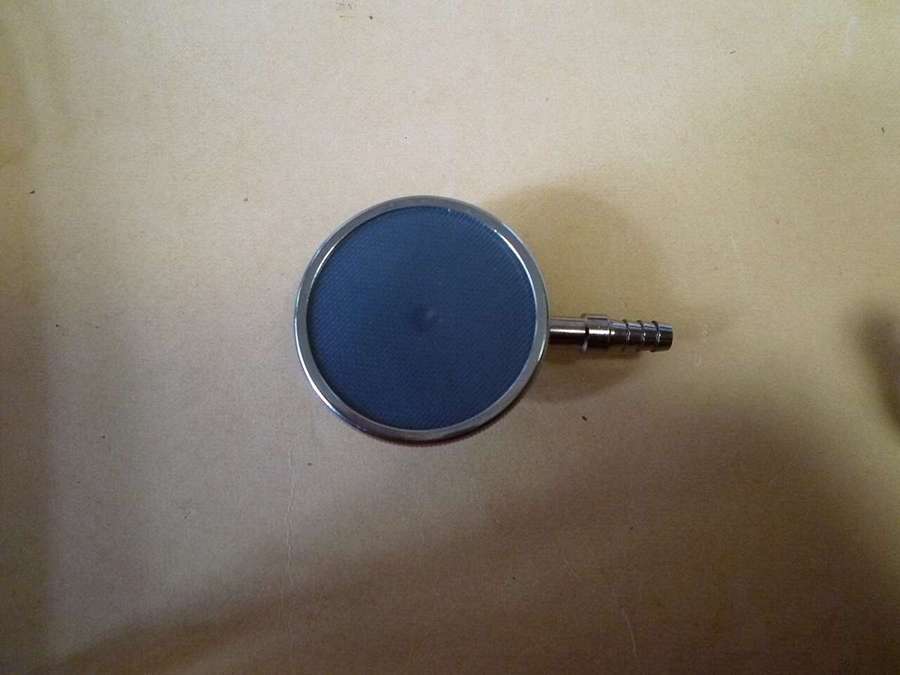
* Photos: cover "Stethoscope's chestpiece diaphragm side" (CC0) and body "Dermatoscope" (public domain), both via Wikimedia Commons.
What the source does not say
The article does not say which tests NFZ pays for, how a foreigner without Polish insurance can get them, or whether a PSA test needs a referral to be free. It also gives no screening programme details for men. Another site article covers the free screening programmes in general. For your own situation, ask your family doctor.
Frequently asked questions
At what age does the page say to start prostate checks?
From age 40, ask your primary care doctor for a referral to a urologist and a PSA blood test. The risk of prostate cancer rises after 50.
How often should men examine themselves?
The page recommends self-examination of the testicles and penis once a month.
Which doctor looks at worrying moles?
A dermatologist or an oncology surgeon, as soon as possible.