Moving to Poland With a Toddler: What I Wish I Knew Before Leaving
A personal essay by a Canadian living in Poland. The views and experiences are the author's own.
What to know: A Canadian parent's guide to moving to Poland with a toddler: neighborhood choice, żłobek childcare, a pediatrician, winters, costs and a first-30-days plan.
Moving to Poland with a toddler sounds like an exciting family adventure. And it can be. But between finding childcare, understanding Polish healthcare, dealing with language barriers, and helping a little one adjust to an entirely new world, there are things I wish I'd understood before making such a big move.
Moving to another country is stressful enough.
Now imagine doing it with a toddler.
A tiny human who doesn't care about your immigration paperwork, apartment deposit, or carefully planned relocation budget.
A toddler who might decide that the absolute worst moment of your international move is the perfect time to refuse to put on shoes.
Or have a meltdown because the banana broke in half.
Or announce, halfway through a flight, that they urgently need their favorite stuffed animal.
The one you packed in a suitcase.
Somewhere.
Moving from Canada to Poland taught me that relocating as a family isn't simply about transporting your belongings from one country to another.
It's about rebuilding your everyday life.
And when you have a toddler, everyday life is everything.
Their bedtime.
Their favorite foods.
Their playground.
Their routines.
The familiar faces they recognize.
The small things that make them feel safe.
Before thinking seriously about family life in Poland, I imagined the exciting parts.
Beautiful European streets.
Weekend trips.
Cozy cafés.
A different culture.
Maybe even a childhood filled with experiences that would have been difficult to offer back in Canada.
But the practical questions quickly became more important.
Where would we find a good nursery?
Would a pediatrician speak English?
What if our toddler got sick?
Would they understand other children?
Could we find familiar food?
And how would we handle those moments when everything felt unfamiliar?
After looking at life in Poland through the eyes of a parent, I've come to believe that moving with a toddler has both surprising advantages and challenges that deserve serious preparation.
Here are the things I wish every parent knew before making the move.
1. Your Toddler Doesn't Care That You're Moving to Europe
This was one of the most important realizations for me.
Adults see an international move as an opportunity.
We think about better lifestyles, lower living costs, new experiences, and exciting possibilities.
Toddlers don't think that way.
They don't care that Warsaw has beautiful parks or that Kraków is one of Europe's most charming cities.
They care about whether their favorite blanket is nearby.
Whether breakfast happens when they expect it.
Whether the person putting them to bed is familiar.
And whether they can find the toy they were playing with yesterday.
For a young child, moving abroad can mean that almost everything familiar suddenly disappears.
Their bedroom looks different.
The sounds outside are different.
The language around them is different.
Even the supermarket feels different.
And because toddlers can't always explain their feelings, those changes may show up as clinginess, frustration, disrupted sleep, or more frequent tantrums.
That's why I think the most important thing parents can bring to Poland isn't furniture or expensive baby equipment.
It's consistency.
Keep familiar bedtime routines.
Bring favorite toys.
Use the same bedtime stories.
Maintain familiar mealtimes when possible.
And don't feel pressured to introduce every exciting new experience immediately.
Sometimes, the best thing you can do during the first week in a new country is absolutely nothing exciting.
Just stay home, play, cuddle, and help your toddler understand that even though the world looks different, their family is still the same.
2. Choosing the Right Neighborhood Matters More Than Choosing the Right City
Before moving abroad, it's easy to focus on cities.
Warsaw or Kraków?
Wrocław or Gdańsk?
A modern capital or a charming historic town?
But when you're moving with a toddler, I think the neighborhood matters much more than the city itself.
You could live in the most beautiful part of Kraków and still have a frustrating daily routine if your apartment is on the fourth floor without an elevator.
Or if the nearest playground is twenty minutes away.
Or if the sidewalks are difficult to navigate with a stroller.
On the other hand, a quiet residential neighborhood in Warsaw might make everyday parenting surprisingly easy.
Imagine being able to walk five minutes to a playground.
Seven minutes to a supermarket.
Ten minutes to a nursery.
And having a pharmacy just around the corner.
That's the kind of convenience I would prioritize.
In Warsaw, family-oriented areas such as parts of Mokotów, Ursynów, Żoliborz, and Wilanów are worth investigating.
In Kraków, areas such as Dębniki, Krowodrza, and residential parts of Podgórze may offer appealing options.
But every neighborhood has trade-offs.
I'd personally look for five things before renting an apartment: a nearby playground, a grocery store, a nursery or preschool, convenient transportation, and a pediatrician or medical clinic.
I'd also check the building itself.
Does it have an elevator?
Is there somewhere to store a stroller?
Is the apartment quiet?
Is there enough room for a toddler to play?
Are the windows and balcony safe?
These aren't glamorous questions.
But they can determine whether everyday family life feels easy or exhausting.
My advice: Choose your apartment based on the life you'll actually live, not the photographs that make it look impressive.
3. Poland's Playgrounds Might Become Your Favorite Discovery
One of the things I appreciate about family life in Poland is how common neighborhood playgrounds are.
In many residential areas, you'll find playgrounds surrounded by apartment buildings, parks, or green spaces.
Some are simple.
Others are modern, with climbing structures, slides, swings, sandboxes, and equipment for different ages.
And because many Polish cities are relatively walkable, visiting a playground can become part of your daily routine rather than a planned outing.
For parents coming from car-dependent neighborhoods in North America, that can be a meaningful change.
Instead of loading everyone into the car for a short trip, you can simply put on shoes, grab a jacket, and walk outside.
I also like the social opportunities playgrounds create.
Toddlers don't need to speak the same language to play beside each other.
A ball is a ball.
A slide is a slide.
And apparently, the universal rule of toddlerhood is that the toy another child is holding is always more interesting than the one you brought from home.
Playgrounds can also help parents meet other families.
You may not become best friends with someone after one conversation, but seeing familiar faces regularly can gradually make a new neighborhood feel like home.
And when you're raising a toddler in a foreign country, that feeling matters.
4. Childcare in Poland: Understanding Żłobek
If you're moving to Poland with a child under three, one of the first Polish words you'll want to learn is żłobek.
A żłobek is a nursery or childcare facility for very young children, generally up to age three.
Poland has public and private nurseries, but availability, costs, and enrollment procedures vary by municipality and facility.
Public nurseries may be more affordable, although places can be limited.
Private nurseries often provide additional options, including smaller groups, extended hours, or bilingual programs.
But they can be considerably more expensive.
Before choosing a nursery, I would ask about the daily schedule, staff qualifications, group sizes, meals, outdoor activities, nap arrangements, and how the facility handles children who don't speak Polish.
One thing I'd pay particular attention to is the adaptation period.
Many nurseries use a gradual introduction process, often called adaptacja.
Instead of expecting a child to stay for an entire day immediately, parents may be encouraged to begin with shorter visits and gradually increase the time.
The exact process varies.
But the principle makes sense to me.
Imagine being two years old and suddenly spending an entire day surrounded by unfamiliar adults speaking a language you don't understand.
Even a confident toddler might find that overwhelming.
I'd rather allow extra time for the transition than rush the process because of work commitments.
My advice: Research childcare before signing a long-term lease, and build flexibility into your first few weeks.
5. Can a Toddler Learn Polish Without Speaking It at Home?
This is one of the most fascinating parts of raising children abroad.
Young children can develop language skills through everyday exposure, play, songs, stories, and social interaction.
A toddler attending a Polish nursery may gradually begin recognizing words and phrases that parents don't even understand yet.
That can be wonderful.
But I wouldn't assume every child will become fluent overnight.
Language development varies enormously.
Some children begin using new words quickly.
Others spend a long time listening before they start speaking.
And some children may initially become quieter in unfamiliar settings.
That doesn't necessarily mean anything is wrong.
It may simply be part of adjusting to a new language environment.
If your family speaks English at home, I wouldn't abandon it.
Maintaining a strong home language is valuable for communication, family relationships, and emotional development.
You can support Polish learning through books, songs, playgroups, nursery attendance, and friendly interactions with local families.
And parents can learn alongside their children.
There is something both humbling and amusing about the possibility that your toddler might eventually correct your Polish pronunciation.
But that's part of the adventure.
6. Finding a Pediatrician Should Be a Priority
One thing I would never leave until the last minute is healthcare.
Toddlers get sick.
Often at inconvenient times.
They develop fevers.
They catch viruses.
They wake up coughing.
And occasionally, they do something so unexpected that you find yourself wondering whether every parent experiences this level of chaos.
When you're in your home country, you usually know what to do.
You know where to call.
Which clinic to visit.
How the system works.
In a new country, even a routine medical problem can feel stressful.
Poland has public healthcare through the National Health Fund, known as NFZ, for eligible people.
Children may qualify for publicly funded care under applicable rules, but families should confirm their specific coverage and registration requirements.
Private pediatricians are also available, particularly in larger cities.
Some offer appointments in English.
Before moving, I'd research local clinics, find out how to book appointments, and understand where to go for urgent care.
I'd also bring vaccination records, medical history, and information about allergies or ongoing health conditions.
If your toddler takes medication regularly, confirm its availability in Poland before traveling.
And learn the emergency number: 112.
You hope you'll never need it.
But knowing it is important.
7. Grocery Shopping With a Toddler: Familiar Problems in a New Language
One of the funny things about moving abroad is how ordinary activities suddenly become adventures.
Grocery shopping is a perfect example.
In Canada, I knew where to find everything.
I recognized the brands.
I understood the labels.
I could buy what I needed without thinking.
In Poland, even choosing yogurt or cereal can become a small research project.
Is this the right kind?
Does it contain added sugar?
What does that ingredient mean?
Why are there seventeen varieties of something I don't recognize?
The good news is that Poland has plenty of supermarkets and convenience stores.
Biedronka, Lidl, Auchan, Carrefour, and other retailers make everyday shopping accessible in many areas.
You'll find fresh produce, dairy products, bread, snacks, baby food, diapers, and household essentials.
But familiar brands may differ from what you're used to in Canada.
My advice is to avoid bringing enormous quantities of everyday products unless your child has a specific need.
Instead, research what is available locally.
For children with allergies or dietary restrictions, learn the relevant Polish food-labeling terms and check ingredients carefully.
And if your toddler is an extremely picky eater, consider bringing a small supply of favorite shelf-stable foods for the transition.
Because sometimes the difference between a peaceful evening and a complete toddler meltdown is having the correct crackers.
8. Strollers, Trams, and Getting Around Poland With a Toddler
One of the biggest lifestyle differences between Poland and parts of Canada is how practical public transportation can be.
In Warsaw, for example, families can use the metro, buses, and trams to travel around the city.
Kraków, Wrocław, Gdańsk, and other major cities also have extensive public transportation systems.
But navigating these systems with a stroller requires some planning.
Many modern vehicles are low-floor and stroller-friendly.
However, accessibility can vary by vehicle, stop, station, and route.
Older infrastructure may include stairs or uneven surfaces.
Historic city centers can also have cobblestones that make stroller travel less comfortable.
Before moving, I'd investigate the transportation routes near potential apartments.
Are the stops accessible?
Does the metro station have an elevator?
Can you easily travel to nursery, medical appointments, and grocery stores?
I'd also consider choosing a sturdy but manageable stroller.
Something that handles uneven sidewalks without being so large that every tram ride becomes a logistical operation.
For families who drive, remember that child car-seat requirements apply in Poland, and appropriate restraints are essential.
Overall, I think Poland can offer an excellent lifestyle for families who prefer walking and public transportation.
But it's worth testing your daily routes before committing to a neighborhood.
9. Winter With a Toddler: The Challenge I Would Prepare for Most
Coming from Canada, I wasn't particularly worried about cold weather.
But winter with a toddler is different from winter as an adult.
Adults can decide to stay home when the weather is miserable.
Toddlers still have energy.
A lot of energy.
An almost unreasonable amount of energy.
And they don't care that it's dark outside at four in the afternoon.
Polish winters can bring cold temperatures, rain, snow, icy sidewalks, and long stretches of gray weather.
Outdoor play may require more planning.
Warm clothing becomes essential.
And getting a toddler dressed for winter can feel like preparing someone for an expedition to the Arctic.
But Poland also offers plenty of indoor activities.
Play centers.
Swimming pools.
Libraries.
Museums.
Indoor sports facilities.
And family-friendly cafés.
I would make a list of indoor activities before winter arrives.
I'd also establish a routine that includes outdoor time when conditions are suitable.
One additional consideration is air quality.
Some Polish cities and regions experience elevated air pollution during the heating season.
For families with young children, it's worth checking local monitoring data and following health guidance on poor-air-quality days.
My advice: Don't underestimate the effect of winter on family routines, even if you're coming from a cold country.
10. How Much Does It Cost to Raise a Toddler in Poland?
Let's talk about money.
Because moving to Poland with a toddler can be affordable compared with certain North American lifestyles, but the costs still add up.
Here's an illustrative monthly budget for two parents and one toddler renting in a major Polish city.
| Expense | Estimated monthly cost |
|---|---|
| Two-bedroom apartment | 3,500–5,000 PLN |
| Utilities and building charges | 700–1,000 PLN |
| Groceries and household supplies | 1,800–2,700 PLN |
| Diapers and toddler essentials | 150–350 PLN |
| Transportation | 200–600 PLN |
| Internet and mobile phones | 120–220 PLN |
| Healthcare and medical expenses | 150–500 PLN |
| Family outings and entertainment | 300–700 PLN |
| Clothing and miscellaneous expenses | 400–800 PLN |
| Childcare | Varies significantly |
These are forward-looking 2027 planning estimates, not verified market averages. Nursery fees are excluded because they depend heavily on location, public or private provision, and any applicable support.
For a family of three, I'd aim for approximately 12,000–17,000 PLN in combined monthly take-home income for a comfortable lifestyle in a major city, depending on housing and childcare arrangements.
Some families will need considerably more, especially if they choose expensive private childcare or rely on a car.
Others can live comfortably on less.
The key is to calculate your family's actual needs.
Don't simply assume that Poland is cheap.
11. Family Benefits and Childcare Support in Poland
Poland has introduced several programs to support families with children.
One of the best-known is the 800 Plus child benefit.
There are also childcare-related support programs, including assistance linked to nursery attendance and parental employment circumstances.
However, foreign families need to pay close attention to eligibility.
Citizenship, residence status, employment, and other legal conditions can affect whether you qualify.
Rules have changed over time and may change again before or during 2027.
I wouldn't build a family budget around receiving a particular benefit until eligibility is confirmed.
Instead, check the latest information directly through ZUS and official Polish government websites.
Government support can be valuable.
But it's important to treat it as something you must verify, not something every newly arrived family automatically receives.
12. The Emotional Side of Moving With a Toddler
I think this is the part that gets overlooked most often.
People talk about visas.
Apartments.
Schools.
Salaries.
Transportation.
But they don't always talk about how emotionally exhausting an international move can be.
Especially for parents.
You're trying to organize an entirely new life.
You're learning how things work.
You're dealing with paperwork.
You're making decisions in an unfamiliar environment.
And meanwhile, your toddler still needs you to be patient, calm, and emotionally available.
That can be difficult.
There may be days when you miss Canada.
Not necessarily because you regret moving.
But because everything used to be easier.
You knew how to book appointments.
You knew where to buy things.
You understood conversations.
You had familiar routines.
And you didn't need to translate a message from the nursery while trying to prepare dinner.
Sometimes, the hardest part of living abroad isn't the country itself.
It's the mental effort required to do ordinary things.
That's why I think parents need to be kind to themselves during the transition.
You don't need to explore a new museum every weekend.
You don't need to master Polish immediately.
You don't need to prove that moving abroad was the best decision you've ever made.
Sometimes, a successful day is simply getting everyone fed, dressed, and asleep at a reasonable hour.
And that's enough.
13. Making Friends as an Expat Parent in Poland
One of the unexpected challenges of moving with a toddler is that your social life often becomes connected to your child's routine.
You meet people at playgrounds.
Nurseries.
Swimming lessons.
Parent groups.
Birthday parties.
And neighborhood activities.
This can actually be an advantage.
Having a toddler gives you a natural reason to interact with other families.
But the language barrier can make those interactions more complicated.
In major cities, you may find English-speaking parent groups and international communities.
Those can be extremely helpful during your first months.
However, I'd also make an effort to connect with Polish families.
Even simple conversations can gradually develop into friendships.
You don't need perfect Polish to smile, introduce yourself, or arrange a playdate.
And having local friends can make the country feel much less unfamiliar.
For me, building a social network is just as important as finding a good apartment.
Because parenting is easier when you don't feel like you're doing everything alone.
14. What I Would Pack When Moving to Poland With a Toddler
If I were preparing for the move again, I'd focus on bringing the things that provide comfort, continuity, and practical value.
Not everything we own.
Just the things that matter.
My priorities would include:
- Favorite stuffed animals, blankets, and bedtime items.
- A few familiar books and toys.
- Essential medications and medical documentation.
- Vaccination records and relevant health information.
- Comfortable clothing for different seasons.
- A practical stroller or carrier.
- Familiar snacks for the journey and first few days.
- Important family and immigration documents.
- Any specialized items that may be difficult to replace immediately.
- A small collection of photographs or familiar objects for the new bedroom.
I wouldn't overpack ordinary supplies like diapers or basic toiletries unless there were specific medical or brand requirements.
Most everyday toddler products are available in Poland.
But I'd absolutely make sure the favorite stuffed animal travels in hand luggage.
Some risks simply aren't worth taking.
15. My First 30 Days in Poland With a Toddler: What I Would Prioritize
I think the first month should be about stability, not sightseeing.
Week One: Make Home Feel Familiar
Unpack the child's bedroom first.
Set up familiar sleeping arrangements.
Find the nearest grocery store, pharmacy, and playground.
Keep mealtimes and bedtime as consistent as possible.
Avoid overwhelming your toddler with too many new activities.
Week Two: Build a Simple Routine
Visit the same playground regularly.
Explore nearby walking routes.
Identify a pediatrician and understand urgent healthcare options.
Begin any necessary nursery adaptation process.
Learn the local words you'll use most often.
Week Three: Start Building Connections
Meet other parents.
Look for toddler activities.
Visit a library or playgroup.
Explore family-friendly cafés.
Encourage relaxed interaction with local children.
Week Four: Review What's Working
Is the apartment comfortable?
Does the daily routine feel manageable?
Is your toddler sleeping reasonably well?
Are childcare arrangements working?
Are you getting enough support as parents?
Adjust what isn't working.
Don't expect everything to feel normal after thirty days.
But by the end of the first month, the goal is to have a few familiar places, a predictable routine, and a growing sense of confidence.
16. Is Moving to Poland With a Toddler Easier Than Moving With Older Children?
In some ways, yes.
Toddlers generally don't have the same established school relationships or academic commitments as older children.
They may adapt to a new language environment through play and everyday exposure.
And they have more time to develop familiarity with Polish before starting formal education.
But toddlers also require intensive daily care.
They may struggle to communicate their emotions.
Changes in sleep, food, and routines can be difficult.
And parents have fewer opportunities to focus on relocation tasks without interruptions.
Older children can sometimes understand the reasons for moving and participate in decisions.
Toddlers usually can't.
So I wouldn't say moving with a toddler is automatically easier.
It's simply a different kind of challenge.
The good news is that with preparation, patience, and a stable routine, many families can make the transition successfully.
17. Would I Recommend Moving From Canada to Poland With a Toddler?
Yes, I would consider it a very reasonable choice for the right family.
But I wouldn't recommend it simply because Poland appears cheaper.
I'd want to know that the family has stable income, suitable housing, access to healthcare, and a realistic childcare plan.
I'd also want parents to understand that moving abroad doesn't eliminate parenting stress.
A toddler who refuses to eat vegetables in Canada may also refuse to eat vegetables in Poland.
Only now, the vegetables have Polish names.
And you're trying to figure out what the label says.
But there are genuine advantages.
Walkable neighborhoods.
Accessible playgrounds.
Public transportation.
Family activities.
Opportunities to learn another language.
And the possibility of growing up with connections to more than one culture.
Those are meaningful benefits.
For me, the most attractive part isn't that Poland might make parenting cheaper.
It's that Poland can offer a different kind of everyday family life.
One where walking, neighborhood activities, and exploring new places become a natural part of childhood.
Final Thoughts: What I Wish I'd Known Before Moving to Poland With a Toddler
If I could give one piece of advice to any family considering this move, it would be this:
Don't plan your relocation only around what the adults need. Plan it around what your toddler needs to feel safe.
The apartment matters.
The salary matters.
The city matters.
But so do the small things.
A familiar bedtime story.
A favorite toy.
A nearby playground.
A patient nursery teacher.
A predictable morning routine.
And parents who have enough time and energy to help their child adjust.
Moving to Poland with a toddler can be challenging.
There will be confusing moments.
Frustrating days.
Unexpected expenses.
And probably a few meltdowns in places where you really wish there weren't any.
But there can also be wonderful moments.
Watching your child discover a new playground.
Hearing their first Polish words.
Meeting families from another culture.
Exploring beautiful cities together.
And realizing that a place that once felt unfamiliar is slowly becoming home.
That's what makes moving abroad special.
Not the perfect Instagram photographs.
Not the promise of a cheaper lifestyle.
And not the idea that everything will somehow be easier in another country.
It's the opportunity to build a different life together.
Would I move to Poland with a toddler? Yes—with preparation, realistic expectations, and plenty of patience.
Because at the end of the day, your toddler doesn't need a perfect country.
They need a safe, loving, predictable environment where they can grow.
And for many families, Poland can be a wonderful place to provide exactly that.
---
Frequently Asked Questions About Moving to Poland With a Toddler
Is Poland a good place to live with a toddler?
Poland can be an excellent place for families with young children, especially in neighborhoods with playgrounds, nurseries, healthcare facilities, and walkable everyday services. The experience depends on the city, housing, income, and support network.
Can my toddler attend nursery in Poland without speaking Polish?
Yes. Many nurseries accept children who don't speak Polish, although admission policies and language support vary. Ask each facility about its adaptation process and experience with international families.
What is a żłobek in Poland?
A żłobek is a nursery or childcare facility for young children, generally up to age three. Poland has public and private nurseries, with different fees, availability, and enrollment procedures.
How much money does a family with a toddler need in Poland?
For two parents and one toddler renting in a major city, approximately 12,000–17,000 PLN in combined monthly net income is a useful illustrative comfort target. Private childcare, housing choices, and car ownership can increase the amount.
Is healthcare available for foreign toddlers in Poland?
Children may qualify for publicly funded healthcare under applicable rules, but coverage depends on their circumstances. Families should confirm eligibility, registration, and any insurance requirements before moving.
Will my toddler learn Polish quickly?
Some toddlers begin understanding Polish through nursery, play, and everyday exposure relatively quickly, while others need more time. Language development varies, and maintaining the home language is also important.
Is Warsaw or Kraków better for families with toddlers?
Warsaw offers extensive transportation, healthcare, childcare, and international services. Kraków offers historic charm, parks, and family activities. The best choice depends on the neighborhood, budget, and childcare availability.
What should I do first after moving to Poland with a toddler?
Focus on establishing a familiar home routine, identifying healthcare providers, finding nearby playgrounds and shops, confirming childcare arrangements, and helping your child adjust gradually.
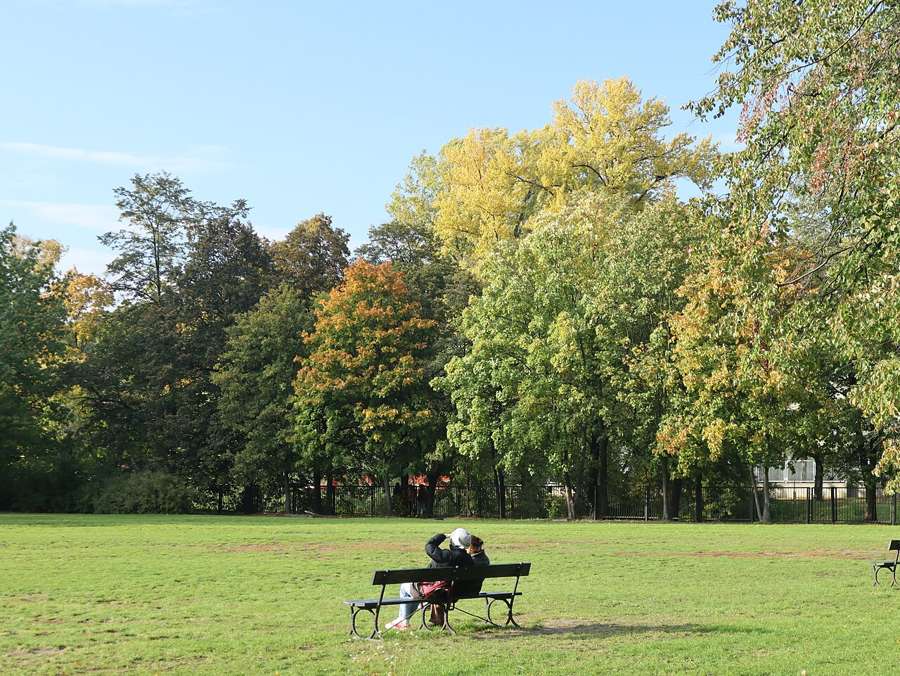
* Photos: Łazienki Park, Warsaw by Cybularny (CC0) and Park Południowy, Wrocław by Aw58 (CC BY-SA 4.0), Wikimedia Commons.