Nadole Farmstead: November Visits, Winter Closure and Kashubian Life
The essentials: Nadole’s Zagroda Gburska i Rybacka closes December-February. In November it lists Tuesday-Friday 09:00-15:00 and weekends 10:00-14:00, except the first Sunday. Last entry is one hour before closing. Admission is 12 PLN standard or 10 PLN reduced.
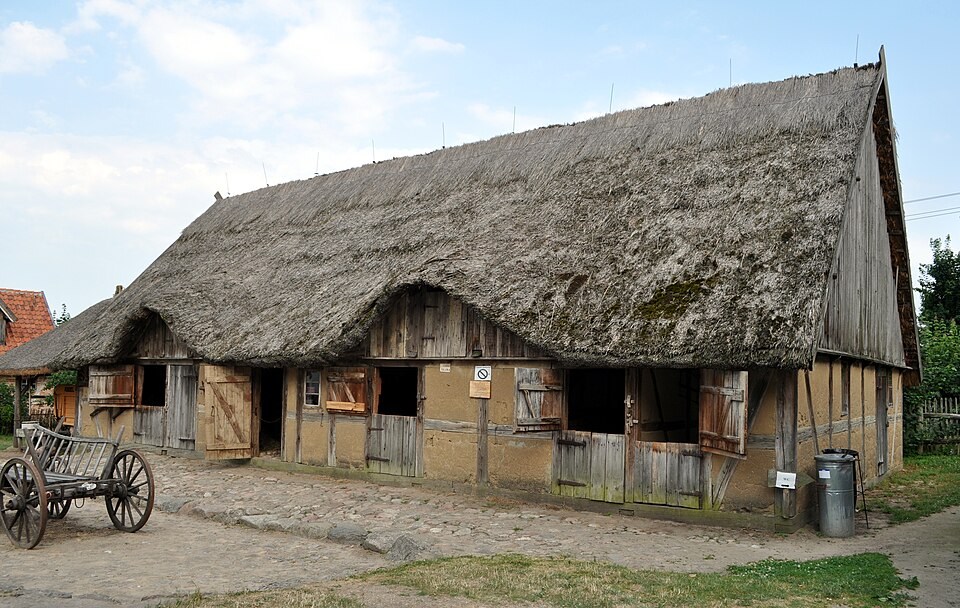
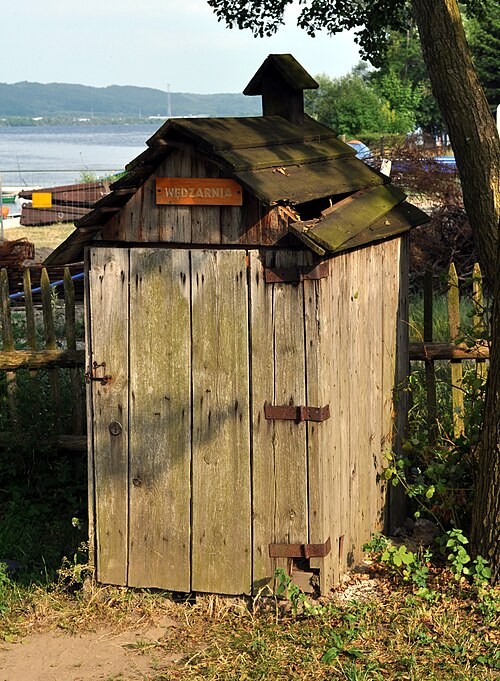
Cover: a farm building at Nadole museum, photographed on 15 July 2010. This archival view does not show current conditions or confirm an opening date. Photo: Paweł 'pbm' Szubert / Wikipedia, CC BY-SA 3.0. Resized and recompressed under the same licence.
A winter-themed exhibition is not a winter opening promise
Nadole's Zagroda Gburska i Rybacka is a museum of farming and fishing life, with a current exhibition about winter transport. That combination can be misleading when planning a cold-season trip. The museum's own timetable closes the Nadole branch from December through February. An exhibition about snow, skates and sledges does not mean the buildings are open throughout winter.
For people living in the Tricity area, the useful distinction is between a late-November visit and a December outing. In October and November, and again in March and April, the published hours are Tuesday-Friday 09:00-15:00 and Saturday-Sunday 10:00-14:00. Mondays are closed. The first Sunday of each of those four months is also closed. Last entry is a full hour before closing, so the ordinary shoulder-season cutoffs are 14:00 on weekdays and 13:00 at weekends.
As of this article's publication on Saturday 28 November 2026, the calendar therefore points to a short remaining November window: the published schedule covers Saturday 28 and Sunday 29 November, while Monday 30 November is closed. December then brings the winter break. These are timetable-based dates, not a live reservation or confirmation of an exceptional opening. Check the museum's latest notices before travelling.
What the name means in practice
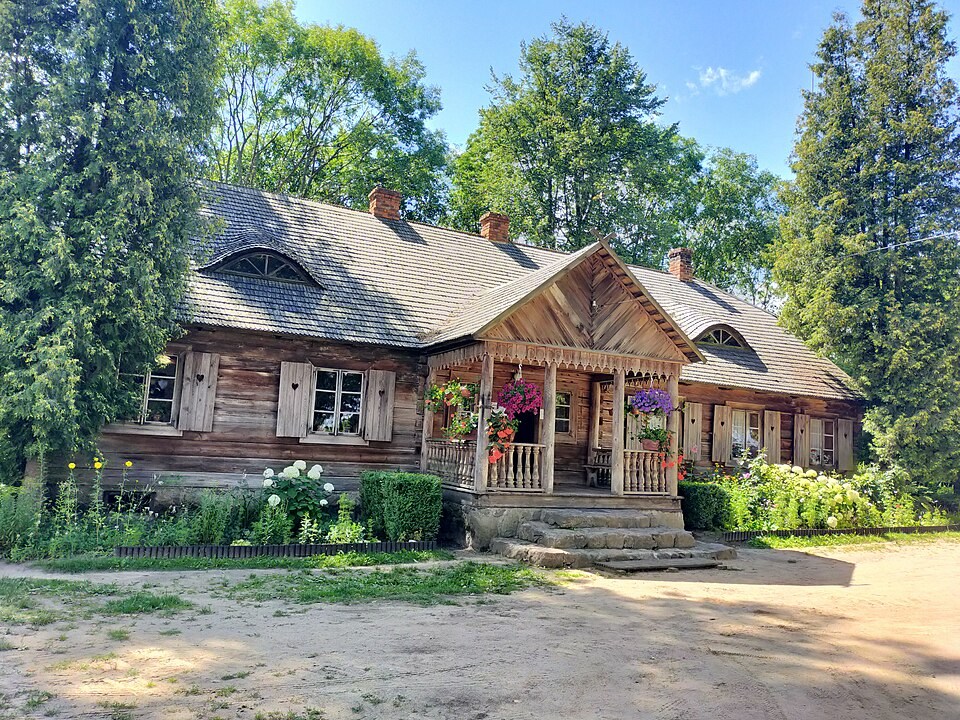
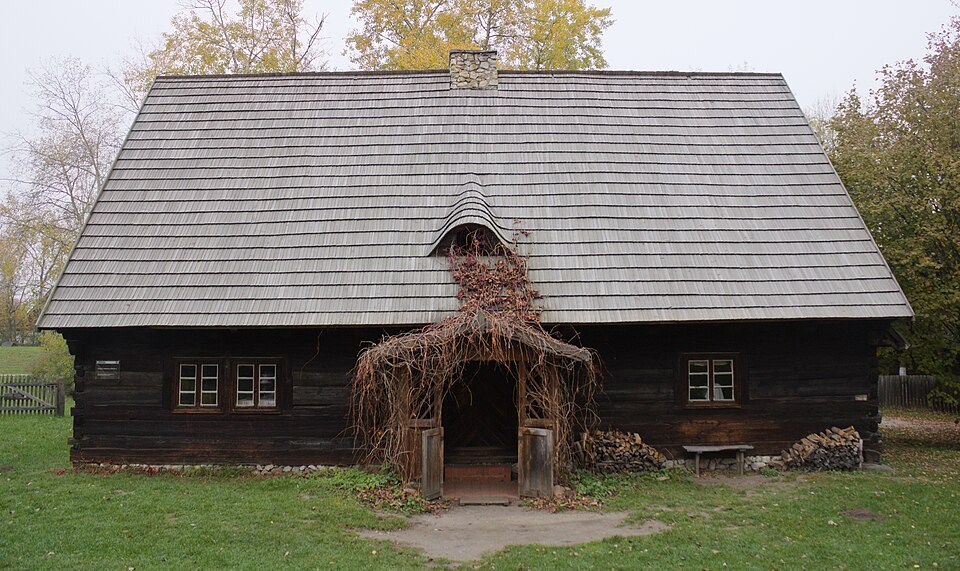
The museum's branch description presents a nineteenth-century rural homestead, rather than a large village of relocated houses. Its buildings and smaller structures show how domestic life, farming, storage and fishing fitted together. The museum's institutional history describes the Nadole display as an image of a prosperous rural family's life. This is a useful way to understand the farmer's side of the name without treating every historic household as identical.
The house stands towards the back of the yard, with a flower garden separating it from the working part of the farm. The museum describes it as the centre of a three-generation family's life. Nearby are a cellar, well and vegetable garden. Those relationships are worth noticing: the site is about the organisation of a household as much as individual attractive buildings.
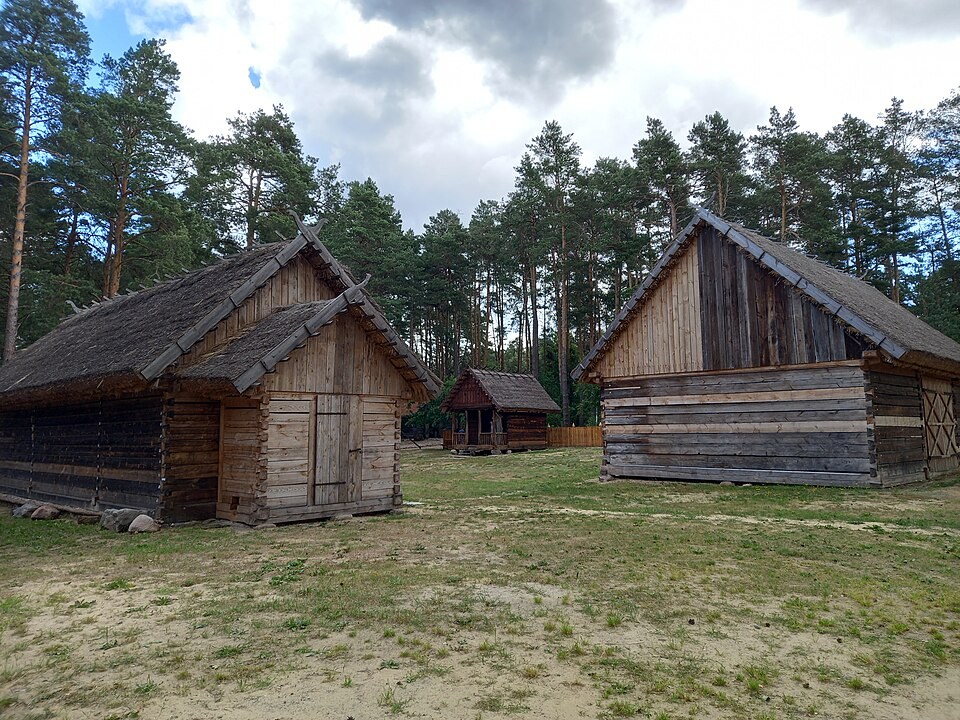
The wider group includes a barn, livestock building and carriage shed, together with a dovecote, horse-powered mechanism, apiary, smokehouse and bread oven. Do not assume these names mean live demonstrations run on an ordinary visit. A preserved oven can explain food production without being lit; a smokehouse can be an exhibit without selling food.
Why a power-station project belongs in this museum's story
The museum connects the creation of the Nadole branch with the planned power-station complex around Lake Żarnowieckie. Its history records that it was given the task of creating the open-air museum in 1982. The traditional homestead received conservation protection, and the branch opened to visitors on 23 June 1987, the same day as the museum's townhouse branch in Puck.
This background makes Nadole different from a purely picturesque collection assembled for a day out. Conservation here was connected to a changing landscape and major infrastructure plans. The buildings are evidence of local working life preserved while the surrounding area faced a different future. Visitors do not need to turn the trip into a technical history lesson, but that context helps explain why the museum exists.
Later additions also matter. The branch description dates the reconstructed fisherman's cottage and net shed to 2006, alongside a small fire station with a pump dated 1907, an agricultural-machinery shelter and an events stage. A reconstruction and an old object are different kinds of evidence. Read labels with that distinction in mind rather than assigning the same nineteenth-century date to everything on the site.
Read the farmyard as a working system
The barn stands parallel to the road, with access to its threshing area from both the road and the yard. That layout is an easy detail to miss if the visit becomes a sequence of photographs. Looking at how a vehicle could enter, unload and leave turns the building into a practical workplace rather than simply a large thatched roof.
The multipurpose livestock building housed spaces for horses, cattle, pigs, sheep and poultry under one roof, according to the museum. A carriage shed was attached to it. Families visiting with children can use these relationships as a simple observation exercise: where were animals kept, where was equipment stored, and how far did people have to move between daily tasks? There is no need to invent an activity programme to make the layout interesting.
Smaller structures help explain storage and processing. Compare the well, cellar, bread oven and smokehouse with the rooms used for living. The point is not that every household did everything in exactly the same way. It is that food, water, tools and animals had to be organised within a limited working space. That is a stronger reason to slow down than trying to count buildings.
The barn now tells a winter transport story
The museum currently identifies the barn exhibition as Praca i zabawa zimą, about winter transport in northern Kashubia. Its downloadable 2026 exhibition guide gives a useful preview. The subjects include skates, ice grips, sledges and skis, connecting recreation with the equipment people needed for work and movement.
One particularly relevant thread is fishing on the frozen Bay of Puck. The guide discusses skates as working transport as well as leisure equipment, and describes spiked grips used for traction. It also uses historical photographs and press material. These are ways to understand past practices, not advice to copy them on today's lake or bay. A museum display does not establish that any present-day ice is safe.
Some older tourism descriptions still refer to a beekeeping exhibition in the barn. The municipal visitor page is one example. For the current exhibition subject, use the museum's own branch page and 2026 guide instead. The museum also links a high-contrast version of the guide, useful for preparation even when the branch is closed. Neither download substitutes for a confirmed opening date.
Tickets, guiding and the limits of a combined ticket
The current museum tariff lists Nadole admission at 12 PLN standard and 10 PLN reduced. It lists guiding separately at 60 PLN and states that the service is in Polish. Reserve guiding at least a week in advance by calling the branch on +48 58 304 45 02. Do not assume the presence of English-speaking visitors means an English tour is included or available.
The museum gives an indicative visit length of one hour. That fits the last-entry rule, but it is not a promise that every group can arrive at the cutoff and receive a specially arranged tour. Book the service and arrival time together. Ask about reduction eligibility and any group-specific conditions before building a budget around a discounted ticket.
A four-branch combined ticket is listed at 40 PLN standard or 30 PLN reduced, covering Szpitalik, Kamienica Mieszczańska, Nadole and Hallerówka. This is not evidence that all four branches are open on the same day. Hallerówka has its own autumn-winter closure, and Nadole closes December-February. Check each branch and the ticket's validity terms before choosing the combined option. Likewise, the free Monday entry shown for the Puck townhouse must not be transferred to Nadole, whose Mondays are closed.
Access: the grounds and the interiors are different
The museum's accessibility declaration distinguishes the entrance and grounds from the historic interiors. It describes an entrance from Bałtycka Street reached by a paved pavement, and says the grounds are accessible to wheelchair users. Within the site, however, the route includes fieldstone paving. Ask whether those surfaces suit your chair, walking aid or pushchair rather than treating accessible grounds as smooth surfaces throughout.
The same declaration says the cottage and livestock-building interiors are not accessible to wheelchair users, and that the toilet is not adapted. Assistance and guide dogs are permitted. It also records the absence of hearing loops and tactile plans. The declaration dates from an earlier review period, so confirm the arrangements that matter to your visit directly, especially if an inaccessible toilet or interior would make the outing unsuitable.
For arrival, the declaration places a bus stop about 50 metres away and says there is no parking within the museum grounds; it identifies three free municipal parking areas in Nadole. That is not a current bus timetable or a reserved parking space. Check the actual outbound and return services, and ask which parking area gives you the most suitable approach.
Use the branch's own details before leaving
The address is Bałtycka 2, Nadole. Use the museum's current contact page for the branch number, +48 58 304 45 02, rather than older tourism listings with a different telephone number. The municipal page says cash-only payment, but its older exhibition description is a reason to confirm payment arrangements with the museum rather than treating every practical detail there as newly checked.
Before leaving, settle four things: whether the branch is open on your exact date, whether you can arrive before last entry, whether your preferred guiding language and time are confirmed, and whether the route and toilet meet your needs. For December-February, plan on the published closure unless the museum itself announces otherwise. That keeps a worthwhile Kashubian-history trip from becoming a drive to a closed gate.
Frequently asked questions
Is Nadole museum open in December?
The published branch timetable closes Nadole from December through February. Only rely on an exception announced by the museum itself.
Is English guiding included?
No. The tariff lists Polish guiding at 60 PLN, booked at least one week ahead. Confirm any other language directly.
Does a combined ticket mean every branch is open?
No. The four covered branches have different seasonal timetables. Check the dates and ticket validity before buying.
Sources
- Museum: branch hours, last entry, admission and guiding
- Museum: homestead and current exhibition
- Museum: history and opening date
- Museum: 2026 winter transport exhibition guide
- Museum: accessibility declaration
- Museum: current branch contacts
- Gniewino municipality: visitor information, older exhibit description