Nutrition Labels in Poland: Per 100 g, Portions and RWS
The essentials: Find wartość odżywcza, check whether figures are per 100 g, per 100 ml or a stated portion, and compare the same basis. kJ and kcal are different energy units, not amounts to add together. RWS is reference information, not a personal nutrition target.

Cover: Jessica Latorre, source photograph, Pexels License. Image unchanged. A shopper selecting cereal boxes. General packaged-food shopping context, not a Polish nutrition-label example or a product recommendation.
The nutrition table on a Polish food package becomes much easier to use once you separate two questions: how much of a nutrient is in a standard quantity, and how much is in the amount you plan to eat. A per-100 g column is a comparison tool. A portion column is useful only when you know what that portion means. Neither is a personalised diet plan, and a small headline number can be misleading if you overlook its basis.
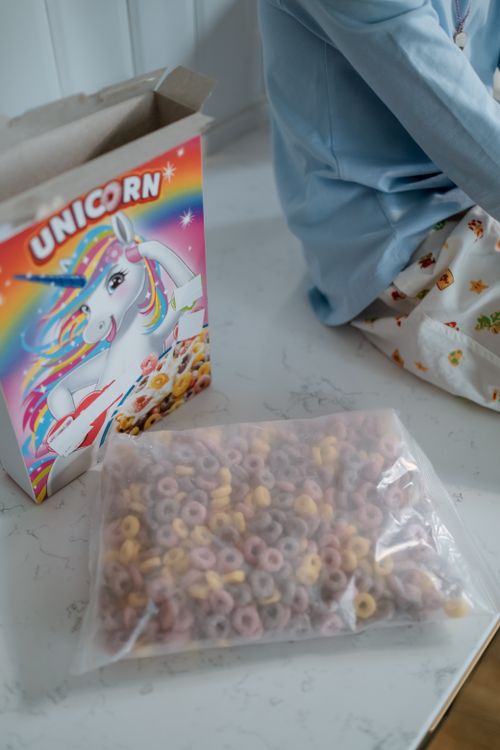
This guide explains label reading for everyday shopping in Poland. It does not prescribe calorie targets, recommend a weight-loss plan or judge a person's diet from one product. It uses GIS and European Commission information checked on 5 November 2026. The photographs show cereal shopping and packaging as context, not Polish nutrition tables, verified claims about those products or recommendations to buy them.
Find wartość odżywcza and the measurement basis
Wartość odżywcza means nutritional value. GIS explains that the standard information includes energy, fat, saturated fat, carbohydrate, sugars, protein and salt, expressed per 100 g or 100 ml. Start by finding that basis on the actual table. It lets you compare different package sizes without confusing the amount in the whole container with the amount in a standard quantity.
The European Commission notes that most prepacked foods require nutrition information, with exemptions for some foods. Therefore, do not decide that every item without a conventional table is automatically unlawful. This guide is not a complete list of exemptions. Its practical focus is how to interpret the table when the product carries one and how to ask for clarification when information is unclear.
Before comparing two products, check whether each column describes the food as sold or a stated prepared form. A preparation instruction can change what the numbers refer to. Do not silently combine a dry product's figures with those for another product prepared with added ingredients. Read any explanatory wording around the table, not just the row you are most interested in.
Recognise the main Polish row names
Wartość energetyczna is energy value. Tłuszcz is fat; w tym kwasy tłuszczowe nasycone identifies saturated fat within that category. Węglowodany means carbohydrate, and w tym cukry means of which sugars. Białko is protein and sól is salt. Learning those terms makes the structure familiar even when the brand and product are new to you.
The phrase w tym is important because it means a component is included within the broader row, not an extra amount to add on top. Do not add sugars to carbohydrate as if the two lines were separate piles. Likewise, the saturated-fat line sits within the fat category. Read the hierarchy before performing any calculation.
The standard panel does not answer every ingredient question. The ingredients list tells you what was used; the nutrition table quantifies selected nutritional information. If you need to identify an allergen or a particular ingredient, use the relevant ingredients and warning information as well. One panel is not a substitute for the other, even when both appear on the same small label.
kJ and kcal are two energy units, not two servings
Energy can appear in kilojoules, kJ, and kilocalories, kcal. Do not add the two figures together. They express energy in different units. When comparing products, use the same unit and the same quantity basis. Comparing one product's kJ per 100 g with another product's kcal per portion produces a number that looks precise but answers no useful question.
You do not need to convert every label by hand if both products show the same units. Identify the kcal line or the kJ line consistently, then check whether it refers to 100 g, 100 ml or a stated serving. The common basis matters more than memorising a conversion. Keep the units attached to any number you write down.
This guide does not set an energy allowance for an individual. A label's reference figure is not tailored to your age, health, activity or clinical needs. If you have a specific nutrition requirement, use appropriate professional advice and treat the package as information about that food. The table can support an existing plan; it cannot create a personal one merely by being printed clearly.
Convert the amount you will actually use
An invented example makes the portion calculation easier. Suppose a food contains 12 g of a listed nutrient per 100 g and you plan to use 30 g. The corresponding amount is 12 multiplied by 30 divided by 100, or 3.6 g. These are teaching numbers, not a statement about any product in the photographs or a current item on sale.
For a drink, suppose an invented label lists 5 g per 100 ml and the bottle contains 330 ml. The whole bottle contains 16.5 g on that basis. A bottle is not automatically one of the manufacturer's stated portions. Check the serving description and the quantity you intend to consume rather than assuming the front-of-pack number covers everything you will drink.
The same method works in the other direction: a pack can contain several portions, or you may use less than one. The purpose is not to encourage meticulous calculation for every meal. It is to prevent a basic mismatch between a convenient serving number and the actual amount. Use a reliable measurement when the quantity matters; do not disguise a guess as an exact result.
A portion is a stated quantity, not a universal standard
A per-portion figure is only useful when the portion size is clear. Two manufacturers can describe different serving amounts. If you compare their portion columns without checking the gram or millilitre quantity, you may be comparing different amounts of food. Return to the common per-100 basis for an initial comparison, then consider your own likely portion.
A smaller printed serving is not evidence that you will eat less of the product. Decide what the quantity means in your routine. If you normally use the whole pack, the whole-pack calculation may be the relevant one. If you share it, identify the amount reasonably rather than assuming the number of people alone defines equal portions.
Do not mistake a suggested serving for a medical instruction or a guarantee of balanced eating. It is label information with a defined basis. A single product's table also says little about the rest of a meal. This guide keeps the task narrow: understand the numbers before deciding what they mean for a wider eating plan.
Read RWS as reference information
RWS stands for Referencyjne Wartości Spożycia, reference intakes. GIS explains that this optional presentation can relate energy and selected nutrients in a portion to reference values for an average adult. The percentage is therefore linked to a particular reference and portion, not a personalised assessment of the person holding the packet.
Check what the percentage refers to before using it. A front-of-pack reference-intake number may sit beside an amount per portion, while the main table uses 100 g. Keep both the serving size and the stated reference in view. Do not compare two percentages without knowing whether their portions and relevant nutrient are the same.
GIS specifically cautions against treating reference figures for sugars, fats, saturated fats and salt as targets that must be consumed every day. This guide does not convert those references into individual upper limits or a dietary prescription. If you need a clinical target, the appropriate plan comes from your healthcare guidance, not from choosing whichever packet has the simplest percentage display.
Compare useful alternatives, not unrelated foods
A common basis makes numbers comparable, but it does not make all foods interchangeable. Start with alternatives that serve the same purpose for you. Compare the relevant rows, quantity and ingredients, then include price, taste preferences and practical use. One low number does not establish a complete ranking of product quality or suitability.
For someone with an allergen requirement, the composition and warning panel still needs its own check. For someone following a clinician's advice, identify the information that advice actually requires. Do not let a favourable-looking energy figure override a different restriction. Label reading works best when you know the question you are trying to answer.
Similarly, avoid judging a product solely by a front-of-pack description while ignoring its table. A claim can focus attention on one feature, whereas the table provides a broader set of standard information. Read both without assuming a single marketing word settles the whole decision. This is a method for understanding a purchase, not a recommendation for a particular diet.
Keep a short, accurate shopping routine
For an unfamiliar product, locate the nutrition table, check its basis and identify the rows that matter to your decision. Compare like quantities first. If needed, scale the number to the amount you plan to use. Then check ingredients, storage and date information separately. Those panels answer different questions and should not be collapsed into one verdict.
If a sticker, damaged print or a language problem makes the figures uncertain, ask for help with the whole relevant panel. A cropped number without its unit, row name and quantity basis is difficult to interpret. Keep that context in a photo or note when asking someone to translate it. Do not assume the largest number on the back is the amount for the whole pack.
The useful skill is modest: recognise wartość odżywcza, distinguish per 100 g from per portion and keep units attached to numbers. That is enough to prevent many everyday comparison mistakes. You can make a clearer shopping decision without turning the label into a personalised health plan or expecting one table to describe everything important about a food.
Frequently asked questions
Should I add kJ and kcal together?
No. They express energy in different units. Compare one consistent unit on the same quantity basis.
Is a manufacturer portion the amount I must eat?
No. Check its stated size and distinguish it from the quantity you plan to use.
Is RWS a personal daily target?
No. It is reference-intake information, not a plan tailored to your health or activity.