Organic Food Labels in Poland: EU Leaf, Code and Origin
The essentials: Read the EU organic logo with the control-body code and agricultural-origin line. Rolnictwo UE means EU agriculture; spoza UE means outside the EU. Organic status concerns a production scheme, not a personal health guarantee or proof of Polish origin.
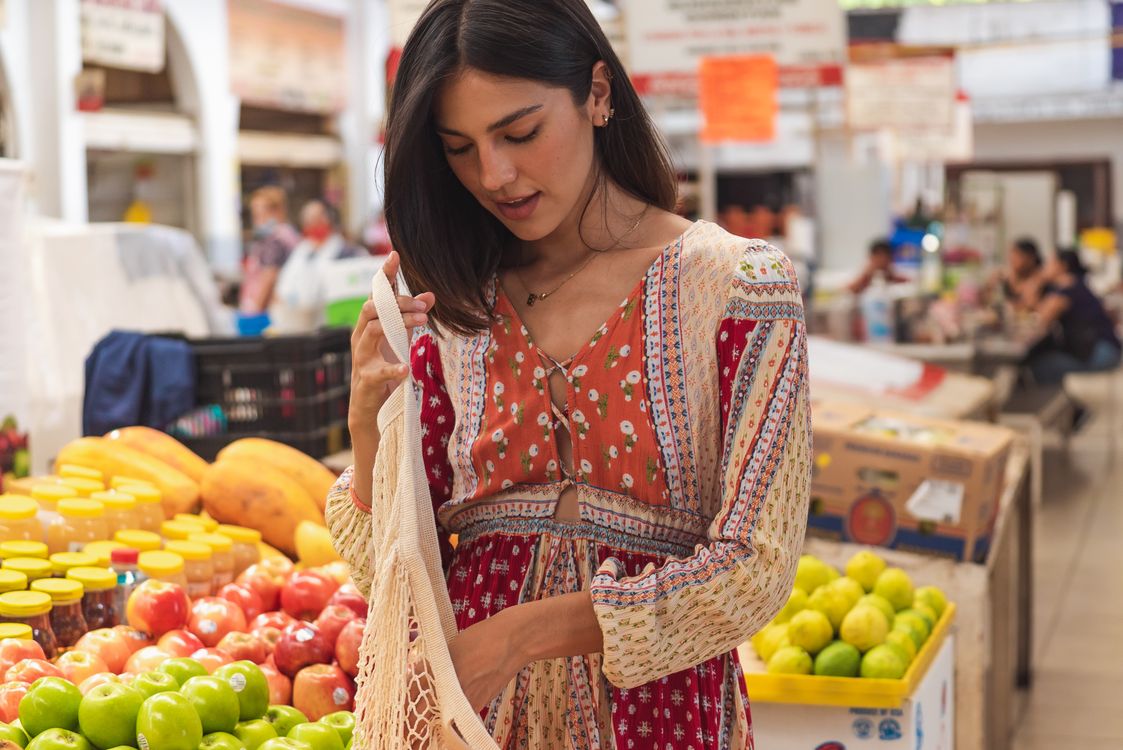
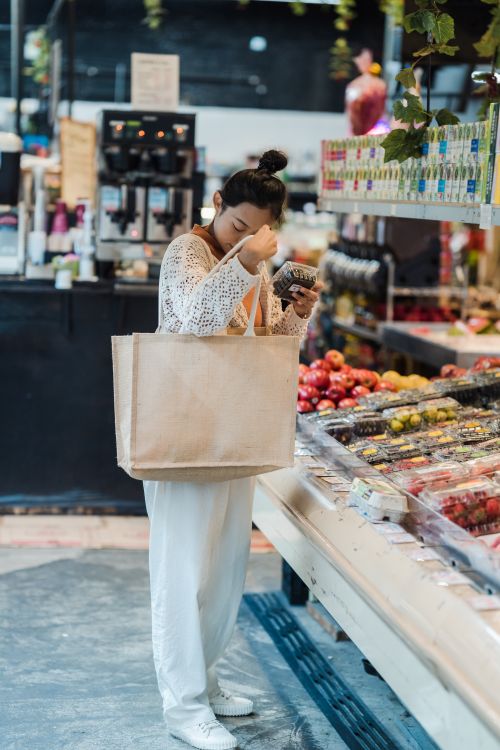
Cover: Los Muertos Crew, source photograph, Pexels License. Image unchanged. A shopper with a net bag in a produce market. General food-shopping context, not evidence of organic certification.
A green package is not the same thing as an organic label. On food sold in Poland, the useful task is to identify a particular regulated marking and read the information beside it. The EU organic leaf, the control-body code and the agricultural-origin statement answer related but different questions. Treating them as one vague promise makes the label less useful.
This guide concerns food and the EU organic-production scheme. It does not rank diets, guarantee that a food suits an allergy or describe a cosmetic certification scheme. It also does not claim that the vegetables in the photographs are certified organic. They illustrate shopping, not evidence about a producer or a product.
Start with the EU leaf, not the package colour
The EU organic logo forms a leaf from stars. It gives certified organic products a common visual identity. European Commission guidance explains that the logo is for products certified by an authorised control body or control authority and meeting the scheme's requirements. It is not a decoration available to any package that looks natural.
The logo should be read as part of the whole label. Look nearby for the control-body information and where the agricultural raw materials were produced. A photograph of only the front panel can leave out the information that makes the organic claim traceable. Turn the pack over or open the additional online label images.
Do not replace this check with a judgment about the shop. A small market stall, a farm-themed brand and a supermarket can each sell different kinds of food. The appearance of the setting does not establish the certification status of a particular item.
Learn the Polish words without treating them as loose praise
Ekologiczny is the Polish word commonly used for organic in this food-production context. Bio and eko also appear on food labels. Polish inspection guidance says terms referring to organic production, including these shortened forms, are reserved for products that meet the relevant rules. They are not simply synonyms for attractive, traditional or homemade.
A different word, such as natural, does not by itself supply the EU organic certification information. Read the actual claim rather than translating every positive-sounding food description into organic. If the package suggests a production scheme, look for the evidence that belongs to that scheme.
This distinction also helps with English online listings. A seller's summary may be shorter than the physical label. If organic status matters to your purchase, ask for a readable label image or a clear explanation tied to the exact product instead of accepting a category-page heading as the final answer.
Read the control-body code as its own piece of information
Beside the organic logo, look for the code identifying the control body or authority. Polish materials often show the PL-EKO pattern. The code relates to the control system; it is not the same thing as the line explaining where the agricultural ingredients were grown.
Do not assume that a Polish-looking code, a Polish brand or a Polish company address proves every ingredient was produced in Poland. The agricultural-origin statement has its own job. Read both pieces together, and keep their meanings separate when explaining the label to someone else.
If you need to check a Polish control body, use the official current IJHARS register rather than a copied list in an old blog. Names and authorisations can change. A saved code helps you ask a precise question, but a code on its own is not permission to invent a story about a particular farm.
Translate the agricultural-origin line carefully
Rolnictwo UE means EU agriculture: the agricultural raw materials were produced in the EU. Rolnictwo spoza UE means non-EU agriculture. Rolnictwo UE/spoza UE indicates a combination of EU and non-EU agricultural origins. These phrases are useful even when the brand name or distributor's address suggests a different country.
The origin information can, where the relevant conditions are met, use or include a country name. Read the wording actually printed rather than assuming a country because the package is sold in Poland. A label-reading guide should not turn an EU-wide origin statement into a more specific national claim.
An invented example makes the distinction clear. Imagine a package with a Polish business address and a rolnictwo spoza UE statement. The address and the agricultural origin are not automatically contradictory. They describe different things. This example is not an assessment of a current brand or a claim about any pictured groceries.
Know where the logo is required and where the picture changes
The European Commission says the EU organic logo is mandatory on prepacked organic food produced and sold in the EU. It may also be used on compliant imported organic products and on non-prepacked organic products. This difference matters when comparing a packaged product with loose produce.
Do not use absence of the logo as a universal fraud test. First establish what kind of product and sale you are looking at. An imported item or loose food can raise a different label question from an EU-produced prepacked product. Ask for the relevant organic information instead of applying one front-of-pack test to every situation.
The scheme also has boundaries. The Commission says the food organic logo is not for cosmetics or for products outside the organic-production rules. A cosmetic may have other claims or schemes, but that is not a reason to transplant this food-label checklist onto a cream bottle.
Understand the 95 percent point without oversimplifying it
Official guidance explains that using the logo requires the relevant organic composition threshold and other production rules. The Warsaw agricultural-quality inspectorate describes the threshold as at least 95 percent by weight of agricultural ingredients being organic. It is not a claim that any recipe becomes certified merely by reaching a number on a kitchen scale.
The remaining ingredients are also subject to conditions. Certification, production, processing, transport and storage requirements matter. Avoid reducing the whole scheme to a slogan that 95 percent is enough regardless of what happens to the other part of the product.
For an ordinary shopper, the practical step is to read the certified product's label rather than trying to certify it yourself from the ingredients list. This guide does not provide an operator's compliance assessment or authorise a seller to add the logo to homemade food.
Keep organic status separate from the rest of the food label
An organic claim answers a production-scheme question. It does not tell you the amount of sugar in a portion, settle whether an ingredient is suitable for you or replace a use-by date. Read the nutrition table, ingredients, allergen information and storage instructions for their own purposes.
The same separation applies to household preferences. A certified organic product may or may not be the size, taste or recipe you want. A label-reading routine helps you understand the claim without turning it into a recommendation that everyone should buy the item.
Do not infer a personal health result from the leaf. This article does not compare clinical outcomes or make a promise about pesticide residues, allergies or treatment. When a health requirement drives the purchase, use the relevant product information and appropriate professional advice rather than expanding the meaning of an organic mark.
Compare the exact product, not the whole brand
A company can sell different product lines. Check the label of the item and size you are considering. A logo on one product does not prove that every product from the same brand is organic. Likewise, a shelf sign should not replace a check of the particular package.
For online shopping, save the name and the label image that support the claim. If the photo is too small to read, ask for clearer information. Do not fill in a missing code or origin line from a similar product found elsewhere. That shortcut can quietly change the item being assessed.
For loose food, ask a focused question about the organic claim and its supporting information. Avoid assuming that an informal display must be organic, or that lack of a printed front panel makes a seller dishonest. The correct response to missing information is to establish it, not to invent it.
Keep a useful record if the information seems inconsistent
Write down the exact claim you cannot reconcile. Keep the product name, label photographs, code and agricultural-origin line together. If relevant, preserve the online description and proof of purchase. This gives the seller or the relevant inspection service something specific to review.
Start with a factual question: which control body is responsible for this product's organic claim, and where is the agricultural-origin information? Avoid demanding that a retailer defend an accusation based only on a green design or an incomplete picture.
The routine is short once the pieces are familiar. Identify the regulated leaf, read the control-body code, translate the agricultural-origin statement and check the rest of the food label separately. You are looking for a clear, product-specific claim, not asking a single symbol to answer every question about the food.
A final useful check is whether you can explain each piece without adding assumptions. The logo identifies the scheme, the code identifies the control-body information, and the origin line describes agricultural origin. If one piece is unreadable, keep that uncertainty visible until the seller supplies it.
Frequently asked questions
Does a Polish brand prove Polish agricultural origin?
No. Read the agricultural-origin statement separately from the company address.
Must every loose or imported organic item show the EU leaf?
Do not apply the rule for EU-produced prepacked organic food to every sale. Commission guidance distinguishes optional uses on compliant imports and non-prepacked food.