Paprika in Poland: Sweet, Hot, Smoked and Seasoning Blends
The essentials: Keep słodka, ostra and wędzona in the paprika product name. A kebab-gyros or potato seasoning can already contain salt, herbs and other ingredients, so it is a different starting product from a single named paprika.
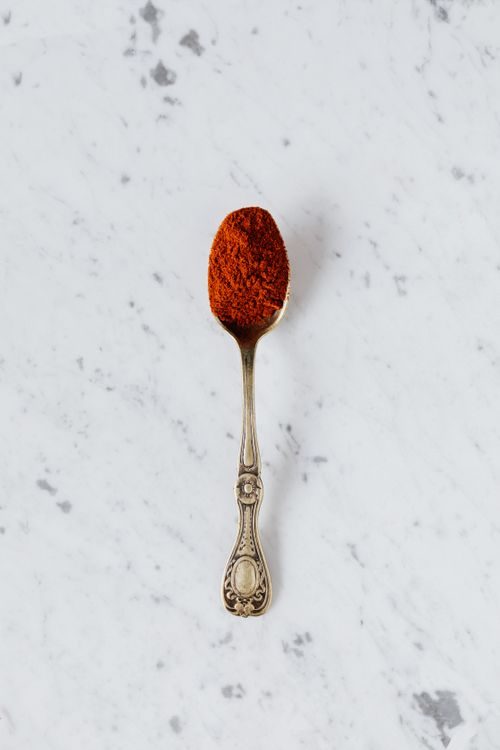
Cover: Kaboompics, source photograph, Pexels License. Resized and JPEG-compressed. A spoon holding red ground spice. Illustrative paprika context, not a cited Prymat product or verification of heat, sweetness or smoking.
A red powder on a Polish spice shelf might be sweet paprika, hot paprika, smoked sweet paprika or one ingredient in a seasoning mixture. A packet labelled przyprawa do ziemniaków or kebab-gyros can contain salt, several spices and dried vegetables rather than paprika alone. The useful first choice is therefore the actual product type, followed by the exact formulation and the flavour your recipe intends.
Prymat's own product and shop pages provide the examples here. They show why słodka, ostra and wędzona should be retained in a shopping note, and why a named seasoning blend deserves its own ingredient check. This is not a universal heat chart, a salt guide or a claim that every producer follows the same recipe. Colour and a serving photograph cannot establish those details.
Papryka słodka is a named sweet-paprika product
Prymat's Papryka słodka mielona 20 g shop page gives its ingredient as ground sweet paprika. The producer describes a distinctly sweet flavour and suggests a broad range of uses, including meat, fish, soups, sauces, salads and vegetables. Those are product descriptions and use ideas, not firsthand cooking results or a promise that one amount will suit every dish.
The important words are słodka and mielona: the selected item is the ground sweet-paprika product. If an English recipe asks for sweet paprika, preserve that in the shopping note rather than writing only red spice. The same producer sells hot and smoked versions, and a shop may shorten titles enough to hide the difference unless you open the full listing.
Sweet does not mean this guide has established a measured heat value or guaranteed complete absence of sensation for every diner. The cited page gives a flavour description, not a laboratory comparison with every other packet. Use the exact name to identify the intended ingredient, and keep recipe quantities separate from a product's general list of suggested dishes.
Papryka ostra changes the flavour choice
Prymat's Papryka ostra mielona 20 g page lists ground hot paprika as the ingredient. The producer positions it as an addition when you want a spicy accent in soups, sauces and other dishes. That is a different selected product from the sweet version, even if both are finely ground and displayed in packets with similar colours or the same weight.
Do not treat the two as a guaranteed spoon-for-spoon match in an existing recipe. The hot name is a deliberate flavour distinction. If you choose it in place of sweet paprika, the dish may need its own judgement about the amount and the intended result. This article supplies no universal reduction factor, heat units or conversion that would preserve every recipe's flavour.
The powder's shade also does not provide a verified heat reading. A product photograph can help recognise the packet, but it cannot establish an exact level of pungency. For a repeat purchase, save the producer and full name instead of trying to match a particular red colour from memory. A differently lit image is not a dependable ingredient specification.
Wędzona and słodka describe different parts of the choice
Prymat's Papryka wędzona słodka mielona 20 g lists smoked sweet ground paprika. The producer describes a pronounced aroma with a sweet note and suggests fish, beans, stews and thick sauces among its uses. This is a concrete example in which smoked and sweet appear together. Wędzona is not automatically another word for hot.
The cited shop description discusses the product's smoked character, but this guide does not turn that into a universal smoking process or claim that every producer uses a particular wood. The useful shopping fact is the named smoked-sweet item and its stated ingredient. If a recipe requests smoked paprika, look for that specific description instead of assuming ordinary hot paprika creates the same flavour.
Likewise, an image of peppers beside smoke or a dark red powder is only illustration until the selected product's text confirms its identity. Do not infer a smoked process from packaging artwork. The name and ingredient statement provide the evidence for this example, while the producer's use suggestions explain how it is positioned without pretending the article has tested each dish.
A kebab-gyros blend is more than paprika
Prymat's Przyprawa kebab-gyros pikantna 30 g begins its ingredient list with salt, sweet paprika, chilli 7.4%, sugar, coriander seed and onion. It also names white mustard seed 5.4%, garlic, marjoram 4.8%, rosemary, juniper, turmeric, allspice, clove, basil, savoury, black pepper and parsley leaf. This is a multi-ingredient seasoning, not paprika in a packet with a serving suggestion.
Those named shares belong to this specific blend. The 7.4% figure is for chilli, not all red ingredients together, while the marjoram and mustard figures identify other components. Do not add the numbers into an invented paprika percentage or assume another kebab-gyros mixture has the same balance. Preserve the exact product and variant when you want to repeat it.
Pikantna is also part of the identity. A different packet called kebab-gyros may be another variant rather than the same list without one ingredient. Check the selected item instead of borrowing this formulation because the dish name matches. A familiar blend title is a useful lead, but the actual list is what tells you which seasonings are already combined.
A potato blend has its own recipe and format
Prymat GastroLine's Przyprawa do ziemniaków 1 kg is explicitly a catering-size seasoning mixture. Its detailed ingredient list names salt, onion, monosodium glutamate as a flavour enhancer, coriander seed, sweet paprika, caraway, marjoram, savoury, dill leaves, dill seeds, black pepper and chilli. Keep that complete product line separate from a smaller household packet with a similar title.
The page's descriptive prose also mentions garlic, but the detailed ingredient list does not name it. This article does not silently add garlic to the quoted formulation. The mismatch is a reason to check the current pack if that ingredient matters. It is more useful to preserve the source's disagreement than to merge both snippets into a supposedly verified list.
The producer positions the mixture for potato dishes such as fries, crisps or sliced potatoes. These are intended-use descriptions, not complete cooking directions or guarantees about roasting time and texture. The seasoning does not replace the preparation method for your potatoes. Nor does a catering pack establish the exact amount you should add to a smaller household recipe.
A mixture can change more than one recipe ingredient
When a recipe lists paprika separately from salt, garlic or herbs, buying a formulated blend changes the starting point. The kebab-gyros example already includes several of those flavour decisions, while the potato blend has another balance. You may want a prepared mixture, but choose it deliberately rather than assuming the packet is simply a convenient source of the one spice your recipe named.
This is not a claim that every blend is unsuitable for cooking from a recipe or that a shorter ingredient list is always preferable. A named mixture can be exactly what a dish intends. The practical question is whether the recipe expects the prepared blend or individual ingredients. Keeping that distinction visible is easier than trying to correct an accidental seasoning change later.
The guide does not offer a universal paprika-to-blend ratio. A blend's paprika share may not be stated, and its other ingredients still enter the dish even if you try to adjust by colour. A red result is not evidence that the final seasoning matches another recipe. The selected product's formula is the useful starting information.
Keep flavour descriptions separate from health claims
The cited product pages contain wider background and promotional statements, but this article uses them for product identity, actual ingredients and suggested culinary roles. It does not adopt medicinal claims, vitamin comparisons or broad stories about which ingredient is better for someone. The shelf choice can be explained without a health ranking or an assurance about individual dietary suitability.
For the same reason, a single-ingredient description in this comparison is not an allergy-safety promise. Check the current packet's full information for any dietary requirement. A concise ingredient summary helps identify the cooking product; it does not replace every other part of the label or establish what any particular person can use.
A pack weight is useful for identifying the cited item, but it does not supply a recipe dose. The 20 g paprika packets, 30 g kebab-gyros blend and 1 kg catering potato mixture are purchase formats, not interchangeable measures of seasoning strength.
A shopping note that keeps the important words
For sweet paprika, retain słodka mielona and the producer you want. For hot paprika, keep ostra. For the smoked-sweet example, save both wędzona and słodka rather than choosing only one word. For a prepared mixture, retain the full blend name, variant and product line so a similar-looking packet does not become an unnoticed substitute.
You do not need a universal definition of every red spice to shop well. You need to know whether you are buying the single named paprika or a multi-ingredient seasoning, and what flavour choice the product has already made. That gives the recipe a clear starting ingredient without relying on colour, a familiar dish picture or a formula borrowed from another packet.
Frequently asked questions
Does wędzona automatically mean hot?
No. The cited Prymat product is explicitly smoked sweet ground paprika.
Is a seasoning blend simply another packet of paprika?
Not in the cited examples. The kebab-gyros and potato blends list salt and several other spices or ingredients.
Does the potato-blend description exactly match its ingredient list?
Its descriptive prose mentions garlic, but the detailed ingredient list does not. Check the current pack rather than merging the two.