Picture Framing in Poland: Sizes, Glass and Custom Orders
The essentials: Search for oprawa obrazów, describe the object and agree the visible opening, frame, mount, glazing and backing. Compare the total service price and ask a conservator about fragile or irreplaceable works.
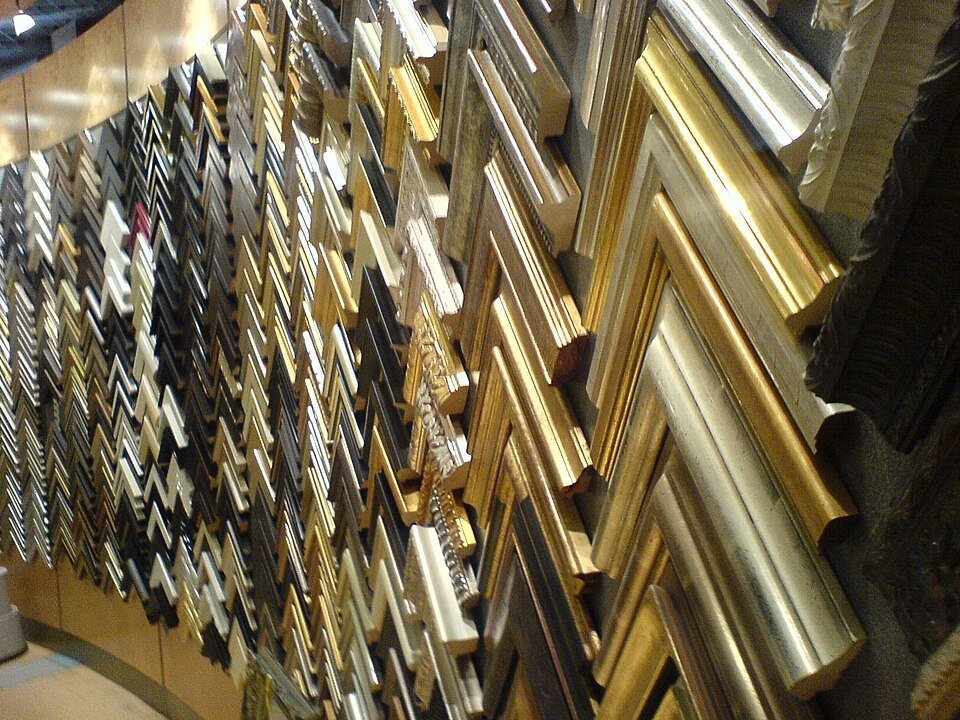
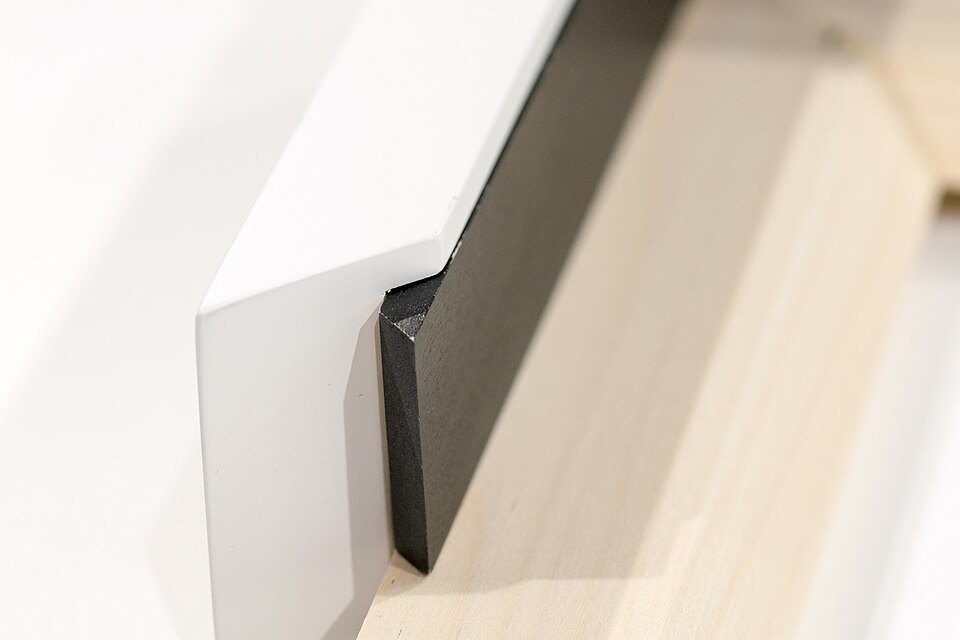
Illustrative frame samples in Munich, April 2009, not a Polish shop listing. Mattes / Wikimedia Commons, CC BY-SA 3.0. Resized, same licence.
A print from home, a family photograph or a poster bought in Poland can be easy to live with and surprisingly awkward to frame. The paper size is not necessarily the size of the visible image, the frame's advertised measurement may not be its outside dimension, and a low initial price may leave out glazing, backing or mounting.
In Polish, search for oprawa obrazów for picture framing or ramy na wymiar for made-to-measure frames. Start with what the object needs, then choose the appearance and agree the complete order. This guide draws on Polish workshops and Canadian Conservation Institute guidance checked on 27 October 2026. The preservation advice concerns works on paper, not a universal recipe for every painting or object.
Decide whether you need a frame or a complete framing service
A ready-made frame can be a sensible option for a replaceable poster that fits the stated size. A custom service is worth asking about when the work has unusual dimensions, needs a particular border, already has an important frame or requires careful mounting. Do not assume a custom frame automatically includes conservation-grade materials. Ask what is actually supplied.
Fotkom's Polish service page describes its order process as identifying the work and dimensions, choosing the frame material and profile, deciding on glass, acrylic and passe-partout, then obtaining an individual quote. That is a useful ordering checklist, not a national specification. Another workshop may structure the service differently or ask to inspect the object before quoting.
If the object is valuable, fragile or irreplaceable, say so at the beginning. A cheap decorative reprint and a signed original may need different handling and mounting. An old family letter, photograph or drawing can be important even without a high market value. Ask whether a conservator should assess it before anyone dismantles an old frame or attaches new materials.
Describe the object before choosing a border
Tell the framer whether the work is a photograph, watercolour, pastel, print, poster, canvas or textile. Explain any existing creases, loose pigment, tears or signs of moisture. Do not flatten, clean or tape the object just to make it easier to bring in. The Canadian Conservation Institute warns that paper can be harmed by contact with glue, pressure-sensitive tape and other unsuitable materials.
Take a clear private record of the object and its condition before handing it over. Agree what the workshop may do: opening the old frame, removing a mount, trimming, flattening or mounting are different permissions. If you do not want the paper cut or permanently attached to a board, state that explicitly and have the order reflect it.
For works on unusual materials, request specialist advice rather than treating every flat object as ordinary paper. The Institute's framing note says materials such as parchment and vellum can need a professional conservator. A workshop's general claim to frame many objects does not establish that it can safely treat your particular damaged or historic item.
Measure the paper, image and finished frame separately
Bring the full width and height of the sheet, and explain how much of it should remain visible. A signature, plate mark or handwritten note near the edge can change the desired opening. Do not give only the printed image dimensions if the surrounding paper is part of what you want to preserve and display.
Ask the framer to distinguish the work size, the passe-partout opening, the glazing size and the finished outside dimensions. This matters when a frame must fit a narrow wall, sit beside another picture or travel in luggage. A wider border and frame profile can make the finished piece substantially larger than the artwork alone.
For an existing frame, ask whether it has enough depth for the proposed glazing, mount and backing. The Institute cautions that some clip-together metal frames lack the depth needed for a protective package. Reusing a frame is not simply a matter of fitting the width and height: its condition, depth and construction matter as well.
Passe-partout is more than a colour choice
The term passe-partout, also written paspartu in Polish, refers here to the window mount around the work. Fotkom describes it as a board element that creates visual distance between the work and frame. Ask to see samples beside the actual object, since a small colour chip away from the artwork can give a different impression.
For works on paper, spacing has a protective role too. The Institute recommends keeping the artwork from touching the glazing, commonly by using a sufficiently thick window mat. Without that separation, contact can lead to staining, image transfer or adhesion. The correct arrangement depends on the work, so ask how the proposed mount or spacer keeps it safely away from the front covering.
Ask about the composition of both the mount and backing, not only their colour. The Institute recommends suitable acid-free materials and warns that some ordinary backing materials can introduce harmful acids or resins. 'White board' and 'archival' should prompt a question about the actual product and mounting method, rather than being accepted as complete technical descriptions.
Choose glazing for the work and its display conditions
Polish workshop menus may offer ordinary glass, anti-reflective glass, museum glass and acrylic or plexi. Fotkom lists several of these choices. Ask for the precise material, relevant UV-filtering specification, thickness and cleaning instructions. A marketing label does not tell you every property or whether it is appropriate for the work inside.
Do not treat reduced reflections and reduced UV exposure as identical promises. Ask which performance the quoted product provides. The Canadian Conservation Institute explains that glazing choices involve both appearance and preservation. It also warns that filtering materials do not remove every harmful UV exposure, so they should be combined with appropriate light conditions rather than used as an excuse for a sunny display position.
Glass and plastic have different drawbacks. The Institute notes that glass can break and that plastic can build an electrostatic charge. It specifically cautions against ordinary plastic glazing for friable images such as charcoal or pastel, where particles may be lifted. Tell the framer the medium and ask for an appropriate recommendation instead of choosing plexi solely because it is lighter.
Use samples and a written order to settle the design
Bring a photograph of the intended wall and measurements of the available space. Treat it as design context, not a reliable colour-calibrated view of the artwork. Compare the actual frame and mount samples together before approving the combination. Ask how much of the image the frame edge or mount will cover and whether the signature stays visible.
If language is a concern, ask about English service before visiting. As one concrete example, Piotr Iwiński's Warsaw workshop website states that it serves customers in English and German as well as Polish. That is the workshop's published claim, not a guarantee about who is available at every moment. Confirm the appointment and explain the job directly.
Have the order record the chosen profile, finish, mount, glazing, backing and mounting approach. If a material becomes unavailable, ask the workshop to contact you before substituting it. A design can look similar while using a different glazing or attachment method. The written specification helps both sides distinguish an approved change from a misunderstanding.
Compare complete quotes and realistic collection dates
Ask for the total rather than comparing a bare frame price with a full framing-service price. Confirm whether consultation, dismantling, mount cutting, glazing, assembly and hanging fittings are included. Fotkom says its cost depends on dimensions, profile and material, glazing, passe-partout and non-standard preparation. This guide therefore gives no nationwide price or fixed turnaround.
Agree the expected collection date, any deposit and what happens if the materials take longer to arrive. For a gift, exhibition or move, explain the real deadline before ordering. Do not assume a workshop's general completion estimate is a promise for a specialist order, restoration or unusually large frame. Ask when the finished work will actually be ready to collect.
If delivery is proposed, ask who packs it, what protection is used, whether the contents are covered by the transport arrangement and what to do if it arrives damaged. Fragile glazing and original artwork deserve a specific plan. For an important work, ask the framer or conservator about safe transport rather than improvising with tape against the artwork.
Inspect, display and keep the paperwork
Before leaving, inspect the frame corners, visible mount, glazing and agreed image opening. Check for trapped debris, damage and unexpected cropping. Ask how to carry it, clean the glazing and use the supplied hanging fittings. Match the fixing to the frame's weight and wall construction; if you are renting, agree any drilling or installation arrangements first.
Choose the display location with care. The Institute's basic-care guidance says light damage to paper is irreversible and recommends avoiding sunlight from windows or skylights. A UV-filtering front does not make the whole object immune to fading or environmental harm. If your preferred wall is bright or damp, discuss a different position or displaying a reproduction instead of the original.
Keep the receipt, order specification, condition record and care instructions. Raise any problem with the business using the agreed specification and the change you are requesting. For a disputed private purchase from a business, Gov.pl points to consumer advisers, local consumer ombudsmen and Trade Inspection. The appropriate remedy depends on the actual goods-and-service agreement, not a generic guarantee that every custom frame can simply be returned.
Frequently asked questions
What is picture framing called in Polish?
Search for oprawa obrazów. Ramy na wymiar means made-to-measure frames. Explain whether you want only a frame or a complete service including mounting, glazing and backing.
What is passe-partout?
It is the window mount around the work. For paper works it can also help separate the artwork from glazing, but its material and mounting method matter as well as its appearance.
Does museum glass prevent all fading?
No. Ask for the exact glazing specification and continue to manage light exposure. Conservation guidance recommends avoiding sunlight on works on paper; filtering glazing is not complete protection.
Should I put pastel behind ordinary acrylic?
Ask a specialist about the exact work and glazing. The Canadian Conservation Institute warns that ordinary plastic glazing can develop static and lift particles from friable media such as pastel or charcoal.
Can I reuse an old frame?
Possibly, but its condition and depth need checking as well as width and height. Agree the full protective package and ask for conservation advice before altering valuable or fragile work.
Sources
- Fotkom custom-framing order and materials, checked 27 October 2026
- Piotr Iwinski workshop services and language statement, checked 27 October 2026
- Canadian Conservation Institute: framing works on paper, checked 27 October 2026
- Canadian Conservation Institute: glazing materials, checked 27 October 2026
- Canadian Conservation Institute: basic care of art on paper, checked 27 October 2026
- Gov.pl consumer help, updated 13 January 2026, checked 27 October 2026