Płock for a Weekend: Royal Tombs, Art Nouveau and the Wide Vistula
The essentials: Płock rewards a weekend: a cathedral hill where two Polish kings lie buried, one of the country's largest Art Nouveau collections (20 zł), a zoo above the Vistula (45 zł) and river sunsets. Around 1.5 to 2 hours by train from Warsaw.
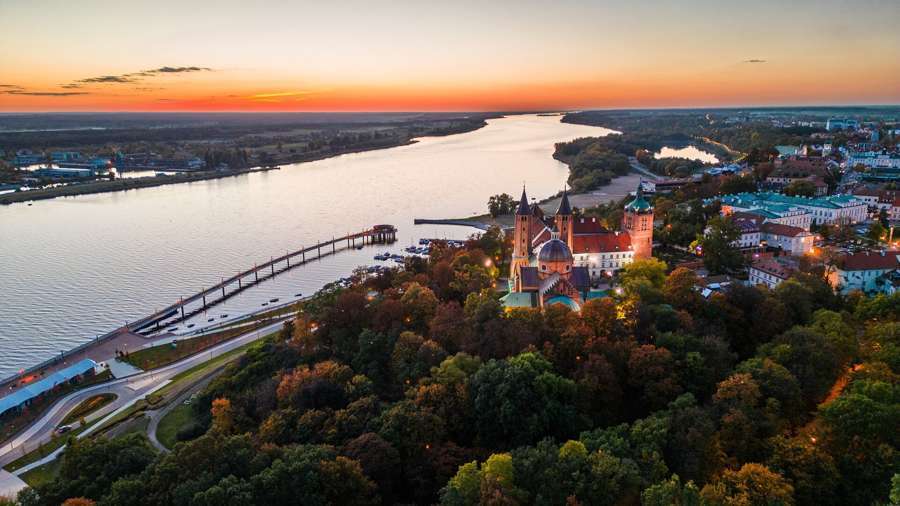
Nine hundred years ago, the rulers of Poland ran their kingdom from Płock. The city has long since handed the capital's role to Warsaw, but it kept the view: a cathedral hill towering over the widest, wildest stretch of the Vistula in Mazovia. Add one of the country's great Art Nouveau collections, a zoo on the river escarpment and an old town built for slow evenings, and Płock makes one of the easiest and most rewarding weekends from the capital. It is also one of the cheapest overnight escapes in this guide: regional-city prices, no queues, no crowds. 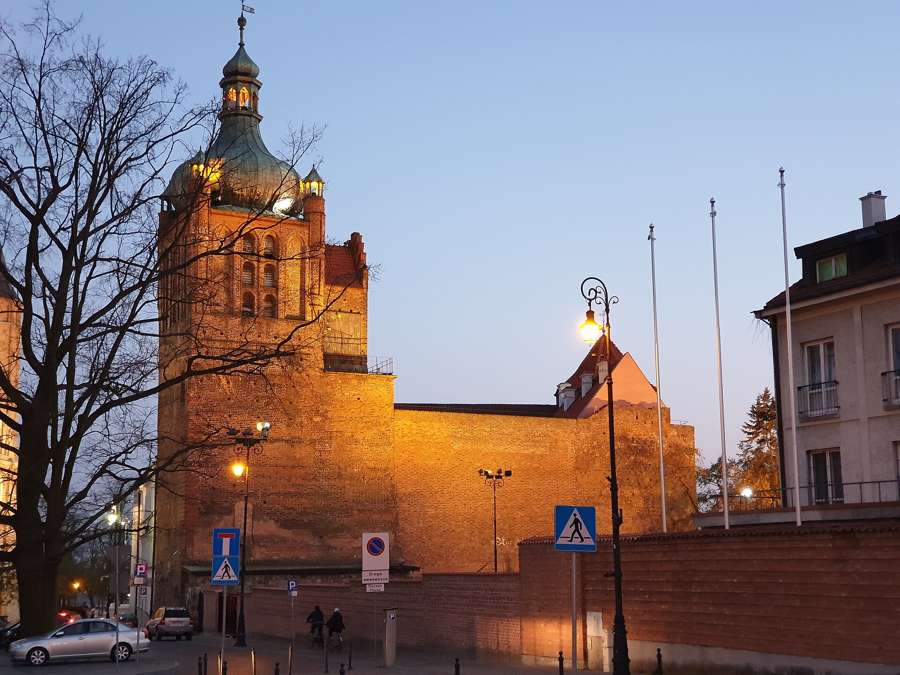
Getting there
Płock lies about 110 km northwest of Warsaw, on the Vistula's high right bank. Koleje Mazowieckie trains via Kutno take around an hour and a half to two hours, and driving takes about an hour and a half outside rush hour. That puts the city comfortably inside day-trip range, though the riverside sunsets argue for staying the night. The station sits on the far side of the centre from the river; buses run to the old town, or walk it in about 25 minutes. Once you are on Tumskie Hill, everything is compact and walkable.
Data source: Koleje Mazowieckie and Płock city information, checked 22 October 2026.
Tumskie Hill: the royal heart of Mazovia
Płock was a capital before Warsaw was a town. Between 1079 and 1138 it served as the seat of the Piast rulers of Poland, and the kings Władysław Herman and Bolesław III Wrymouth lie buried in the cathedral on Tumskie Hill. The Cathedral Basilica of the Assumption keeps a Romanesque core from the 12th century beneath later remodelling, and its story comes with one of the great footnotes of Polish art: the bronze Romanesque doors cast for Płock in the 12th century were carried off to Novgorod in the Middle Ages and still hang there, while the cathedral displays a faithful copy. Beside the cathedral stands the castle of the Mazovian dukes, whose tower and walls complete the hilltop silhouette that appears on every postcard of the city.
The hill itself is half the pleasure. Terraces on its northern side look straight down the Vistula, and on a clear evening the sunset over the river, with the cathedral towers behind you, is worth the trip on its own.
Płock's royal period ended with the move to Kraków and then Warsaw, but the city stayed a serious place: seat of a bishopric since 1075, a prosperous Vistula trading port, and later an industrial city known for the giant refinery on its outskirts. The layers survive side by side, and the compact scale means you read them all in a single afternoon: Romanesque stones, Gothic walls, Art Nouveau townhouses and a working Polish city in between.
Data source: Płock cathedral and city information, checked 22 October 2026.
Art Nouveau and the museum trail
Płock's second surprise is indoors. The Mazovian Museum holds one of Poland's largest and finest collections of Art Nouveau, the sinuous, nature-inspired style of the years around 1900: furniture, glass, silver and painting gathered in a dedicated Secesja branch in a handsome Art Nouveau townhouse in the centre. If you know this style only from Kraków or Łódź, Płock's collection will change your ranking.
The museum spreads across several branches. Tickets for the Secesja branch cost 20 zł normal and 12 zł reduced, or 30 zł and 15 zł combined with the "Ten Centuries of Płock" historical exhibition, which alone costs 15 zł normal and 8 zł reduced. A combined ticket covering every branch, including the granary gallery, the Museum of Mazovian Jews and the riverside skansen, costs 70 zł normal and 35 zł reduced, and stays valid on the day of purchase plus the two following days. Family tickets are available at roughly double the reduced rate across the branches.
Data source: Mazovian Museum in Płock official price list, checked 22 October 2026.
The zoo on the escarpment
Płock's zoo occupies a spectacular position: grounds laid out along the high Vistula escarpment east of the old town, with the river gleaming through the trees between the enclosures. It is a proper mid-sized zoo rather than a token city menagerie, with big cats, primates and a walkable, shady layout that suits a long family morning.
Tickets cost 45 zł normal and 35 zł reduced, and children under three enter free with an adult ticket. For summer visitors there is a combined ticket with the city's aquapark at 120 zł normal and 90 zł reduced, sold online and valid for 30 days. Pushchairs can be rented at the entrance.
Data source: Płock Zoo official price list, checked 22 October 2026.
The old town and the river
Between the hill and the zoo, Płock's old town keeps a low-key charm. The Stary Rynek is a sloping, intimate square ringed with 19th-century facades and cafe terraces, with the Gothic town hall at its head, and Tumska street runs the ridge from the square to the cathedral hill past small shops and galleries. Below it all, the Vistula boulevards and the pier draw the evening crowd: families on bikes, anglers, and half the city out to watch the light change on the water. Płock's riverfront is less polished than Warsaw's, and many people prefer it for exactly that reason.
For eating, the Stary Rynek and Tumska street carry most of the options: milk-bar lunches, pierogi and modern Polish kitchens, plus a growing handful of specialty cafes. Prices sit a clear step below Warsaw's, and weekend dinners rarely need a reservation outside the summer festival weekends. In season, look for river fish on menus and the city's ice-cream institutions near the pier.
Data source: Płock city information, checked 22 October 2026.
With children
Płock is a strong family weekend on a budget. The zoo is the headline, worth a full morning; the pier and boulevards handle the afternoon energy; and the skansen branch of the museum, with its relocated Vistula-side cottages, adds an open-air hour that younger children enjoy more than any gallery. The compact centre means short legs never face long transfers, and the combined zoo-and-aquapark ticket turns a hot-weather visit into two full days of water and animals. One planning note: museum branches keep individual opening patterns and most close on Mondays, so check the current hours for the specific branch you want before promising the children the Art Nouveau glass collection. The cathedral works best as a short, story-led visit: tell them two real kings are buried here, and let them hunt for the bronze doors.
Data source: zoo, museum and city information, checked 22 October 2026.
A simple weekend plan
Saturday: train from Warsaw, Tumskie Hill and the cathedral, the castle walls, sunset from the terraces and dinner on the Stary Rynek. Sunday: the zoo in the morning, the Art Nouveau museum after lunch, a last walk along the pier and home. Płock asks for very little and gives back a royal hill, a great museum and the best river view in Mazovia.
Practical notes: the cathedral is a working basilica, so plan interior visits outside mass times. The walk from the Stary Rynek up Tumska to the hill is short but uphill; take the side streets and it becomes part of the pleasure, passing small galleries and the occasional plaque marking nine centuries of city life. And if you arrive by car, the escarpment roads to the zoo are steep; the parking by the river below the hill is the easier base for the whole day.
Frequently asked questions
How much does Płock Zoo cost?
A standard ticket costs 45 zł and a reduced ticket 35 zł, with children under three entering free. A combined zoo and aquapark ticket costs 120 zł normal and 90 zł reduced, sold online.
What is Płock famous for?
Płock was the capital of Poland's Piast rulers between 1079 and 1138, and two Polish kings are buried in its cathedral. It is also known for one of Poland's largest Art Nouveau collections, its zoo on the Vistula escarpment, and its river views.
How do I get from Warsaw to Płock?
Koleje Mazowieckie trains via Kutno take around 1.5 to 2 hours from Warsaw. By car the 110 km journey takes about 1.5 hours outside rush hour.
Are Płock's museums expensive?
No. The Art Nouveau branch costs 20 zł normal and 12 zł reduced, and a 70 zł combined ticket covers every Mazovian Museum branch for three days. Family tickets are available. * Photos: Tumskie Hill and the Vistula at Płock by Aquarius 24, CC BY-SA 4.0; Płock castle at dusk by MichalPL, CC BY-SA 4.0, both via Wikimedia Commons.