Bread in Poland for expats: chleb, obwarzanki, bakeries guide
The essentials: Poland runs on bread: 84% of Poles eat it at breakfast, and mixed bread averaged 11 zl/kg in early 2026 (GUS via BNP Paribas, 27.07.2026). The loaf to know is chleb zytni na zakwasie, sourdough rye. Buy at a piekarnia by the loaf or half, sliced on request.
In Poland, bread is not a side dish - it is the foundation of the table, and Poles guard that status with something close to devotion. Nearly half of them eat bread every day and 84% eat it at breakfast, according to Mintel data cited in a Bank BNP Paribas market analysis published on 27 July 2026. Prices rose about 5% over the year to mid-2026, and analysts expect a few percent more by year-end - yet consumption holds steady. As one BNP Paribas expert put it, bread in Poland is like pasta for Italians or rice in much of Asia: beyond negotiation. For an expat, that is good news. You have moved to one of Europe's great bread countries. Here is how to make the most of it.
Chleb: the loaf that matters
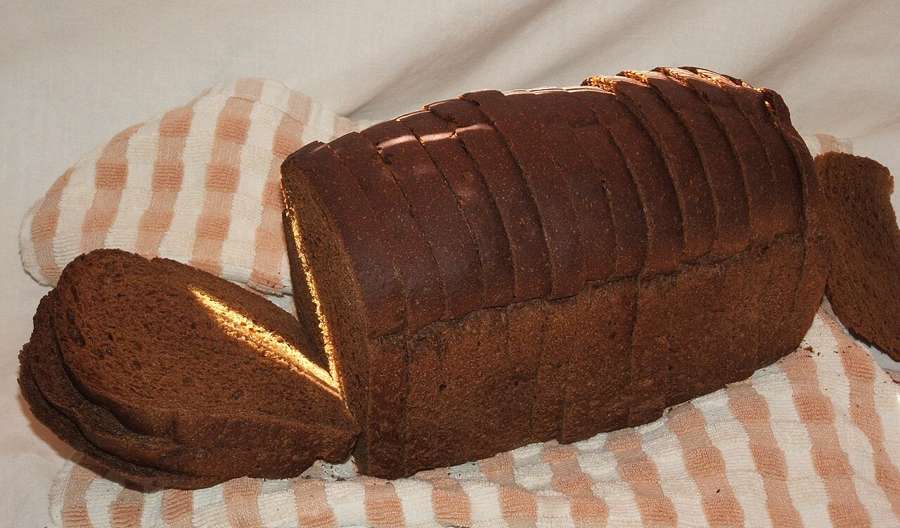
The word you need first is chleb - bread in the serious sense, a baked loaf sold whole, in halves or by weight, as opposed to a packaged sliced product. The classic is chleb zytni na zakwasie: rye bread leavened with a fermented rye starter instead of commercial yeast. The Ministry of Agriculture's entry for it on Poland's official list of traditional products (12.06.2019) describes a rectangular one-kilo loaf with a golden-brown crust dusted white with flour, a moist grey crumb that springs back when pressed, and a gently sour taste from the lactic-acid fermentation that also gives it its keeping qualities and its reputation as the healthy choice.
In practice you will meet a family of loaves. Chleb pszenny is pure wheat - lighter and milder. Chleb mieszany, the mixed wheat-rye, is the everyday standard and the loaf the statisticians track. Chleb razowy is the wholemeal style, dense and nutty. Most bakeries also do seeded variants with sunflower or flax. All of them share the traits that define Polish bread: a real crust, a moist crumb, and enough sourness or depth to stand up to butter alone.
Then there are bulki, the rolls. The kajzerka - a round, crusty roll scored on top - is the breakfast default, split and buttered or loaded with ham and cheese. Bulkas of every size fill the morning counter, and at about one to two zloty each they are the cheapest solid food in the country.
Why bread is sacred here
The ministry's traditional-products entry reads like folklore, because it is. In old farmhouses bread was baked once a week, on horseradish or cabbage leaves, and the sign of the cross was pressed into each loaf with the edge of a hand. Fresh bread was placed on the home altar to be blessed. Bread could not be wasted, thrown away, set on a dirty table or left with a knife stuck in it - and refusing someone a piece of bread was unthinkable. Bread stood for hospitality, friendship and safety.
Traces of that survive in plain sight. The formal Polish welcome is still bread and salt (chleb i sol), offered to honoured guests on a tray. Dropping a piece of bread earns you a mock-stern reminder from older relatives to pick it up and apologise to it. And the quiet rule that you never throw bread away explains why Polish kitchens turn stale ends into soups, dumplings and the fried-crouton garnish on cream soups. You are not expected to perform any of this - but knowing it explains the look you get if you bin half a loaf.
The obwarzanek: Krakow's protected ring
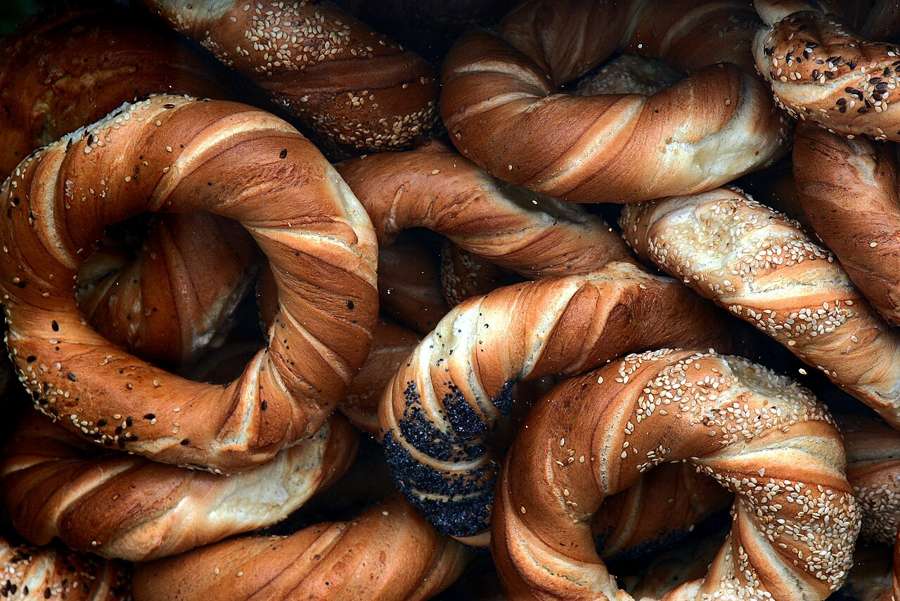
Krakow's street food is a bread product with legal armour. The obwarzanek krakowski - a ring of yeast dough twisted from two or three strands, boiled briefly, baked golden and sprinkled with poppy seed, salt or sesame - holds EU protected geographical indication status, and it sits on the Polish traditional products list too, where the ministry's entry (02.07.2018) specifies it down to the centimetre: 12-17 cm across, 3-4 cm thick, 120-200 grams, hand-formed, the salt traditionally from Wieliczka, Bochnia or Klodawa.
The paperwork reaches back almost as far as the city. Krakow's 1257 founding charter already records the bakers' privileges to sell on the market square, and a city council resolution of 22 April 1529 regulates the baking of obwarzanki and the pay of the bakers' assistants. Today they are sold from blue carts across the city from early morning, still warm, for a few zloty - the breakfast of commuters, students and tourists alike.
Do not call it a bagel in front of a Krakow native. A bagel is a smooth single ring; an obwarzanek is visibly braided from its twisted strands, which gives it a different crust and chew. Both descend from the same Ashkenazi Jewish baking tradition of the region, but the obwarzanek is the one with the EU certificate and the seven centuries of paperwork.
The sweet side
A Polish piekarnia is half bakery, half patisserie, and the sweet shelf deserves your attention. The paczek - the filled doughnut that becomes a national event on Fat Thursday, covered in our guide - is a year-round staple. Around it sit drozdzowki, yeast buns with cheese, apple or poppy filling; jagodzianki, the blueberry buns of summer; makowiec, the poppy-seed roll of Christmas and Easter; and chalka, the braided sweet bread with Jewish roots. Most bakeries also sell sandwiches, cakes and coffee, and many now run as full bakery-cafes.
That hybrid is the industry's growth engine. The BNP Paribas analysis notes that bakeries are expanding into breakfasts, lunches and on-the-go eating, and describes the financing of chains like Goraco Polecam Smaki z Piekarni - the new wave of Polish bakery-cafes you will see spreading through every city. The old neighbourhood bakery and the modern chain now coexist, and an expat benefits from both.
How to buy bread like a local
Walk into a piekarnia in the morning - that is when the shelves are full and the bread is hours old, not days. Point at the loaf you want and say how much: caly (whole), pol (half) or, at many bakeries, a quarter. Ask kroic if you want it sliced; most bakeries have a slicer behind the counter and will do it free. Bread is priced per loaf or per kilogram - the official GUS average for mixed bread in the first half of 2026 was 11 zl per kilo, up 5% year on year, and artisan sourdoughs in city bakeries run well above that.
A few habits help. Bread at room temperature keeps two to four days; a sourdough rye lasts longer, which is why it was the farmhouse loaf. Do not refrigerate it - it stales faster. Freeze what you will not finish. And if the morning queue at your local bakery looks intimidating, watch what the regulars do: they order rolls by number, pay by card or BLIK for a two-zloty purchase without a blink, and they are gone in ninety seconds. You will be one of them within a month.
Supermarket bread, toast bread and the quiet revolution
Supermarkets sell the same world at lower prices: packaged chleb from industrial bakers, in-store ovens turning out hot rolls all day, and the full shelf of tostowy - the square toast bread Poles treat as a different product entirely, bought for sandwiches and never confused with real bread. The BNP Paribas analysis describes the shift clearly: total bread consumption is stable, but Poles are trading quantity for quality, reaching for local products, high-protein loaves and health additions, while bakery-cafes absorb the on-the-go eating that used to mean a plain roll. Crispbread, tortillas and rice cakes now share the shelf space that once belonged to chleb alone. None of this has dethroned the sourdough loaf - it has just raised expectations of it. The best neighbourhood bakeries now queue out the door on Saturday mornings precisely because customers will no longer settle for the packaged version.
Useful words at the counter
Chleb is the loaf; bulka is a roll; kajzerka is the classic breakfast roll. Swiezy means fresh, wczorajszy means yesterday's - some bakeries sell it at a discount, and it makes excellent croutons. A wedge of vocabulary covers every transaction: caly (whole), pol (half), kroic (to slice), and na wynos (to take away). If you want to sound like a regular, ask for chleb na zakwasie - bread on sourdough starter - and you will be handed the best thing they bake.
What 2026 means for your wallet
Bread inflation has been mild but persistent: about 5% over the twelve months to July 2026, with BNP Paribas analysts projecting a further few percent by the end of the year, driven by grain markets unsettled by heat waves, drought and the Black Sea conflict, plus energy and labour costs. The same report notes that Poland exported 887,000 tonnes of bakery products worth 3.35 billion euro in 2025, up 5% on the year - frozen and part-baked goods, much of it ending up on European supermarket shelves. The bread you eat in Poland, in other words, is increasingly the bread Europe eats. Buying it fresh, from the source, for a few zloty remains one of the small daily luxuries of living here.
Frequently asked questions
What bread do Poles actually eat?
The everyday loaf is chleb - usually a sourdough rye or a wheat-rye mix, dense and fragrant, nothing like packaged toast bread. Rolls (bulki) like the kajzerka are the breakfast standard. According to Mintel data cited by BNP Paribas, nearly half of Poles eat bread daily and 84% eat it at breakfast.
How do I buy bread in a Polish bakery?
Point at a loaf and say how much you want - whole (caly), half (pol) or a quarter. Many bakeries will slice it for you (kroic) on the spot. Bread is priced per loaf or per kilogram; official statistics track mixed bread, which averaged 11 zl/kg in early 2026.
What is the difference between an obwarzanek and a bagel?
Both are boiled-then-baked rings, but the Krakow obwarzanek is twisted from two or three strands of dough, which gives it a braided surface, while a bagel is a smooth single roll. The obwarzanek holds EU protected geographical indication status and is sold from blue street carts all over Krakow.
Is bread in Poland getting more expensive?
Yes, gradually. Bread and rolls rose about 5% over the 12 months to July 2026, and BNP Paribas analysts expected a further few percent by the end of 2026, citing grain markets, energy and labour costs. Consumption has not fallen - Poles treat bread as non-negotiable.
What is chleb zytni na zakwasie?
Rye bread leavened with zakwas, a fermented rye starter, instead of yeast alone. It tastes gently sour, stays fresh for days and is the style entered on Poland's official list of traditional products. If a bakery sells one loaf worth trying first, this is it.
Where should I buy bread - bakery or supermarket?
A piekarnia (artisan bakery) for the real thing: sourdough loaves baked that morning, plus sweet pastries. Supermarkets stock the same everyday loaves cheaper and stay open late, and their in-store ovens turn out acceptable rolls. For weekend quality, find your neighbourhood bakery and go before noon - the best loaves sell out. <em>Cover: Obwarzanki with sesame and poppy seed - photo by Chris Brown, CC BY 2.0, via Wikimedia Commons. Body: A sliced loaf of dark rye bread - photo by Glane23, CC BY-SA 3.0, via Wikimedia Commons.</em>