Portal DOM: Poland's public home price database from 2 April 2027
Short answer: Portal DOM, run by the Insurance Guarantee Fund, will publish average and median transaction prices for flats and houses, with at least six deals per view. Most of the law starts 2 April 2027.
What Portal DOM is
Poland is setting up a public database of home sale prices. A law of 17 October 2025 (Journal of Laws 2025, item 1669, published 1 December 2025) creates the Housing Market Data Portal, called Portal DOM, run by the Insurance Guarantee Fund (UFG). Most of the law takes effect 16 months after publication. The finwire.pl calendar of changes gives the date as 2 April 2027. A few provisions came earlier.
Portal DOM will show statistics on transaction prices of flats and single-family houses, not individual deals. For anyone buying or selling in Poland, it is meant to replace asking prices with real prices. It is general information, not legal or financial advice.
What the portal will publish
Under the new Article 56f of the developer act, UFG publishes, including on a map:
average transaction prices of flats or houses, or average prices per square metre of usable area, or medians of those prices;
the number of transactions behind those prices.
Users can narrow the view by location, property characteristics or type of transaction, and by a period of no more than two years before the query. UFG locates the property for the map based on the plot number and plot identifier.
There is a privacy limit. The statistics appear only if the chosen filters cover at least six flats or houses and at least six different buyers. The publication must not allow buyers or properties to be identified.
Where the data comes from
Article 56b of the law lists the sources:
contracts passed on from the register UFG keeps under the developer act;
contracts of developers and of other businesses covered by Articles 3 and 4 of the law, which they must report to the portal themselves;
paid transfers of flats, single-family houses and cooperative ownership rights, which the head of the National Revenue Administration makes available, based on the tax code. The law excludes life-annuity contracts and exchanges.
Developers and other sellers who sign the covered contracts must report data to the portal without delay and no later than 7 days after the contract is signed (Article 56c). Data from the register reaches the portal within 7 days.
What data is collected
For each contract the portal collects items such as the date, the notarial deed number and notary's name, the land and mortgage register number and the address, the type of property, the price, the usable area, the number of rooms, the floor, the number of floors in the building and the building completion date.
If the buyer received a discount on a public sale, the price recorded is the price before the discount.
Data identifying the buyer is also collected. For a private person buying for non-business purposes, it is the PESEL number. If the buyer has no PESEL, the portal records the date of birth, and the series, number and name of the identity document and the country that issued it. For other buyers it is the tax number (NIP) or, without one, the country and register of registration and the registration number and date. For tax-based transfers, if there is no PESEL, the law refers to the date and country of birth and the series and number of the identity document.
This matters for foreigners buying a home. If you buy without a PESEL, your passport or ID details can be recorded. According to the law, these details are not shown publicly.
How long the data is kept
UFG must delete certain data at the latest:
after 3 years: the buyer's PESEL (except year of birth and sex derived from it), and the day and month of birth and the identity document details;
after 6 years: the buyer's tax number, registration details, the land register number and the notarial deed data.
Other data remains until the portal stops operating. UFG and its staff can use personal and tax-secret data only for the portal's tasks.
Penalties for sellers
Developers and other businesses that must report contracts face penalties. A person who reports false information faces a fine, restriction of liberty or imprisonment for up to 2 years (Article 60a). Failing to report is punishable by a fine (Article 60b). Reporting late is also punishable by a fine (Article 60c).
What it means for buyers
Once the portal is live you should be able to compare an asking price with recorded prices in the same area, though only where there are enough deals to meet the six-flat, six-buyer test. The first statistics will depend on how many contracts are reported after the start date. The law says that contracts signed after the law takes effect are covered, so data will build up over time. Check the UFG announcements for when the map goes live.
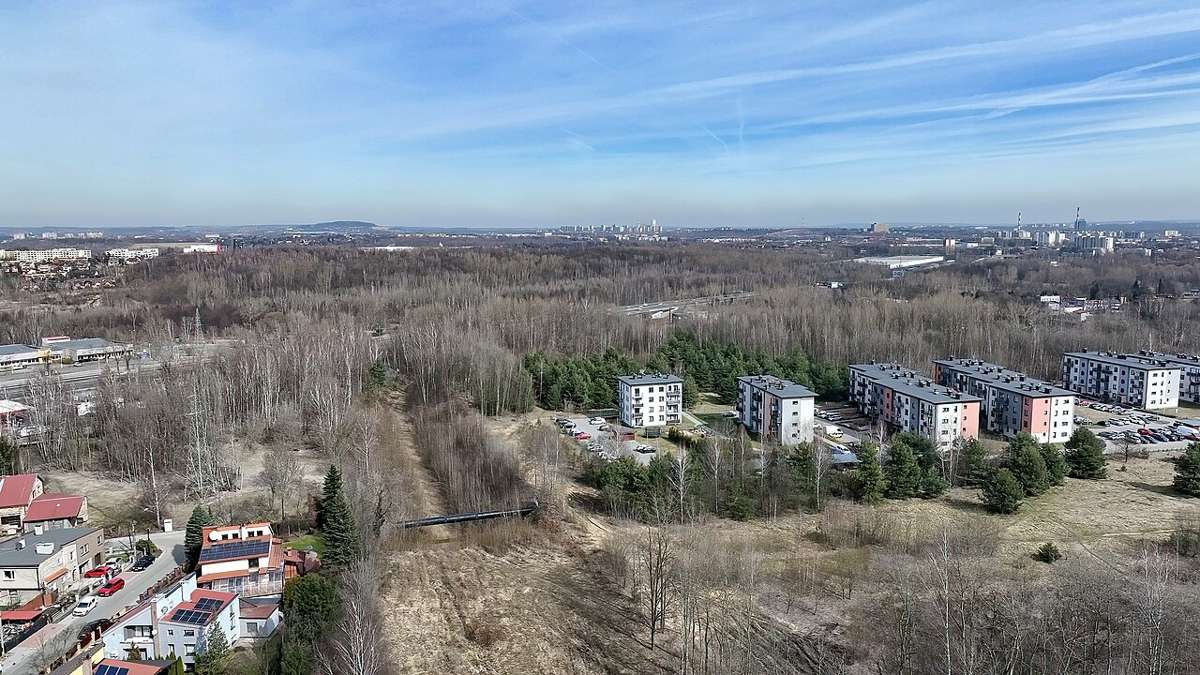
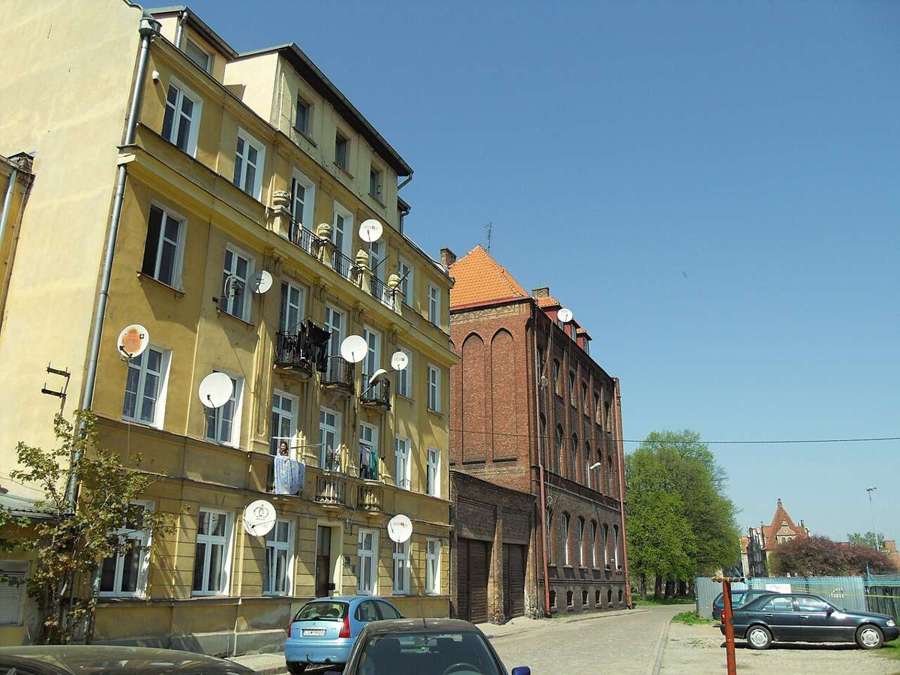
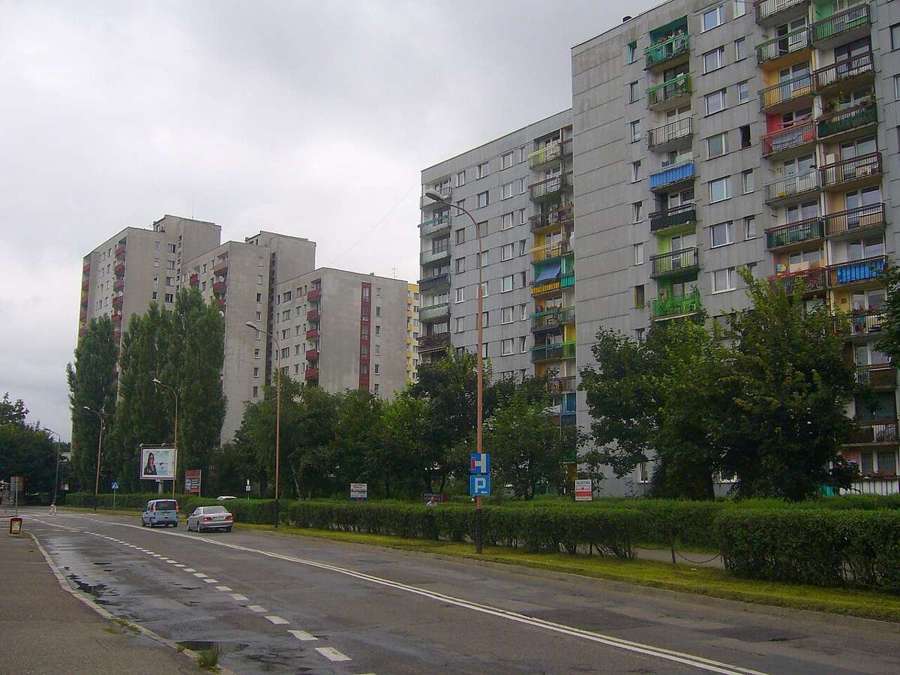
* Photos: housing blocks in Bielsko-Biała (public domain) and an aerial view of Katowice-Burowiec (CC0), both via Wikimedia Commons. The images are illustrative.
Frequently asked questions
When does Portal DOM start?
Most of the law takes effect on 2 April 2027, according to the finwire.pl calendar of changes, which cites Journal of Laws 2025, item 1669.
Will my personal data be public?
According to the law, the public statistics must not allow buyers or properties to be identified, and prices are shown only when at least six properties and six buyers match the filters.
Who runs it?
The Insurance Guarantee Fund (Ubezpieczeniowy Fundusz Gwarancyjny).
What if I buy without a PESEL?
The portal records your date of birth and identity document details instead, including the issuing country. These are deleted after 3 years at the latest.