15 Pros and Cons of Living in Poland as a Foreigner
A personal essay by a Canadian living in Poland. The views and experiences are the author's own.
What to know: A Canadian expat lists 15 pros and cons of living in Poland. Pros: affordability, safety, transport, modern services. Cons: the language, bureaucracy, winters and salaries.
Is Poland a good place to live? After moving from Canada to Poland, I discovered a country that surprised me in almost every way. Some things were better than I expected. Others tested my patience. Here are 15 honest advantages and disadvantages of living in Poland as a foreigner.
When I first told people I was moving from Canada to Poland, the reactions were interesting.
"Poland? Really?"
"Why would you leave Canada?"
"Isn't it freezing there?"
And my personal favorite: "But do people even speak English?"
I quickly realized that many people had an image of Poland that was at least twenty years out of date.
Some imagined gray apartment buildings, endless winters, and a country still struggling to catch up with Western Europe.
Others simply didn't know much about Poland at all.
I'll admit, I had my own assumptions.
I expected life to be cheaper. I expected the language to be difficult. I expected a cultural adjustment.
What I didn't expect was to find myself genuinely questioning whether certain parts of everyday life in Poland were actually better than what I'd been used to in Canada.
But I also discovered that living somewhere is very different from visiting.
When you're a tourist, you notice the beautiful architecture, delicious food, and affordable restaurants.
When you're a resident, you notice the paperwork, the apartment heating bills, the doctor's appointments, and the fact that you've been standing in the wrong government office line for forty minutes.
Poland can be a wonderful place to live. But it isn't paradise, and it certainly isn't for everyone.
Here are the 15 biggest pros and cons I've discovered about living in Poland as a foreigner.
1. PRO: Poland Can Offer an Excellent Quality of Life for the Money
Let's start with one of the biggest reasons foreigners consider moving to Poland: affordability.
Compared with Canada, the United States, and many Western European countries, Poland can offer noticeably lower costs for certain everyday expenses.
Public transportation, restaurant meals, personal services, and some private healthcare appointments can be relatively affordable.
One of the first things I noticed was how different going out for dinner felt.
In Canada, a restaurant bill can quickly become expensive once you add taxes, drinks, and a tip.
In Poland, I found that I could enjoy a nice meal without always feeling like I'd made a significant financial commitment.
But there's an important catch.
Poland is much more affordable when your income is strong relative to local prices.
If you're earning a Canadian, American, or Western European salary while living in Poland, you may enjoy substantial purchasing power.
If you're earning an average Polish salary, particularly while renting in Warsaw or Kraków, the financial reality can be very different.
Housing costs have increased significantly in desirable Polish cities, and some expenses aren't especially cheap.
Still, for someone with a comfortable income, Poland can offer an attractive balance between cost and lifestyle.
My take: Poland offers excellent value for some foreigners, but don't confuse lower prices with universal affordability.
2. PRO: I Feel Surprisingly Safe in Everyday Life
Safety was one of the biggest positive surprises after moving to Poland.
Before arriving, I didn't really know what to expect.
But as I became familiar with Polish cities, I noticed how comfortable I felt walking around.
Families spending time outside.
People taking public transportation in the evening.
Children playing in neighborhood parks.
Ordinary daily life often felt calm and predictable.
Of course, Poland has crime, and some areas require more caution than others.
Pickpocketing, theft, scams, and occasional antisocial behavior exist, particularly around busy tourist destinations and nightlife areas.
But my general sense of security has been positive.
And there's something valuable about not constantly thinking about safety during ordinary activities.
Whether I'm walking to a shop, taking a tram, or exploring a new neighborhood, I appreciate that feeling.
My take: The everyday sense of safety is one of Poland's strongest lifestyle advantages for me.
3. CON: The Polish Language Is Genuinely Difficult
I knew Polish would be challenging.
I just didn't realize how challenging.
Coming from Canada, I was familiar with living in a country with two official languages.
But Polish was an entirely different experience.
The pronunciation.
The grammar.
The cases.
The consonant combinations that seem designed to test whether your mouth is functioning correctly.
I remember looking at Polish words and wondering whether someone had accidentally removed all the vowels.
Then there's the problem of learning a phrase, feeling confident, and discovering that the word changes depending on the sentence.
Wonderful.
At first, even simple tasks could become stressful.
Booking an appointment.
Speaking with a delivery driver.
Explaining a problem to a landlord.
Understanding an announcement.
And while many younger Poles and people working in international environments speak English, you can't assume everyone does.
Outside major cities and tourist areas, language barriers can become more noticeable.
The good news is that learning even basic Polish makes a huge difference.
A simple "Dzień dobry," "Dziękuję," or "Przepraszam" can make interactions easier.
But becoming truly comfortable with the language takes time and effort.
My take: You can manage in Poland with English, especially in major cities, but learning Polish makes life significantly easier.
4. PRO: Public Transportation Makes Life Easier
One of the things I appreciate most about Poland is that living without a car can actually be practical.
In many Canadian communities, driving is simply part of everyday life.
Need groceries? Drive.
Meeting friends? Drive.
Taking your child somewhere? Drive.
In Polish cities, the experience can be completely different.
Warsaw has a metro, trams, buses, and commuter trains.
Kraków, Wrocław, Poznań, and Gdańsk have extensive public transportation networks of their own.
And intercity trains make traveling between major destinations relatively convenient.
I love being able to walk out of my apartment, catch a tram, and reach a restaurant or shopping center without worrying about parking.
It's not just about saving money.
It's about saving time and reducing stress.
Of course, transportation quality varies depending on the city and neighborhood.
Some suburban and rural areas still require a car.
But in well-connected urban neighborhoods, Poland offers a lifestyle that many North Americans would find surprisingly convenient.
My take: Poland's urban transportation is a major advantage, particularly if you enjoy walking and prefer not to drive everywhere.
5. CON: Polish Bureaucracy Can Test Your Patience
If you want to discover how patient you really are, try navigating government paperwork in a language you barely understand.
Moving to Poland involves more than finding an apartment and buying groceries.
Depending on your citizenship and circumstances, you may need to deal with residence permits, address registration, identification numbers, healthcare coverage, taxes, and other administrative requirements.
And sometimes, the process isn't particularly straightforward.
You might arrive at an office only to discover that you need another document.
Or that your document needs a translation.
Or that you should have booked an appointment.
Or that you're at the wrong office entirely.
I quickly learned that a successful administrative appointment is something worth celebrating.
Poland has made progress with digital government services, but not every procedure is simple or available entirely online.
For foreigners, language barriers can make an already complicated process feel even more intimidating.
My advice is simple: research requirements through official sources, prepare documents carefully, and don't assume that what worked for someone else will apply to your immigration status.
My take: Bureaucracy is one of the most frustrating parts of moving to Poland, especially during your first year.
6. PRO: Poland Is More Modern Than Many Foreigners Expect
This might be the biggest misconception about Poland.
Some people still imagine the country as a place that's technologically behind Western Europe.
My experience has been very different.
Modern shopping centers.
Beautiful new residential developments.
Contactless payments.
Excellent mobile banking tools.
Convenient delivery services.
And digital solutions that sometimes feel more advanced than what I was accustomed to in Canada.
Take BLIK, for example.
It's a Polish payment system that allows users to make purchases and transfers through participating banking apps.
Then there's InPost.
Parcel lockers are so widespread that collecting online orders can become part of your everyday routine.
Instead of waiting at home for a package, you can pick it up from a nearby locker when it's convenient.
I also appreciate the abundance of neighborhood convenience stores, pharmacies, cafés, and supermarkets.
In cities like Warsaw, ordinary errands can be remarkably efficient.
That doesn't mean everything works perfectly.
But Poland has developed into a modern European country with infrastructure and services that deserve more international recognition.
My take: If you're expecting Poland to feel outdated, prepare to be surprised.
7. CON: Polish Winters Can Feel Long, Gray, and Depressing
Coming from Canada, I thought I was prepared for Polish winters.
After all, Canada isn't exactly famous for tropical weather.
But I discovered that winter isn't just about temperature.
It's about light.
Or, more accurately, the lack of it.
In Poland, winter days can feel painfully short.
You wake up, look outside, and see gray skies.
You go to work.
You come home, and it's already dark.
And sometimes it feels like the sun has taken an extended vacation without telling anyone.
Of course, Polish winters vary by region and year.
Some are snowy and beautiful.
Others are relatively mild but relentlessly cloudy.
Personally, I find the lack of sunshine more challenging than the cold itself.
There are things I love about winter in Poland.
Christmas markets.
Cozy cafés.
Warm restaurants.
Beautiful old towns decorated with lights.
But by February, I can understand why so many people start dreaming about summer.
My take: If you're sensitive to gray weather and short days, Polish winters may be one of your biggest challenges.
8. PRO: Poland Is an Amazing Base for Exploring Europe
One of the greatest advantages of living in Poland is its location.
Coming from Canada, I was used to international travel involving long flights, significant planning, and often expensive tickets.
In Poland, much of Europe feels surprisingly close.
Germany.
Czechia.
Slovakia.
Lithuania.
Austria.
Hungary.
And countless other destinations are accessible by road, rail, or short flights.
A weekend in Prague suddenly becomes realistic.
A few days in Berlin doesn't feel like a major expedition.
And exploring different European cultures becomes something you can do regularly rather than once every few years.
Poland itself is also worth exploring.
The Tatra Mountains.
The Baltic coast.
The Masurian Lakes.
Historic cities.
Beautiful forests.
Small towns that many international visitors have never heard of.
For someone who enjoys traveling, Poland is an excellent home base.
My take: Living in Poland makes exploring Europe easier and can completely change how often you travel.
9. CON: Polish Salaries Can Be Disappointing
This is probably the biggest financial disadvantage for foreigners who plan to work locally.
Poland has developed enormously, but salaries are still generally lower than in countries like Germany, Canada, and the United States.
That matters.
Especially because housing prices and other living costs have increased.
A job that pays well by Polish standards may still offer a much lower salary than an equivalent position in North America.
Of course, the cost of living is also different.
But some expenses, particularly imported electronics, cars, and international products, don't become dramatically cheaper just because local wages are lower.
This creates an important distinction.
Poland can be financially attractive for remote workers, entrepreneurs, retirees with sufficient income, or people earning internationally competitive salaries.
But someone moving to Poland to take an ordinary local job needs to examine the numbers carefully.
Don't compare salaries alone.
Compare your expected take-home income with realistic rent, utilities, transportation, groceries, childcare, and other expenses.
My take: Poland can offer an excellent lifestyle, but local earning potential is an important limitation.
10. PRO: Polish People Can Become Incredibly Loyal Friends
When I first arrived in Poland, I thought people seemed unfriendly.
Not rude, exactly.
Just serious.
Cashiers didn't always smile.
Strangers rarely made small talk.
And social interactions felt more reserved than what I was used to in Canada.
At first, I found it strange.
But as I spent more time here, I began to understand that Polish friendliness often works differently.
People may take longer to open up.
They don't necessarily treat every stranger like a potential new friend.
But once you build a relationship, the warmth can be genuine and meaningful.
I've come to appreciate the importance many people place on family, close friendships, and hospitality.
Being invited into someone's home can mean a table full of food, long conversations, and repeated attempts to convince you that you haven't eaten enough.
I also appreciate the directness I've encountered.
People may tell you what they really think instead of wrapping every opinion in layers of politeness.
That can take some getting used to.
But I've learned not to confuse a serious expression with an unfriendly personality.
My take: Polish social culture may require patience, but building genuine relationships can be one of the most rewarding parts of living here.
11. CON: Finding an Apartment as a Foreigner Isn't Always Easy
Finding housing in Poland can be stressful, especially if you're unfamiliar with the market.
Warsaw, Kraków, Gdańsk, and Wrocław all have desirable neighborhoods where competition for good apartments can be strong.
Rental prices vary enormously depending on location, size, condition, and transportation access.
But price isn't the only challenge.
You also need to understand what you're actually paying for.
In Poland, rental listings may separate the base rent from administrative charges and utilities.
An apartment that initially looks affordable can become significantly more expensive once everything is included.
Then there are security deposits, lease terms, and questions about registration or documentation.
Some landlords may be hesitant to rent to foreigners, particularly if communication is difficult or the applicant lacks local employment history.
That doesn't mean every foreigner will struggle.
Many landlords are perfectly comfortable renting to international tenants.
But the process can require extra preparation.
I would strongly recommend understanding the lease, checking all monthly charges, and documenting the apartment's condition before moving in.
My take: Housing is manageable with preparation, but don't underestimate the challenges of renting in an unfamiliar country.
12. PRO: Family Life Can Be Surprisingly Comfortable
One of the things I appreciate about Poland is how family life fits into everyday neighborhoods.
In many residential areas, you'll find playgrounds, parks, schools, pharmacies, supermarkets, and other services within walking distance.
That makes ordinary routines easier.
Instead of organizing every activity around driving, families in well-connected neighborhoods can often walk or use public transportation.
I've also noticed how visible grandparents and extended family can be in everyday life.
You'll see grandparents walking with children, families spending time together in parks, and multiple generations gathering for meals.
Of course, this isn't unique to Poland, and not every family has relatives nearby.
But it contributes to a family-oriented atmosphere that I find appealing.
Poland also offers public education, healthcare for eligible residents, and various family-support programs.
Access, quality, and eligibility vary, and parents should research local schools and childcare carefully.
Still, if you're raising children and value walkable neighborhoods, playgrounds, and family activities, Poland deserves serious consideration.
My take: Poland can be an excellent place to raise a family, particularly when you choose the right neighborhood and have a stable income.
13. CON: Air Pollution Is a Real Problem in Some Areas
This is one disadvantage I don't think foreigners should ignore.
Poland has struggled with air pollution, especially during the colder months.
The situation has improved in some cities, but pollution remains a concern in certain regions.
Kraków has historically received considerable attention because of winter smog, although restrictions on household solid-fuel heating have contributed to improvements.
Other towns and cities can also experience poor air quality depending on weather conditions, local heating systems, traffic, and regional emissions.
Warsaw isn't immune either.
For people with asthma, respiratory conditions, or young children, air quality should be part of the relocation decision.
It's worth checking official monitoring data for the specific city and neighborhood you're considering.
I think this is especially important because Poland can look beautiful in photographs.
Historic streets, charming neighborhoods, and wonderful parks.
But the quality of the air matters just as much as the appearance of the city.
My take: Air pollution is a legitimate drawback in some parts of Poland, particularly during winter.
14. PRO: Poland Offers a Great Balance Between City Life and Nature
One of my favorite things about Poland is how many different lifestyles are available.
If you love big cities, Warsaw offers modern neighborhoods, international restaurants, shopping centers, cultural events, and career opportunities.
If you prefer historic charm, Kraków has beautiful architecture and a lively cultural atmosphere.
Gdańsk offers coastal character.
Wrocław has attractive neighborhoods and a distinctive city center.
Poznań provides another appealing combination of urban life and regional character.
And outside the major cities, Poland has plenty of beautiful places to explore.
The Tatra Mountains are spectacular.
The Masurian Lake District is wonderful for people who enjoy water and outdoor activities.
The Baltic coast offers beaches and seaside towns.
And Poland's forests and national parks provide opportunities to escape urban life.
Coming from Canada, I still think Canadian wilderness is extraordinary.
But Poland has its own advantage.
Many destinations are relatively accessible, and you can experience a surprising amount of variety without traveling enormous distances.
My take: Poland offers an attractive combination of modern city living, historic destinations, and accessible nature.
15. CON: Being a Foreigner Can Sometimes Feel Lonely
This is probably the most personal disadvantage on the list.
And it's one that doesn't get discussed enough.
Moving abroad can be exciting.
Everything feels new.
You explore different neighborhoods, discover unfamiliar food, and experience a completely different culture.
But eventually, the excitement becomes ordinary life.
And that's when the difficult moments can appear.
You miss familiar conversations.
You miss family and old friends.
You miss understanding every joke.
You miss being able to explain something complicated without searching for the right words.
Sometimes, you simply miss feeling like you belong without having to think about it.
Poland has become much more international, especially in major cities.
There are expat communities, language exchanges, international workplaces, and social groups.
But building meaningful friendships takes time.
And if you don't speak Polish, there may be moments when you feel disconnected from the people around you.
I think this is one of the biggest differences between visiting a country and actually living there.
As a tourist, being different can feel exciting.
As a resident, sometimes you just want to feel normal.
The good news is that this can improve.
Learning the language, joining activities, developing routines, and building friendships can gradually turn an unfamiliar place into home.
But it's important to recognize that the emotional adjustment is real.
My take: Loneliness and cultural adjustment can be among the hardest parts of expat life, even when you genuinely love the country.
My Final Scorecard: The 15 Pros and Cons of Living in Poland
| Pros of living in Poland | Cons of living in Poland |
|---|---|
| Affordable lifestyle with a strong income | Difficult Polish language |
| Good everyday sense of safety | Complicated bureaucracy |
| Convenient public transportation | Long, gray winters |
| Modern digital services | Lower local salaries |
| Strong personal relationships | Challenging rental market |
| Convenient location for European travel | Air pollution in some areas |
| Family-friendly neighborhoods | Loneliness and cultural adjustment |
| Attractive cities and accessible nature | — |
Is Poland a Good Place to Live in 2027?
Looking toward 2027, I think Poland deserves to be on the shortlist of anyone considering a move to Europe.
Not because it's the cheapest country.
Not because it has the highest salaries.
And certainly not because everything works perfectly.
But because it offers a combination of advantages that can be difficult to find elsewhere.
Modern cities.
Convenient public transportation.
A generally positive sense of everyday safety.
Good restaurants.
Interesting culture.
Access to the rest of Europe.
And, for people with suitable incomes, a potentially excellent quality of life.
But I'd also encourage anyone considering the move to be realistic.
Don't assume you'll find a high-paying job immediately.
Don't underestimate the language barrier.
Don't expect every administrative process to be simple.
And don't assume that moving abroad automatically makes you happier.
Your income, personality, family situation, and willingness to adapt will have an enormous influence on your experience.
For some people, Poland will feel like the perfect place to start a new chapter.
For others, the challenges may outweigh the benefits.
Both experiences are valid.
Would I Move to Poland Again?
If I could go back to the moment I decided to leave Canada for Poland, knowing what I know now, would I make the same decision?
Yes.
But I'd arrive with different expectations.
I'd take learning Polish more seriously from the beginning.
I'd prepare better for the bureaucracy.
I'd spend more time researching neighborhoods before choosing where to live.
And I'd remind myself that building a new life takes patience.
Because living abroad isn't just about changing your address.
It's about changing your habits, expectations, routines, and sometimes even the way you think about happiness.
Before moving, I associated quality of life with things like salary, career opportunities, housing, and financial security.
Those things still matter enormously.
But Poland has taught me to appreciate other things too.
Being able to walk to a café.
Taking public transportation instead of driving everywhere.
Spending an afternoon exploring a historic neighborhood.
Traveling to another European country for a weekend.
Enjoying a meal with friends without feeling rushed.
And discovering that a country I once knew relatively little about could become somewhere I genuinely enjoy living.
Poland has its frustrations.
There are days when the weather is miserable, the paperwork makes no sense, and I would do almost anything to have a simple conversation in English without needing to translate half the words in my head.
But there are also days when I walk through a beautiful Polish neighborhood, stop for a coffee, look around, and think:
I'm really glad I came here.
And for me, that feeling makes the challenges worthwhile.
Final Thoughts: Is Moving to Poland Worth It?
If you're considering moving to Poland, my advice is simple.
Come with an open mind.
Do your research.
Understand your finances.
Choose your city carefully.
Learn at least some Polish.
And don't expect the country to work exactly like the place you're leaving.
Because it won't.
Some things will be better.
Some things will be worse.
And some things will simply be different.
But that's part of the experience.
The biggest mistake you can make when moving to Poland is expecting a cheaper version of Western Europe.
Poland isn't trying to be Canada, Germany, or the United States.
It has its own culture, strengths, problems, and personality.
And the more I've learned to appreciate those differences, the more rewarding life here has become.
Would I recommend living in Poland as a foreigner? Absolutely—for the right person, with realistic expectations and a solid financial plan.
Because sometimes the best decision you make isn't moving somewhere that looks better on paper.
It's moving somewhere that gives you a different—and potentially better—way to live.
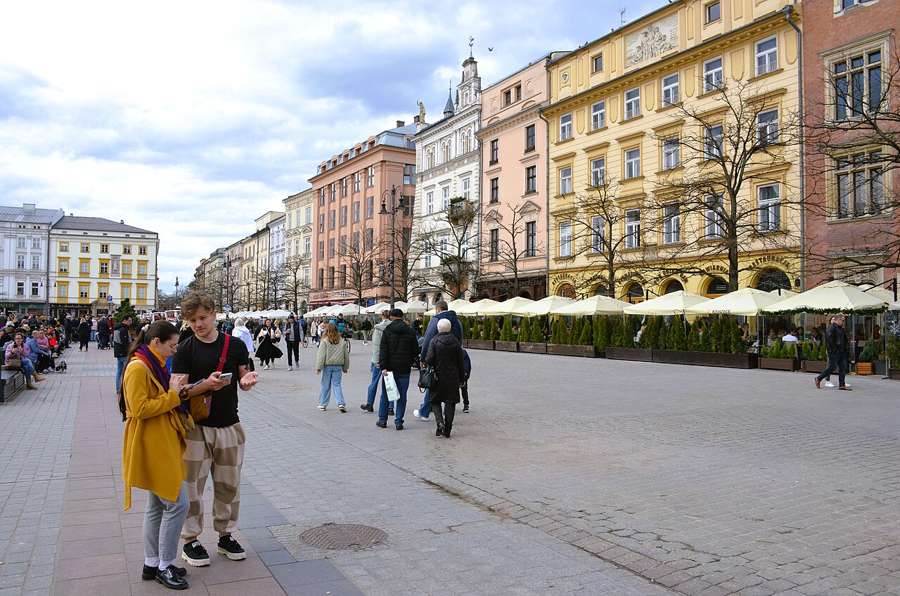
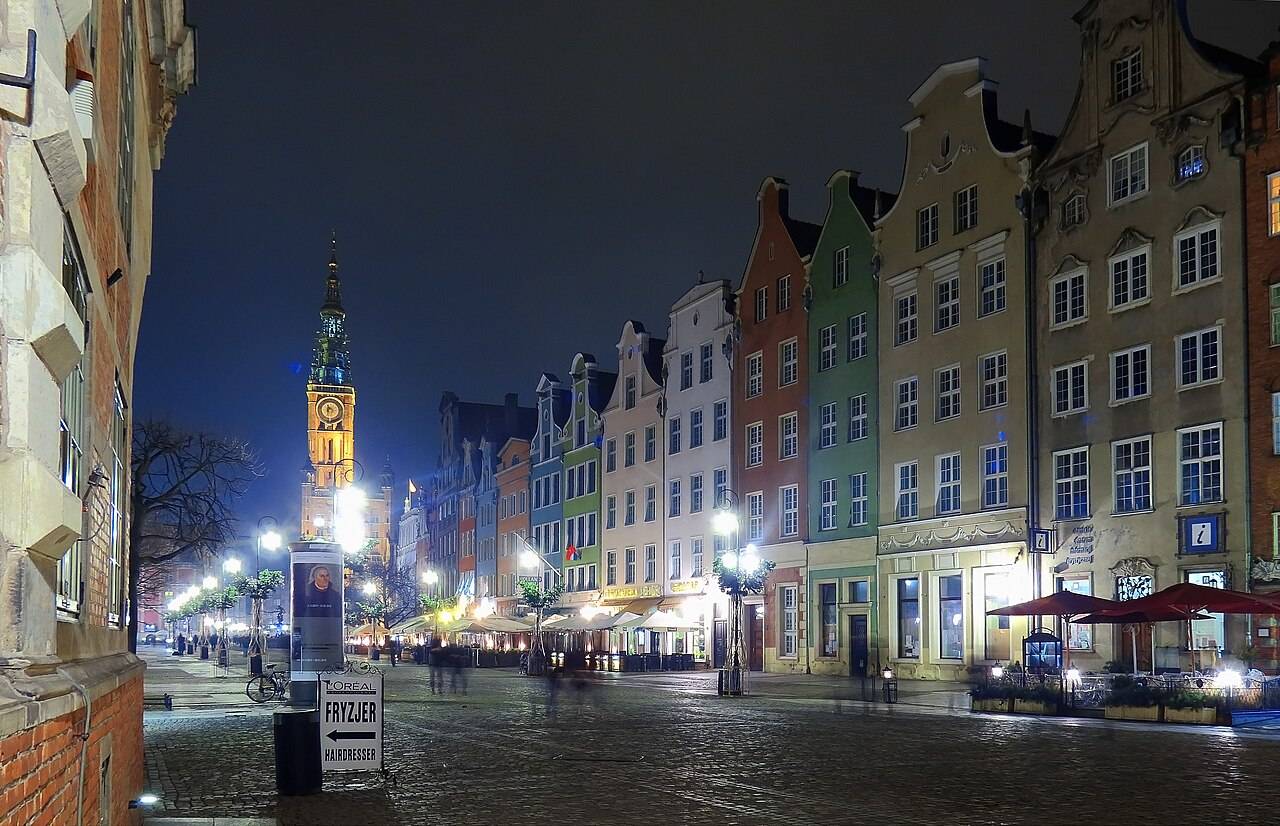
* Photos: Długi Targ, Gdańsk by Аимаина хикари (CC0, Wikimedia Commons).