Radom Rural Museum: Winter Tickets, English Guides and Access
The essentials: Muzeum Wsi Radomskiej lists winter hours of 09:00-15:30 weekdays and 10:00-15:00 weekends, with ticket sales ending one hour earlier. Walking tickets cost 10/6 PLN and exclude interiors. Enter at Szydłowiecka 30; construction means no on-site parking.
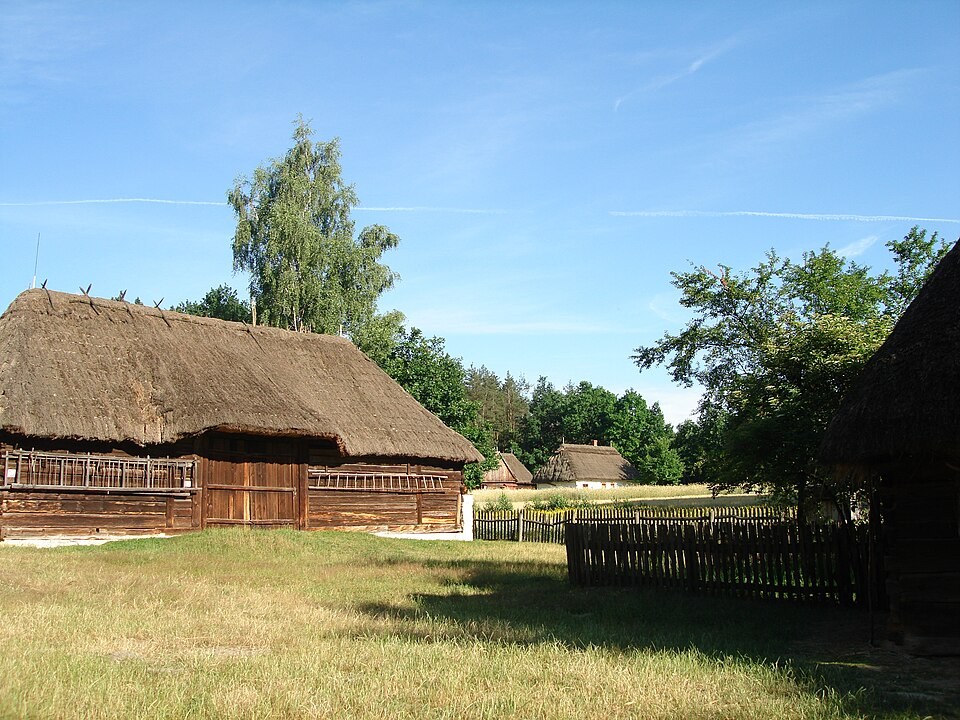
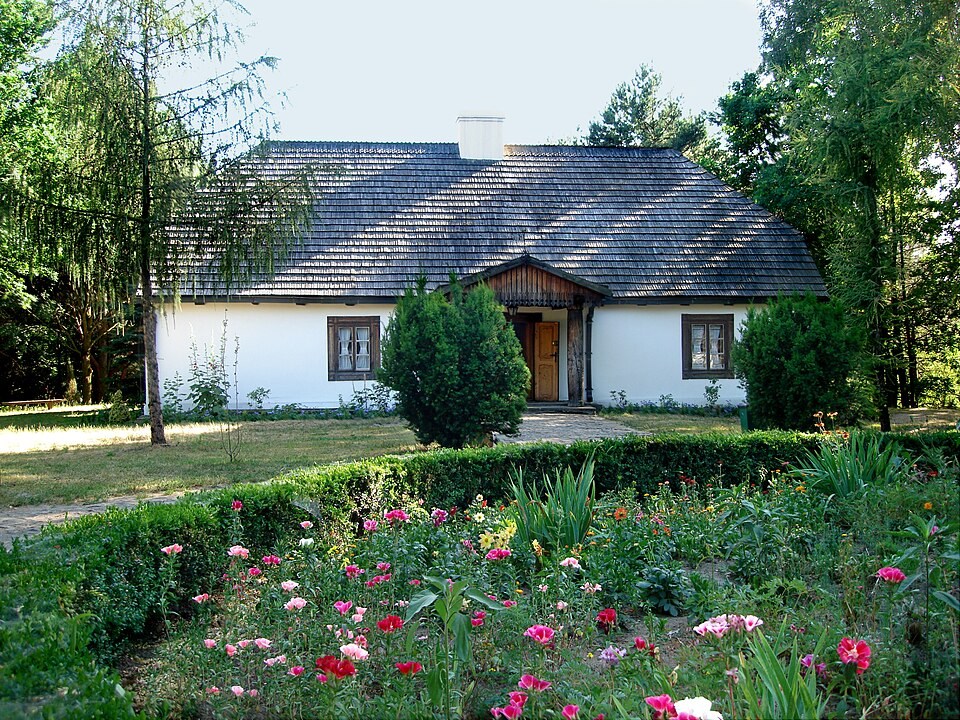
Cover: farm buildings at the Radom rural museum, photographed on 3 July 2008. This archival summer image does not show current winter conditions or entrance arrangements. Photo: M.Bucka / Wikimedia Commons, CC BY-SA 4.0. Resized and recompressed under the same licence.
Start with the entrance, not the old parking pin
A winter visit to Muzeum Wsi Radomskiej needs two decisions before the usual question of which historic house to see first: how you will arrive, and whether you want an outdoor walk or a visit that includes interiors. The museum's current visitor page directs visitors and ticket sales to Szydłowiecka 30 in Radom. Its published winter timetable runs from 1 November to 28 March, with weekday hours of 09:00-15:30 and weekend hours of 10:00-15:00.
Do not navigate to an older entrance or assume that a large open-air museum comes with usable visitor parking. The museum's parking reminder says there is currently no parking on the museum grounds because of entrance-area construction. It recommends city bus 18, which stops directly by the entrance from Szydłowiecka Street. This is the museum's arrival advice, not a checked departure time for your journey.
Ticket sales finish one hour before closing. Under the ordinary winter timetable, that means 14:30 on weekdays and 14:00 at weekends. Those are cutoffs for buying a ticket, not suggested arrival times for a relaxed visit or a promise that a guide can start then. Decide what you want to see and arrange any guiding before making the trip.
Two winter ticket choices with different access
The tariff on the visitor page lists a standard ticket at 20 PLN and a reduced ticket at 12 PLN. It also offers winter walking tickets at 10 PLN standard or 6 PLN reduced. The cheaper walking ticket explicitly excludes interiors. For someone who wants fresh air and historic buildings as part of a landscape, that may be the right option. It is not a discounted version of a full interior visit.
There is a small but important mismatch in the seasonal dates: winter opening hours are listed through 28 March, while walking tickets are listed from 1 November through 31 March. Keep those two rules separate. If planning a late-March visit, check both the day's opening hours and which ticket applies rather than extending the shorter timetable period by assumption.
The page says children under seven enter free and lists several discount schemes, but eligibility still matters. Bring the document supporting any concession and check the conditions before relying on a reduction. The tariff is labelled as effective from 3 December 2024 and remains the one displayed on the museum's current visitor page. Special events can have separate admission arrangements, so do not transfer an ordinary-day price to a named event.
English guiding is listed, but it needs arranging
Unlike some rural museums that list only Polish guiding, Radom publishes an English-language guide service. The displayed price is 200 PLN for a group of up to 20 people with one guide. Polish guiding is listed at 50 PLN on the same group basis. These are separately listed services; do not read the guide fee as admission for the whole group.
The museum requires advance booking by telephone on +48 697 566 083. Settle the date, start time, language, group size and admission arrangements together. An English service appearing in the tariff does not establish that an English-speaking guide is available at the time you happen to arrive. Nor does an ordinary admission ticket by itself promise access to every historic interior.
For families or mixed-language groups, explain what matters most before booking: domestic interiors, windmills, a shorter walking route or help with mobility barriers. The accessibility declaration says guides adapt their programme to individual group needs. That is a reason to ask for a suitable route, not to assume that every building can be made accessible.
A museum of the Radom region, not Sierpc
The name is worth getting right when searching for tickets or transport. Muzeum Wsi Radomskiej is the rural museum in Radom. It is not Muzeum Wsi Mazowieckiej in Sierpc, which has a different timetable, winter tour system and address. A search for a rural museum in Mazovia can return both, but their admission rules are not interchangeable.
The museum's history page describes the Radom region as lying on the border of Mazovia and Lesser Poland. The institution was established on 31 December 1976, while the opening of early exhibitions and the beekeeping display on 23 June 1980 is treated as its official public opening. Those are different milestones, not competing answers to the same question.
The same page gives the present site as 32.5 hectares with 80 examples of historic rural architecture. Its earlier plan was much larger, with a proposed 287 buildings on 50 hectares. Use the present figures rather than turning the original ambition into today's collection count. More importantly, a large site rewards a chosen route rather than a promise to see everything before the early winter closing time.
Compare two ways of organising a farm
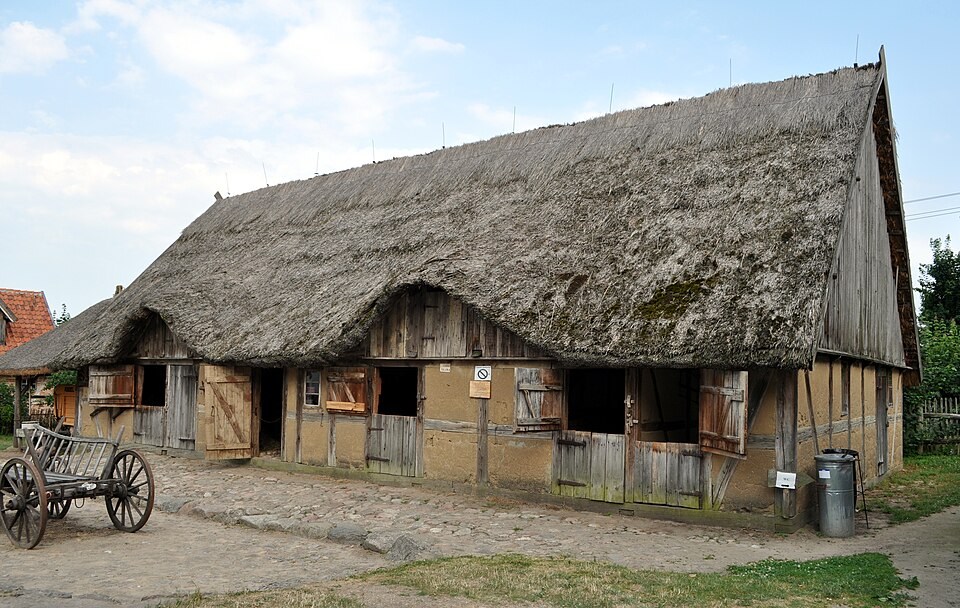
The Chomentów farmstead description offers a useful starting point. It represents a prosperous farmer's household from the first decade of the twentieth century. The number and separate purposes of its buildings tell part of that story: alongside a barn and livestock buildings are storage spaces, a shed and a granary.
The museum explains that the mostly freestanding arrangement reflected a newer style around the turn of the nineteenth and twentieth centuries. It also records the use of seasonal hired labourers known as bandosi. That gives visitors something more specific to consider than whether a cottage looks comfortable: who owned the property, who worked there, and which spaces were made for storing or producing things rather than living?
Compare that with the farmstead from Solec nad Wisłą. Its working buildings form a closed quadrangle, including an entrance gate, passage carriage shed, barns and livestock accommodation. The museum links that enclosed form with prosperous households able to afford substantial building material and protect their property. Even on an outdoor walking ticket, the contrast between an enclosed yard and separate freestanding buildings gives the visit a clear subject.
The windmills are not all the same type
The museum's windmill collection page distinguishes four post mills, or koźlaki, from one paltrak. It specifically says the museum does not have a Dutch-style tower mill. The paltrak in the collection was converted to an electric mill. These distinctions are more useful than describing every wooden mill as an interchangeable symbol of the countryside.
The page names the post mills from Grabowiec and Kajetanów as available for visiting. Treat that as collection information to discuss when arranging an interior route, not a guarantee that both will be open on an unbooked winter walk. The walking ticket still excludes interiors, and current staffing, conditions or conservation work can affect a particular route.
For preparation from home, the museum's audio-description page lists recordings covering the Chomentów household, tools and buildings, the church from Wolanów, the Grabowiec windmill and the manor from Pieczyska. It is a way to learn the names before arriving and choose priorities. Do not assume every recording is an English-language audio tour or that its presence means the corresponding room is open that day.
Mobility access requires a route, not a general label
The accessibility declaration, updated in January 2026, says the site's topography is not suitable for independent wheelchair movement and that a supporting person is required. Historic buildings and the landscape limit adaptation. It also identifies benches and rest points. This is not a fully step-free museum simply because parts of the grounds can be reached.
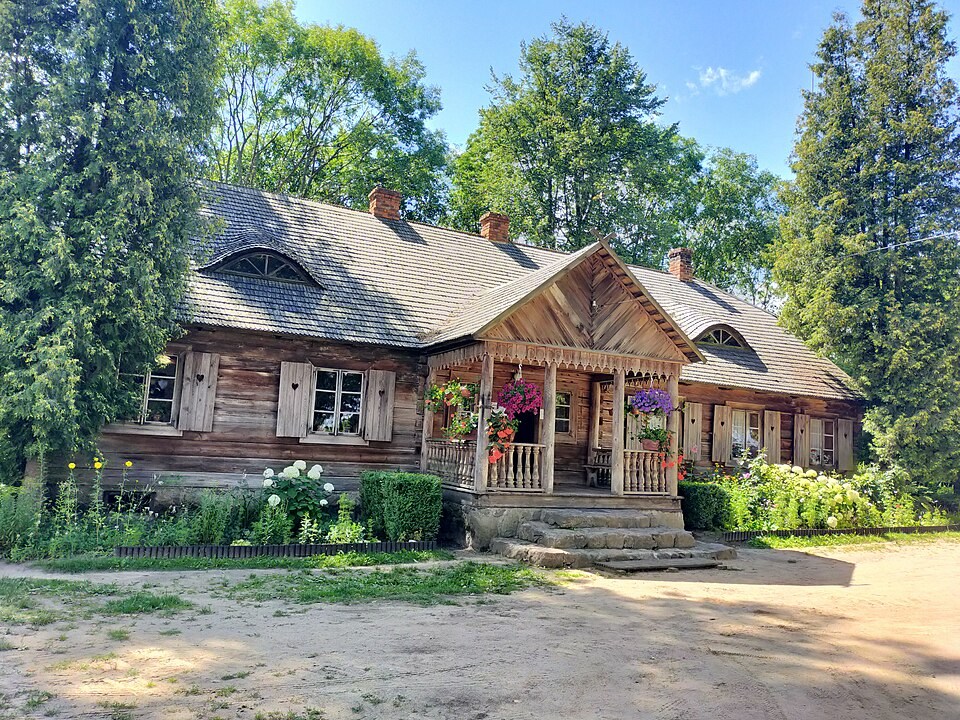
A folding ramp can be installed on request at the side entrance to the church of St Dorothy from Wolanów. The declaration identifies an adapted toilet in the agricultural-machinery exhibition pavilion as the nearest one under the changed entrance arrangements. It also describes adapted education rooms and further toilets elsewhere on the grounds. Ask which facilities will be open and reachable on your particular winter route.
A separate museum page describes accessibility measures planned for a new cultural and educational offer. Planned sign-language support, sensory space or other future facilities should not be treated as services already available on an ordinary visit. Use the current declaration and direct confirmation for the arrangements you need now.
Holiday dates and the final check
The published closure list includes New Year's Day, 6 January, Christmas Eve, Christmas Day and 31 December, along with several other holidays. It explicitly lists the second day of Christmas as open. That does not establish a special programme or override a later notice. Check the exact date rather than assuming that every day between Christmas and New Year follows the ordinary weekday timetable.
Dogs may accompany an outdoor walk on a lead, according to the visitor page; that is not blanket permission for all interiors. Before leaving, confirm the entrance arrangements, the day's hours, the ticket that matches your intended visit and any booked guide or access assistance. With those settled, Radom's farmyards and mills become a manageable winter outing rather than a race across a large site after the ticket desk has closed.
Frequently asked questions
Does the winter walking ticket include interiors?
No. The 10/6 PLN walking ticket explicitly excludes interiors. Confirm interior and guiding arrangements before visiting.
Can I book an English-speaking guide?
The museum lists English guiding at 200 PLN for up to 20 people with one guide, by advance phone booking. A listed service is not confirmation of availability at your preferred time.
Is parking available at the museum?
The current museum reminder says no on-site parking during entrance-area construction. Use Szydłowiecka 30 for arrival and check current transport arrangements.