Sandomierz: The Medieval Weekend Trip from Warsaw, Explained
The essentials: Sandomierz, 218 km from Warsaw, is a medieval Monument of History: underground merchant route 22-28 zl, castle museum 20 zl (free Tuesdays), cathedral 13 zl. By car about 3 hours; FlixBus from 3 h 52 min; trains with a change at Skarzysko-Kamienna. Best as a one-night weekend.
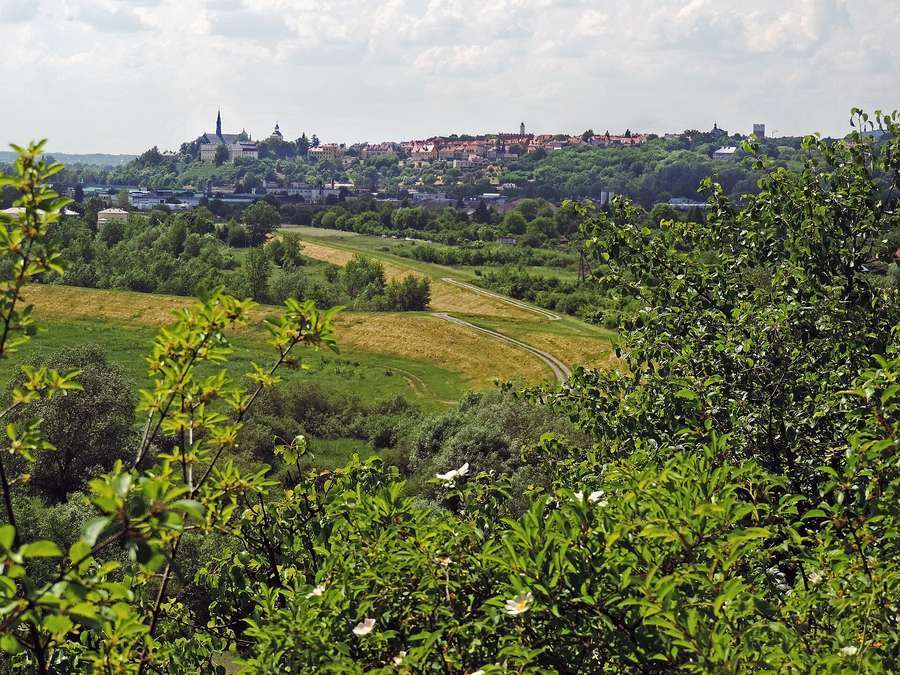
Some Polish towns are famous beyond their size. Sandomierz, a town of barely 23,000 people on a loess bluff above the Vistula, was once described by the chronicler Gallus Anonymus as sedes regni principalis - a principal seat of the realm. A thousand years later its medieval street grid, Gothic cathedral, merchant tunnels and castle are so intact that in 2017 the President of Poland declared the whole historic complex a Pomnik Historii, an official Monument of History. For expats based in Warsaw, it is the single most rewarding small-town weekend trip in the country's east.
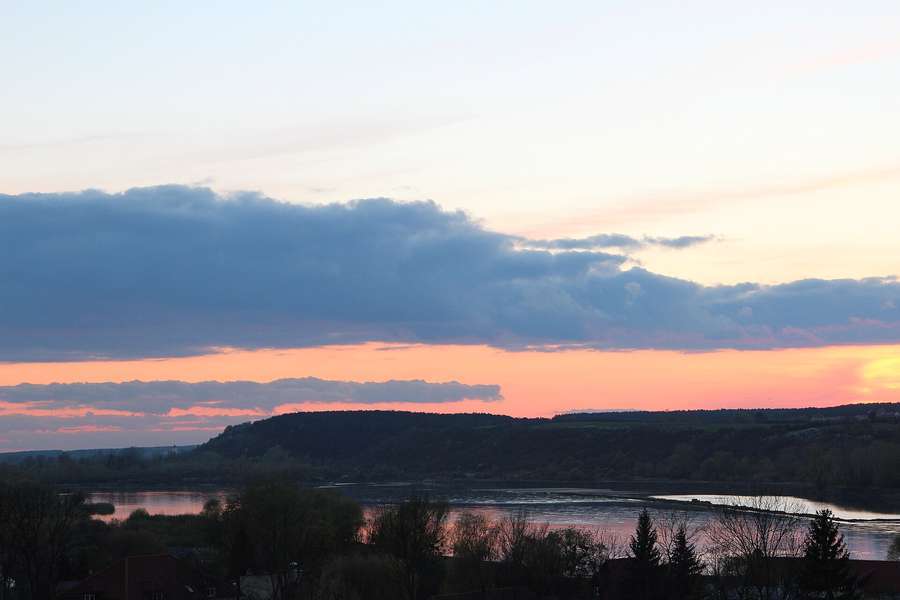
One honesty note first: Sandomierz is not a casual day trip. It lies 218 km from Warsaw, and public transport takes the better part of four hours each way. Drive, or treat it as a one-night weekend - the town is compact enough to see in a day and a half, and the evening light on the Vistula gorge is worth staying for.
Getting there from Warsaw
By car the trip is around 218 km, roughly three hours: the S17 expressway towards Lublin, then national roads via Garwolin, Zwoleń and the Vistula valley. This is by far the most practical option, and parking around the old town edge is straightforward outside festival weekends.
By bus, FlixBus runs Warsaw-Sandomierz services with a minimum journey time of 3 hours 52 minutes, departing from several Warsaw stops including Metro Młociny. By rail, Sandomierz has a small PKP station served by Polregio regional trains on the Kielce-Skarżysko-Ostrowiec-Sandomierz line (current timetable valid from 30 August 2026); from Warsaw you change at Skarżysko-Kamienna, making the total journey around four hours. It works, but the schedule math favors a car or an overnight stay.
Data source: FlixBus (flixbus.pl, Warsaw-Sandomierz route page) and Polregio (polregio.pl, Kielce-Sandomierz timetable valid from 30 August 2026), checked 22 October 2026.
Why Sandomierz matters
Few Polish towns carry this much weight per resident. Sandomierz was one of the main royal seats of Poland as early as the 11th century; after the 1138 testament of Bolesław Krzywousty it became the capital of a district duchy, and from the 14th century the seat of a vast voivodeship. A Tatar raid in 1260 nearly erased it - the town and its new Dominican monastery were destroyed and much of the population killed - and in 1286 Duke Leszek Czarny re-founded Sandomierz on Magdeburg law, moving it to its present hill. In the mid-14th century, after a Lithuanian raid, the royal castle, town hall and city walls went up, and around 1360-1382 King Kazimierz Wielki (Casimir the Great) founded the collegiate church that is now the cathedral.
Wealth came from geography: Sandomierz sat on the land route to Ruthenia and Lithuania and on the Vistula trade artery, and its merchants grew rich enough to dig the multi-level storage cellars you can still walk through today. Decline followed a great fire in 1612 and the Swedish Deluge, which blew up the castle; the partitions finished the job. The reward for visitors is that almost nothing was rebuilt on top of the medieval town, and World War II left it undamaged. On 22 November 2017 the historic architectural-landscape complex was declared a Monument of History by presidential regulation (Dz.U. 2017 item 2273).
Data source: Narodowy Instytut Dziedzictwa (zabytek.pl, "Sandomierz - historyczny zespół architektoniczno-krajobrazowy") and Dz.U. 2017 poz. 2273, checked 22 October 2026.
The market square and town hall
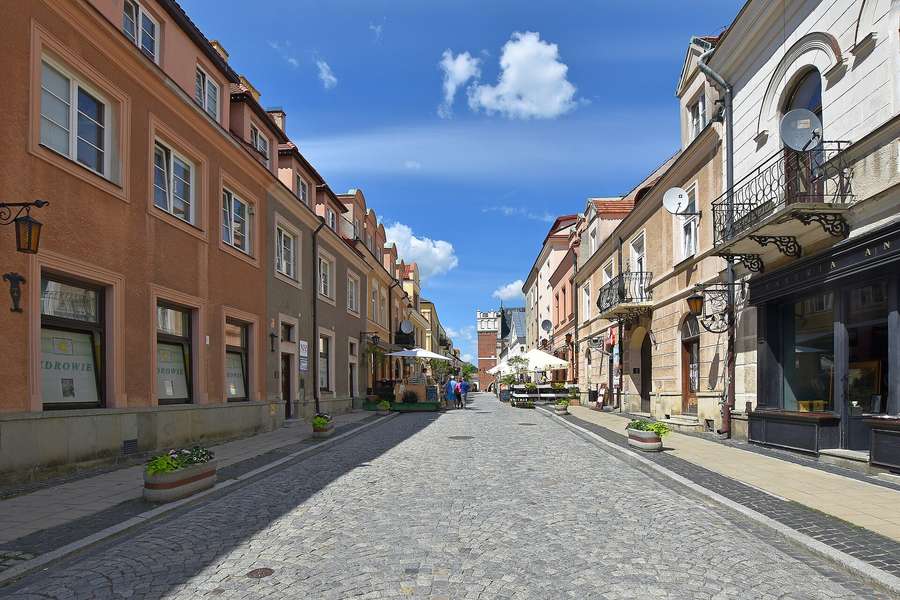
Everything in Sandomierz starts at the rectangular Rynek, the market square laid out in the mid-14th century and still ringed by burgher houses with arcaded ground floors. In the center stands the town hall, one of only a handful of Gothic-Renaissance town halls surviving in Poland: a 14th-century brick body crowned later with a Renaissance attic, with a tower that anchors every photo of the town. The square is free, obviously, and the old well in the middle is the traditional meeting point - including for the guided walks that leave from the tourist information office on the square.
From the Rynek, the geometric medieval street grid is still perfectly readable, and fragments of the city walls survive, including the narrow Dominican wicket gate known as Ucho Igielne - the Needle's Eye.
Data source: Narodowy Instytut Dziedzictwa (zabytek.pl), checked 22 October 2026.
The Underground Tourist Route: the town below the town
Sandomierz's signature experience is below your feet. The Podziemna Trasa Turystyczna is a 470-meter guided route through connected merchant cellars and corridors dug into the loess, reaching 12 meters below the market square, passing under eight tenement houses. The cellars date from the 15th to 17th centuries, when merchants stored wine, salt and herring here and hid in them during raids; the modern route was created during 20th-century stabilization works that saved the collapsing old town from its own tunnels. The visit takes about 45 minutes and includes the legend of Halina Krępianka, the innkeeper who - the story goes - lured Tatar warriors into the cellars to their doom.
Practicals for the 2026 season: the route is open daily 9:00-19:00 with last entry at 18:00, visits are guided only, and the entrance is at ul. Oleśnickiego. Tickets since 1 January 2025 cost 28 zł normal and 23 zł reduced including the Legendary Chamber multimedia exhibition, or 22/17 zł for the classic route alone, with family and local discounts. In high season, book ahead - groups are capped and the midday slots sell out.
Data source: Podziemna Trasa Turystyczna official site (sandomierskiepodziemia.eu, price list effective 1 January 2025) and Sandomierz city portal (sandomierz.eu), checked 22 October 2026.
Cathedral, castle and the Opatowska Gate
The cathedral basilica of the Nativity of the Virgin Mary is a brick-and-stone Gothic hall church from Kazimierz Wielki's foundation, but the treasure is inside: Byzantine-Ruthenian frescoes painted around 1430 at the initiative of King Władysław Jagiełło, one of only three such preserved cycles anywhere. Entry is 13 zł normal, 9 zł reduced, including an audio guide. Next door, the Gothic Dom Długosza from 1476 - built for the chronicler Jan Długosz - houses the Diocesan Museum (15/12 zł).
The Opatowska Gate, the surviving Gothic gate of the city walls, offers a viewing terrace over the Vistula valley for 15/12 zł. At the castle hill, the Muzeum Zamkowe w Sandomierzu occupies the rebuilt royal castle: admission 20 zł normal, 15 zł reduced, open Tuesday to Sunday 11:00-18:00 in season (April-September) and 10:00-17:00 off-season, closed Mondays, with free entry for individual visitors on Tuesdays. On Wzgórze Świętojakubskie stands the church of St. James - Sandomierz's oldest monument, a 13th-century late-Romanesque brick church attached to the Dominican convent founded in 1226, the second Dominican house in Poland. Entry is 6/5 zł including the bell tower and crypt.
Data source: Sandomierz tourism portal (turystyka.sandomierz.pl, 2026 season ticket prices) and Muzeum Zamkowe w Sandomierzu (zamek-sandomierz.pl), checked 22 October 2026.
The gorge, the ravines and the Father Mateusz effect
Sandomierz's setting is half the show. The old town sits at the edge of the Vistula upland, split by deep loess ravines - the most famous, the Wąwóz Królowej Jadwigi (Queen Jadwiga Ravine), drops from the cathedral hill towards the river and is the town's prettiest walk. Down on the water, a sightseeing boat runs 30-minute Vistula cruises for 40/35 zł in season, the best way to see the full escarpment panorama.
And then there is the cult factor: since 2008, Sandomierz has doubled as the fictional town where TVP's hit detective series Ojciec Mateusz (Father Mateusz) is filmed. The town leans in cheerfully - there is a dedicated Świat Ojca Mateusza museum (25/23 zł), a Father Mateusz bench on the square, and Polish visitors quoting the show at every corner. If you want to understand a slice of Polish pop culture, this is it.
Data source: Sandomierz tourism portal (turystyka.sandomierz.pl, 2026 season ticket prices), checked 22 October 2026.
Practical tips
Sandomierz's old town is small, steep and cobbled - bring real shoes, and expect the walk from the castle to the ravines to involve stairs. Most paid sights cluster within ten minutes of the Rynek, so one full day covers the route, cathedral, gate and castle with time for the gorge at sunset. Monday is the wrong day for the castle (closed) and Tuesday is the right one (free for individuals). Restaurants cluster around the Rynek and ul. Długosza; try the local take on sandomierski wine culture - the cellars that once stored imports now host tastings. Summer weekends and festival days get busy by Polish standards, which still means pleasantly quiet by Western ones.
Frequently asked questions
Is Sandomierz a realistic day trip from Warsaw?
Only by car, and it is a long day: 218 km and about three hours each way. FlixBus takes at least 3 h 52 min and trains around four hours with a change at Skarżysko-Kamienna, so most visitors stay one night.
How much does the Sandomierz Underground Tourist Route cost?
Since 1 January 2025: 28 zł normal and 23 zł reduced with the Legendary Chamber exhibition, or 22/17 zł for the classic route alone. Open daily 9:00-19:00, last entry 18:00, guided visits only.
What is Sandomierz famous for?
A perfectly preserved medieval old town declared a Monument of History in 2017, 470 meters of visitable merchant tunnels, the cathedral's 15th-century Byzantine-Ruthenian frescoes, and as the filming location of the TVP series Ojciec Mateusz.
When is the Sandomierz castle museum free?
The Muzeum Zamkowe w Sandomierzu is free for individual visitors every Tuesday, year-round. It is closed on Mondays; regular admission is 20 zł normal and 15 zł reduced. * Photos: Zofia Wiktoria Patoka (CC BY 3.0), Henryk Bielamowicz (CC BY-SA 4.0), via Wikimedia Commons.