Shoe Repairs in Poland: Finding a Cobbler and Agreeing a Quote
The essentials: Search for szewc or naprawa obuwia. Agree the repair, whether the price covers one shoe or the pair, the total and collection date. Keep the ticket and condition photos; inspect the work and raise faults with the business.
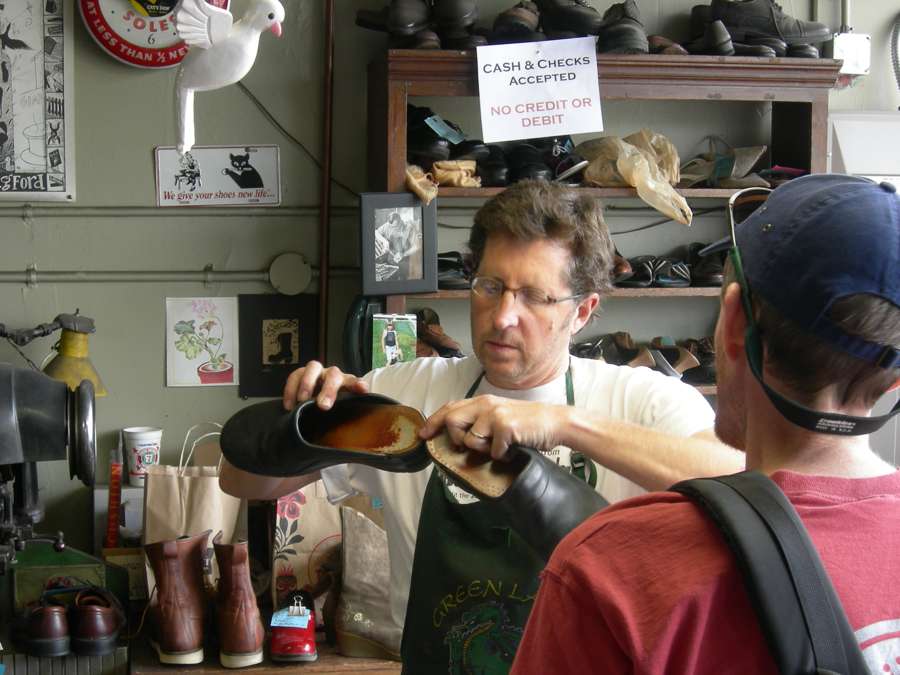
Cover: Swanson Shoe Repair in Seattle, United States, photographed in 2007. Joe Mabel / Wikimedia Commons, CC BY-SA 3.0. Resized, same licence. Illustrative photograph, not one of the Polish businesses mentioned below.
A worn heel or a loose sole does not automatically mean buying new shoes. In Poland, look for a szewc, a cobbler, or naprawa obuwia, shoe repair. The useful first step is an assessment of the actual pair, not choosing the cheapest service name from a price list.
This guide explains how to describe the problem, compare quotes and collect your shoes without a misunderstanding. Business examples and published prices were checked on 27 October 2026. They illustrate different services, not a national tariff or a recommendation based on a test visit.
Find the right kind of repair shop
Search for "szewc" plus your neighbourhood. Add the job if you know it: "wymiana fleków" for heel tips, "klejenie butów" for gluing, or "wymiana suwaka" for a zip replacement. A shop advertising kaletnik or usługi kaletnicze also deals with leather goods such as bags; check whether it handles your particular boot, lining or fastening.
The distinction matters because cleaning, colour restoration and structural repair are different jobs. A sneaker-cleaning studio may offer selected repairs without offering a complete rebuild of stitched leather shoes. Conversely, a traditional repair shop may fix a sole but not restore a complicated colour finish. Ask about the fault before travelling with the pair.
For examples of this range, Super Flek in Warsaw advertises heel tips, soles and heels, alongside zip work in shoes and leather goods. Dratewka in Kraków lists shoe repair and alterations, leather-goods repairs and upper-making work. These are descriptions from the businesses themselves, not evidence that every item is repairable or that staff speak English.
Take both shoes and agree the result
Bring the pair, even when only one shoe appears damaged. Ask whether the proposed price covers one shoe or both, and whether matching work on the other shoe is included. This is especially useful when the visible result, height or sole material could differ between left and right.
Show the problem while wearing the shoes if fit is part of it. Point to the exact rubbing area rather than asking only for "bigger shoes". Explain whether the priority is a hidden repair, better grip, a matching colour, a working zip or simply making an everyday pair usable again. Those goals can lead to different work and different prices.
Photograph the uppers, soles, heels and any existing damage before leaving them. For valuable shoes, record the brand and identifying details on the intake ticket. This is a practical record, not a substitute for agreeing what the shop will do. Ask what cannot be restored and what the finished repair is likely to look like.
Polish words that make a quote clearer
A few specific words are more useful than translating an entire conversation at the counter:
- Fleki: heel tips, the wearing pieces at the bottom of heels.
- Podeszwa: sole. Ask whether work means a full replacement or an added protective layer.
- Zelowanie: adding a protective sole layer; establish its material and coverage.
- Obcas: heel, not necessarily just its replaceable tip.
- Zapiętki: the heel area inside the shoe, often discussed when the lining is worn.
- Suwak / zamek błyskawiczny: zip. Ask whether the slider or the whole zip needs work.
- Rozciąganie / rozbijanie: stretching. Ask which part can be changed and how much is realistic.
- Wkładki: insoles. Clarify whether they are ordinary replacements or something more specialised.
Use the words to ask a question, not to prescribe a technique. "Czy wystarczy wymienić suwak?" asks whether replacing the zip is enough. "Czy naprawa będzie widoczna?" asks whether the repair will be visible. A photograph with the damaged area marked can help when spoken Polish is difficult.
What published prices actually tell you
Prices differ sharply with the work. On 27 October 2026, Warsaw business Wielki Shoe listed heel-tip replacement at PLN 60-160, protective sole work at PLN 110-360, and stretching at PLN 90, including three sessions. Its list separately showed Blake sole replacement from PLN 720 and hand-sewn Goodyear-welted replacement from PLN 900.
Those are one specialist's advertised figures. They do not mean that an ordinary loose sole needs a PLN 900 repair, or that another shop will honour the same range. The difference between a protective layer and rebuilding a sole is precisely why comparing only the word "sole" can mislead.
Wash Studio's online list showed gluing at PLN 49, heel-lining repair for a pair at PLN 99 and a patch for one hole at PLN 59. It listed different timings for repair, cleaning and colour restoration. Again, these are named-provider examples, not guaranteed quotes for your shoes. Ask the shop to confirm the total after examining them, including materials and any extra work.
A useful question is: "Ile wyniesie całość za parę, z materiałem?" That means: how much will the whole job cost for the pair, including material? Follow it with: "Proszę zadzwonić przed dodatkowymi pracami", asking for a call before additional work. Agree a spending limit in writing if you do not want an open-ended repair.
Repair, cleaning and restoration are separate decisions
Do not pay for a cosmetic package when the main problem is a failing structure. Ask for the repair assessment first. Equally, do not assume that repairing a zip includes cleaning, repainting or waterproofing the boots. Write down the included tasks, especially if several services are combined.
For stretching, describe where the shoe is tight and ask whether that material and construction are suitable. Do not treat a listed stretching service as a promise to turn the wrong size into the right size. For a major sole change, ask about the replacement material, appearance and any limits on the outcome. If the shoes have specialised protective or sporting functions, ask the manufacturer or an appropriate specialist before authorising changes.
Compare the confirmed quote with what a suitable replacement would cost you, rather than the original purchase price alone. Comfort, an unusual fit and sentimental value can matter. But set a budget before approving restoration on top of repairs. A cheaper repair is not good value if it leaves the original problem unsolved.
Agree collection, payment and delivery
Ask for a collection date, not just "a few days". If you need the shoes for a wedding, interview or trip, state the deadline before handing them over and keep a backup pair. A published processing time is not confirmation that a particular job will be ready for your event.
Wash Studio's checked online list separated shoe repairs at 1-3 working days, cleaning at 5-7 working days and colour restoration at 15-20 working days. These categories show why you should not transfer the quickest advertised timing to a more involved job. Confirm when the clock starts and whether it excludes transport.
For postal services, establish the packing instructions, transport cost, return method and what happens if examination changes the quote. Wash Studio's list advertised PLN 29.99 for InPost delivery to the workshop and back. Check the actual order terms before paying; other businesses may have a different arrangement. Keep the tracking reference and photograph the packed contents.
At a counter, ask whether payment is due now or on collection and keep evidence of any advance. Retain the ticket or order number. Confirm the contact method and what message will tell you the shoes are ready. Never assume a shop can hold uncollected items indefinitely without conditions.
Inspect the pair before leaving
At collection, compare the completed work with the agreed job. Look at both heels and soles, operate repaired fastenings and check the inside for rough edges or a problem you can feel. Try on the shoes if fit was part of the service, and ask about any waiting period or care instructions before wearing them outside.
Raise a visible mismatch immediately and ask the shop to record it. If the fault appears later, photograph it and contact the business with the order date, repair description and the result you are asking for. Keep the exchange written where possible. Avoid commissioning a second shop to alter the evidence before the first business has had a chance to inspect the complaint.
Separate two situations: a complaint about the shoes you bought and a complaint about a paid repair. UOKiK's goods-complaint page concerns goods that do not conform to the contract. Do not automatically copy those rules, deadlines or remedies onto every service dispute. The correct route depends on the agreement and what went wrong.
UOKiK directs consumers with problems involving goods or services to consumer advice, with more complex matters handled by a consumer ombudsman or Trade Inspection. Its ombudsman page says assistance is free and can include help writing a complaint. Bring the ticket, photographs, payment evidence and correspondence. Do not assume English-language support without checking.
A simple counter checklist
Before leaving the shoes, have answers to five questions: what exactly will be repaired; is the price for one shoe or the pair; what is the final total; when will they be ready; and will the shop seek approval before doing anything extra? Save those answers with the ticket.
The aim is not to become a shoemaker. It is to leave the workshop with the same understanding as the person doing the work. A clear scope, realistic deadline and collection check are more useful than an impressive restoration promise or an unexplained starting price.
Frequently asked questions
What is a shoe repair shop called in Polish?
Look for szewc, zakład szewski or naprawa obuwia. Search with your neighbourhood and the particular job. A kaletnik also works on leather goods, but confirm that the business handles your type of shoe or fastening.
How much does shoe repair cost in Poland?
There is no single tariff in this guide. Checked business lists range from selected small repairs to costly stitched-sole replacement. Get an individual total for the actual pair, including materials, and confirm whether the listed amount covers one shoe or two.
Can a cobbler stretch shoes or fix boot zips?
Some businesses advertise these services, but suitability depends on the item. Ask for an assessment and a realistic outcome. A stretching service is not a guarantee of a size change, and a zip fault may need a different repair from a full replacement.
Can I send shoes for repair from another Polish city?
Some providers advertise postal options. Confirm acceptance, quote approval, packing, insured or tracked transport arrangements, return delivery and the full cost before sending. Published workshop time may not include transport.
What if the repair is faulty?
Record the fault and complain to the business with the order details and requested remedy. Preserve evidence. For unresolved disputes, use UOKiK's consumer-help routes; a local consumer ombudsman offers free assistance. Do not assume rules for faulty new goods apply unchanged to a repair service.
Sources
- Super Flek service list, checked 27 October 2026
- Dratewka Krakow services, checked 27 October 2026
- Wielki Shoe published prices, checked 27 October 2026
- Wash Studio online price list, checked 27 October 2026
- UOKiK consumer help, checked 27 October 2026
- UOKiK consumer ombudsmen, checked 27 October 2026
- UOKiK goods complaints, checked 27 October 2026