Szczecin Weekend Guide: Wały Chrobrego, Upheavals and the Emerald Lake
The essentials: Two days in Szczecin covers the Wały Chrobrego terrace, the Pomeranian dukes' castle, the Dialogue Centre Upheavals (20 zł), the parks and Central Cemetery, and the Emerald Lake. Fastest trains from Warsaw take 4 h 32 min; Berlin regional trains also serve the city.
Szczecin is the Polish city break nobody has on their list, which is exactly why it works: a grand terrace above the Oder, a castle of the Pomeranian dukes, one of the country's best new museums, a cemetery that is really a botanical garden, and a flooded chalk mine glowing emerald in the forest. Berlin is closer than Warsaw, the crowds are thinner than anywhere else on this scale, and prices still feel like a secret. This is a two-day plan with current museum prices and train times.
Getting there
PKP Intercity links Warsaw and Szczecin directly; the operator's autumn 2025 service release quotes a record 4 hours 32 minutes on the fastest EIC services between the cities. From 13 December 2026, the operator's 2026/2027 timetable raises the number of express pairs to five a day, with the fastest trains scheduled at about 4 hours 14 minutes and departures spread roughly every two hours. Berlin is the other gateway: regional trains run between Berlin and Szczecin Główny, which makes the city an easy add-on to a Germany trip.
Szczecin Główny station sits a short tram ride from the centre. The city's trams reach everywhere a weekend visitor needs, with ticket machines at stops and on board, and the compact centre between the station, the old town and Wały Chrobrego is walkable end to end.
Data source: PKP Intercity press office, autumn 2025 service release and 2026/2027 timetable release for Zachodniopomorskie (intercity.pl), checked 22 October 2026.
Day one: Wały Chrobrego and the waterfront
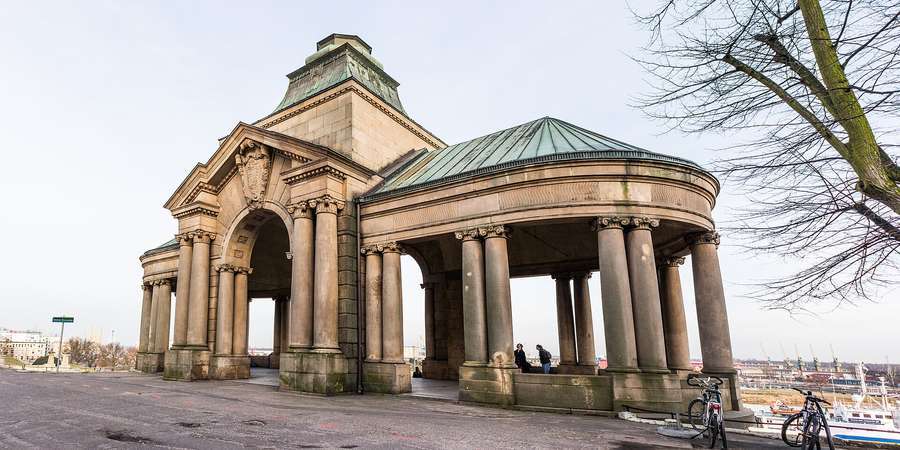
Start at Wały Chrobrego, the Hakenterasse: a monumental early-20th-century terrace rising above the Oder, with pavilions, colonnades and a long promenade looking across the river to the cranes of Łasztownia island. It is Szczecin's living room, free at all hours, and the view is at its best in low autumn light. Walk the full length: the central pavilion with its cafe terrace, the rows of lampposts and flowerbeds, and the viewing balconies where locals lean at sunset watching ships slide past on their way to and from the Baltic. In summer the terrace hosts open-air concerts and fireworks for the tall-ships gatherings; in the off-season you may have the whole colonnade to yourself. The National Museum's main branch sits on the terrace, and its collections cover the city's maritime story and West Pomeranian art.
Museum tickets work across branches: a permanent-exhibition ticket for one branch costs 20 zł normal and 12 zł reduced, temporary exhibitions 15 zł and 8 zł, a combined ticket 30 zł and 15 zł, and on the family ticket parents with children up to 16 pay the reduced price. All National Museum branches are closed on Mondays and otherwise open Tuesday to Thursday and Saturday 10:00 to 18:00, Friday and Sunday 10:00 to 16:00.
Data source: National Museum in Szczecin, tickets and opening hours (muzeum.szczecin.pl), checked 22 October 2026.
Day one, afternoon: the castle and the old town
From the terrace it is a short walk to the Castle of the Pomeranian Dukes, the Renaissance seat of the Griffin dynasty that ruled this coast for five centuries. The courtyards are free to wander, the wings host exhibitions, concerts and a city-view tower, and the small sarcophagus chamber of the dukes is one of the most quietly impressive rooms in Poland. Around the castle, Szczecin's old town is modest but likeable: the rebuilt hay market square with its coloured facades, the Gothic cathedral whose tower gives a wide view over the city's improbable star-shaped street plan, and lanes that feel genuinely lived-in rather than staged. The city was laid out on a fan of radiating avenues copied from 19th-century Paris, and the best way to feel it is simply to walk from the castle downhill towards the river, then back up through the grid to the station side, watching the streetscape shift from medieval walls to Wilhelmine facades in a few hundred metres.
For lunch, find a bar serving pasztecik szczeciński, the city's cult street food: a deep-fried yeast-dough pastry with a meat or vegetable filling, invented here in 1969 and defended by locals with near-religious loyalty. It costs a few złotych, arrives in seconds, and is the correct fuel for a walking day.
Day two morning: the Dialogue Centre Upheavals
The Centrum Dialogu Przełomy, on Solidarity Square, is Szczecin's essential museum: an underground pavilion, its floor level with the square's deck, telling the story of the city's turbulent 20th century, from German Stettin through the war, the border shift and the 1970 and 1980 strikes that helped ignite Solidarity. The exhibition is modern, moving and compact enough for ninety minutes. As a branch of the National Museum it keeps the same hours and prices: closed Mondays, otherwise 10:00 to 18:00 (Friday and Sunday to 16:00), 20 zł normal and 12 zł reduced for the permanent exhibition, with parents paying reduced prices on the family ticket.
Data source: National Museum in Szczecin, tickets and opening hours (muzeum.szczecin.pl), checked 22 October 2026.
Day two, midday: Łasztownia and the river islands
Across the bridges, Łasztownia island is Szczecin's next chapter: the old port district being rebuilt around its silos and cranes into a waterfront of promenades, food halls and viewing decks, with the best close-up views of the working harbour. Walk the quays to the old crane sign that has become the city's unofficial mascot, watch the dredgers and ferries work, and stop at one of the island's food spots before heading south to the parks. The river here is the Oder a dozen kilometres from its mouth, wide and tidal in feel, and the constant movement of ships gives Szczecin a port-city energy that landlocked Polish cities simply do not have.
Day two afternoon: parks, the cemetery and the Emerald Lake
Szczecin is one of Poland's greenest cities, built among beech woods, lakes and river islands. Kasprowicza Park and the Jasne Błonia avenue of plane trees form the classic promenade, laid out in the 19th century as the city's answer to a grand European park, with the summer outdoor stage and the wide Rusałka lake at its heart. The Central Cemetery, laid out in 1901, is one of the largest in Europe and reads as a landscaped garden of chapels, ponds, bridges and old trees rather than a graveyard; locals genuinely come here to walk, and in early November the sea of candles left on graves makes it one of the most affecting sights in the country.
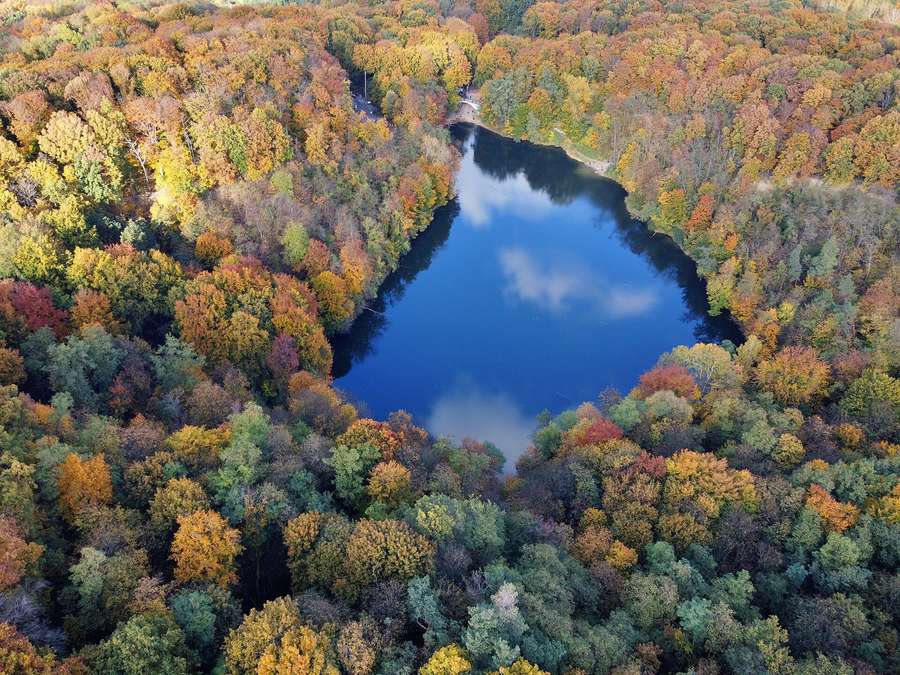
The standout is Jezioro Szmaragdowe, the Emerald Lake, in the Bukowe Hills on the city's southern edge: a flooded 19th-century chalk mine whose water turns an extraordinary green-blue against the forest, with marked walking trails around the shore and viewpoints from the old quarry walls. In autumn the beech forest around it burns gold and rust; in summer the lake has a guarded swimming area. Bus routes from the centre reach the trailheads, and the loop walk takes about an hour.
Practical notes and a weekend plan
Szczecin is cheap by big-city standards, card payment is universal, and English works in the centre and museums. Book trains early for Friday evenings; the Berlin connection makes the city a natural two-country weekend. In December the Christmas market takes over the old-town squares; in late autumn the parks and the Emerald Lake are at their most colourful.
Saturday: train in, Wały Chrobrego and its museum, pasztecik for lunch, the castle courtyards and old town, dinner by the river. Sunday: the Dialogue Centre Upheavals when it opens, then Kasprowicza Park or the cemetery, and the Emerald Lake loop before the evening train. With children, swap one museum for the lake and leave time for the park playgrounds.
Frequently asked questions
How long is the train from Warsaw to Szczecin?
The fastest EIC services take 4 hours 32 minutes according to PKP Intercity. From 13 December 2026 the operator plans five express pairs a day with the fastest trains at about 4 hours 14 minutes.
How much does the Dialogue Centre Upheavals cost?
As a National Museum branch, the permanent exhibition costs 20 zł normal and 12 zł reduced; parents with children up to 16 pay reduced prices on the family ticket. It is closed on Mondays and otherwise open 10:00 to 18:00, Fridays and Sundays to 16:00.
What is the Emerald Lake in Szczecin?
Jezioro Szmaragdowe is a flooded chalk mine in the Bukowe Hills on the city's edge, famous for its green-blue water, with marked walking trails and viewpoints; it is free to visit year-round and has a guarded swimming area in summer.
Is Szczecin a good weekend trip from Berlin?
Yes. Regional trains connect Berlin and Szczecin Główny, and the city's compact centre, museums and parks fit comfortably into two days, with prices well below comparable German cities.
What is pasztecik szczeciński?
Szczecin's cult street food: a deep-fried yeast-dough pastry with a meat, cheese or vegetable filling, served in seconds for a few złotych in dedicated bars around the centre. It was invented in the city in 1969 and remains its most local plate. * Photos: Cover - the pavilion on Wały Chrobrego by Michalpe96, CC BY-SA 4.0, via Wikimedia Commons. Body - Jezioro Szmaragdowe from the air by Kapitel, CC BY-SA 4.0, via Wikimedia Commons.