Discussing Sexual Expectations and Exclusivity With a Polish Partner
The essentials: Have the exclusivity and expectations talk directly, at a calm chosen moment. Ask when your partner expects exclusivity, define what it covers, and discuss pace and boundaries. Polish law requires freely given consent (Penal Code Art. 197). Free help: Blue Line 800 120 002, 24/7.
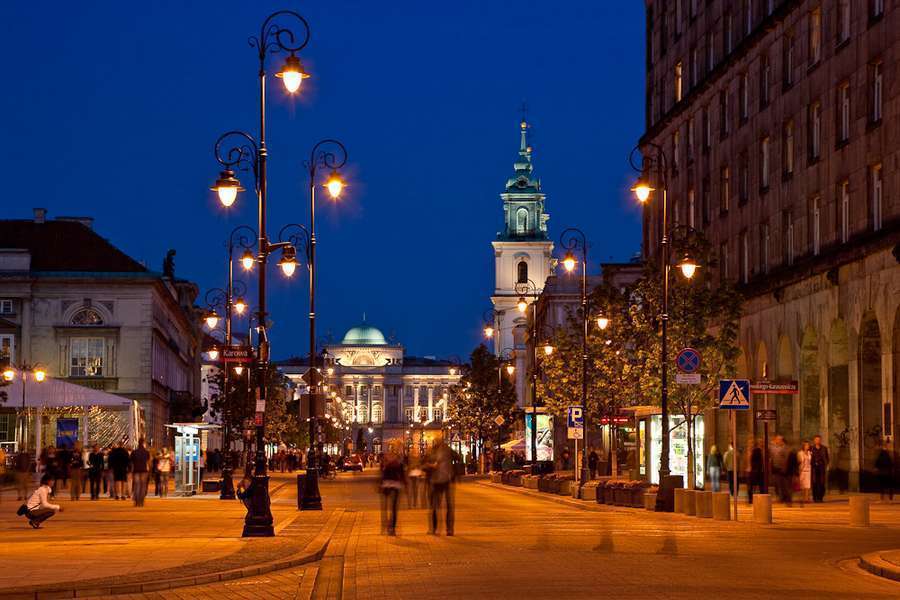
Moving to a new country reshapes how people date, and it reshapes the conversations couples have behind closed doors. If you are seeing a Polish partner, the talks about sexual expectations and exclusivity may not happen on the timeline you expect, in the words you expect, or with the assumptions you brought from home. This guide explains how to start that conversation, what Polish law says about consent, what survey data shows about attitudes, and where to turn if the conversation reveals something serious.
Why this conversation deserves its own moment
Early dating runs on inference. Two people go out, enjoy each other, and quietly build private theories about what the other person wants: how fast things should move, whether either is seeing someone else, what commitment would even mean. In an international pairing those theories are built from different raw material. What reads as casual in one culture reads as serious in another. What one partner considers an obvious signal of exclusivity, the other has never learned to read at all.
The fix is unglamorous: an actual conversation, in words, at a chosen time. Not a hint, not a test, not a fight that stumbles into the topic. Partners in long-term relationships consistently report that the talks they dreaded most turned out easier than the months of guessing that preceded them.
What Polish law says about consent
Any conversation about sexual expectations in Poland sits on a clear legal floor. Under Article 197 of the Polish Penal Code, sexual contact obtained through force, an unlawful threat, or deceit is a crime. Polish law and practice expect consent to be freely given; pressure, persistence after a refusal, and taking advantage of someone who cannot consent fall on the wrong side of that line. The law applies identically to Polish citizens and to foreigners living in or visiting the country.
This matters for your conversation in a practical way. You are not asking for a favor when you ask about boundaries, pace, or exclusivity. You are doing what the law already expects both of you to do: establish that whatever happens is genuinely wanted by both people. A partner who treats these questions as insulting, tedious, or suspicious is telling you something worth knowing early.
Data source: Act of 28 June 2024 amending the Penal Code (Journal of Laws 2024, item 1228), eli.gov.pl, Article 197, checked 21 October 2026.
Pick the right moment
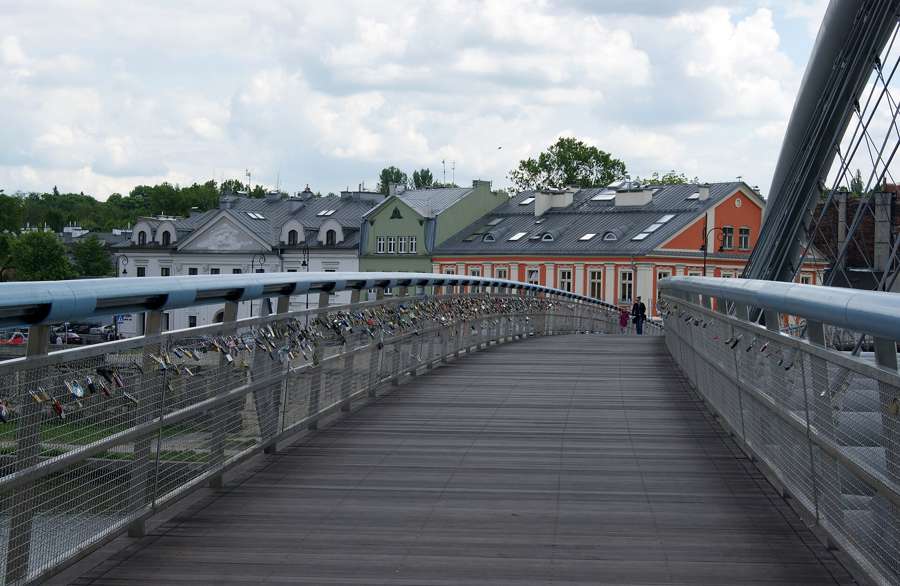
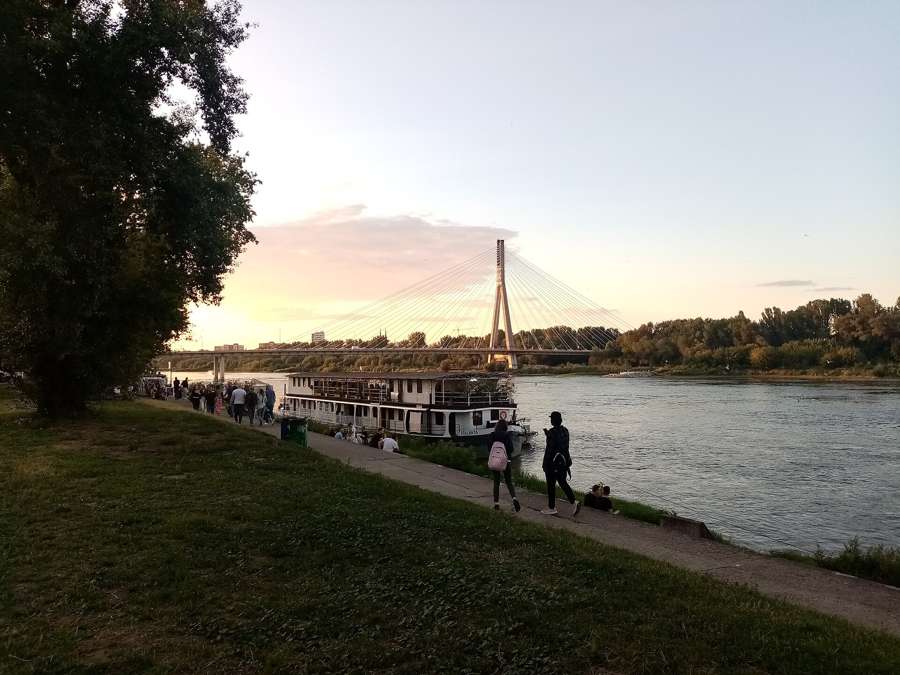
The single biggest mistake is raising expectations mid-conflict or mid-intimacy. In the first case the topic becomes a weapon; in the second it becomes pressure. Choose a neutral, private, unhurried setting: a walk, a quiet evening at home, a long coffee. Warsaw's tree-lined boulevards and Krakow's riverside paths exist almost as if designed for these talks, and many couples find it easier to speak honestly while walking side by side than while sitting face to face.
Give the conversation a little warning. "I would like us to talk about where this is going, some evening this week - nothing bad, I just want us to be on the same page" lands far better than an ambush.
How to open the conversation
Direct and warm beats clever. Openers that work tend to share three features: they use "I" statements, they name the relationship as something valuable, and they ask an open question rather than issuing a test. For example: "I really like where this is going, and I realized I do not actually know how you see us. Can we talk about that?" Or: "Before this goes further, I want to be honest about what I am looking for, and I would like to hear what you are looking for."
If your Polish is limited and your partner's English is good, agree explicitly which language the conversation happens in. Important talks deserve the language in which both of you can be precise. Many international couples in Poland switch languages for exactly these moments, and treating that as a deliberate choice rather than a failure removes a surprising amount of tension.
Talking about exclusivity
Exclusivity is the conversation international couples most often get wrong, because the default settings genuinely differ. In some dating cultures, seeing multiple people is assumed until an explicit "we are exclusive" talk. In others, a third or fourth date already carries an expectation of focus, and discovering that your partner is still on an app feels like a small betrayal. Neither default is wrong. The danger is assuming you share one.
Ask directly, without apology: "At what point do you expect someone you are dating to stop seeing other people?" Then answer the same question yourself. If your answers differ - and in cross-cultural couples they often do - that is not a crisis. It is a negotiation, and it is much easier to have now than after a discovery.
Be concrete about what exclusivity covers: dating apps deleted or merely unused, introductions as a partner, expectations about the future or only the present. Couples who leave these vague often discover, months later, that they agreed to different things using the same word.
Talking about sexual expectations
The same directness applies to the physical side, with an extra layer of care. Talk about pace ("how fast or slow do you like things to move"), about boundaries ("is there anything that is clearly off the table for you"), and about how each of you signals yes and no. Frame your own limits as information, not complaints: "I am comfortable with X, I am not comfortable with Y yet, and I will tell you when that changes."
Remember the legal anchor from earlier: consent in Poland, as in every European country, must be freely given and can be withdrawn at any point. A good partner will treat your boundaries as the floor, not the ceiling, of the conversation. And you owe the same in return. Asking "what do you enjoy, and what should I never assume?" is not unromantic. Couples who talk this way report more trust and, repeatedly in relationship research, better intimacy than couples who rely on reading signals.
If you come from a culture where these subjects are discussed openly and your partner comes from a more reserved background, expect the first conversation to be shorter and more general than you would like. That is normal. Treat it as the first of several, not a failed attempt.
What the survey data shows about attitudes in Poland
It helps to calibrate expectations with real numbers. Poland remains more socially conservative than most of Western Europe on questions of sex and relationships, and large surveys capture this. In the EU Agency for Fundamental Rights' 2024 LGBTIQ survey, 74 percent of Polish respondents said they avoid holding hands in public with a same-sex partner for fear of harassment - down from 83 percent in the 2019 round, still the pattern of a society where public intimacy can feel risky. For different-sex couples the public climate is far more relaxed, but the underlying tendency is real: Poles often separate a warm private sphere from a restrained public one.
The practical takeaway for your conversation is not that Polish partners are prudish or that foreigners are pushy. It is that your partner's public reserve, slower pace, or reluctance to define things loudly may reflect a cultural setting, not a verdict on you. Ask instead of decoding.
Data source: European Union Agency for Fundamental Rights, "LGBTIQ equality at a crossroads: progress and challenges" (14 May 2024), Poland country results, checked 21 October 2026.
*Photo: Pudelek, CC BY-SA 4.0, via Wikimedia Commons*
Handling disagreement well
Some expectation talks surface a genuine gap: one of you wants commitment this year, the other is not sure. Two rules keep these moments productive. First, thank the honesty before you argue with the answer. Second, separate the decision from the timeline: you rarely need to resolve a gap in one evening, only to agree whether it is workable and when to revisit it.
Watch for the genuinely bad signs, which are the same in every language: ridicule of your boundaries, pressure framed as proof of love, refusal to have the conversation at all, or anger when you ask about other partners. A partner who punishes you for asking questions will punish you for bigger things later.
If the conversation reveals something serious
Occasionally an expectations talk uncovers something heavier - past coercion, ongoing pressure, or behavior that frightened you. If that happens, you do not have to handle it alone, and help in Poland does not depend on citizenship. The Blue Line (Niebieska Linia), Poland's national support service for people experiencing violence, operates a free 24-hour helpline at 800 120 002. Emergency psychological help is also available through the public mental health system.
If you are ever in immediate danger, call 112, the universal European emergency number, which operates in Poland with English-speaking dispatchers available.
Data source: gov.pl victim-support information page (Niebieska Linia, free, 24/7), checked 21 October 2026.
When a couples therapist helps
If the two of you keep circling the same disagreement, or if the conversations matter but keep ending in silence or fights, a few sessions with a couples therapist can change the pattern quickly. Poland has a professional register of certified sex therapists and couples counselors run by the Polish Sexological Society (Polskie Towarzystwo Seksuologiczne), with practitioners listed by city, and larger cities such as Warsaw, Krakow, Wroclaw and Gdansk have therapists who work in English. Public psychological support centers (Centra Zdrowia Psychicznego) also offer free entry-level help without a referral.
Bringing in a professional is common in Poland's big cities and carries far less stigma among younger Poles than many foreigners expect. Suggesting it says "I want this to work," not "this is broken."
Data source: Polish Sexological Society specialist registers, pts-seksuologia.pl, checked 21 October 2026; gov.pl "Centra Zdrowia Psychicznego" page, checked 21 October 2026.
Frequently asked questions
Is there a "right" date number to have the exclusivity talk in Poland?
No. There is no Polish rule about when the talk should happen. The reliable signal is not the calendar but the stakes: if the answer would change your behavior - whether you keep dating other people, how you plan your time, what you tell friends - it is time to ask. Most couples in Poland's larger cities have some version of this conversation within the first one to three months of regular dating.
My Polish partner is very private about our relationship. Should I worry?
Usually not. Poland's public culture around relationships is more reserved than in much of Western Europe or North America, and many people simply separate private life from public display. Worry only if the privacy is one-directional - for example, you are hidden from their friends and family while they are fully present in your life - or if requests for clarity are met with anger. Privacy is a style; secrecy is a pattern.
How do I bring up boundaries without sounding like I am accusing my partner?
Lead with what is going well, then frame boundaries as information about you, not suspicion of them: "I like being with you, so I want you to know what I am comfortable with." Polish law is clear that consent must be freely given (Article 197 of the Penal Code), which means these conversations are normal and expected, not an accusation. A partner who reacts as though the question itself is an insult is showing you a red flag. *Cover photo: Robert Parma, [CC BY-SA 3.0](https://creativecommons.org/licenses/by-sa/3.0), via Wikimedia Commons*
Sources
- Act of 28 June 2024 amending the Penal Code (Dz.U. 2024 poz. 1228), eli.gov.pl
- EU Fundamental Rights Agency - LGBTIQ equality at a crossroads (14 May 2024)
- gov.pl: support for people affected by violence (Niebieska Linia)
- Ministry of Health - Mental Health Centres (CZP)
- Polish Sexological Society - clinical sexologists register