Why Polish People Seemed Unfriendly at First, Until I Got to Know Them
A personal essay by a Canadian living in Poland. The views and experiences are the author's own.
What to know: Polish people often smile less at strangers, but the author found warmth in actions: a neighbor's help, long dinners and honest advice. Friendly and warm are not the same thing.
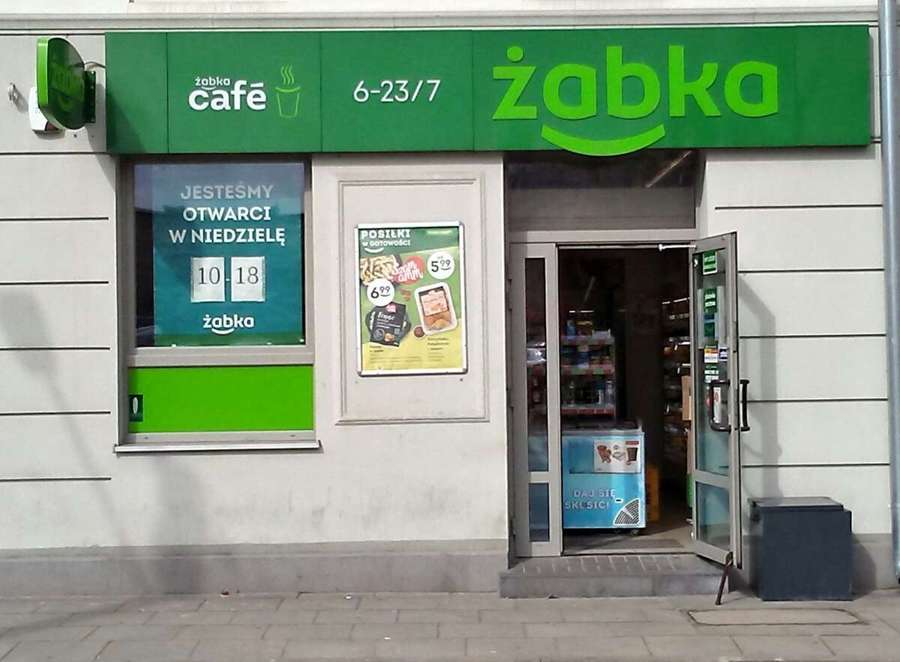
I moved from Canada expecting culture shock. What I didn't expect was how much a simple smile—or the absence of one—would make me question everything I thought I knew about friendliness.
When I first arrived in Poland, I was convinced that Polish people didn't like me.
Not because anyone said anything particularly rude. Nobody told me to go home. Nobody slammed a door in my face. It was something much more subtle.
Nobody smiled.
Coming from Canada, where smiling at strangers is practically a national sport, this was a strange adjustment. Back home, you smile at the cashier, the person walking their dog, the guy standing next to you in the elevator. Sometimes you even apologize to a chair after accidentally bumping into it.
In Poland? I could walk into a shop, say hello with my friendliest Canadian smile, and receive a look that suggested I'd just interrupted a very important meeting.
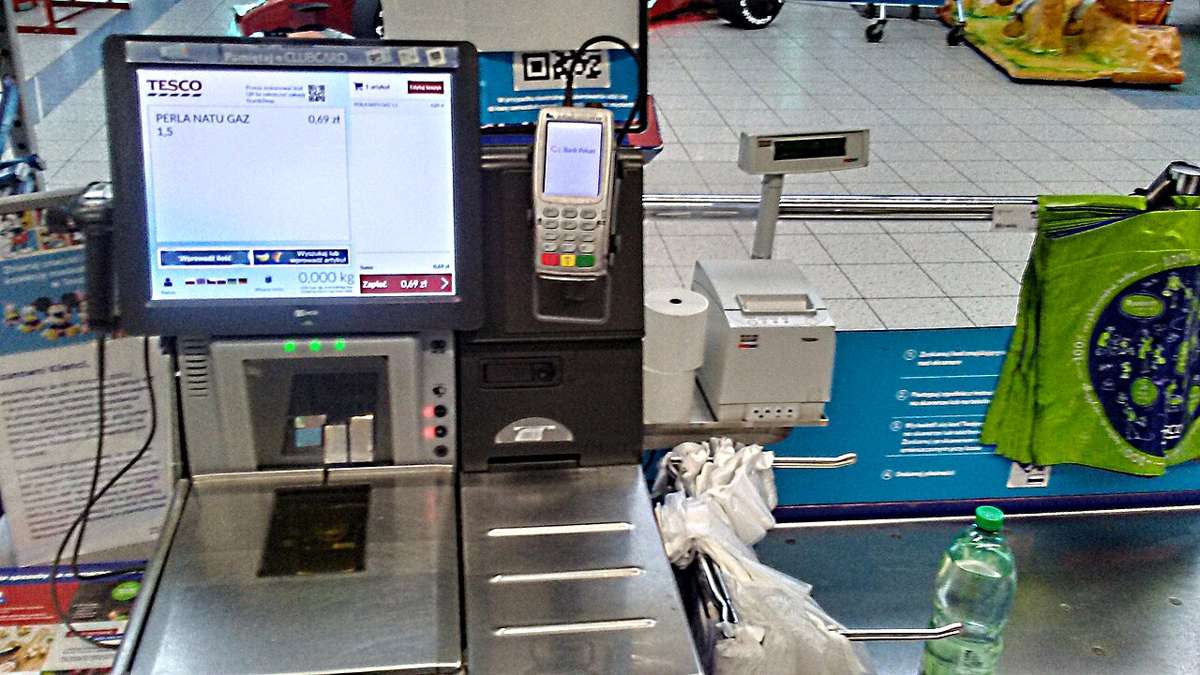
I remember one of my first grocery shopping experiences. I approached the cashier, smiled, and said, "Dzień dobry!"
She looked at me, scanned my groceries at lightning speed, announced the total, and waited.
No small talk. No "How's your day going?" Not even a courtesy smile.
I walked out thinking, Wow. Tough crowd.
What I didn't realize at the time was that I was about to learn one of the most important lessons of my life abroad:
Being friendly and being warm aren't necessarily the same thing.
The Polish Smile: Apparently, You Have to Earn It
A few weeks after moving, I met a Polish guy named Michał through a mutual friend. We ended up having a beer together, and I finally asked the question that had been bothering me.
"Why does everyone here look so serious all the time?"
He laughed.
"Why do Canadians smile at everyone?" he asked. "Do you actually like everyone you meet?"
I opened my mouth to answer, then stopped.
Fair point.
Michał continued with an explanation that completely changed how I looked at Polish social behavior.
"In Poland, if I smile at you, it's because I'm happy to see you. If I ask how you're doing, I actually want to know. We don't always do these things just to be polite."
That conversation stayed with me.
In Canada, friendliness is often part of the social atmosphere. We smile to acknowledge people. We ask how they're doing without necessarily expecting a detailed answer. It's a way of making everyday interactions pleasant.
In Poland, I began to notice something different. People seemed less interested in performing friendliness for strangers.
It wasn't necessarily hostility. It was a different social language.
And I had been trying to read it using a Canadian dictionary.
My Neighbor Barely Spoke to Me. Then One Day, Everything Changed.
One of the most memorable experiences happened in my apartment building.
For months, I would see my neighbor, Andrzej, in the hallway. He was probably in his sixties, always dressed neatly, usually carrying groceries or heading out for a walk.
Every time I saw him, I'd say hello.
"Dzień dobry!"
"Dzień dobry," he'd reply.
And that was it.
No smile. No conversation. No questions about where I was from.
I figured he simply wasn't interested in getting to know me.
Then one winter morning, I was outside struggling with something that should have been simple. I was trying to deal with a problem with my car in freezing weather, looking increasingly helpless.
Andrzej appeared.
He watched me for a moment, said something in Polish that I didn't understand, and disappeared.
I assumed he'd decided I was an idiot.
Five minutes later, he returned with tools.
Without making a big deal out of it, he spent the next twenty minutes helping me. His English was limited, my Polish was worse, and somehow we managed to communicate.
When we finished, I thanked him about ten times.
He shrugged.
"Neighbors help neighbors," he said.
That was it.
No dramatic speech. No expectation of anything in return.
Just a man who had barely spoken to me for months, standing outside in the cold because someone needed help.
I remember going upstairs and thinking about how wrong my first impression had been.
Andrzej hadn't been unfriendly. He simply hadn't needed to prove that he was friendly.
In Poland, Friendship Can Take Time. But When It Happens, It Means Something.
One of the biggest differences I noticed between Canada and Poland was how friendships develop.
In Canada, it's relatively easy to have a pleasant conversation with someone you've just met. You might talk about work, hockey, the weather, or weekend plans. By the end of the conversation, someone might say, "We should grab a coffee sometime!"
Whether that coffee ever happens is another story.
In Poland, I found that the early stages of getting to know people could feel slower.
People didn't always volunteer personal information immediately. Conversations could be more reserved. Invitations didn't necessarily come after the first meeting.
But once I got past that initial distance, something interesting happened.
People started inviting me into their homes.
And that's when I discovered an entirely different Poland.
I remember visiting a Polish couple, Kasia and Piotr, for what I thought would be a casual afternoon coffee.
I arrived expecting a cup of coffee and maybe a biscuit.
Instead, their kitchen table looked like they were preparing to feed an entire football team.
There were cakes, sandwiches, salads, homemade food, and enough tea and coffee to keep us awake until Christmas.
"Eat, eat!" Kasia insisted, putting another plate in front of me.
"I'm really full," I said.
She looked genuinely confused.
"Full? But you haven't tried everything!"
Piotr laughed from across the table.
"Don't fight it. She'll win."
We stayed for hours.
We talked about family, politics, travel, childhood, work, and what life was like in Canada. Nobody checked the time. Nobody suggested we should wrap things up.
At one point, Kasia said something I still remember.
"When someone comes to our home, we want them to feel like family."
And she meant it.
That afternoon made me realize that I'd been judging Polish hospitality by what happened in grocery stores and elevators.
I had been looking in the wrong places.
Polish Honesty Can Feel Brutal — Until You Learn to Appreciate It
There's another aspect of Polish culture that took me some time to understand.
People can be remarkably direct.
In Canada, we often soften criticism. If something isn't particularly good, we might say, "It's interesting," or "Not bad," or the classic, "Maybe we could try something different."
In Poland, I've encountered people who simply say what they think.
I once asked a Polish friend, Tomek, what he thought of an idea I was considering.
He looked at me for a moment.
"Terrible idea," he said.
I laughed, assuming he was joking.
He wasn't.
"Why?" I asked.
"Because you're making it too complicated. Do it this way."
Then he spent the next half hour helping me figure out a better approach.
At first, that directness could feel harsh. I was used to criticism arriving wrapped in several layers of politeness.
But over time, I began to appreciate knowing where I stood.
When Tomek said something was good, I knew he meant it.
When he thought something was a mistake, he told me.
And when I needed help, he showed up.
I started to understand that what sounded blunt to my Canadian ears was often intended as practical, straightforward communication.
Not every Polish person communicates this way, of course. But it was a pattern I encountered often enough to change my expectations.
The Unexpected Kindness of Complete Strangers
The longer I lived in Poland, the more I began noticing kindness that I'd previously overlooked.
A stranger helping an older person carry something heavy.
Someone taking the time to explain directions even though we barely spoke the same language.
A shopkeeper remembering what I usually bought.
A parent helping another parent at the playground without expecting a conversation afterward.
These weren't grand gestures.
They were small, practical acts of consideration.
I remember one particularly confusing experience at a government office. Anyone who has lived abroad knows that bureaucracy in another language can make you question every decision that led you there.
I had paperwork. I had documents. I had absolutely no idea whether I was standing in the correct line.
A woman named Agnieszka noticed my confusion.
She asked me something in Polish.
I gave her my usual helpless foreigner smile.
"Sorry, English?"
She switched to English and asked what I needed.
After I explained, she helped me figure out which counter to visit and which document I was missing.
She didn't have to do any of that.
Before leaving, I thanked her and said how much I appreciated her kindness.
She smiled.
"You're in Poland. Sometimes you just have to ask."
It was such a simple sentence.
But it captured something I was slowly beginning to understand.
Sometimes the warmth is there. You just have to learn how to find it.
I Also Had to Stop Comparing Everything to Canada
This was probably the hardest lesson.
When you move abroad, it's tempting to compare every interaction to what you're used to.
In Canada, people do this.
In Poland, people do that.
In Canada, the cashier smiles.
In Poland, the cashier scans your groceries so fast you barely have time to pack them.
In Canada, strangers might start a conversation in an elevator.
In Poland, the elevator ride can be so silent you become painfully aware of your own breathing.
At first, I interpreted those differences as evidence that something was missing.
But eventually, I began asking myself a different question.
What if nothing was missing?
What if people were simply expressing themselves differently?
I also realized that Canada isn't some perfect paradise of friendliness. A stranger can smile at you and still have no interest in helping you. A conversation can be pleasant without leading to a meaningful connection.
And Poland isn't a country full of secretly wonderful people waiting to be discovered. I've met rude people here too. I've experienced impatience, indifference, and moments when I genuinely wished someone would just be a little nicer.
But that's life anywhere.
The mistake wasn't noticing cultural differences.
The mistake was assuming that my way of expressing friendliness was the correct one.
The Moment I Realized Poland Had Changed Me
A while ago, I was standing in line at a supermarket when a tourist ahead of me tried to start a cheerful conversation with the cashier.
"Beautiful day today, isn't it?"
The cashier looked up briefly, nodded, and continued scanning.
The tourist seemed confused.
I recognized that expression immediately.
It was the same one I'd worn when I first arrived.
And then I caught myself smiling.
Not because the situation was funny, exactly.
But because I finally understood both sides.
I understood why the tourist expected a little small talk.
And I understood why the cashier might not feel any need to provide it.
Neither person was necessarily doing anything wrong.
They were simply operating with different expectations.
A few minutes later, I stepped outside, checked my phone, and continued with my day.
It occurred to me that I'd stopped expecting every stranger to acknowledge me with a smile.
And strangely enough, I didn't feel any less welcome.
Poland Didn't Become Friendlier. I Learned to Understand It.
If you had asked me during my first few weeks in Poland what Polish people were like, I probably would have said they were serious, reserved, and a little difficult to approach.
Today, I'd give you a very different answer.
I'd tell you about Michał, who challenged my assumptions over a beer.
I'd tell you about Andrzej, who helped me outside in the freezing cold without being asked.
I'd tell you about Kasia, who apparently considers it a personal failure if a guest leaves her home capable of eating another bite.
I'd tell you about Tomek, whose honesty sometimes drives me crazy but whose advice I trust.
And I'd tell you about Agnieszka, who helped a confused foreigner navigate Polish bureaucracy simply because she could.
None of these people needed to smile at me in the street to make me feel welcome.
They did something more meaningful.
They made room for me in their lives, even if only for a few minutes.
I still love the easy friendliness of Canada. I miss those spontaneous conversations, the casual smiles, and the feeling that you can exchange a few words with almost anyone.
But Poland has taught me to appreciate a different kind of warmth.
One that doesn't always announce itself.
One that sometimes takes patience.
One that might look like a serious face, a blunt answer, an overflowing dinner table, or a neighbor quietly showing up with a toolbox.
I came to Poland thinking friendliness was something you could see on someone's face.
I stayed long enough to discover that sometimes, you see it best in what people do.
And these days, when I walk into a Polish grocery store and the cashier doesn't smile?
I smile anyway.
Not because I expect one back.
Just because I'm Canadian.
And apparently, some habits are impossible to break.
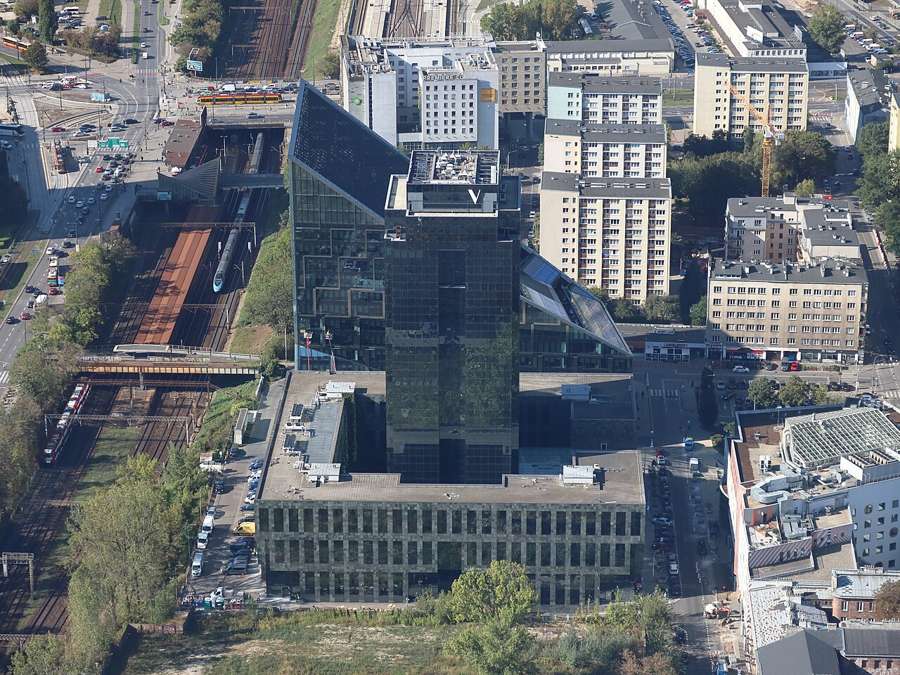
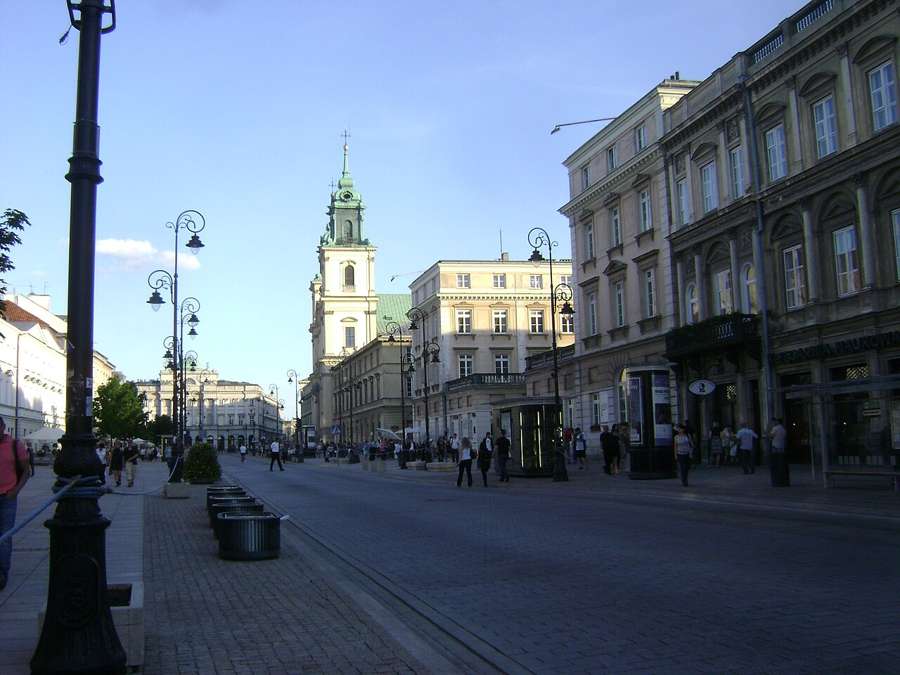
* Photos: Żabka convenience store in Tomaszów Mazowiecki and self-service checkouts in a Tesco store in Poland (both Wikimedia Commons, public domain), illustrative.