Living in Żoliborz vs Saska Kępa: Costs, Lifestyle and Transport
The essentials: Żoliborz averages 3,774 zl asking rent with direct M1 metro access; Saska Kępa (in Praga-Południe, district average 3,403 zl) offers more listings and café life but relies on trams until metro line M3, with construction from 2028, adds nearby stations. Pick Żoliborz for the commute, Saska Kępa for atmosphere.
Two green neighborhoods, two different moods
Żoliborz and Saska Kępa sit on opposite banks of the Vistula and attract a similar kind of expat: someone who wants trees, pre-war architecture and a slower street life without giving up a short commute to the center. They answer that brief in very different ways, and the practical differences in rent, transport and housing stock matter more than the postcard descriptions.
Żoliborz, on the left bank, is Warsaw's smallest district. Its name comes from the French "joli bord", beautiful bank, and the neighborhood leans into that promise: early modernist villas and manor-style housing estates on streets like Wieniawskiego and Brodzińskiego, the Brukalski villa, and the church of St Stanisław Kostka. The city's own walking route starts in Park Fosa i Stoki Cytadeli, where wild greenery wraps around the brick remains of the Citadel fortifications. Saska Kępa, on the right bank inside the Praga-Południe district, is Warsaw's best-known diplomatic quarter: interwar modernist houses under tall trees, the 1926 Łaski Colony whose three horseshoe rows of houses were modeled on traditional manor houses, and a café strip along Francuska street that anchors daily life.
Data source: City of Warsaw walking guides for Żoliborz and Saska Kępa on warsawtour.pl; checked 23 October 2026.
Rent and availability as of late October 2026
Listing data aggregated from active offers over the last seven days puts Żoliborz at an average asking rent of 3,774 zł per month, or 84 zł per square meter, across 1,273 active listings. Praga-Południe, the district that contains Saska Kępa, averages 3,403 zł per month and 78 zł per square meter across 3,599 listings. Read those numbers carefully. The Żoliborz figure is close to the real Żoliborz experience, because the district is small and uniform. The Praga-Południe figure blends Saska Kępa with much cheaper parts of the district, so an actual Saska Kępa address, especially a renovated modernist building near Francuska, typically sits above that district average.
The listing counts tell their own story. Żoliborz has roughly a third of the rental supply of Praga-Południe despite similar expat demand, so good flats there move quickly and viewing slots fill within days. Saska Kępa offers more churn, but the most desirable stock, the interwar villas and their conversions, is also the least liquid. Expect Żoliborz two-bedrooms to price at or above the district mean, and expect character buildings in both neighborhoods to carry a premium over the panel-block stock that quietly fills most listings.
Data source: znajdznajem.pl Warsaw district rent map, active listings from the last 7 days; checked 23 October 2026.
Getting around today: a metro versus a tram
This is where the two neighborhoods genuinely diverge. Żoliborz sits directly on metro line M1, with Plac Wilsona and Marymont stations serving the district. From Plac Wilsona the ride to the city center takes minutes, which is a large part of why the district stays expensive despite its small size.
Saska Kępa has no metro station of its own today. The neighborhood runs on trams and buses through the Rondo Waszyngtona hub at its western edge, and the closest metro is Stadion Narodowy on line M2, a walk or short tram ride away. For a commute to the left-bank center, Żoliborz wins on pure transit convenience. For anyone working near the National Stadium, Wschodni station or along the right bank, Saska Kępa is already practical.
Data source: metro.waw.pl line information and znajdznajem.pl listing context; checked 23 October 2026.
The change coming in 2028 and after
Saska Kępa's transport position is temporary. The city has signed the design contract for the first section of metro line M3, an 8.1-kilometer route with seven stations: the existing Stadion Narodowy as an interchange, plus six new stations at Dworzec Wschodni, Mińska, Rondo Wiatraczna, Ostrobramska, Jana Nowaka-Jeziorańskiego and Gocław. Design work is scheduled through 2027, with construction planned to start in 2028. The environmental decision process for this section opened public consultation on 22 October 2026, running to 20 November 2026, which puts the project firmly in motion rather than in the drawer.
Mińska and Rondo Wiatraczna stations will put rail transit within reach of Saska Kępa's eastern side, and Stadion Narodowy becoming an M2-M3 interchange upgrades the hub the neighborhood already uses. The longer-term masterplan extends M3 across the Vistula through Mokotów to Ochota. None of this changes a commute in 2026, and buyers or long-term renters should treat any opening date as unannounced until the city publishes one, but the direction of travel is clear: the right bank's biggest transit gap is being closed.
Data source: metro.waw.pl M3 project announcements; RDOŚ Warsaw environmental proceedings notice on gov.pl, consultation window 22 October to 20 November 2026; checked 23 October 2026.
Green space and weekends
Both neighborhoods deliver on greenery, differently. Żoliborz's anchor is Park Fosa i Stoki Cytadeli, where the old fortress moat and overgrown slopes feel closer to a forest walk than a city park, and the Vistula escarpment gives the district real topography. Saska Kępa borders Skaryszewski Park, one of Warsaw's most loved parks, and sits a short ride from the Vistula boulevards on the right bank, the wilder, less developed riverfront.
For families, both neighborhoods support the car-optional weekend: playgrounds, park loops and cafés within walking distance. Żoliborz layers in small cultural touchpoints, including the David Bowie mural at the corner of Potocka and Maria Kazimiery streets, which commemorates the singer's 1970s train stop at the nearby Gdański station that inspired the song "Warszawa" on the album Low.
Data source: City of Warsaw walking guides on warsawtour.pl; checked 23 October 2026.
Daily life: cafés, shops and errands
Saska Kępa's daily life concentrates on Francuska street and the corners around it: cafés with outdoor tables, small bakeries and the long-running Irena confectionery on Zakopiańska street, famous locally for its donuts and wuzetka cakes. The neighborhood rewards walking; the side streets hide details like the socialist-realist mosaic preserved in Bar Alpejski at 68 Międzynarodowa street. Żoliborz spreads its errands along Słowackiego and around Plac Wilsona, with a similar density of independent cafés and shops but a more residential, less village-like feel between them.
On practical errands both are well covered by supermarkets, pharmacies and parcel lockers, so the real lifestyle choice is atmosphere: Saska Kępa feels like a garden suburb that happens to sit inside a capital, while Żoliborz feels like a dense, green district of the old city. Neither requires a car for daily life; both make owning one mildly inconvenient in the older streets.
Data source: City of Warsaw walking guides on warsawtour.pl; checked 23 October 2026.
Which one fits you
Choose Żoliborz if the commute comes first. Direct M1 access, uniform pre-war housing stock and a small, self-contained district suit professionals working in the center who want quiet evenings and do not mind paying the district's premium or moving fast when a good flat appears. Choose Saska Kępa if atmosphere and space come first. Larger and more varied stock, the diplomatic-quarter greenery and the café life around Francuska suit families and remote workers who can plan around the tram, and who want to be in place before the M3 stations change the neighborhood's price curve.
The honest trade-offs: Żoliborz gives you the metro now but thin rental supply and firm prices. Saska Kępa gives you more choice and a stronger street life, at the cost of a slower commute until the new line arrives. Both are among the few Warsaw neighborhoods where a car genuinely stays optional.
One more practical note for Saska Kępa: when M3 construction begins, worksites around Mińska, Rondo Wiatraczna and the Stadion Narodowy interchange will bring years of partial street closures and tram diversions to the district's edges. The works concentrate on the arteries rather than the villa streets, so daily life inside the neighborhood should stay calm, but commute routes will shift repeatedly between 2028 and opening. Renters signing multi-year leases should expect occasional diversion chaos in exchange for the eventual metro.
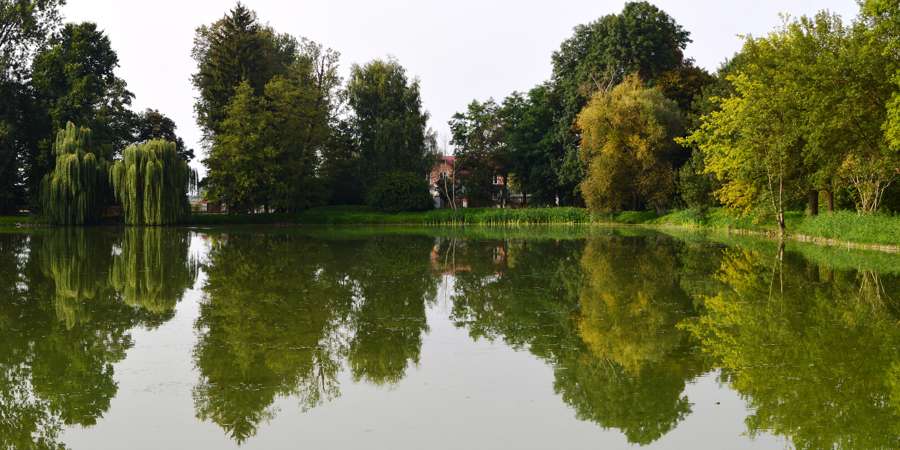
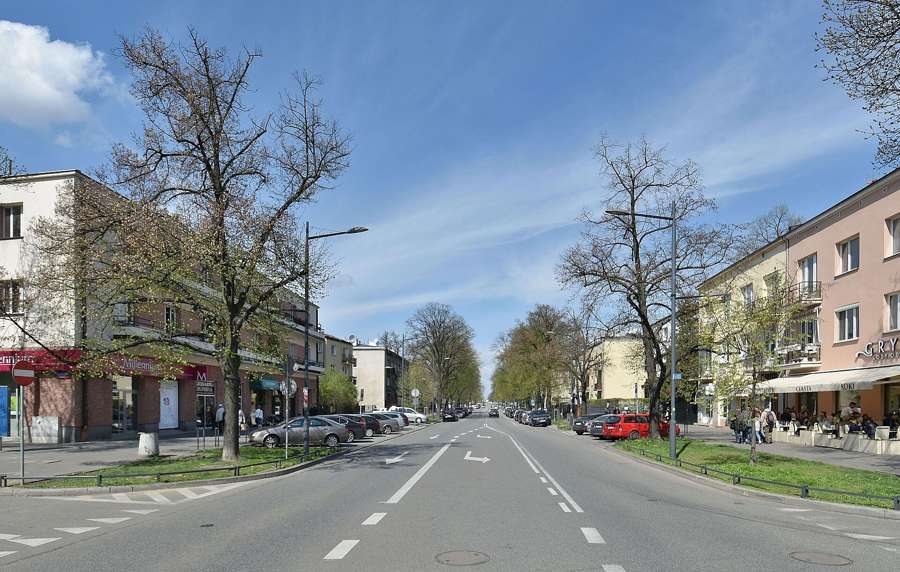
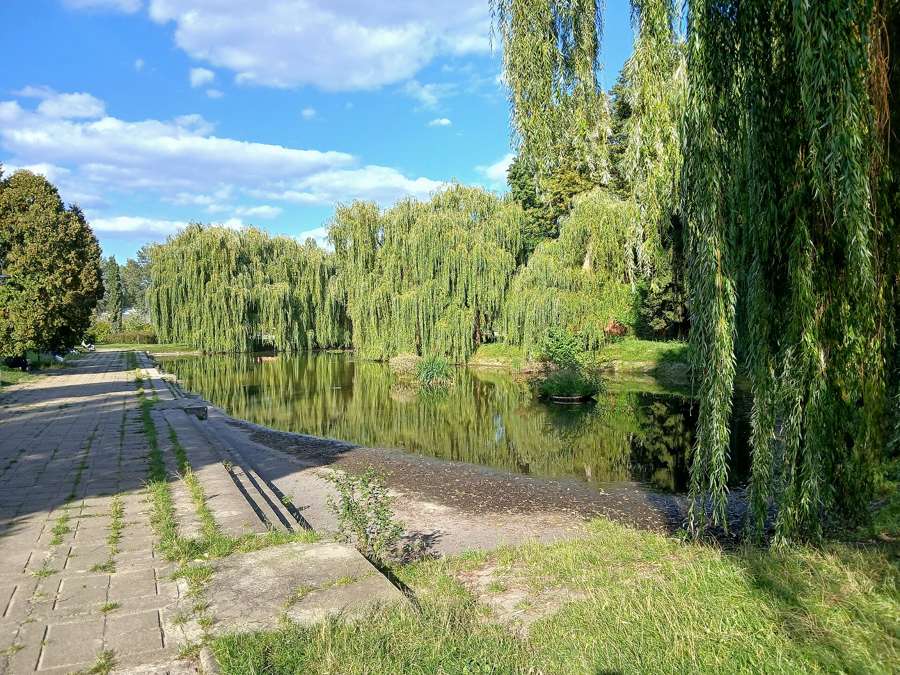
* Photos: cover, Francuska street in Saska Kępa, Adrian Grycuk, Wikimedia Commons, CC BY-SA 3.0 PL; body, the pond in Park Fosa i Stoki Cytadeli, Żoliborz, SagbataMaesho, Wikimedia Commons, CC BY-SA 4.0.
Frequently asked questions
Is Żoliborz or Saska Kępa cheaper for renters?
On district averages as of late October 2026, Praga-Południe (containing Saska Kępa) averages 3,403 zł per month versus 3,774 zł in Żoliborz. Saska Kępa itself prices above its district average, especially renovated modernist buildings, so real Saska Kępa listings often match or exceed Żoliborz prices for comparable character flats.
Does Saska Kępa have a metro station?
Not yet. The nearest metro is Stadion Narodowy on line M2, and the neighborhood runs on trams and buses via Rondo Waszyngtona. Metro line M3, with construction planned from 2028, will add stations at Mińska and Rondo Wiatraczna nearby and turn Stadion Narodowy into an interchange.
How reliable are district average rents?
They are asking-price averages from active listings, not signed leases, and they smooth over big differences inside a district. Use them to compare neighborhoods, then check current listings for the specific streets you would actually live on, because renovated pre-war stock prices well above the panel-block average in both areas.
Are these neighborhoods good for families without a car?
Yes, both rank among Warsaw's most walkable family neighborhoods: parks within walking distance, cafés and daily shops nearby, and strong public transport. Żoliborz offers direct M1 metro access today, while Saska Kępa relies on trams until the M3 line opens.
Will M3 construction disrupt life in Saska Kępa?
Mostly at the edges. Worksites for the Mińska, Rondo Wiatraczna and Stadion Narodowy stations sit on main arteries, so expect tram diversions and partial closures there from 2028, while the interior villa streets stay quiet. Commuters should plan for changing routes until the line opens.