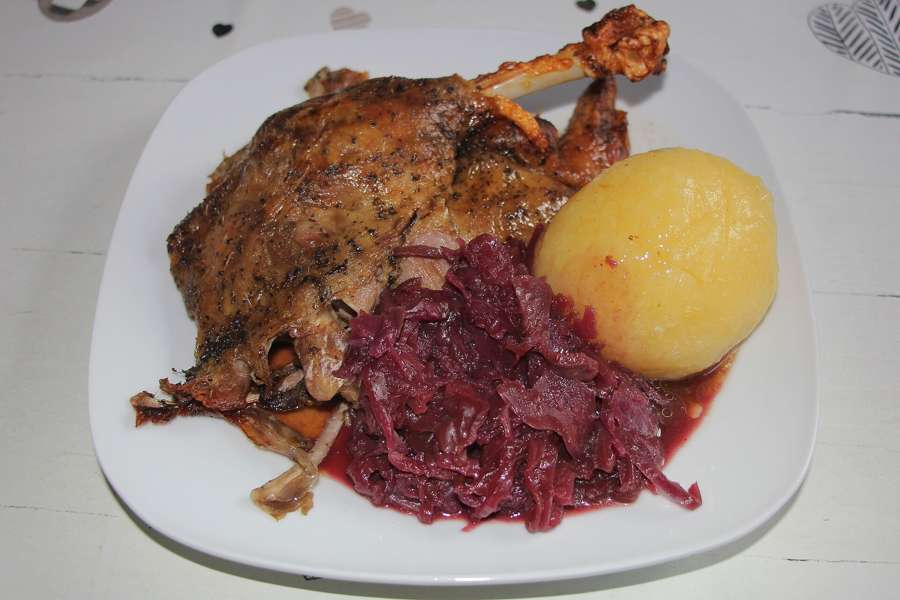
Christmas carp in Poland: buying live karp, prices and the rules
The essentials: Carp is Poland's traditional Wigilia fish, promoted nationwide from 1947. Live carp is sold legally in December at farms, street tents and some hypermarkets under welfare rules; most families ask the shop to kill and clean it or buy it filleted. Whole carp cost roughly 24-30 zł/kg in shops in December 2025.
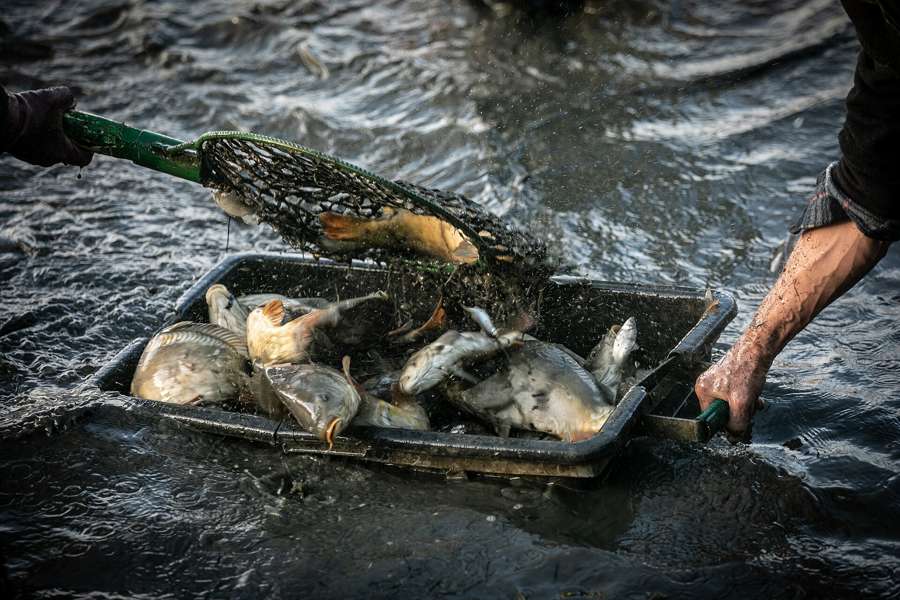
Every December, parking lots and pavements across Poland sprout blue plastic tubs full of live fish, and supermarkets wheel out tanks of carp. For an expat seeing it for the first time, the scene raises questions: why are people buying live fish in the street, and what are they doing with them? The answer is one of Poland's most distinctive Christmas customs - the Wigilia carp - and if you are spending the holidays here, you will meet it at the table, in conversation, and quite possibly in a neighbour's bathtub.
Here is what the tradition is, what the fish costs, where to buy it, and the animal-welfare rules that now shape the whole trade.
Why carp?
Carp has not always been the Polish Christmas fish. The Wigilia supper is a fasting meal with medieval roots, and fish earned its place as the permitted festive protein - historically whatever was local: pike, tench, herring. Carp's domination is a 20th-century story. After the Second World War the communist state promoted pond carp as cheap, farmable protein; a 1947 campaign slogan, "Karp na każdym wigilijnym stole" ("Carp on every Christmas Eve table"), did much of the work. State-supported pond farms scaled up, and within a generation carp was the default. Poland is still one of Europe's biggest carp producers, and the industry remains tightly bound to December: a market carp takes about three years to grow, so each Christmas season sells fish planned years earlier.
Around the fish grew the household rituals expats find most surprising: buying the carp alive a few days before Wigilia, keeping it in the family bathtub until it is time to cook, and slipping a scale or two into your wallet afterwards - they are supposed to keep money coming all year.
Buying it live: how the December trade works
The live-carp season is short and intense. From mid-December, three channels appear:
- Fish farms and ponds. Breeders sell directly at the farm and at local harvest events (odłowy), often on December weekends. This is the cheapest option: in December 2025 a kilogram of live carp from a breeder cost roughly 14 to 20 zł.
- Street points and tents. Seasonal stalls with aerated tubs set up near markets and housing estates, usually from the second week of December until Christmas Eve morning.
- Hypermarkets. Some large stores still sell live carp from tanks, and most chains sell it freshly killed, gutted or filleted on ice.
One thing has changed that expats with older guidebooks should know: most supermarket chains no longer sell live carp at all. Biedronka and Lidl dropped live sales around 2018, and by 2020 most big chains had followed, citing welfare concerns. If you want a live fish, look to the street tents, the hypermarkets that still keep tanks, or a farm. Everyone else sells the same fish killed, cleaned or filleted - which is what a growing share of Polish families now buy, along with a rising number who simply choose trout, salmon or herring instead.
What it costs
Prices from the 2025 season, reported by INNPoland in mid-December 2025, give a working map for 2026:
- Live carp at the farm or harvest: about 14-20 zł/kg
- Live or fresh whole carp in shops: about 24-30 zł/kg
- Gutted carp: about 25-35 zł/kg, and up to 40-50 zł/kg at big-city markets
- Fillets and loins: about 45-60 zł/kg
- Dzwonka (the prized belly cut): around 70 zł/kg
Promotions undercut these: Aldi, for example, advertised whole carp at 14.90 zł/kg in its 16 December 2025 Christmas offer. Breeders warned that 2025 production was lower than the year before - a cool summer slowed growth - and advised buying before the final pre-Christmas week, when prices edge up and the biggest fish sell out. A typical Wigilia carp weighs 1.5 to 2.5 kg, so a whole shop-bought fish runs roughly 40-75 zł.
The bathtub question
Yes, the bathtub is real, though less common than it used to be. Families traditionally bought the carp several days early and kept it in a filled bathtub so it would stay alive - and, by older logic, purge any muddy taste - until Christmas Eve. Modern flats, animal-welfare awareness and busy schedules have shrunk the custom, but you will still hear "karp pływa w wannie" every December. If your Polish hosts mention they cannot use the bathroom this week, now you know why.
If you are thinking of trying it: the Chief Veterinary Inspectorate's guidance for carrying a live fish home is that it must travel in water, in a container large enough for the fish to hold a natural body position, with at least a 1:2 ratio of fish weight to water volume, unsealed so air can circulate, and for the shortest time possible. A knotted plastic bag with no water - the old way - is explicitly out.
The welfare rules that shape the sale
Poland's Chief Veterinary Inspectorate (GIW) publishes detailed recommendations for the live-fish trade every season, and knowing the basics helps you pick a decent seller:
- Selling already-killed fish is the preferred model. The GIW's standing recommendation is that retail sale should happen after humane killing at the point of sale, by staff who are adult and trained in welfare, stunning and slaughter.
- Humane stunning is defined. Following EFSA guidance, accepted methods are mechanical (a blow to the front of the skull) or electrical, followed immediately by destruction of the central nervous system or decapitation.
- Never in front of children. The animal-protection act flatly prohibits killing vertebrates - fish included - in the presence of children, backed by criminal sanction. Killing stations must be screened off from customers entirely.
- Tank standards. Holding tanks must be smooth-walled, with clean, aerated water (a third changed every 12 hours), at 4-6 °C and no more than 10 °C, and stocked at no more than 1 kg of fish per litre with oxygenation. Fish with visible injuries must be killed immediately, not sold as "live".
- Your responsibility starts at purchase. Carrying a live fish home without water, or bent into a container where it cannot hold its natural position, breaches the same welfare principles the seller had to follow.
The practical reading: buy from points with clean, well-oxygenated tanks and a screened killing station, and let the shop do the killing and gutting - every live-carp point will do it on request, and most customers ask.
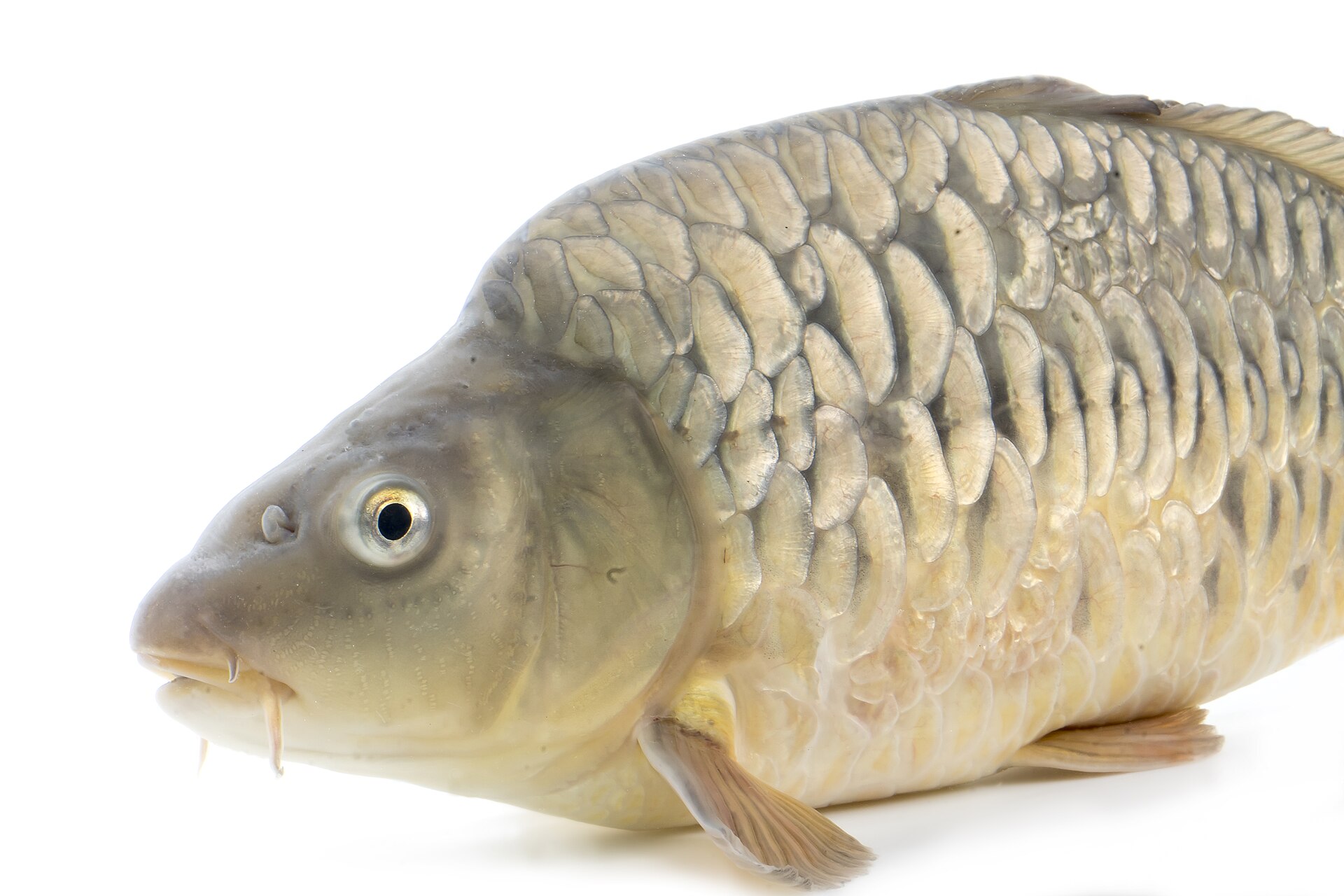
Cover photo: a Christmas carp harvest at a Polish fish farm, by Andrew Skowron / Otwarte Klatki (CC BY 2.0, via Wikimedia Commons). Photo above: a mirror-variety common carp (Cyprinus carpio), USFWS Mountain-Prairie (public domain, via Wikimedia Commons).
If live fish is not for you
Most Polish households now take one of three easier routes, and none of them is treated as cheating on tradition:
1. Ask the shop to kill and clean the fish. Standard service at every live point; done out of sight as the law requires. You take home a ready-to-cook fish. 2. Buy gutted, filleted or frozen. Frozen carp divides opinion, but INNPoland's December 2025 reporting notes many buyers now accept it, and it lets you shop weeks early. 3. Serve a different fish. Herring (śledź) in cream or oil is on nearly every Wigilia table anyway, and trout has become the most popular carp substitute - same ritual, fewer bones.
On cooking: the classic presentation is portions breaded and fried, served next to the Wigilia spread of barszcz, pierogi and poppy-seed makowiec. Jewish-style carp (po żydowsku, in a sweet-savoury onion sauce) and carp in aspic (w galarecie) are the traditional alternatives. Whichever way, warn yourself and your guests: carp is famously bony, with a lattice of fine forked bones through the fillet - eat slowly, and keep fillets for children or the bone-wary.
And after the meal, do not forget the scales. Dry one, put it in your wallet, and - tradition insists - it will keep the money flowing until next Christmas.
Frequently asked questions
Is buying live carp in Poland legal?
Yes. Live sales are legal but regulated: sellers must meet tank, staffing and humane-stunning requirements, and killing must never happen in front of children. The veterinary inspectorate recommends buying fish killed at the point of sale.
Why do Poles eat carp at Christmas?
The Wigilia supper is a fasting meal where fish is the traditional protein. Carp became dominant after 1945 through state promotion of pond farming - a 1947 slogan called for "carp on every Christmas Eve table".
How much does a Christmas carp cost in Poland?
In December 2025: roughly 14-20 zł/kg live at farms, 24-30 zł/kg whole in shops, 25-35 zł/kg gutted, 45-60 zł/kg filleted. A typical 1.5-2.5 kg fish costs about 40-75 zł.
Do people really keep the carp in the bathtub?
Some still do, though the custom is fading. Traditionally the fish swam in the tub for the last days before Wigilia. Most families now have the shop kill and clean it or buy it filleted.
Will the shop kill and clean the carp for me?
Yes - every live-carp seller will, screened from view as the law requires. Just ask.
What does a carp scale in the wallet mean?
A folk charm: keeping a scale from the Wigilia carp in your wallet is supposed to attract money for the coming year.