Buying a Christmas Tree in Poland: Prices, Traditions and Disposal
The essentials: A 1.5-2 m real Christmas tree in Poland costs 100-300 zł in the 2026 season: Norway spruce is cheapest, Caucasian fir the priciest. Poles traditionally decorate the tree by Christmas Eve and keep it until Candlemas on 2 February. Cities collect trees free with green waste in January.
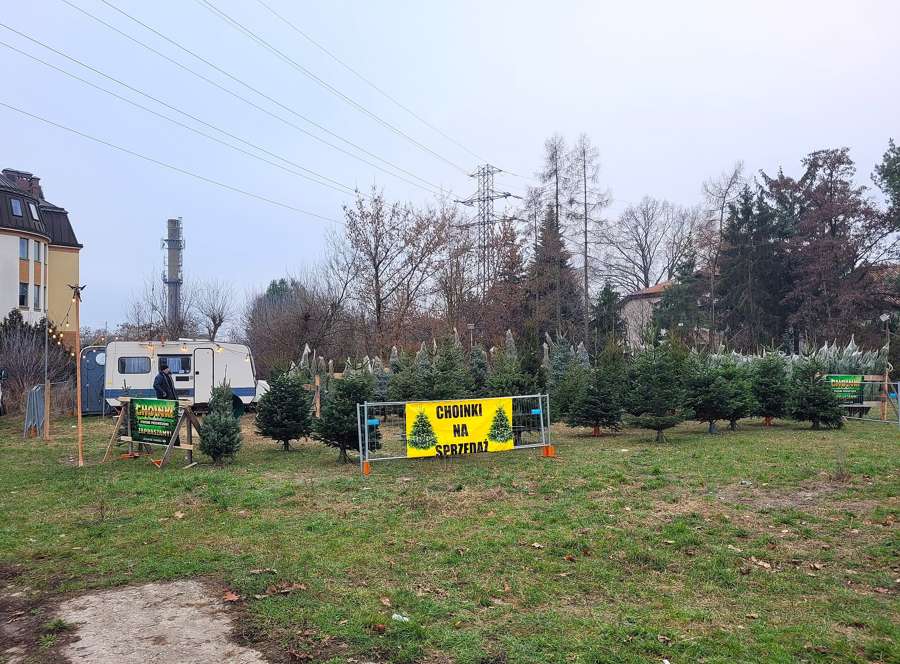
Walk through any Polish neighbourhood in December and you will spot the yellow "choinki na sprzedaż" banners strung between rows of cut firs and spruces. Buying a real Christmas tree is one of the easiest Polish traditions to adopt - but which species to pick, what a fair price is in 2026, and what to do with the tree in January are things nobody explains to newcomers. This guide does.
A short history of the Polish choinka
The decorated Christmas tree is a surprisingly recent guest in Polish homes. The custom arrived from Protestant Germany at the turn of the 18th and 19th centuries and only spread widely over the following decades. Early Polish trees were not dressed in random baubles: every ornament had a meaning. Typical decorations were handmade gingerbread cookies, apples, nuts, wafers, strands of straw and hay, and chains cut from coloured tissue paper - symbols of abundance and good harvests.
The classic rule, still quoted by grandmothers and lifestyle media alike, is that the tree should be in the house no later than Christmas Eve, 24 December. Traditionally the tree went up on the morning of Wigilia itself and was decorated during the day. These days many families cheat a little and put the tree up right after Mikołajki on 6 December, so it can be enjoyed for most of Advent (see our Advent 2026 guide).
Equally strict is the traditional end date: the tree should stay up until Candlemas - Święto Ofiarowania Pańskiego, known in Poland as Matka Boska Gromniczna - on 2 February. That is the day the Christmas tree disappears even from St Peter's Square in the Vatican. In practice most Polish households take the tree down in the first half of January, shortly after Three Kings' Day on 6 January (see our Epiphany and Orszak guide).
Species guide: what the stalls actually sell
Four conifers dominate Polish tree lots, and they are not interchangeable. Prices below come from choinkaonline.pl's season-2026 overview published on 22 October 2026.
- Norway spruce (świerk pospolity) - 30-100 zł for a tree up to 2 m. The cheapest and the most aromatic, with the classic "Christmas smell". The catch: in a warm flat it starts dropping needles within days. Buy it last-minute and keep it cool.
- Blue spruce (świerk srebrny) - 60-160 zł from a plantation, more in the city. Stiff branches, a silver-blue tint and much better needle retention than the Norway spruce. The minus: needles are genuinely sharp, which makes decorating a job for gloves.
- Caucasian fir (jodła kaukaska) - 80-200 zł from a producer, 200-450 zł at city stalls. The most popular tree in Polish homes. Soft needles that do not prick and do not fall even when dry, so the tree easily lasts four to five weeks. The price reflects a decade or more of slow plantation growth.
- Scots pine (sosna pospolita) - 40-100 zł. The budget alternative with long needles and a strong resin scent. It handles dry radiator air well, but has a sparser, more open shape and takes up more floor space.
For a typical 1.5-2 m tree in the 2026 season, expect to pay 100-300 zł overall. A rough per-metre rule: a two-metre Norway spruce costs about 100 zł from a producer (around 50 zł per metre), while a two-metre Caucasian fir runs 150-300 zł - and city stalls add their own markup on top.
Potted trees with roots (80-160 cm) cost 90-200 zł. In terms of height per złoty they are poor value - the same money buys a much bigger cut tree - but a potted native tree can be replanted afterwards, which Warsaw's foresters actively support (see below).
Artificial trees start at 250-500 zł for a mid-range 180 cm model, while the most realistic polyethylene (PE) versions cost 800-1500 zł. Spread over 10-15 years of use, that is 25-100 zł per season - cheaper than buying a real tree every year, if you have the storage space.
Where to buy
Plantations and state forest districts (nadleśnictwa) sell the cheapest because you skip the middlemen: spruces and pines under 1.5 m often go for less than 60 zł, and two-metre trees for 70-100 zł. The trade-offs are the drive out of town, transporting the tree yourself, and frequently cash-only payment.
Street stalls and neighbourhood bazaars are the convenient option - they appear on every district in early December and let you inspect the exact tree you are buying. You pay for it: the same spruce can cost twice the plantation price, and in Warsaw and other big cities a large Caucasian fir at a stall reaches 250-450 zł.
Online with delivery has become a real option: delivery typically costs 19-50 zł depending on the city, and some sellers carry the tree up to your flat and even mount it in the stand - a genuine perk if you live on the fourth floor without a lift.
Whichever route you choose, budget for the extras that first-time buyers forget: a stable stand with a water reservoir costs from a few dozen to about 150 zł, and water in the stand is the single biggest factor in keeping needles on the tree.
After the holidays: how to dispose of a tree legally
Do not leave the tree by the bins unannounced and definitely do not dump it in a forest - a "returned to nature" conifer is illegal waste dumping and cities fine it. The legal options are free and easy, and every big city runs some version of them. Warsaw's January 2026 programme shows the pattern:
- Green waste pickup. Trees stripped of decorations, soil and pots can be left in the green-waste container or at the spot indicated by your building administrator. Trees taller than one metre should be cut into pieces. Collection follows the regular green-waste schedule.
- PSZOK drop-off. You can deliver the tree yourself to a selective-waste collection point. Warsaw's PSZOKs (including Wola, Bielany, Białołęka and Mokotów locations) open weekdays roughly 11:00-19:00/20:00 and Saturdays 09:00-17:00.
- Replanting living trees. Lasy Miejskie - Warszawa collects living potted trees of native species (Norway spruce, Scots pine, silver fir) and replants them in city forests. In January 2026 the collections ran on 10 and 17 January at three locations; the tree must have roots, be undecorated and have spent as little time in the warm as possible.
- Paid private pickup. If you cannot face carrying a shedding tree down the stairs, private services collect it from your flat - one Warsaw option was priced at 129 zł in the 2026 season, with trees processed into biofuel.
Check your own city's website in early January for the current dates and rules - the Warsaw-style scheme is typical, but schedules differ. Kraków, Wrocław, Gdańsk, Poznań and Łódź all run similar January collections.
The trees you do not have to water
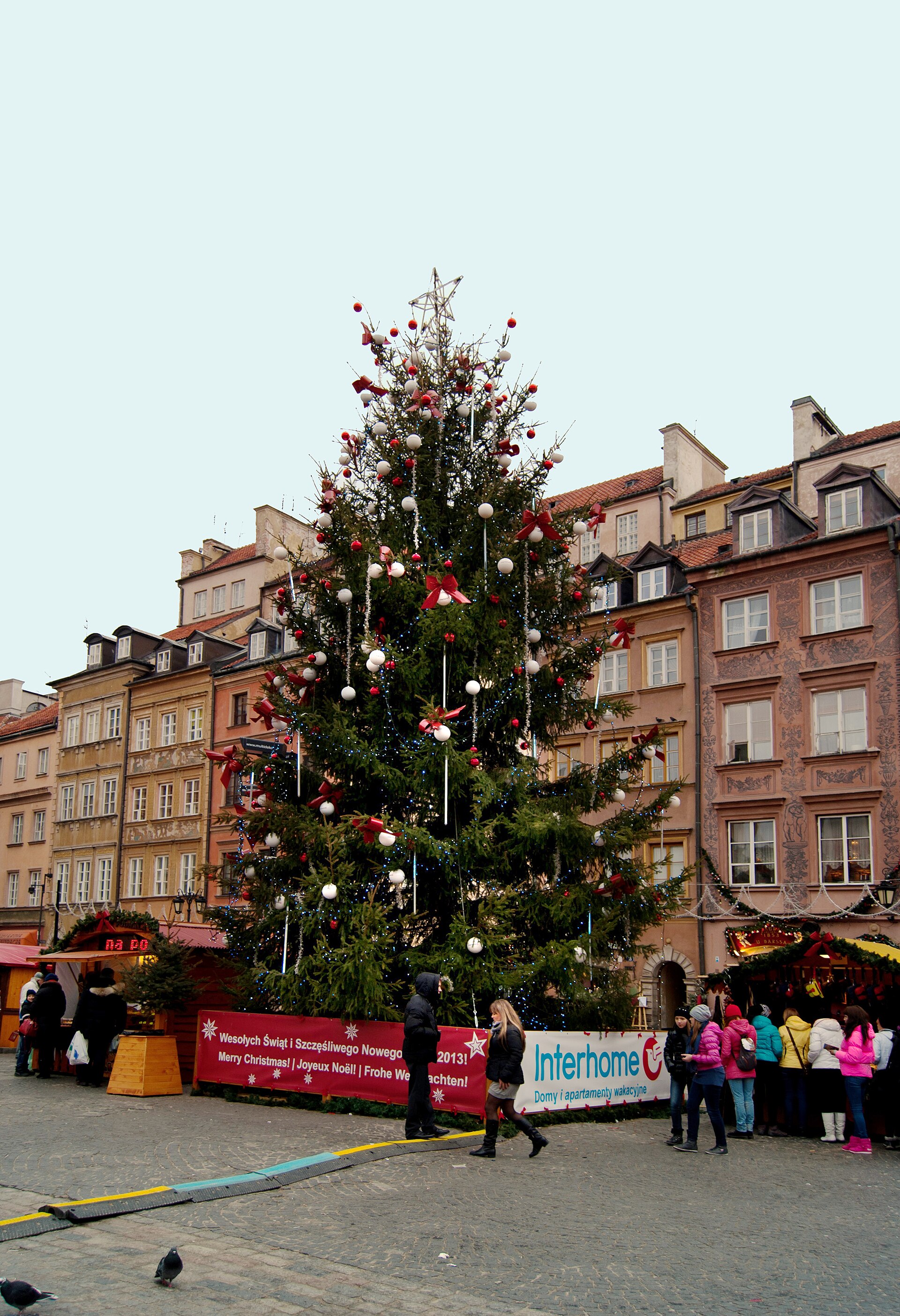
If a real tree sounds like too much logistics for a rented flat, remember that Poland does public Christmas trees on a grand scale. Every market square and most neighbourhood centres put up a municipal tree, usually lit from late November - Warsaw's Old Town tree stands among the burgher houses right by the Christmas market, and other cities do the same (see our 2026 Christmas markets roundup). Some people happily make the city tree "their" tree for the season and keep a small potted fir at home.
Cover photo: cut Christmas trees for sale at a street lot on Śródziemnomorska Street in Warsaw in December 2025, by Wistula (CC BY-SA 4.0, via Wikimedia Commons). Photo below: the city Christmas tree on Warsaw's Old Town Market Square in December 2013, by Guillaume Speurt (CC BY-SA 2.0, via Wikimedia Commons).
Frequently asked questions
How much does a real Christmas tree cost in Poland in 2026?
For a 1.5-2 metre tree, expect 100-300 zł depending on species and where you buy. Norway spruce is cheapest (30-100 zł), Caucasian fir most expensive (80-200 zł from producers, 200-450 zł at big-city stalls). Stands with a water reservoir cost extra, up to about 150 zł.
When do Poles put up the Christmas tree?
Tradition says no later than Christmas Eve, 24 December, and historically the tree was decorated on Wigilia morning. Many families now put it up earlier, often right after Mikołajki on 6 December.
When should the tree come down?
The traditional last date is Candlemas (Matka Boska Gromniczna) on 2 February. Most households take the tree down in the first half of January, after Three Kings' Day on 6 January.
Which Christmas tree drops the fewest needles?
The Caucasian fir (jodła kaukaska) - its soft needles stay on for four to five weeks even when dry. Blue spruce holds its needles well too. The fragrant Norway spruce is the quickest to shed in a warm room.
Can I throw my Christmas tree in the regular bin?
No. Trees go out with green waste (cut into pieces if over a metre tall), or you can deliver them to a PSZOK selective-waste point free of charge. Dumping a tree in a forest or beside the bins can bring a fine. Living potted trees of native species can be donated for replanting - Warsaw's city foresters collect them every January.