Polish Name Days (Imieniny): What They Are and How to Join In
The essentials: Imieniny are Polish name days: each first name has a date in the calendar of saints' feasts, and everyone bearing that name celebrates on it - traditionally bigger than birthdays. The celebrant usually brings cake to work; guests give flowers, chocolate or wine. Say 'Wszystkiego najlepszego z okazji imienin'.
Your Polish coworker walks in carrying a cake. It is not their birthday. Nobody seems surprised except you - and by 10:00 the whole office is saying "sto lat" to a person whose only special status today is their first name. Welcome to imieniny, the Polish name day: a centuries-old tradition that still runs quietly underneath everyday Polish life, and one that regularly catches foreigners off guard.
This guide explains what a name day actually is, who is supposed to do what, how to find out anyone's date, and the exact phrases that will carry you through.
What exactly is a name day?
Imieniny comes from "imię" - first name - so it is literally your name's day. The tradition is rooted in the Catholic liturgical calendar, which assigns one or more saints or blesseds to almost every day of the year. Since most traditional Polish first names are saints' names, nearly every name maps to a specific date: everyone called Katarzyna shares 25 November, every Piotr shares 29 June, and so on. Traditional Polish calendars print one or two names under each date, so the whole country can see whose day it is at a glance.
In Poland the custom appeared in the 13th century, when children began receiving saints' names believed to protect them from harm. For centuries the name day, not the birthday, was the big personal celebration - birthdays were a private, quiet affair while imieniny brought the whole family and half the neighbourhood to the table. Among younger Poles this has flipped, and birthdays now dominate, but the name day survives in workplaces, families and anywhere people know each other's first names.
A few quirks matter in practice:
- Several dates, one rule. Popular names like Jan or Maria appear on the calendar more than once. Custom resolves this neatly: you celebrate on the first occurrence after your birthday.
- Not fully nationwide. The tradition never took root the same way in Upper Silesia and Kashubia, and in the formerly German-administered western territories birthdays stayed the bigger occasion. Do not be shocked if someone from those regions shrugs at the whole idea.
- It is low-friction by design. A birthday requires knowing someone's date of birth. A name day requires knowing only their first name - which is exactly why it works for coworkers, neighbours and distant relatives you barely know.
Who hosts? The part that surprises foreigners
Here is the flipped script: on a Polish name day, the celebrant is traditionally the host, not the guest of honour.
At the office, the person whose name day it is typically brings the cake - homemade or from a bakery - sets it in the kitchen or break room, and coworkers stop by with wishes and take a slice. At home, the celebrant pours the drinks and cuts the cake for a small gathering of family or close friends. It is closer to "I am treating you" than "you are spoiling me", and it shows up in workplaces across the country with striking regularity.
Guests are not off the hook, though. The standard imieniny gift is deliberately modest: a bouquet of flowers, a box of chocolates, a bottle of wine. Nobody expects extravagance - save that for milestone birthdays, which carry the real weight in Poland. Kids often take sweets to school to share with the class on their name day, which is the same host-logic in miniature.
If a Pole invites you to their imieniny, do not arrive empty-handed, but do not overthink it either. Flowers are always right.
How does everyone know whose day it is?
The system is wonderfully redundant, which is why the tradition refuses to die:
- Printed calendars. Most Polish wall calendars print the day's names right under the date. Kitchen calendars, desk pads, parish calendars - they all do it.
- Public boards. Name days are posted at transit stations and outside flower shops as a running reminder of whose turn it is.
- Websites and apps. Name-day calendars online let you type a first name and get every date assigned to it for the year; some send a push notification on the morning of a friend's name day, turning a paper-calendar habit into an automated reminder.
- Just ask. "Kiedy masz imieniny?" - when is your name day? - is a completely normal question to ask a Polish friend, and it usually earns you a smile.
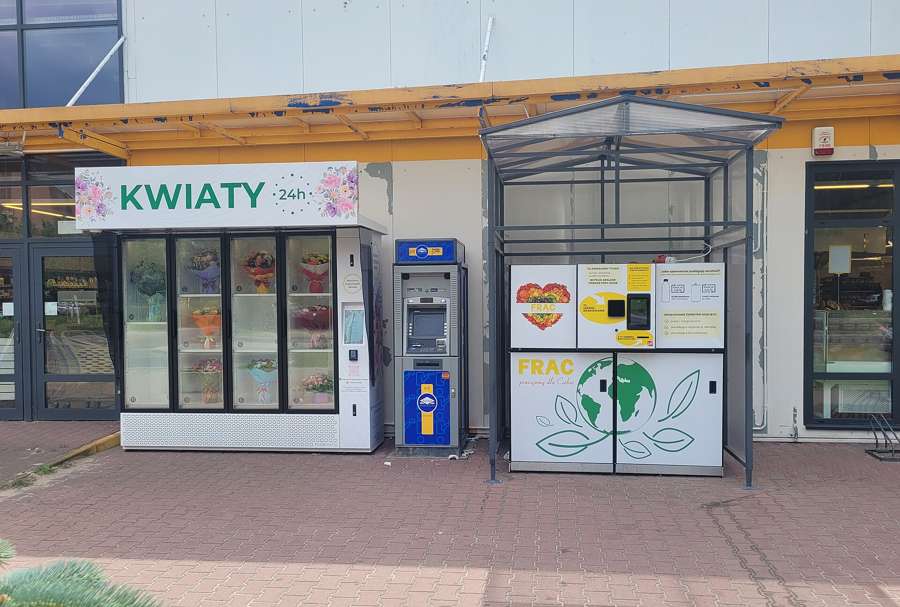
The 24-hour rescue: kwiatomaty
Poland takes name-day flowers so seriously that it built infrastructure for forgetting them. The kwiatomat is an unstaffed flower vending machine: glass compartments of wrapped bouquets and a payment terminal, open around the clock. You will find them outside supermarkets, at train stations and near shopping centres across the country - the machines in the cover photo stand on a Warsaw street, ready for the 9pm "I completely forgot" emergency.
A kwiatomat bouquet will not win a florist's award, but it exists precisely so that no solenizant (the person celebrating) has to go flowerless. That is a fair summary of how embedded the custom is.
What to say: the five phrases that cover everything
You only need a handful of expressions, and most of them work at birthdays too:
| Polish | Meaning | | --- | --- | | Wszystkiego najlepszego! | All the best! | | Wszystkiego najlepszego z okazji imienin! | All the best on your name day! | | Sto lat! | "A hundred years!" - the traditional toast and song | | Kiedy masz imieniny? | When is your name day? | | Dzisiaj są moje imieniny | Today is my name day |
"Sto lat" deserves its own paragraph. It is both a toast and a short song - Poland's universal celebration anthem, sung at name days, birthdays, weddings, anniversaries and retirements alike. The lyrics repeat "sto lat, sto lat, niech żyje, żyje nam" ("a hundred years, a hundred years, may they live for us") and finish with a shouted "Sto lat!". Learn the melody once and you can participate in Polish celebrations for the rest of your life.
For a message or card, "Wszystkiego najlepszego z okazji imienin" is the complete, correct sentence. For the group moment when the cake appears, join the song. That is genuinely all it takes.
The name day that ate the calendar: Andrzejki
One name day grew so large it became a national festival of its own. Andrzejki, the eve of St Andrew's day on 29-30 November, is Poland's great night of fortune-telling: hot wax poured through a keyhole into cold water, shadows read for prophecies about love, shoes lined up toward the door. It lands right at the start of Advent and every Polish twenty-something knows the games. We have a full Andrzejki guide - and if your name is Andrzej, you get a name day and a national party on the same night.
Name days are not the only Polish personal milestone with their own etiquette, either. For the wider picture - flowers, table rules, and the occasions Poles actually care about - see our Polish social etiquette guide.
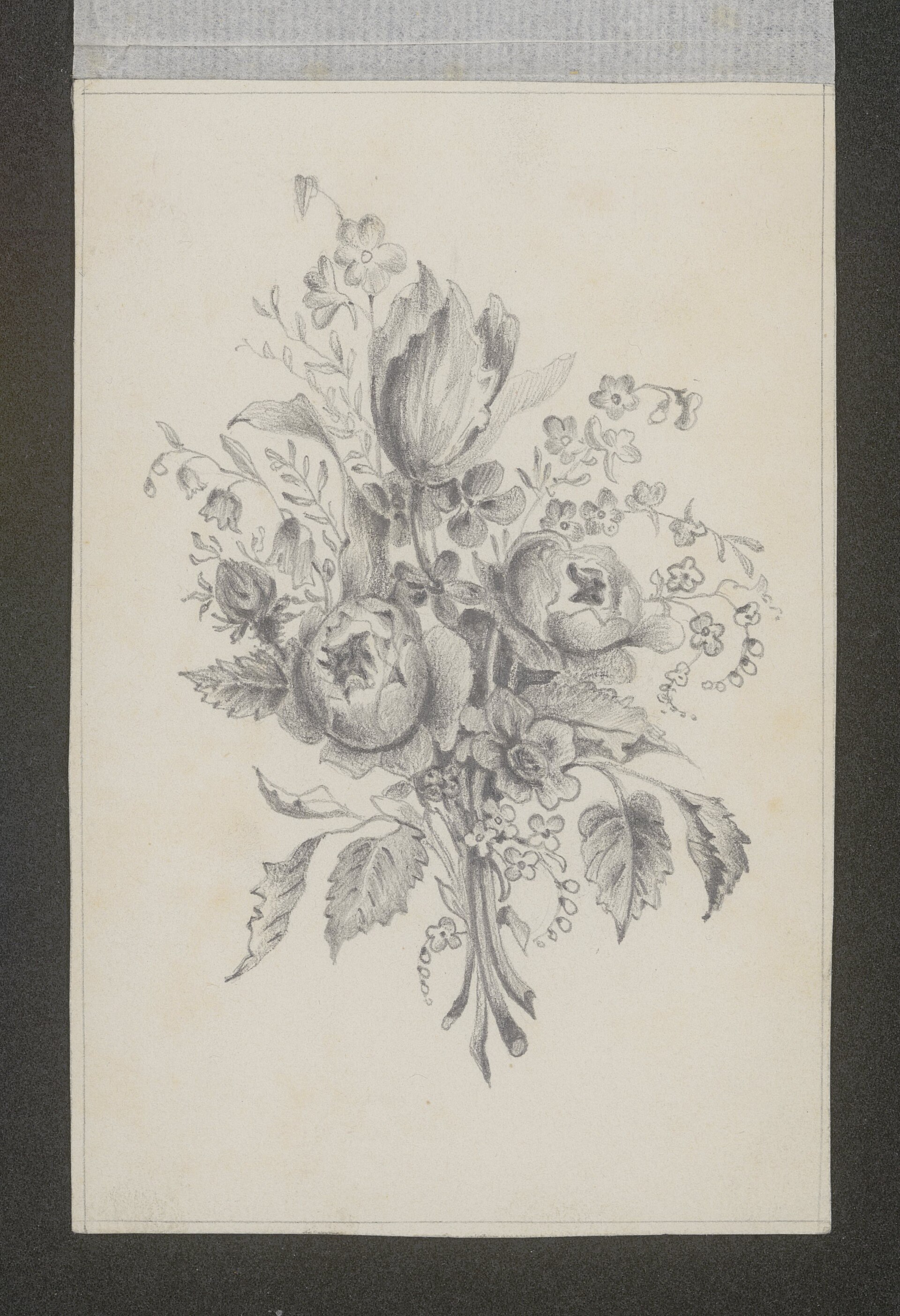
Cover photo: a "KWIATY 24h" flower vending machine with wrapped bouquets on Bonifacego Street in Warsaw, by Wistula (CC BY-SA 4.0, via Wikimedia Commons). Illustration below: a pencil drawing of a flower bouquet by Józef Ignacy Kraszewski, drawn between 1840 and 1887 (public domain, via Wikimedia Commons).
Frequently asked questions
What is an imieniny in Poland?
Imieniny is a name day: the feast day of the saint your first name comes from, celebrated by everyone who bears that name on the same calendar date. The custom is rooted in the Catholic liturgical calendar and has existed in Poland since the 13th century.
Are name days bigger than birthdays in Poland?
Traditionally yes - for centuries the name day was the main personal celebration. Today birthdays dominate among younger Poles, but name days are still widely marked in workplaces, families and among older generations, usually with cake, flowers and good wishes.
What do I bring to someone's name day?
Keep it modest: a bouquet of flowers, chocolates or a bottle of wine is the standard. Extravagant gifts are reserved for milestone birthdays. If it is last-minute, look for a kwiatomat - a 24-hour flower vending machine - outside supermarkets and stations.
How do I find out someone's name day?
Check any Polish calendar (names are printed under each date), use an online name-day calendar or app, or simply ask: "Kiedy masz imieniny?". If a name has several dates, the custom is to celebrate the first one after the person's birthday.
What do I say on a Polish name day?
Say "Wszystkiego najlepszego z okazji imienin" - all the best on your name day. When a group is celebrating, sing "Sto lat", the universal Polish hundred-years song used at name days, birthdays and weddings alike.
Do all Poles celebrate name days?
Most do, but not all. The tradition is weaker in Upper Silesia and Kashubia, and in the formerly German-administered western regions birthdays historically held the bigger role. Among young people everywhere, birthdays increasingly come first.