Advent 2026 in Poland: Roraty, Wreaths and How Expats Can Join
The essentials: Advent 2026 begins on Sunday 29 November and ends on Christmas Eve, Thursday 24 December. Poland marks the season with candlelit Roraty masses at dawn, a four-candle Advent wreath, children's lanterns and good-deed straw. Shops stay closed on 29 November but open on 6, 13 and 20 December.
The first candle goes on the wreath at the end of November, church doors open before sunrise, and children carry homemade lanterns through the dark. Advent - the four-week countdown to Christmas - is one of the most atmospheric times to be in Poland, and one of the easiest traditions for a newcomer to join. In 2026 Advent begins on Sunday 29 November and runs until Christmas Eve, Thursday 24 December.
This guide covers the dates, what Roraty masses actually are, the customs you will see at home and in church, and the practical bits - like which December Sundays the shops are open.
When is Advent 2026?
Advent always starts on the fourth Sunday before Christmas, which is the Sunday closest to 30 November, St Andrew's Day. In 2026 the four Advent Sundays fall on:
- First Sunday of Advent: 29 November 2026
- Second Sunday: 6 December 2026
- Third Sunday (Gaudete): 13 December 2026
- Fourth Sunday: 20 December 2026
The season ends on Christmas Eve, Thursday 24 December, when Advent waiting gives way to Wigilia, the Polish Christmas Eve supper (see our guide to Wigilia traditions). Advent is not a public holiday in Poland, so offices, schools and shops follow their normal schedules - with one shopping twist explained below.
Roraty: Poland's candlelit dawn masses
The single most distinctive Polish Advent custom is the Roraty mass. The name comes from "Rorate caeli desuper" - "Drop down dew, you heavens" - the opening words of the Latin hymn sung at these services. Roraty are votive masses honouring the Virgin Mary, celebrated in the near-dark, lit mostly by candles.
The tradition is remarkably old. According to the Catholic weekly Niedziela, Roraty have been celebrated in Poland since the 13th century; historical accounts describe them under King Bolesław the Bashful, and the earliest Roraty mass formulas were found in the liturgical books of Silesian Cistercians. By the 14th century they were popular across the country, and the 16th century even had dedicated "rorantist" chapels and brotherhoods.
The classic Roraty mass starts at dawn - traditionally 6:00, 6:30 or 7:00 in the morning - so that the service moves from darkness into daylight, mirroring the waiting of Advent itself. These days many parishes hold a second, evening Roraty at 17:00 or 18:00 so working people and schoolchildren can come. On the altar, beside the ordinary mass candles, burns the roratnia: a tall candle tied with a white ribbon that outshines the rest.
For expats, the practical points are simple: Roraty are ordinary public masses. Anyone can walk in, no Polish and no booking required. Parish notice boards and websites list the times - look for the word "Roraty" next to a morning hour. The experience is worth the alarm clock at least once: a dark church, hundreds of small flames, and carols you will not hear at any other time of year.
Lanterns, lucky dips and straw: Advent for children
Polish children have their own Roraty rituals, and expat kids are welcome in all of them.
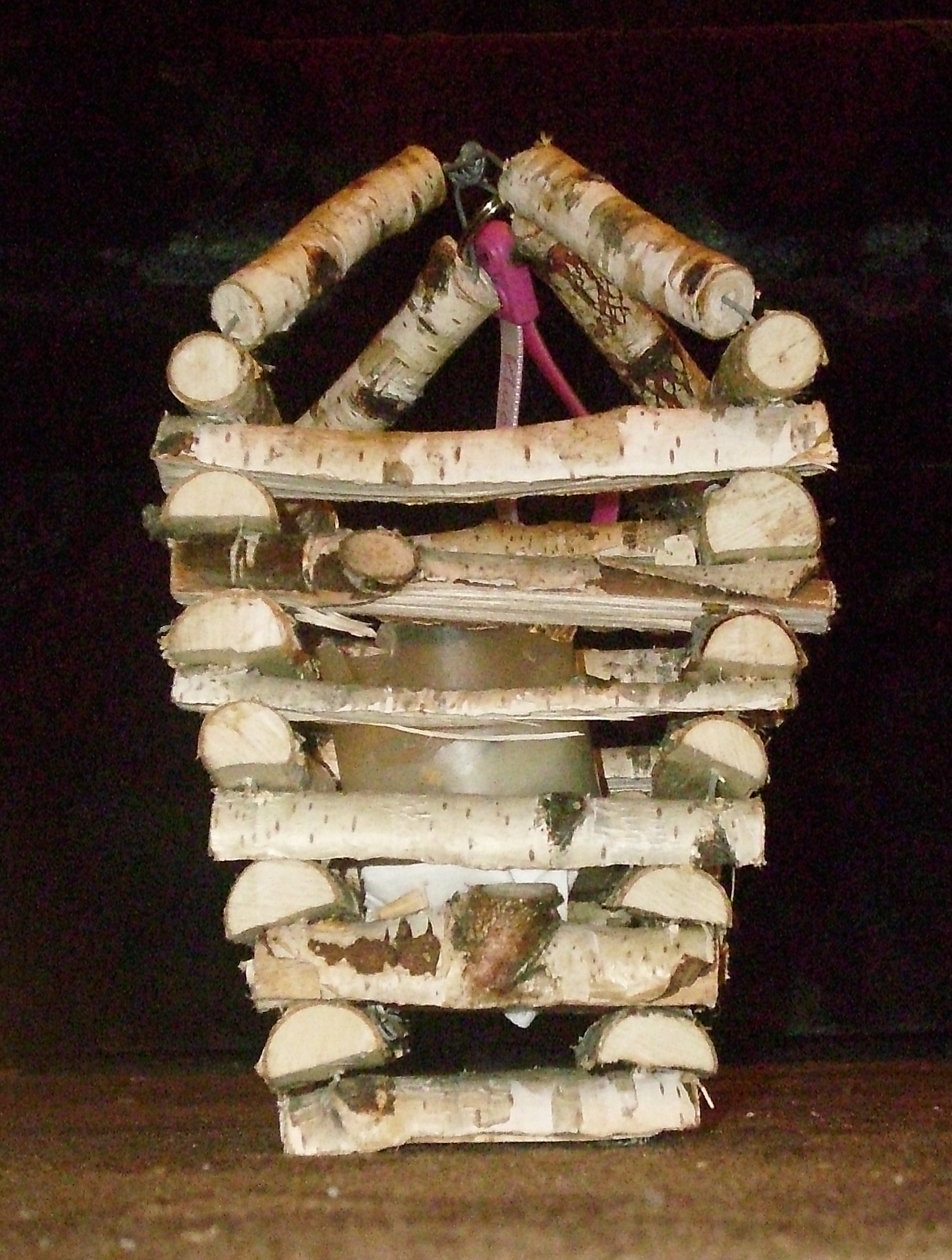
The most visible is the lampion - a homemade lantern, traditionally built from cardboard sides lined with coloured tissue paper so it glows like a miniature stained-glass window. Children carry their lanterns to Roraty and light the way through the darkened church in the entrance procession. The lanterns symbolise readiness, a nod to the parable of the wise and foolish virgins. Ready-made lanterns are sold in shops, but many families still make their own at home or at school craft sessions.
Many parishes add a small lottery: after the mass, one child draws a lucky token and takes home the figure of the Baby Jesus from the church crib for a day, hosting a tiny family celebration before returning it. And at home, children practise the "hay of good deeds" - keeping an empty manger and adding one strand of straw or hay for every good deed done during Advent, so the Christ Child finds a soft bed on Christmas morning.
The Advent wreath
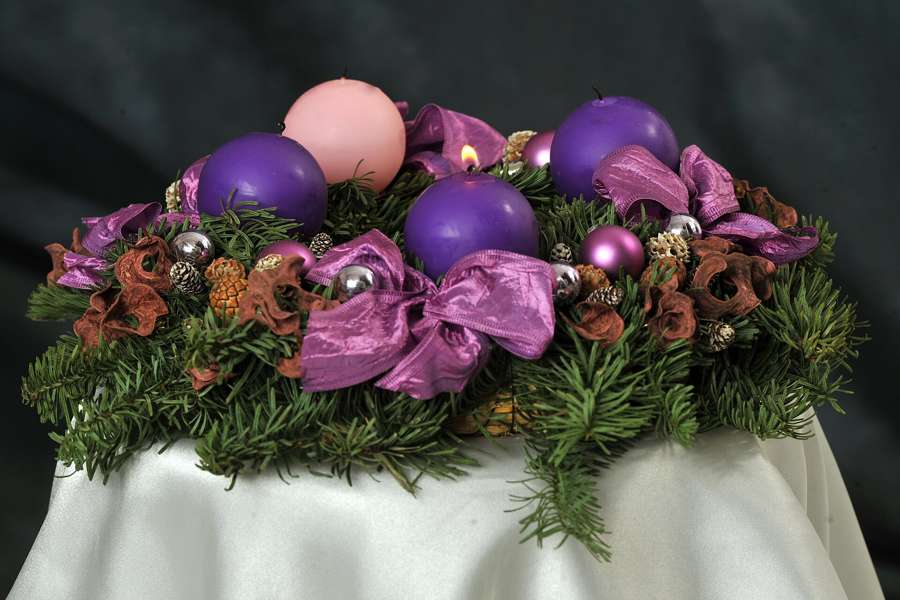
You will see the wreath - wieniec adwentowy - in churches, schools and many homes: a circle of evergreen branches holding four candles. Traditionally three candles are violet and one is rose, though white candles are also used. One more candle is lit each Sunday, so the light grows week by week as Christmas approaches.
The odd candle out is the rose one, reserved for the third Sunday, 13 December in 2026. That day is called Gaudete Sunday, from the Latin for "rejoice" - the midpoint of Advent, when the Church lightens the penitential violet to rose because Christmas is close. If you are invited to a Polish home on an Advent Sunday, the candle-lighting before supper is the quiet, domestic heart of the season.
The rest of the countdown: Andrzejki, Mikołajki and markets
Advent in Poland is packed with fixed points, several of which we cover in dedicated guides:
- 29-30 November - Andrzejki. St Andrew's Eve falls right at the start of Advent and is Poland's traditional night of fortune-telling, especially pouring hot wax through a keyhole into cold water and reading the shadow. See our Andrzejki guide.
- 6 December - Mikołajki. St Nicholas Day, when children find small gifts in shoes, under pillows or at school. Details in our Mikołajki guide.
- Christmas markets. Most big-city markets open in the second half of November and run through Advent and beyond - see our Poland Christmas markets roundup for 2026 and the Warsaw Christmas market guide.
- 17-24 December - the "O Antiphons". In the final week before Christmas, churches sing the ancient "O Antiphons", a series of invocations sung since at least the eighth century, as the waiting sharpens toward Wigilia.
For a broader picture of how the season fits into Polish Christmas as a whole, see how Polish people celebrate Christmas.
Shopping in Advent: which Sundays are open?
Here is the practical trap: Poland's Sunday trading ban stays in force through most of Advent, with only specific Sundays exempted by law.
The first Advent Sunday, 29 November 2026, is not a trading Sunday - supermarkets and shopping centres will be closed, so do the weekend's shopping on Saturday. Under the current trading law (consolidated text Dz.U. 2025 poz. 301), the December trading Sundays are 6, 13 and 20 December 2026 - all three pre-Christmas Sundays are open. Small neighbourhood shops where the owner works the till can open on any Sunday, and bakeries, petrol stations and pharmacies follow their usual exemptions.
If you plan to send gifts abroad, Advent is also the season of postal deadlines - our Christmas parcel guide lists the cut-off dates for Poczta Polska and InPost.
Why bother waking up for it?
For many expats, Advent passes unnoticed until the markets open. But Roraty in particular is one of those experiences that explains Poland to you: half the country has childhood memories of shivering in the dark with a lantern, and colleagues will happily tell you theirs. You do not need to be religious to appreciate a 700-year-old dawn service in a candlelit Gothic church - and in December, Poland gives you one every morning for four weeks.
Cover photo: an Advent wreath with three violet candles and one rose candle, the first candle lit, by PHILIP János (CC0, via Wikimedia Commons). Photo below: a handmade birch-bark Advent lantern (lampion adwentowy) made by a child from Służewo in the Kuyavian countryside, photo by Natalunka (public domain, via Wikimedia Commons).
Frequently asked questions
When does Advent 2026 start and end?
Advent 2026 begins on Sunday 29 November, the fourth Sunday before Christmas, and ends on Christmas Eve, Thursday 24 December. The four Advent Sundays are 29 November, 6 December, 13 December and 20 December 2026.
Is Advent a public holiday in Poland?
No. None of the Advent Sundays is a public holiday, so offices and schools work normally. The season still shapes daily life - from morning Roraty masses to Christmas market visits after work.
What exactly is a Roraty mass?
Roraty is a candlelit votive mass honouring the Virgin Mary, celebrated in Poland since the 13th century during Advent. The name comes from the hymn "Rorate caeli desuper" ("Drop down dew, you heavens"). It is traditionally held at dawn, around 6:00-7:00, though many parishes now add an evening service at 17:00 or 18:00.
Can foreigners attend Roraty?
Yes. Roraty are ordinary public masses - anyone can attend, and no Polish is needed to follow the candlelit atmosphere. Check the parish notice board or website for "Roraty" times. Families are welcome, and children can join the lantern tradition.
What is the rose candle on the Advent wreath?
A traditional Advent wreath holds four candles: three violet and one rose. The rose candle is lit on the third Sunday, called Gaudete Sunday (13 December in 2026), marking the joyful midpoint of the season.
Are shops open on Sundays during Advent 2026?
Mostly no. The first Advent Sunday, 29 November 2026, is a non-trading Sunday. The exceptions are 6, 13 and 20 December 2026, which are trading Sundays under the current Sunday trading law. Small owner-run shops, bakeries and petrol stations can open regardless.